
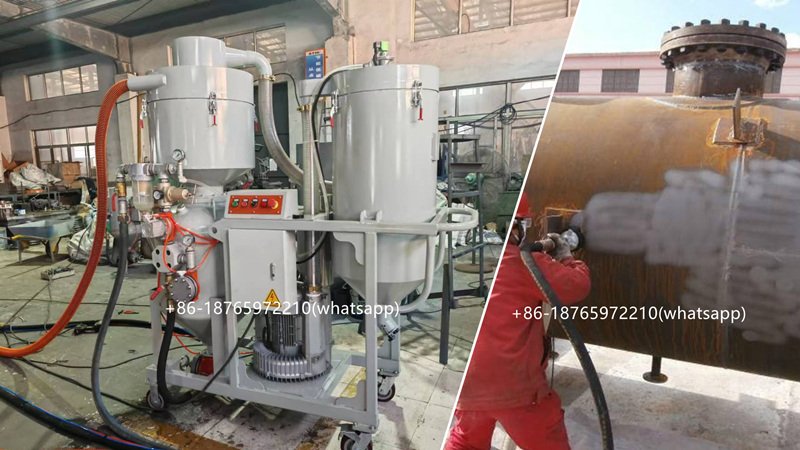
Vacuum sand blaster is a specialized tool that combines the principles of sandblasting (abrasive blasting) with a vacuum system designed to capture dust and debris produced during the abrasive process. It is used for cleaning, rust removal, paint stripping, and surface preparation on various materials like metal, wood, concrete, and stone. The primary advantage of a vacuum sandblaster is its ability to contain dust and recycle abrasive media, making it cleaner and more efficient compared to traditional sandblasting methods
Vacuum blasting and wet blasting are the most effective and efficient dustless blasting systems with their specific applications where environmental, operator and access concerns are present for completing the most challenging projects.
Vacuum Blast Machines provide an environmentally friendly dust free blasting solution which is easy to use, versatile and powerful.
Key Features of a Vacuum Sand Blaster:
Abrasive Blasting: Like traditional sandblasting, the vacuum sand blaster uses compressed air or other pressurized mediums to propel abrasive particles (e.g., sand, garnet, or glass beads) at a high velocity toward a surface. This helps clean or prepare the surface by removing contaminants like paint, rust, dirt, or old coatings.
Vacuum System: The crucial difference with vacuum sandblasters is the vacuum mechanism. This system collects the dust and spent abrasive material as it is used, keeping the work area cleaner and reducing airborne particles. The vacuum helps pull debris from the blasting area through a hose or nozzle, capturing it into a collection chamber.
Dust Control: As abrasive particles hit the surface, they break off contaminants but also create a lot of fine dust. The vacuum system ensures this dust doesn’t escape into the air, making the blasting process much cleaner and safer, especially for indoor work or in areas where health and environmental standards are critical.
Recyclable Abrasives: The vacuum system also allows the collected abrasive media to be reused after it is filtered. This reduces material waste and can significantly lower operational costs, especially in larger or repeated jobs.
How Vacuum Sand Blaster Works?
- Abrasive Blasting:
The sand blaster uses compressed air or another pressurized medium to propel abrasive particles (such as sand, garnet, or glass beads) at high velocity toward a surface.
These abrasives are directed through a nozzle, which is typically controlled by the user. The abrasive particles strike the surface, removing rust, paint, dirt, or other contaminants, and leave a cleaner, rougher texture on the material being treated. - Vacuum Collection:
As the abrasive material is applied to the surface, a vacuum system simultaneously collects the used abrasive and debris (dust, paint particles, etc.) created during the blasting process.
A vacuum hose or suction nozzle is positioned near the blasting area, or it can be integrated into the nozzle itself, depending on the specific setup.
The vacuum system pulls the dust and spent abrasive material into a collection chamber, often equipped with filters that trap harmful dust particles and allow the abrasive material to be returned for reuse. - Recycling the Abrasive:
The collected abrasive is often stored in a separate container or chamber. The vacuum system typically includes a filtration unit that helps separate dust from the abrasive material.
The abrasive can be cleaned and reused multiple times, which helps reduce waste and costs associated with purchasing new abrasive media. - Dust Control:
A key benefit of vacuum sandblasting is that it helps contain and control the dust generated during the blasting process. This is particularly useful in enclosed environments or areas where air quality is a concern.
The vacuum system keeps the work area cleaner and minimizes the spread of dust into the surrounding environment, which is important for safety and health reasons, especially when using hazardous materials like lead paint or certain types of sand. - Filters and Exhaust:
The vacuum system often includes a filtration system (such as HEPA filters) to capture fine dust particles, ensuring that hazardous materials do not enter the air or escape into the environment.
After the dust is filtered, clean air is expelled, and the abrasive material is sent back for reuse or disposal. - Operational Flow:
Air Supply: Compressed air or gas is fed into the blasting machine.
Abrasive Feed: The abrasive media is fed into the blast hose, which directs it to the nozzle.
Blasting: The abrasive material is forced out of the nozzle at high pressure onto the surface being treated.
Vacuum Recovery: The vacuum hose collects the used abrasive, dust, and debris from the surface, sending it into the filtration system.
Reuse/Disposal: The collected abrasive is either reused after cleaning or discarded if it’s no longer suitable for further use.
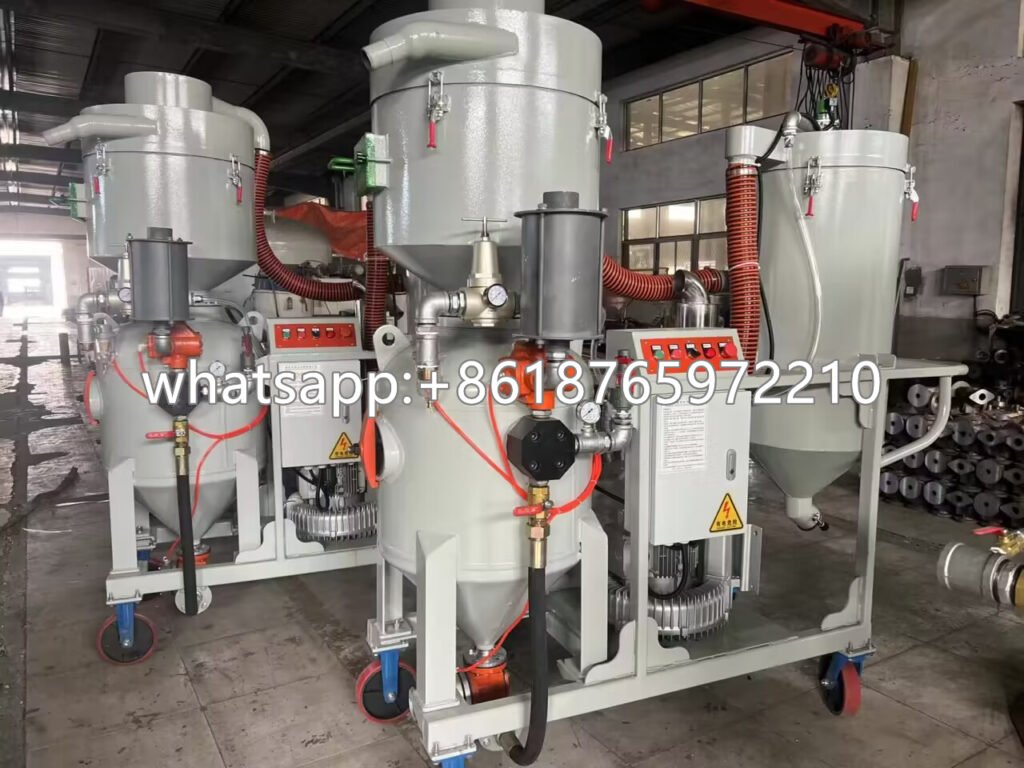
Advantages of Vacuum Sand Blaster
- Cleaner Work Environment: The vacuum system captures dust and debris, keeping the workspace free of harmful particles and minimizing the need for cleanup after the job.
- Health & Safety: It reduces the risk of inhaling dust, which can be hazardous, especially when working with toxic materials like lead or silica-based abrasives.
- Cost-Effective: By recycling the abrasive material, the vacuum sand blaster reduces the need to buy new abrasives frequently, making it a cost-effective solution for larger projects.
- Efficiency: The vacuum system enhances productivity by keeping the area cleaner and reducing the frequency of stopping for cleanup.
- Environmental Impact: With dust and debris contained, there is less contamination of the environment, and less abrasive material is wasted.
Applications
- Surface Preparation: Rust removal, paint stripping, cleaning metal, concrete, wood, and stone surfaces.
- Graffiti Removal: Blasting surfaces to remove graffiti without spreading paint dust or residue.
- Restoration Projects: Suitable for restoring old vehicles, machinery, and other items.
- Industrial Cleaning: Used in factories or warehouses to clean machinery and equipment without creating a dusty mess.
Conclusion
Vacuum sand blaster is a type of abrasive blasting equipment that combines the principles of traditional sandblasting with a vacuum system to collect and contain the abrasive material, dust, and debris created during the process. It is commonly used for surface cleaning, rust removal, paint stripping, or etching on various materials like metal, concrete, or stone.