

Sand reclamation consists of the cleaning of the waste sand by removing these contaminants, grading, and cooling for further use. Resin sand reclamation is a process used primarily in foundries to reclaim used sand that has been mixed with a resin binder, which is then reused for producing new molds and cores for metal casting. Over time, the resin sand becomes contaminated with dust, metal particles, and other impurities, so reclaiming it allows foundries to reduce material costs and waste.
Resin Sand Reclamation Process
- Cooling and Separation
After the sand is used for casting, it often needs to cool down. In many foundries, molten metal is poured into molds made of resin-bonded sand. Once the casting process is done, the sand and metal are separated. The sand may still be hot, so it must first cool down before reclamation. - Mechanical Sieving and Screening
The first step in reclaiming the sand is to remove large impurities, such as broken mold pieces, metal clippings, and other debris. This is done through mechanical sieving, where the sand is passed through screens or vibrating sieves to sort out foreign materials. - Air or Mechanical Attrition
Once the resin has been burned off, the reclaimed sand is subjected to mechanical or air-based attrition. This step helps to break up the remaining resin residue and reduces the particle size, removing any small impurities or carbon particles that remain after the burning process. - Cooling and Moisture Control
After thermal treatment, the reclaimed sand is usually quite hot, so it needs to cool down. Cooling might take place in air-controlled environments or specialized cooling units to bring the sand down to a temperature that’s safe for handling.
It’s also important to monitor the moisture content of the sand because excess moisture can cause issues when reusing it in molds. - Final Screening and Testing
Finally, the reclaimed sand is passed through a series of screens to ensure the sand is of the right consistency and free from any contaminants.
Testing can be done to check the properties of the sand, such as grain size, uniformity, and resin content, to ensure it meets the requirements for the next round of molding. - Reusing the Sand
Once all the impurities are removed, and the sand is of proper quality, it can be mixed with fresh resin (if necessary) and reused for new mold-making processes. This cycle of reclaiming and reusing sand helps foundries to reduce both costs and waste.
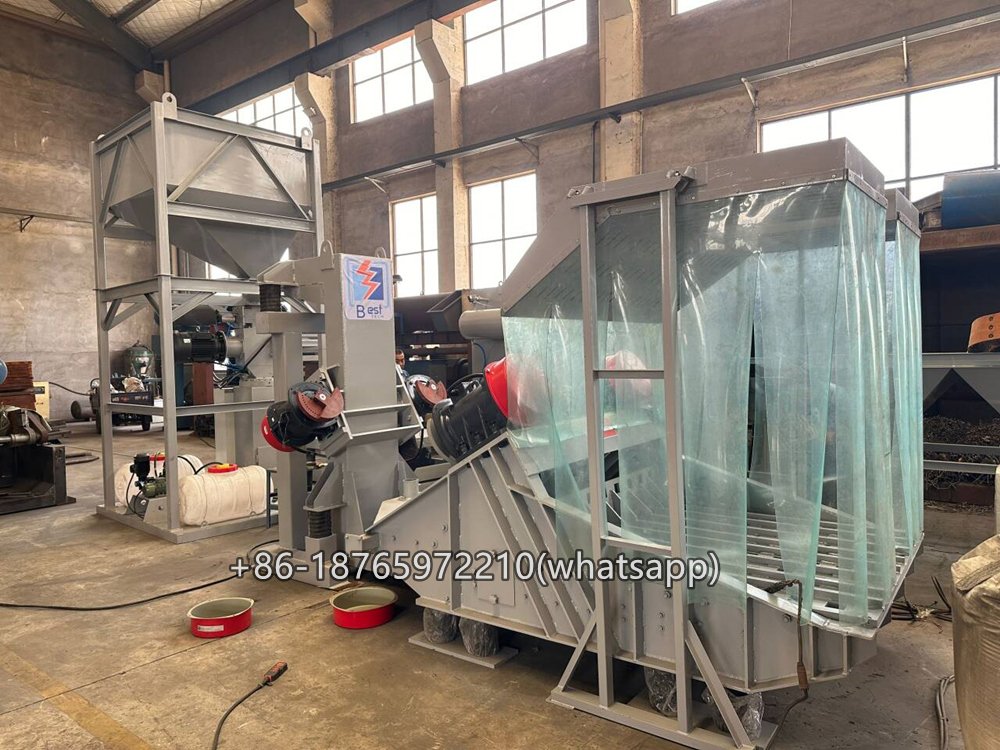
The resin sand reclamation production line uses the processes of crushing, magnetic separation, secondary regeneration, wind selection, and sieving to regenerate the old sand. According to experience, the resin sand has good collapsibility after pouring, so the line uses manual falling through the grid. The fallen old sand is sent to the vibration regeneration machine by a belt conveyor. The head of the belt conveyor uses a permanent magnet head wheel to separate the iron and iron beans from the sand and sand. The sand is regenerated by vibration. The vibration of the machine is broken, and the rubbing between the sand block and the sand block crushes the sand block into sand particles, and then enters the secondary centrifugal regeneration machine through the bucket elevator, and the sand is rotated and rubbed in the centrifugal regeneration machine at a speed of 28 meters per second. Wipe to remove the film, remove the fine powder, and then remove the impurities in the sand through the vibrating sieve, and then lift it to the sand bin for temporary storage by the bucket elevator. The above set of regeneration treatment is compact in structure and reasonable in design, so that the regenerated sand is qualified. It is required that a continuous resin sand mixing machine be set below the sand silo for the mixing of new sand and small castings. The sand is evenly entered into the sand mixer through the proportional regulator, and then it can be entered through the automatic mixing of the sand mixer. Modeling, which not only enlarges the molding area but also saves the conveying volume of the molding sand. In order to fully remove the ash powder in the old sand, the sand processing system is equipped with a dust removal port at each dust raising point to centrally capture the dust into the dust collector for unification. deal with. A top suction dedusting hood is adopted above the grid, and a mechanical rotary back-blown bag type dust removal is set for the main dust source to ensure dust emission standards and JB9078-96 dust emission concentration standards. At the same time, the working environment is improved. Advanced Japanese original PLC programmable controller, automatic control, reliable interlocking protection system for each operating equipment, making the whole line easy to operate, monitor, restrict and fully protect.
Resin Sand Reclamation Advantages
- Cost Reduction
Material Savings: Resin sand reclamation significantly reduces the need for fresh sand. Foundries can reuse the same sand multiple times, lowering the costs of purchasing new sand.
Reduced Waste Disposal Costs: By reclaiming the sand, foundries can minimize the amount of waste they need to dispose of. This not only reduces landfill costs but also addresses environmental concerns. - Environmental Benefits
Waste Reduction: Reclaiming resin sand reduces the volume of waste that is sent to landfills, which is an important step in reducing the environmental impact of foundry operations.
Lower Carbon Footprint: Since fewer raw materials are needed (like fresh sand and resin), the overall carbon footprint of the foundry’s operations can be lowered. In addition, thermal reclamation reduces the need to mine and transport new sand, which can be energy-intensive. - Consistent Sand Quality
Control Over Sand Properties: With proper reclamation, foundries can control the quality of the reclaimed sand, ensuring it meets specific requirements for molding and casting. This can lead to more consistent mold quality and fewer defects in the final product.
Less Variation: If the reclamation process is well-managed, the reclaimed sand can be made to closely match the properties of virgin sand, resulting in fewer inconsistencies during production. - Improved Foundry Efficiency
Increased Production Capacity: By using reclaimed sand, foundries don’t need to worry about running out of raw material as quickly. This can increase production efficiency and reduce downtime for resupply of fresh sand.
Faster Turnaround Times: The ability to reuse sand for new molds allows for faster turnaround in mold production, improving overall throughput. - Reduced Environmental Impact of Resin Use
Less Resin Consumption: In addition to reclaiming sand, foundries can often reduce the amount of new resin binder they need by reusing the sand. This helps minimize the consumption of chemicals used in the casting process. - Economic Competitiveness
Competitive Advantage: Foundries that are able to efficiently reclaim and reuse resin sand can improve their cost-efficiency, which could provide them with a competitive edge in the market. Lower production costs may allow them to offer better pricing or improve profit margins.
Compliance with Regulations: Environmental regulations are becoming stricter in many regions. By adopting sand reclamation, foundries can better comply with waste disposal and environmental standards, avoiding fines and legal issues. - Resource Conservation
Conservation of Natural Resources: Sand is a finite resource, and mining new sand for industrial purposes can have a significant environmental impact. Resin sand reclamation helps conserve this natural resource, as it reduces the demand for new sand mining. - Enhanced Product Quality
Better Control Over Sand Characteristics: Since the reclaimed sand can be reconditioned to meet the specific needs of the foundry, it helps to maintain the desired physical characteristics, like grain size and texture, which directly influence the quality of the casting.
Reduced Defects: When reclaimed sand is properly treated, it helps reduce the risk of defects in the final metal casting, such as rough surfaces or mold collapses, which can occur when the sand quality is inconsistent.
Conclusion
Resin sand reclamation process can be done in a continuous or batch system depending on the size and scale of the operation. Technologies for resin sand reclamation continue to evolve, with newer methods focusing on improving energy efficiency, reducing emissions, and ensuring that the reclaimed sand is as close to virgin material as possible.