
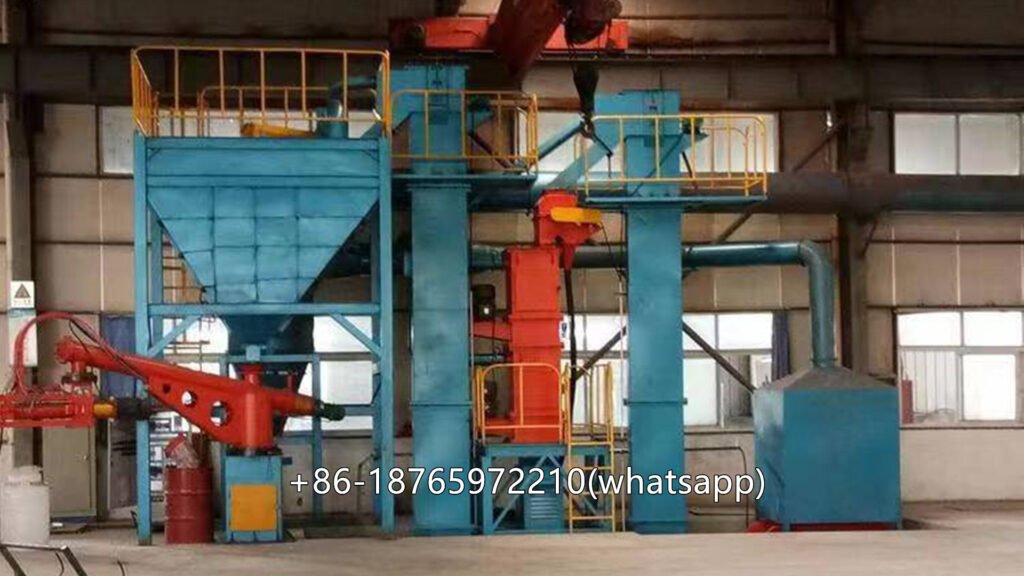
Phenolic no-bake sand is often used in steel casting, phenolic No-Bake Sand Molding Process involves creating molds and cores from a mixture of sand and a phenolic resin binder. This process is simple and efficient, making it ideal for steel and other high-temperature metal castings.
Phenolic No-bake Sand Molding Process Advantages
- High Strength and Durability: Phenolic no-bake sand molds have high compressive strength, which makes them resistant to deformation under the pressure of molten metal. This is particularly useful for steel casting, where the molten metal’s high temperature and density can challenge mold integrity.
- Better Surface Finish: The sand produces smoother surfaces compared to traditional sand casting methods. This reduces the need for additional finishing work on the cast product, which is valuable for applications where precision and a good surface finish are critical.
- Low Gas Evolution: The phenolic resin binder is designed to minimize gas production during the casting process. This reduces the potential for defects like porosity, which is crucial when casting steel as it can significantly affect the quality of the castings.
- Reduced Shrinkage and Distortion: The sand mixture, once hardened, does not shrink as much as other binders, leading to more accurate castings and reduced chances of distortion during cooling.
- Fast Molding Process: The no-bake method involves mixing the sand with a resin and hardener, allowing it to set at room temperature without requiring additional baking or heating. This speeds up the casting process, making it more efficient for large-volume production.
- High Temperature Resistance: Phenolic no-bake sands have a higher thermal stability than traditional molding sands. This makes them particularly suited for the high-temperature environment created during steel casting, where other sands might degrade or fail.
These advantages make phenolic no-bake sand a popular choice for steel foundries aiming for high-quality, precise castings while maintaining production efficiency.
Steps of Phenolic No Bake Sand Molding Process
- Preparation of Sand and Resin Mixture
Sand Selection: The base material is typically high-quality silica sand, chosen for its high melting point and fine grain size.
Binder Addition: Phenolic resin is mixed with the sand, often with a hardener or catalyst to initiate the curing process. The binder system allows the sand to hold its shape once the mold is formed.
Mixing: The sand and binder are mixed thoroughly, usually in a muller or other mixing equipment, ensuring that the resin is evenly distributed throughout the sand particles. - Molding Process
Pattern Preparation: A pattern (either metal or another durable material) of the casting is prepared, typically in the shape of the desired steel part.
Mold Making: The resin-sand mixture is packed around the pattern in a molding box (flask). The mixture is compacted to form the mold cavity. The sand mixture sets without the need for baking or heating, which is why it is called “no-bake.”
Compaction: After the sand mixture is packed around the pattern, the mold is compacted to ensure it achieves the desired strength and stability. This is often done using mechanical vibration or tamping. - Curing
Curing at Room Temperature: The mixture hardens at room temperature through a chemical reaction between the phenolic resin and the hardener. This process takes several hours, depending on the binder system used. During this period, the mold reaches its final strength.
Hardening: The mold achieves the necessary strength to withstand the molten metal during the casting process, without warping or breaking apart. - Pattern Removal
Once the mold is fully cured and hardened, the pattern is removed, leaving behind a cavity that matches the desired shape of the casting.
This is often done by disassembling the mold flask and carefully removing the pattern, ensuring the mold remains intact. - Mold Assembly (for Larger Castings)
For larger or more complex castings, the mold may need to be assembled from multiple sections or cores. These sections are created separately using the same phenolic no-bake process and then joined to form the complete mold. - Pouring the Molten Steel
The mold is then placed in a pouring area where molten steel is poured into the cavity. The high-temperature molten metal fills the mold, taking the shape of the cavity.
Cooling: After pouring, the mold is left to cool, solidifying the steel into the desired shape. - Mold Breakout and Finishing
After the cast steel has cooled and solidified, the sand mold is broken away, leaving the casting.
The cast part is cleaned, often using shot blasting or other methods to remove any residual sand or surface imperfections.
Final finishing steps may include machining or heat treatment to achieve the desired properties and dimensions.
Conclusion
Phenolic No Bake Sand Molding Process is popular for steel castings where high precision, minimal surface defects, and speed are required, especially in industries like automotive, aerospace, and heavy machinery.