

Furan resin sand molding is a widely adopted casting process in foundries due to its excellent dimensional accuracy, high strength, and adaptability for complex geometries. The process utilizes furan resin as a binder mixed with silica sand, which hardens at room temperature through acid-catalyzed polymerization. This self-hardening property eliminates the need for baking, making it energy-efficient and suitable for large-scale production .
Introduction to Furan Resin Sand Molding Process
Furan resin sand molding is a core technology in modern casting, widely used in the production of complex metal castings.
- Furan resin binder: Typically composed of furfuryl alcohol, urea/formaldehyde, and catalysts like sulfonic acids.
- Sand preparation: Silica sand is coated with resin (0.8–1.5% by weight) and catalyst (20–40% of resin weight) .
- Molding process: The resin-sand mixture is compacted into molds or cores, achieving full curing within 1–4 hours depending on ambient conditions.
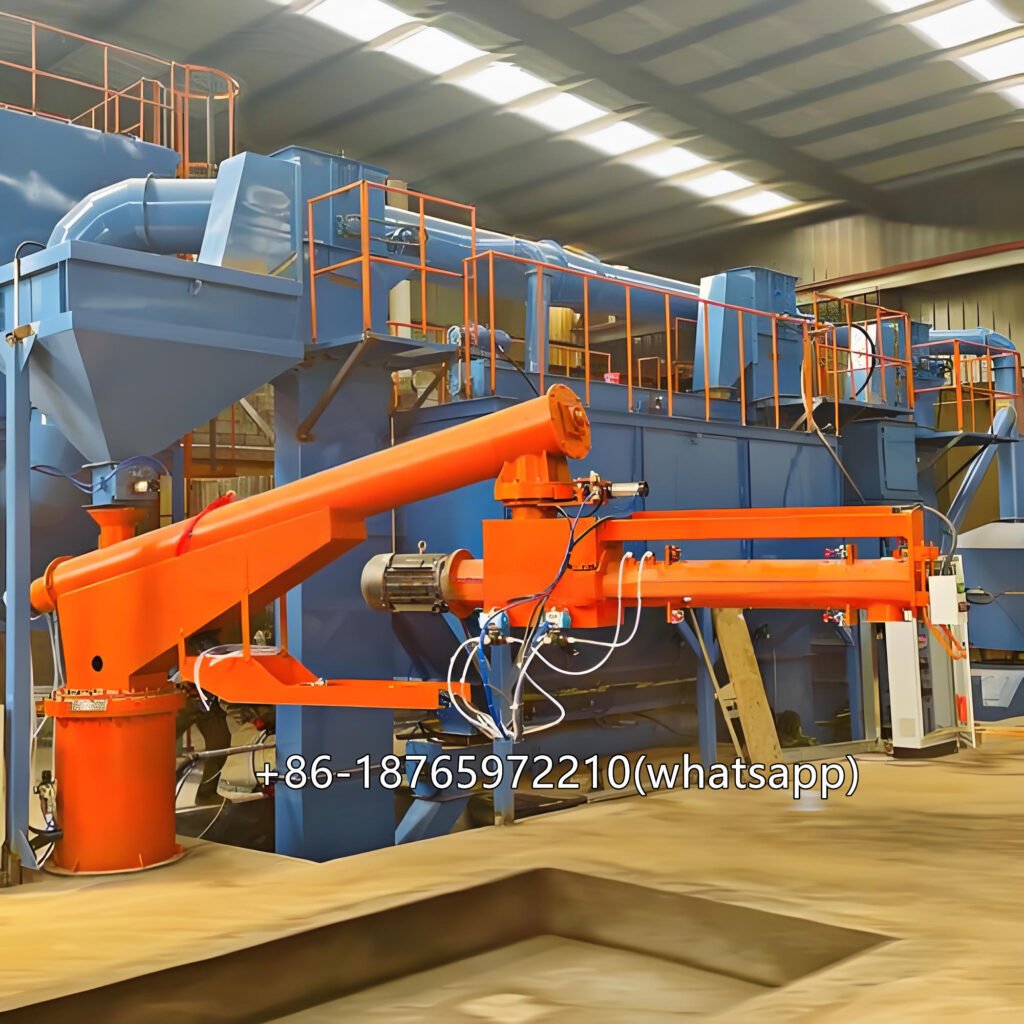
Advantages of Furan Resin Sand Systems
High precision: Suitable for thin-walled and intricate castings (e.g., automotive engine blocks, marine diesel cylinders).
Thermal stability: Resists metal penetration and minimizes veining defects.
Eco-friendly: Low volatile organic compound (VOC) emissions compared to phenolic resins.
Cost-effectiveness: Reduced energy consumption due to no-bake characteristics.
Application
- Heavy machinery: Used for casting large steel components with minimal risk of hot tearing .
- Aerospace: Produces high-integrity aluminum alloy parts through composite molds (metal + resin sand) .
- Pump/valve manufacturing: Resin sand’s corrosion resistance suits components exposed to acidic environments .
Furan resin sand molding lines offer a robust solution for high-mix foundries seeking precision and scalability. Ongoing advancements in resin chemistry and automation promise enhanced sustainability and cost-efficiency, solidifying their role in next-generation casting.
Reclamation Line for Furan Resin Sand
Furan resin sand is a molding material widely used in metal casting, where furan resin acts as a binder to solidify sand into molds. The reclamation line mechanically and thermally processes used sand to remove residual resin, ash, and other impurities, restoring its usability.
What is Furan Resin Sand Reclamation Line?
A Furan Resin Sand Reclamation Line refers to an industrial system designed to recycle and reuse furan resin-bonded sand in foundry processes. This process reduces waste and production costs while maintaining sand quality for repeated use.
Furan Resin Sand Reclamation Process
Shakeout System: Separates the casting from the mold and starts breaking down sand lumps.
Magnetic Separators: Critical for removing ferrous contaminants (e.g., iron particles, casting residues) to ensure high-quality reclaimed sand.
Crushing: Breaking down used sand molds into smaller particles.
Mechanical Reclamation: Using vibration, scrubbing, or airflow to remove resin films and contaminants.
Screening and Grading: Ensuring uniform grain size distribution for reuse.
Dust Collectors: Manage airborne particles during processing.
Application
- Non-Ferrous Alloy Castings: Reclaimed furan sand is preferred for aluminum and ductile iron castings due to its low gas generation and high dimensional stability.
- Large-Scale Foundries: Automated reclamation lines have been adopted in high-volume production of marine diesel engine blocks, reducing raw material costs by 30–40%.
- Sustainable Practices: Companies like Alibaba-listed suppliers offer turnkey reclamation systems emphasizing energy efficiency and waste reduction.
The Furan Resin Sand Reclamation Line represents a cornerstone of modern foundry operations, balancing economic viability with environmental responsibility. By addressing technical bottlenecks and adopting innovative solutions, industries can achieve higher resource efficiency and meet stringent regulatory standards.
Conclusion
Furan resin sand molding and reclamation lines offer a sustainable and efficient solution for modern foundries. By integrating advanced resin formulations, automated reclamation systems, and quality control measures, manufacturers can achieve high productivity while minimizing environmental impact. Future trends may focus on AI-driven process optimization and bio-based resin alternatives to further enhance sustainability.