
Struggling with precision casting?
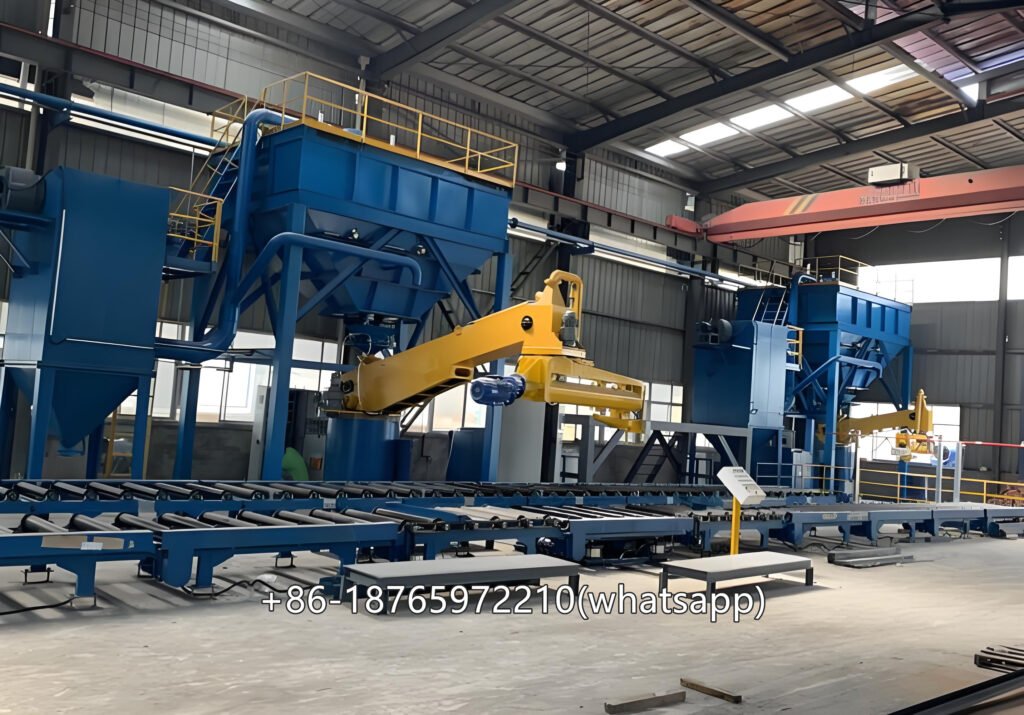
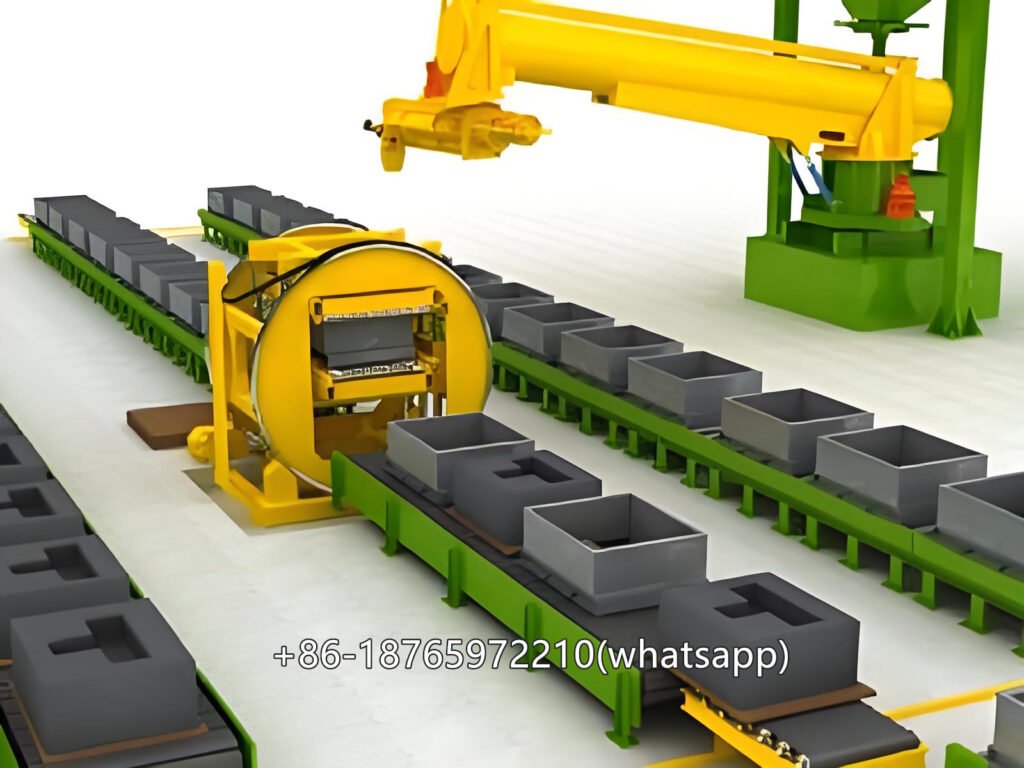
Resin Sand Molding Line is a modern, automated production setup that uses resin-bonded sand to create molds for casting high-precision metal components. It’s a no-bake process that hardens at room temperature, allowing for excellent detail and dimensional control.
While precision casting often brings to mind investment casting (lost wax), resin sand molding is another form of precision casting—especially when casting larger, complex, or higher-strength components that are too big for investment methods.
Process Overview: Resin Sand Molding for Precision Casting
1.Pattern Making
- High-accuracy wooden, plastic, or metal patterns.
- Surface coatings used to improve finish.
- Silica sand mixed with resin (e.g., furan or phenolic) and acid catalyst.
- Uniform mixing ensures mold quality.
3.Molding
- Sand mixture packed around the pattern.
- Mold cures at room temperature—no furnace needed.
- Separate core boxes used for internal cavities.
- Same resin-sand process used.
5.Mold Assembly
- Cores placed into the mold.
- Cope and drag assembled tightly.
6.Pouring
- Molten metal poured—usually ferrous alloys, steel, stainless, or bronze.
- Mold resists high temperatures and maintains shape.
7.Cooling & Shakeout
- Mold breaks after metal solidifies.
- Sand is shaken out and reclaimed.
8.Cleaning & Finishing
- Shot blasting, grinding, and sometimes machining for fine tolerances.
Why Use Resin Sand in Precision Casting?
| Feature | Benefit |
|---|---|
| Dimensional Accuracy | Ideal for tight tolerances (within ±0.2–0.5 mm). |
| Surface Finish | Smooth surfaces reduce post-processing. |
| Complex Geometry | Intricate shapes and internal cavities. |
| Scalability | Suitable for both prototyping and large batch production. |
| Size Flexibility | Works for small to large castings (a few kg to several tons). |
Applications in Precision Industries
- Pumps, valves, and impellers
- Turbine casings
- Machine tool beds
- Mining and heavy-duty equipment
- Large steel and stainless steel components
Advantages of Furan Resin Sand Molding Process
The furan resin sand molding process is a widely adopted method in modern foundry practices, particularly for producing gray iron, ductile iron, and non-ferrous metal castings.
- Excellent Surface Quality and Dimensional Accuracy
Furan resin sand molds exhibit high hardness and stability after curing, resulting in castings with smooth surfaces and minimal defects. The self-hardening properties of furan resin ensure uniform mold contraction, enabling tight dimensional tolerances (typically ±0.5 mm per 300 mm). This makes the process ideal for complex geometries requiring precision, such as engine blocks and gearboxes. - Suitability for Large and Complex Castings
The process excels in producing medium to large castings (ranging from dozens of kilograms to 100 tons per piece) due to the resin’s high strength and thermal resistance. It is particularly effective for intricate designs, such as thin-walled components and multi-cavity castings, where traditional green sand molding may fail. - Improved Casting Integrity
Furan resin sand reduces gas porosity and shrinkage defects by minimizing mold gas permeability during pouring. This leads to higher mechanical properties in the final product, especially for alloys like aluminum and ductile iron. Additionally, the resin’s low viscosity and fast curing time enhance mold integrity under high-temperature conditions. - Environmental and Economic Benefits
Compared to phenolic resin systems, furan resin emits fewer volatile organic compounds (VOCs) and has lower odor, aligning with environmental regulations. While initial costs are higher, the process reduces scrap rates and rework, offering long-term cost efficiency for medium-to-large-scale production. - Versatility in Material Applications
Furan resin sand is compatible with a broad range of metals, including gray iron, ductile iron, and non-ferrous alloys. However, it is not recommended for steel castings due to limited gas permeability, which can cause internal defectes. For aluminum alloys, post-processing techniques like core removal are often required to address poor collapsibility. - Scalability and Automation Potential
The process integrates well with automated molding lines, enabling high-volume production with consistent quality. Case studies highlight its use in tractor parts, truck components, and industrial machinery, where repeatability and speed are critical.
Why Choose Furan Resin Sand Molding Process for Precision Metal Castings
The furan resin sand molding process has emerged as a preferred method for precision metal castings due to its unique advantages in achieving high-quality, complex, and dimensionally accurate components.
Key reasons for selecting furan resin sand molding process:
- Superior Surface Quality and Dimensional Accuracy
Furan resin sand molds provide excellent surface finish and tight dimensional tolerances, critical for precision castings. The resin-bonded sand hardens uniformly after curing, minimizing surface defects like porosity or roughness. This makes it ideal for applications requiring intricate geometries, such as automotive engine blocks, aerospace components, and industrial machinery parts. - Adaptability to Complex Designs
The self-hardening nature of furan resin sand allows for the production of castings with complex cavities, thin walls, and undercuts. Unlike green sand molding, which may struggle with fine details, furan resin sand maintains structural integrity during pouring, ensuring minimal deformation and superior replication of patterns. - High Strength and Stability
Furan resin sand exhibits superior compressive strength compared to traditional molding materials. This enables the casting of large and heavy components (e.g., up to 100 tons per piece) without compromising mold integrity. The hardened surface of the mold also reduces the risk of gas porosity, a common issue in aluminum and alloy castings. - Sand Regeneration and Environmental Benefits
Furan resin sand can be reclaimed and reused after proper regeneration, reducing material waste and costs. Modern processes optimize resin addition (typically 1–2% by weight) to balance strength and recyclability, aligning with sustainable manufacturing practices. - Versatility in Material Applications
While primarily used for gray iron and ductile iron castings, furan resin sand is also effective for non-ferrous metals like copper and brass. However, it is less suitable for steel castings due to limited gas permeability, which can cause defects in high-carbon alloys. - Reduced Post-Processing Requirements
The high collapsibility of cured furan resin sand simplifies shakeout and cleaning processes. This reduces labor costs and cycle times, making it efficient for high-volume production lines.
Conclusion High Efficiency Furan Resin Sand Molding Process
The High Efficiency Furan Resin Sand Molding Process represents a significant advancement in modern foundry practices, offering a balanced combination of high mold strength, dimensional accuracy, and improved surface finish. Its low gas evolution, strong thermal stability, and rapid curing properties contribute to enhanced casting quality and reduced defect rates. Additionally, the process supports greater automation and productivity, while minimizing environmental impact through better reclamation and reduced binder content. As industries strive for cleaner, more cost-effective casting solutions, the furan resin sand molding process stands out as a reliable and efficient choice for both ferrous and non-ferrous applications.