
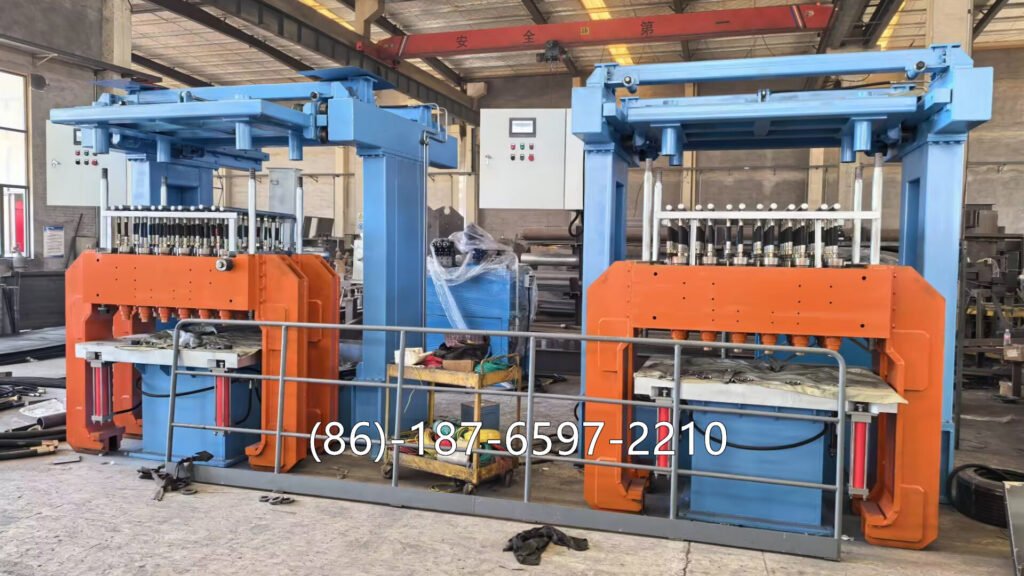
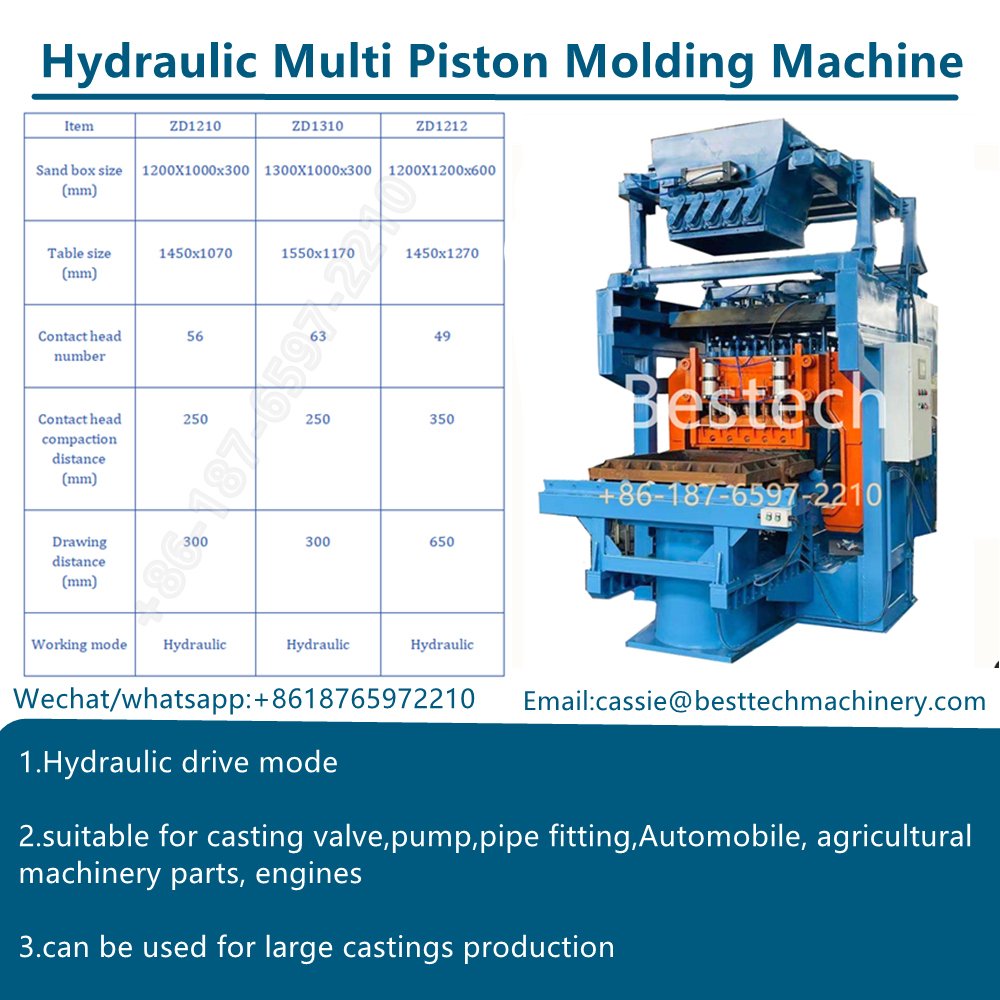
Hydraulic multi-piston sand molding machine is a type of foundry equipment used to produce high-strength green sand molds for metal casting. It uses multiple hydraulic cylinders (pistons) to apply uniform and controlled compaction pressure on molding sand inside a flask, forming precise and dense molds for casting production.
Compared with traditional jolt-squeeze or single-cylinder molding machines, the multi-piston hydraulic design provides higher molding density, better dimensional accuracy, and more stable production quality, making it ideal for medium and large-scale foundries.
Cost-Effective Methods To Enhance Efficiency
Hydraulic multi-piston sand molding machines are widely applied in modern foundry production for green sand molding lines. Due to their stable molding pressure, high compaction strength, and reliable automation performance, they have become essential equipment in medium and large-scale casting workshops. However, with rising energy costs, labor expenses, and production competition, improving operational efficiency while controlling cost has become a key concern for foundry engineers.
1. Optimize Hydraulic System Performance
The hydraulic system is the core of multi-piston molding machines. Poor hydraulic efficiency leads to slow cycle time and unnecessary energy consumption.
Practical measures:
- Use variable displacement hydraulic pumps to reduce idle energy loss.
- Regularly check oil temperature and viscosity to maintain stable pressure response.
- Replace worn seals and valves to prevent internal leakage.
- Install pressure sensors for real-time monitoring and fault warning.
Result:
Stable hydraulic pressure ensures faster mold compaction cycles and reduces power waste.
2. Improve Sand Feeding and Filling Uniformity
Uneven sand filling increases re-compaction time and causes molding defects, lowering overall production efficiency.
Practical measures:
- Adjust sand hopper gate opening for consistent feeding rate.
- Install vibration or pre-leveling devices for better sand distribution.
- Maintain sand moisture and clay ratio for proper flowability.
Result:
Uniform sand filling shortens cycle time and reduces defective mold rate.
3. Enhance Mold Compaction Strategy
Multi-piston machines rely on multiple hydraulic cylinders to achieve high-density molding. Improper compaction parameters cause either under-compaction or excessive energy use.
Practical measures:
- Optimize compaction pressure and stroke according to casting size.
- Use multi-stage compaction programs instead of single high-pressure impact.
- Calibrate position sensors to ensure synchronized piston movement.
Result:
Better compaction quality with lower hydraulic energy consumption.
4. Implement Preventive Maintenance Plan
Unexpected downtime greatly increases production cost.
Practical measures:
- Schedule routine inspection for hydraulic hoses, pumps, and filters.
- Replace hydraulic oil at proper intervals.
- Monitor piston guide wear to avoid misalignment.
- Keep spare sealing kits in stock for quick repair.
Result:
Reduced breakdown frequency and higher machine availability.
5. Introduce Simple Automation and Digital Monitoring
Full automation is expensive, but partial upgrades bring significant efficiency improvement at low cost.
Practical measures:
- Add PLC-based cycle counters and alarm systems.
- Install energy consumption meters for cost tracking.
- Use touch screen parameter presets for different mold types.
Result:
Lower operator error rate and more stable production output.
6. Train Operators with Engineering Guidance
Even advanced machines rely on skilled operators.
Practical measures:
- Provide standard operation procedures (SOP).
- Conduct basic hydraulic troubleshooting training.
- Encourage operators to record abnormal data for engineers.
Result:
Human-related downtime and material waste are reduced.
Conclusion
Improving the efficiency of hydraulic multi-piston sand molding machines does not always require expensive upgrades. Through hydraulic optimization, sand control improvement, proper compaction strategy, preventive maintenance, and simple automation, foundries can achieve higher output, lower energy consumption, and more stable molding quality at a reasonable cost.
For foundry plant, the key lies in balancing equipment performance, process stability, and operational cost — turning the hydraulic multi-piston molding machine into a truly cost-effective production solution.