
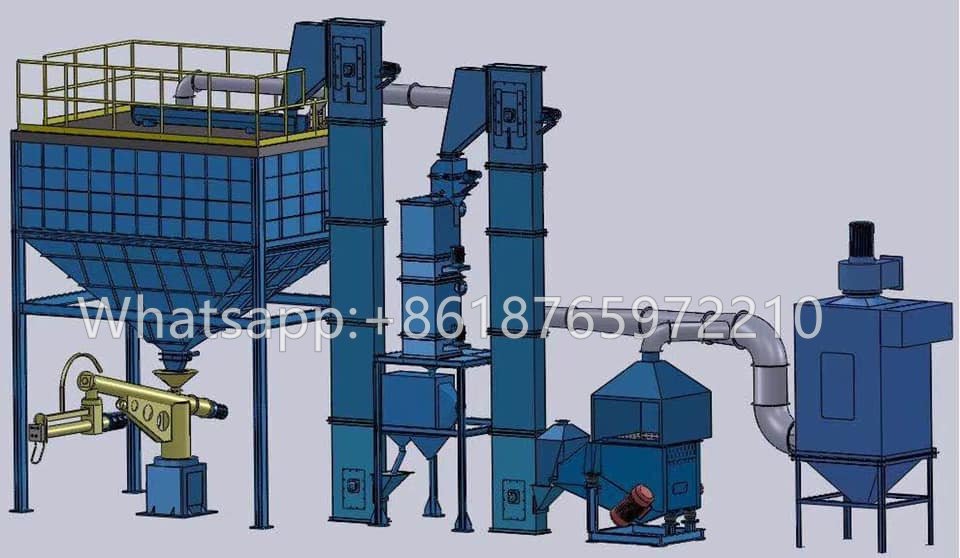
Cutting foundry operating costs isn’t about cutting corners—it’s about smarter recycling.
If your foundry is still treating used resin sand as waste, you are literally throwing money away. Landfill fees are skyrocketing, and raw material costs aren’t lagging far behind.
Our Complete Resin Sand Recycling Line is engineered specifically to break this cycle by offering the industry’s lowest operating costs.
Rising Sand Costs Are Reducing Foundry Profit Margins
For many foundries using resin bonded sand processes, the biggest hidden expense is not equipment.
It is:
- Continuous new sand purchasing
- Waste sand disposal
- Resin consumption
- Environmental compliance costs
Many foundry owners focus on melting efficiency and molding productivity while overlooking one critical issue:
Used sand is still valuable material.
Without an effective recycling system, thousands of tons of usable sand are discarded every year.
The result?
❌ Higher production costs
❌ Increased landfill expenses
❌ Unstable molding properties
❌ Reduced profitability
Why Modern Foundries Need a Resin Sand Recycling Line
In furan resin sand, phenolic resin sand, and no-bake casting processes, sand can account for a significant portion of total molding costs.
A complete resin sand recycling line allows foundries to:
✅ Reuse valuable sand resources
✅ Reduce fresh sand purchases
✅ Improve sand consistency
✅ Lower environmental impact
✅ Increase overall profitability
For many medium and large foundries, sand reclamation is no longer an option—it is a competitive necessity.
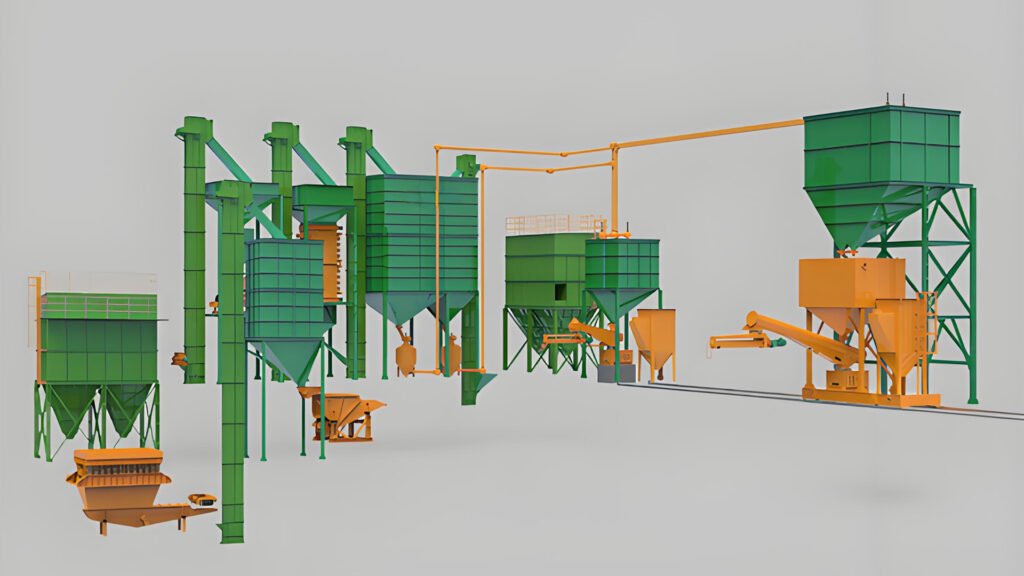
What Is a Complete Foundry Resin Sand Recycling Line?
A resin sand recycling line is a fully integrated system designed to process used resin bonded sand and restore it for reuse.
The system removes:
- Residual resin film
- Fine dust particles
- Metal contaminants
- Sand lumps
- Binder residues
The reclaimed sand can then be returned to the molding process with stable physical and chemical properties.
Typical Process Flow of a Resin Sand Recycling Line
Step 1: Waste Sand Collection
Used sand from shakeout and molding areas is collected and transported to the reclamation system.
Step 2: Sand Lump Crushing
Large hardened sand lumps are broken into reusable particles.
Equipment includes:
- Lump crusher
- Vibrating feeder
- Conveyor system
Step 3: Magnetic Separation
Ferrous particles and metal contaminants are removed.
Benefits include:
- Better sand purity
- Reduced equipment wear
- Improved casting quality
Step 4: Mechanical Attrition Reclamation
This is the core process.
High-speed friction removes residual resin film from the sand grain surface.
Benefits:
- Restores sand activity
- Improves binder bonding performance
- Enhances reclaimed sand quality
Step 5: Air Separation & Dust Removal
Fine particles and burnt resin residues are removed through air classification and dust collection.
This ensures cleaner sand and lower dust emissions.
Step 6: Cooling & Screening
The reclaimed sand is:
- Cooled
- Classified
- Sized uniformly
This creates stable molding properties.
Step 7: Storage & Reuse
Finished reclaimed sand is automatically transferred to storage silos for future production use.
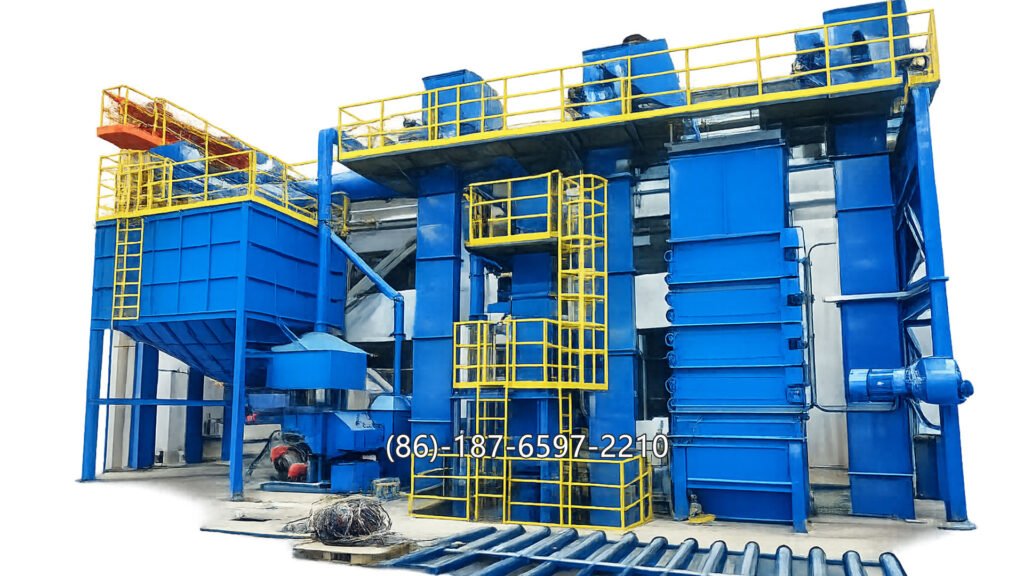
Technical Parameters (Reference Configuration)
| Item | Specification |
|---|---|
| Processing Capacity | 5–30 T/H |
| Reclamation Efficiency | 92–98% |
| Sand Recovery Rate | Up to 95% |
| Dust Emission | ≤20 mg/m³ |
| Control System | PLC Automatic Control |
| Applicable Sand | Furan, Phenolic, Alkyd, No-Bake Resin Sand |
| Operating Mode | Fully Automatic |
Actual specifications can be customized according to foundry production requirements.
Key Advantages of a Complete Resin Sand Recycling Line
Significant Reduction in New Sand Costs
Fresh silica sand prices continue to increase globally.
A recycling line can reduce fresh sand purchasing by:
70–90%
For many foundries, this creates substantial annual savings.
Lower Waste Disposal Costs
Waste sand disposal regulations are becoming stricter worldwide.
By reclaiming used sand, foundries can reduce:
- Landfill volume
- Disposal fees
- Transportation costs
Improved Sand Quality Consistency
Stable reclaimed sand provides:
- Better mold strength
- Improved core performance
- Reduced gas defects
- More consistent casting quality
Reduced Resin Consumption
Uniform reclaimed sand often requires less binder addition.
Potential reduction:
5–15% resin savings
Depending on process conditions.
Environmental Sustainability
Modern foundries are expected to reduce waste and improve resource efficiency.
A resin sand recycling line helps support:
- Green manufacturing
- Sustainable production
- Environmental compliance
Typical Foundry Applications
The system is widely used in:
Steel Casting Foundries
Large structural and engineering castings.
Iron Casting Plants
Gray iron and ductile iron production.
Automotive Casting Facilities
High-volume casting operations.
Pump & Valve Manufacturers
Precision casting requirements.
Heavy Equipment Foundries
Large-scale resin bonded sand applications.
Why Low Operating Cost Matters
Many buyers focus only on equipment purchase price.
However, long-term profitability depends on:
- Energy consumption
- Wear part lifespan
- Maintenance requirements
- Labor costs
- Sand recovery efficiency
A low-cost machine that consumes excessive energy often becomes expensive over time.
The best investment is a system that minimizes total operating cost throughout its service life.
Why Choose Our Resin Sand Recycling Line?
High-Efficiency Mechanical Reclamation Unit
Optimized attrition technology improves resin removal efficiency.
Advanced Dust Collection System
Maintains a cleaner workshop environment and lower emissions.
Intelligent PLC Automation
Features include:
- Automatic process control
- Alarm monitoring
- Real-time diagnostics
- Production data recording
Customized Engineering Design
Every foundry has different:
- Sand characteristics
- Production capacity
- Plant layout
Our engineers design solutions specifically for your operation.

Frequently Asked Questions
What sand types can be reclaimed?
Suitable for:
- Furan resin sand
- Phenolic resin sand
- Alkyd resin sand
- No-bake bonded sand
What is the typical sand recovery rate?
Most systems achieve:
85–98% reclamation efficiency
depending on sand condition and process configuration.
Can reclaimed sand replace new sand completely?
Many foundries successfully replace:
70–100% fresh sand
depending on casting requirements.
How quickly can investment be recovered?
Typical ROI period:
12–24 months
through savings in sand, resin, and disposal costs.
The Business Case: Turn Waste Sand into Profit
Every ton of waste sand represents money leaving your foundry.
A complete resin sand recycling line transforms that waste into reusable production material.
The result:
✅ Lower material costs
✅ Higher profitability
✅ Better casting quality
✅ Reduced environmental impact
✅ Stronger market competitiveness
Request Your Customized Resin Sand Recycling Solution
Looking for a reliable Foundry Resin Sand Recycling Line with low operating cost?
Our engineering team can provide:
Free Services
✔ Process evaluation
✔ Layout planning
✔ ROI calculation
✔ Equipment selection
✔ Technical consultation
Contact Us Today For:
✔ Detailed Quotation
✔ Customized Engineering Proposal
✔ Production Line Layout Design
✔ Sand Recovery Cost Analysis
Send us your:
- Annual sand consumption
- Foundry capacity
- Resin type
- Workshop layout
Our engineers will provide a customized solution and quotation within 24 hours.