
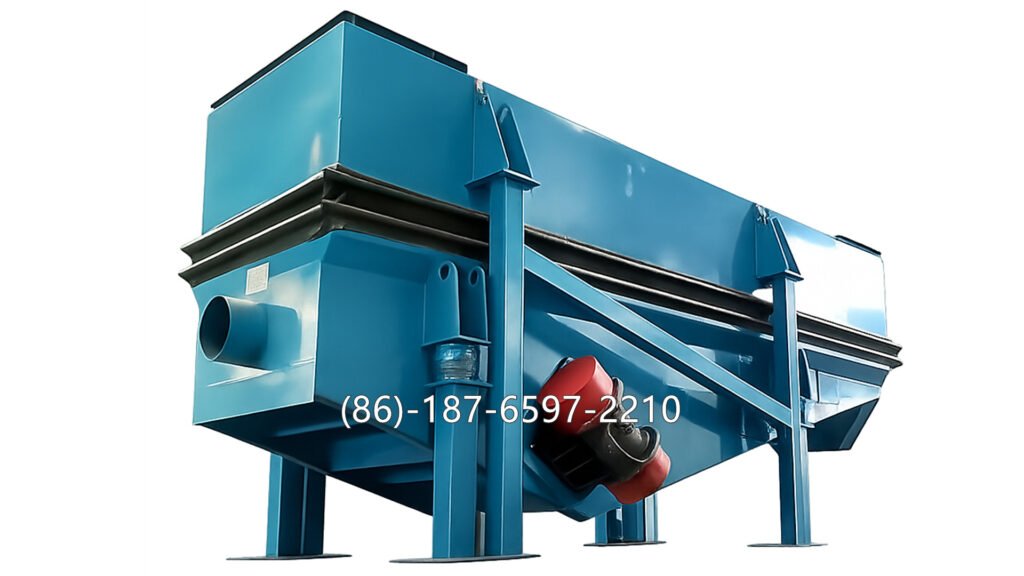
Efficient Sand Cooling for Stable Molding Performance and Lower Operating Costs
Why Sand Temperature Matters More Than Most Foundries Realize
Many foundries invest heavily in:
- Automatic molding lines
- High-efficiency sand mixers
- Sand reclamation systems
- Intelligent process controls
Yet they still encounter:
❌ Unstable mold hardness
❌ Poor compactability
❌ Moisture fluctuation
❌ Reduced casting quality
❌ Higher defect rates
The root cause is often overlooked:
Excessively hot reclaimed sand.
After shakeout and reclamation, return sand can reach temperatures of:
60°C–120°C
When hot sand enters the sand preparation system, it negatively affects:
- Water addition accuracy
- Bentonite activation
- Sand mixing consistency
- Mold performance
This is why modern foundries increasingly install a Boiling Cooling Bed System as a critical component of green sand reclamation and sand preparation plants.
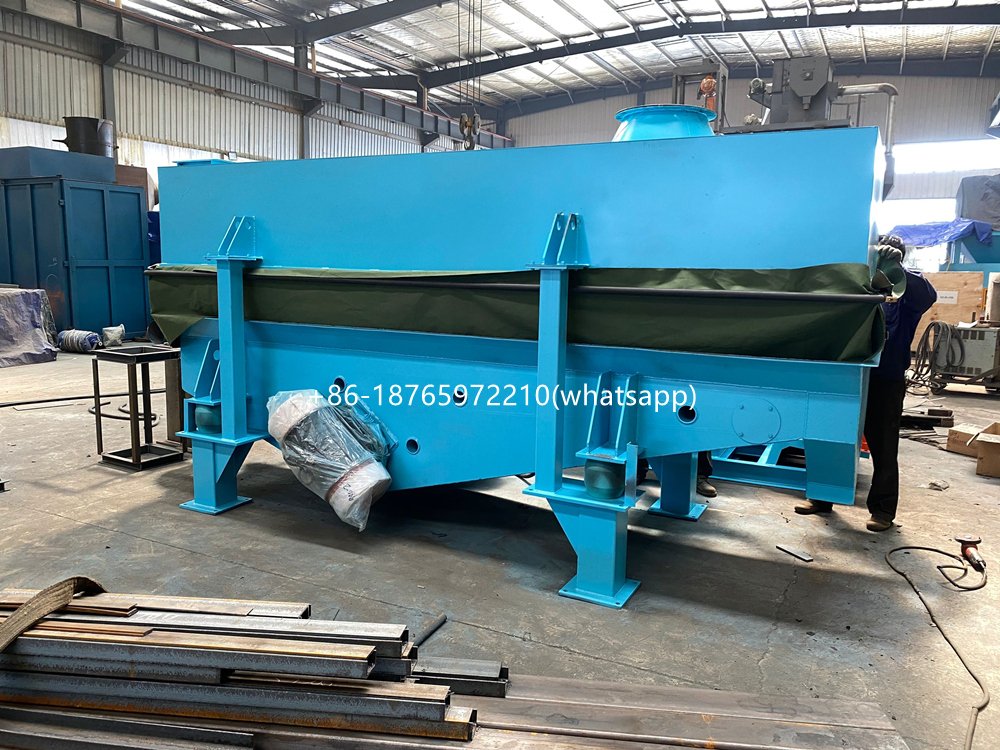
What Is a Foundry Sand Reclamation Boiling Cooling Bed System?
Boiling Cooling Bed System, also known as a Fluidized Sand Cooler, is a specialized cooling device designed to reduce the temperature of reclaimed molding sand before it enters the mixing process.
The system uses:
- Fluidized airflow technology
- Heat exchange principles
- Continuous material movement
to achieve rapid and uniform cooling.
The cooled sand then returns to the molding process with stable temperature and moisture control characteristics.
Why Cooling Reclaimed Sand Is Essential
In green sand foundries, sand temperature directly affects:
Molding Performance
- Compactability
- Green strength
- Permeability
- Flowability
Casting Quality
- Surface finish
- Dimensional accuracy
- Defect rate
- Yield rate
Production Efficiency
- Mixing consistency
- Process stability
- Molding speed
Without proper cooling, even the most advanced molding equipment cannot achieve optimal performance.
How the Boiling Cooling Bed System Works
Step 1: Hot Sand Feeding
Reclaimed sand enters the cooling bed after the reclamation process.
Typical sand temperature:
60°C–120°C
Step 2: Fluidization Process
Air is supplied through a specially designed distribution plate beneath the sand bed.
The airflow causes the sand particles to behave like a boiling liquid.
This creates:
- Uniform mixing
- Maximum heat transfer
- Efficient cooling
Step 3: Heat Exchange
Large volumes of air remove heat from the sand particles.
The fluidized condition ensures every sand grain receives equal cooling treatment.
Step 4: Dust Collection
Integrated dust extraction systems remove:
- Fine particles
- Dust
- Airborne contaminants
This improves workshop cleanliness and environmental performance.
Step 5: Sand Discharge
The cooled sand exits the system and proceeds to:
- Sand storage silos
- Sand mixers
- Automated molding lines
Ready for reuse.
Technical Parameters
| Item | Specification |
|---|---|
| Processing Capacity | 5–100 T/H |
| Inlet Sand Temperature | 60–120°C |
| Outlet Sand Temperature | ≤40°C |
| Cooling Efficiency | 20–80°C Temperature Reduction |
| Air Consumption | 2000–20000 m³/h |
| Fluidization Method | Air Fluidized |
| Dust Collection | Pulse Jet System |
| Control System | PLC Automatic Control |
Custom capacities and configurations are available according to foundry requirements.
Key Advantages of a Boiling Cooling Bed System
1. Rapid Sand Cooling
The fluidized cooling process provides:
✅ Fast heat removal
✅ Uniform cooling
✅ Stable outlet temperature
Compared with natural cooling methods, efficiency improves dramatically.
2. Improve Sand Mixing Quality
Consistent sand temperature improves:
- Moisture control
- Bentonite activation
- Additive distribution
- Mixing uniformity
Result:
Better molding sand performance.
3. Reduce Casting Defects
Stable molding sand conditions help reduce:
- Gas defects
- Surface roughness
- Mold collapse
- Dimensional variation
This increases casting acceptance rates.
4. Lower Energy Consumption
The system uses optimized airflow and heat transfer technology to minimize operating costs.
Benefits include:
- Lower power consumption
- Reduced cooling time
- Higher process efficiency
5. Support Automated Production
The Boiling Cooling Bed integrates seamlessly with:
- Green sand preparation plants
- Automatic molding lines
- Sand reclamation systems
allowing continuous, automated operation.
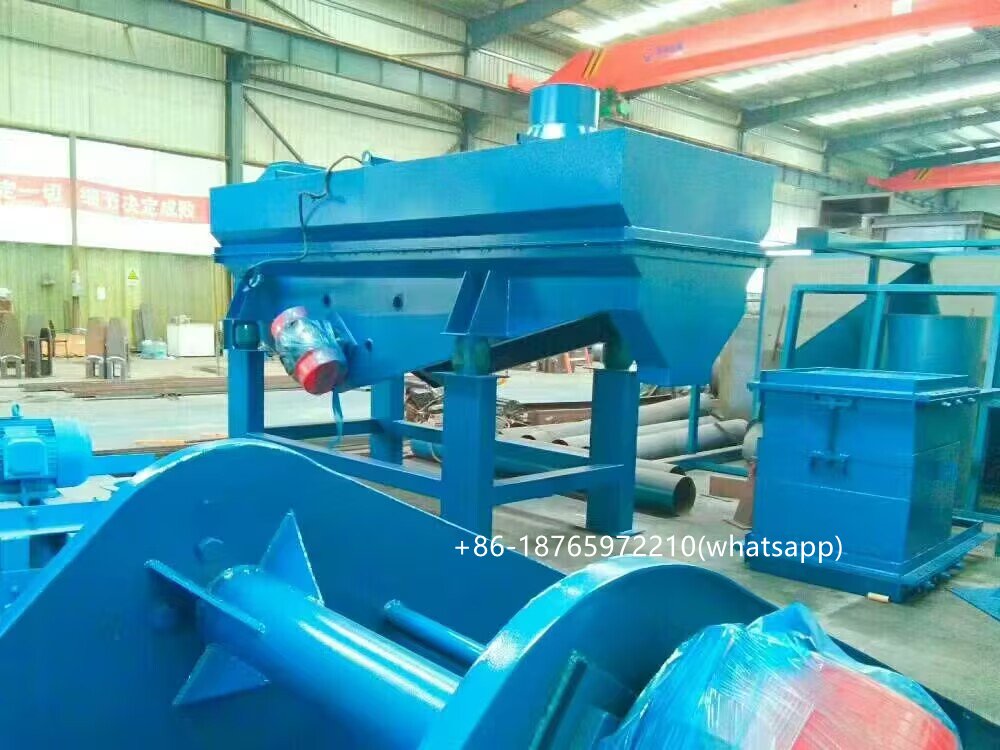
Typical Applications
The system is widely used in:
Gray Iron Foundries
For green sand preparation and return sand cooling.
Ductile Iron Foundries
Maintaining stable molding properties.
Automotive Casting Plants
Supporting high-volume automated production.
Machinery Casting Manufacturers
Improving sand consistency and reducing scrap.
Large Foundry Sand Plants
For continuous reclamation and cooling operations.
Boiling Cooling Bed vs Conventional Sand Cooling Methods
| Feature | Boiling Cooling Bed | Natural Cooling |
|---|---|---|
| Cooling Speed | Very High | Low |
| Temperature Uniformity | Excellent | Poor |
| Space Requirement | Compact | Large |
| Automation Capability | Excellent | Limited |
| Production Efficiency | High | Low |
| Operating Stability | Excellent | Variable |
For modern foundries, fluidized cooling technology offers significantly better performance.
Common Problems Solved by a Sand Cooling Bed
Problem 1: Excessively Hot Return Sand
Solution:
Rapid fluidized cooling reduces sand temperature before mixing.
Problem 2: Inconsistent Moisture Content
Solution:
Stable sand temperature improves water control accuracy.
Problem 3: Unstable Mold Hardness
Solution:
Uniform cooling supports consistent sand properties.
Problem 4: High Casting Scrap Rates
Solution:
Improved molding sand quality reduces defects.
Why Leading Foundries Choose Our Boiling Cooling Bed System
Advanced Fluidization Technology
Ensures uniform cooling throughout the entire sand bed.
Energy-Saving Design
Optimized airflow reduces operating costs.
Heavy-Duty Construction
Built for continuous foundry production environments.
Intelligent PLC Automation
Provides:
- Automatic temperature control
- Airflow regulation
- Fault monitoring
- Data recording
Customized Engineering Solutions
Every foundry has different:
- Sand temperatures
- Production capacities
- Plant layouts
Our engineering team develops customized solutions to maximize efficiency.
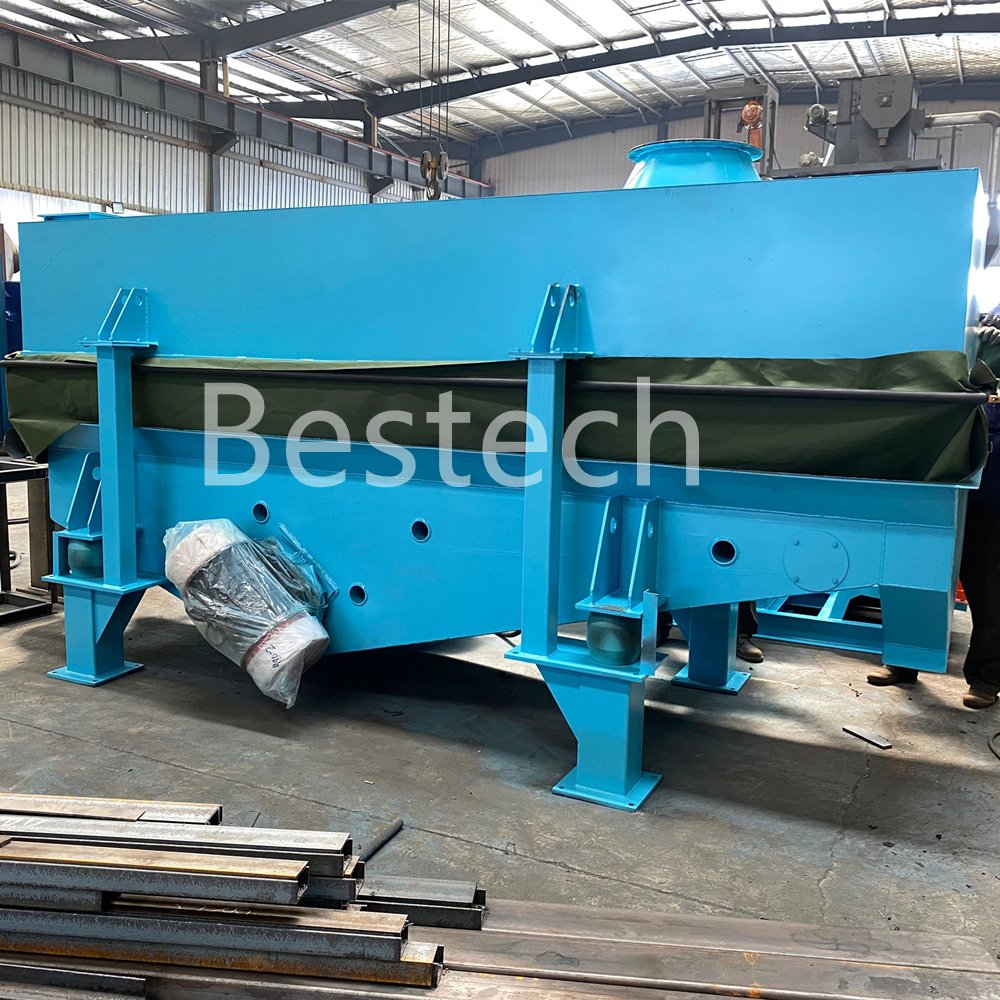
Frequently Asked Questions
What is the ideal outlet sand temperature?
Most foundries target:
30°C–40°C
for optimal molding performance.
Can the system handle high-temperature reclaimed sand?
Yes.
The Boiling Cooling Bed is designed for reclaimed sand temperatures up to:
120°C
or higher with customized configurations.
Is the system suitable for automated molding lines?
Absolutely.
It is commonly integrated into:
- DISA molding lines
- Automatic flask molding lines
- High-capacity sand plants
How much energy can be saved?
Compared with inefficient cooling methods, many foundries achieve:
15–30% lower operating costs
through optimized sand preparation.
A Small Investment That Delivers Big Foundry Returns
Many foundries focus on mixers and molding machines.
However, stable sand temperature is one of the most important factors affecting:
✅ Casting quality
✅ Sand properties
✅ Production efficiency
✅ Operating costs
A Foundry Sand Reclamation Boiling Cooling Bed System ensures your reclaimed sand returns to production in optimal condition, helping maximize productivity and profitability.
Request Your Customized Sand Cooling Solution Today
Looking for a reliable Boiling Cooling Bed System for Foundry Sand Reclamation?
Our engineering team provides:
Free Technical Services
✔ Sand temperature analysis
✔ Cooling capacity calculation
✔ Layout planning
✔ Equipment selection
✔ ROI evaluation
Contact Us Today For:
✔ Detailed Quotation
✔ Customized Engineering Proposal
✔ Sand Cooling Optimization Plan
✔ Production Line Layout Design
Send us:
- Sand processing capacity
- Current sand temperature
- Foundry type
- Workshop layout