
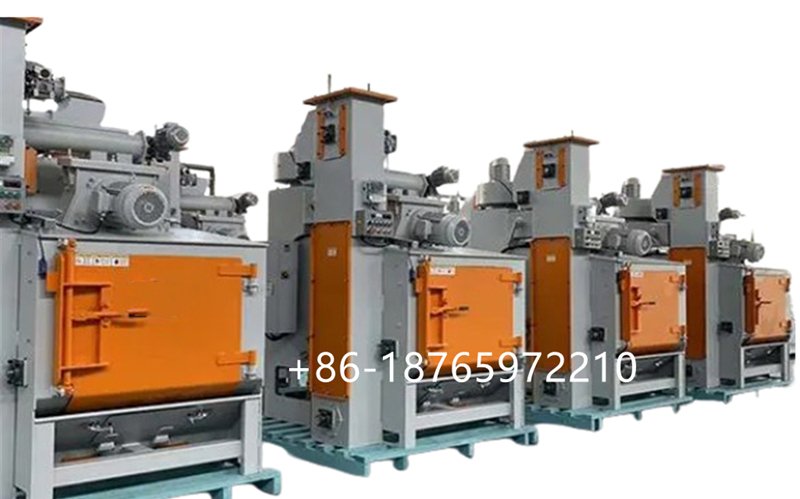
Shot Peening is cast-off to yield a compressed layer and change the properties of a metal. This process is very different from Shot Blasting. Shot Blasting is used to either prepare or clean material, while shot peening is a procedure that is precisely controlled by a careful selection of media, along with the required concentration. It is a stressful process carried out on the surface of metals. It uses steel ‘shots’ that are fast-tracked on the surface, meaning that no dust is caused compared to the process of shot blasting.
The process of shot peening is applied in the automotive, construction, and aerospace industries that apply particular metals. Its media must be in the exact and same diameter, to avoid unnecessary damage to the material upon impact.
Purpose
Shot Blasting Machine:
- Primary Goal: Cleaning or preparing a surface.
- It removes contaminants like rust, paint, scale, or old coatings from surfaces to prepare them for further processing, such as painting, coating, or welding.
- It’s also used to improve the surface finish and texture.
Shot Peening Machine:
- Primary Goal: Strengthening or enhancing material properties.
- It introduces compressive stresses on the surface of a material to increase its fatigue life and resistance to cracking, corrosion, and stress-related failures.
- Commonly used in industries like aerospace, automotive, and power generation to improve the lifespan of critical components.
Working Principle
Shot Blasting:
- Abrasive materials (like steel shots, grits, or sand) are propelled at high speeds onto the surface using air pressure or centrifugal force.
- The abrasive material impacts the surface to clean or strip it.
Shot Peening:
- Small spherical media (shots) are propelled at controlled velocities and angles onto the material surface.
- The impact causes plastic deformation, creating compressive stress without removing significant material.
Surface Impact
Shot Blasting:
- Effect: Removes material or debris from the surface, leading to a cleaned, smooth, or textured surface.
- Typically results in an abrasive, rough finish.
Shot Peening:
- Effect: Does not remove material but instead plastically deforms the surface.
- Results in surface hardening with a relatively smooth finish.
Applications
Shot Blasting:
- Cleaning rusty or painted surfaces.
- Preparing surfaces for welding, coating, or painting.
- Texturing surfaces for decorative purposes.
Shot Peening:
- Enhancing fatigue life of gears, springs, and turbine blades.
- Reducing stress-corrosion cracking in critical components.
- Hardening surfaces for high-performance applications.
Conclusion
Shot Blasting process involves shooting a relentless stream of abrasive material against the surface of a metal part. In reliant on the application, the shots may be forced by an under-pressure fluid such as compressed air or an efferent wheel, which is also known as wheel blasting. The outline, density, and size of the shots will determine the absolute result. The metal abrasive used in shot blasting comprises copper shots, steel grit, and aluminum shots.
Shot peening is a cold working process used to improve the mechanical properties of a material, primarily by enhancing its fatigue life and resistance to cracking or stress-induced failures. This is achieved by bombarding the surface of a component with small spherical media (shots) at high velocity. The controlled impact creates compressive stresses on the surface, improving the material’s durability and performance.