
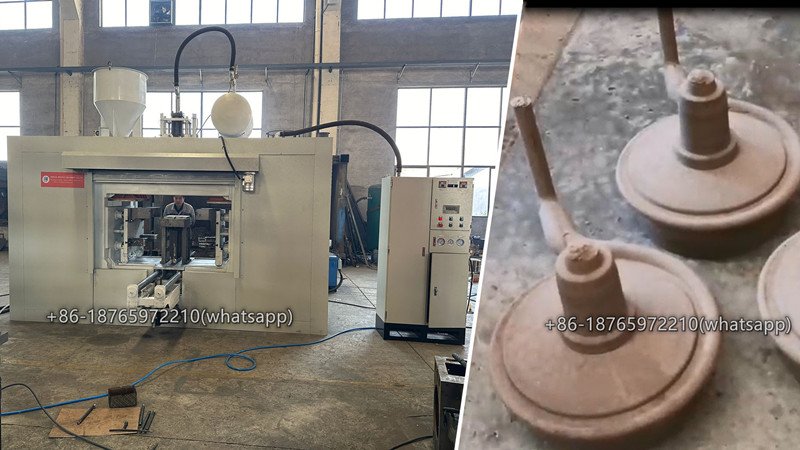
Cold box core shooting machine is a specialized piece of equipment used in the foundry industry for producing sand cores that are used in the casting of metal parts. These machines utilize the cold box process, a method of binding sand grains together using a chemical reaction at room temperature, to create cores with high strength and dimensional accuracy.
Discover everything you need to know about Cold-Box core shooting machines and plants used to produce sand and resin cores. From different types of machines to dosing techniques for sand and resins, to the choice of mixer.
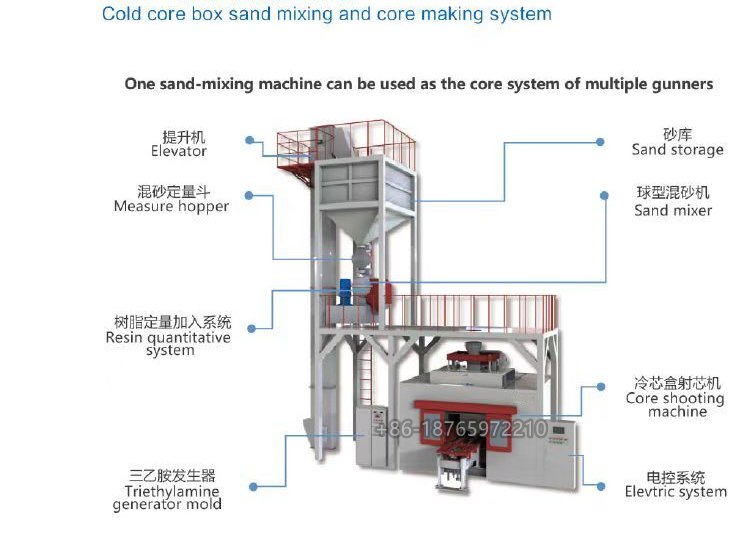
Cold Box Core Shooting Machine Key Features and Components
Core Box (Mold):
The machine uses a mold, called a core box, which defines the shape of the sand core. This box can be made of metal, resin, or other durable materials.
Sand Hopper:
Sand mixed with a chemical binder (usually resin and catalyst) is stored in a hopper and fed into the core box.
Air Blowing System:
The sand mixture is blown into the core box using compressed air to ensure it fills all cavities and voids uniformly.
Gas Curing System:
A gaseous catalyst, often amines, is introduced into the filled core box to trigger the chemical reaction. This reaction hardens the binder, binding the sand grains together and forming a solid core.
Core Extraction System:
Once the core is hardened, the machine opens the core box, and the finished core is removed either manually or automatically.
How Cold Box Core Shooting Machine Works?
Cold box core shooting machine works by creating sand cores using a chemical bonding process at room temperature.
- Sand Preparation
Sand Mixture: The process begins with the preparation of a special sand mixture. The sand is mixed with a chemical binder (usually a combination of resin and a curing catalyst).
The prepared sand is loaded into a hopper in the machine. - Filling the Core Box
Core Box Placement: The core box (mold) is placed in the machine. It determines the final shape of the core.
Blowing Sand: The machine uses compressed air to blow the sand mixture into the core box. This ensures the sand fills all the cavities and corners of the mold. - Gas Curing Process
Once the sand fills the core box, a gaseous curing agent (usually triethylamine or similar amines) is injected into the core box.
The gas reacts with the chemical binder in the sand mixture, initiating a chemical reaction that quickly hardens the sand. - Core Extraction
Core Hardening: After the curing process (which typically takes a few seconds), the core is solid and strong enough to be handled.
Core Ejection: The machine opens the core box, and the finished core is removed manually or automatically, depending on the machine design. - Cleaning and Finishing
The hardened core may undergo additional cleaning to remove excess sand or flash.
The core is then ready to be used in the casting process.
Cold Box Core Shooting Machine Advantages
High Precision: Creates cores with intricate details and tight tolerances.
Fast Production: The curing process is quick, enabling high production rates.
Consistency: Produces cores with uniform strength and quality.
Energy Efficiency: No need for high-temperature curing ovens, as the process occurs at room temperature.
Versatility: Suitable for a wide range of core shapes and sizes
Conclusion
Since foundry cores vary in size and characteristics, we should choose the equipment that best suits our Cold-Box production needs.
The machines used to produce solid or hollow cores, of simple or complex shapes, are all poured from above and use third dimensions positioned in the lower table.
These machines can be divided into three categories:
- Machines for vertical split core boxes
- Machines for horizontal split core boxes
- Universal machines suitable for both types of core boxes
The Cold-Box process, unlike the Shell Moulding process, requires a mixing of sand and resin prior to injection into the core box, obtained through a specific equipment.