
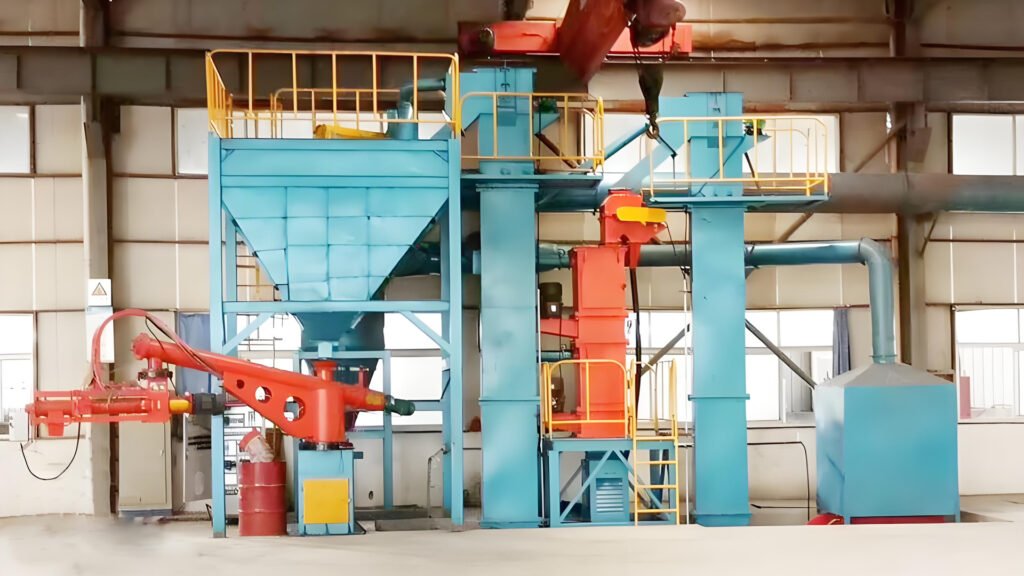
Struggling with how to choose the right resin sand mixing machine?
Continuous resin sand mixing machine is a vital piece of equipment in foundries that use resin-bonded sand for mold and core making. It automates the mixing of silica sand, resin binder, and hardener in a consistent, continuous flow, ensuring uniform mixing and high mold quality.
In modern foundry operations, resin-bonded sand is a cornerstone material for creating molds and cores due to its versatility, strength, and dimensional stability. However, the quality of the mixed sand—comprising base sand, resin binders, catalysts, and additives—directly dictates the integrity of castings. Suboptimal resin sand mixtures can lead to defects such as gas porosity, sand inclusions, and surface imperfections, ultimately compromising the mechanical properties and usability of finished components.
What Is Resin Sand?
Resin sand is a type of chemical-bonded sand. It’s typically silica sand coated with:
- Resin (binder) – usually phenolic, furan, or polyurethane resins
- Hardener (catalyst) – initiates the curing (hardening) of the resin
This combination allows the sand to hold complex shapes and remain rigid under the stress of molten metal.
Composition and Functional Analysis of Resin Sand Components
Resin sand, a synthetic material widely used in foundry and industrial applications, comprises multiple components that synergistically enhance its mechanical properties and adaptability.
Primary Resin Components
Resins form the backbone of resin sand, providing binding and structural stability. Common types include:
- Polyester Resin: Offers excellent plasticity and ease of molding, making it suitable for complex casting shapes.
- Polyamide Resin: Known for high heat resistance and mechanical strength, ideal for high-temperature casting environments.
- Phenolic Resin: Enhances thermal stability and chemical resistance, often used in precision casting.
Reinforcement Additives
These components adjust the physical properties of resin sand:
Fillers:
- Quartz Powder: Improves hardness and wear resistance.
- Talc: Enhances surface smoothness and reduces shrinkage.
- Silica Sand: Regulates thermal expansion and improves dimensional accuracy.
Hardening Agents:
- Peroxides: Accelerate resin curing through oxidative reactions.
- Acid Anhydrides/Amines: Enable cross-linking in thermosetting resins, ensuring rapid solidification.
Functional Additives
Specialized components address specific performance needs:
- Lubricants (e.g., Calcium Stearate): Reduce friction during molding and improve demolding efficiency.
- Anti-Cracking Agents: Mitigate thermal stress during casting to prevent defects like hot tears.
- Flame Retardants: Enhance fire resistance in high-risk industrial settings.
What Is Resin Sand Mixing Machine?
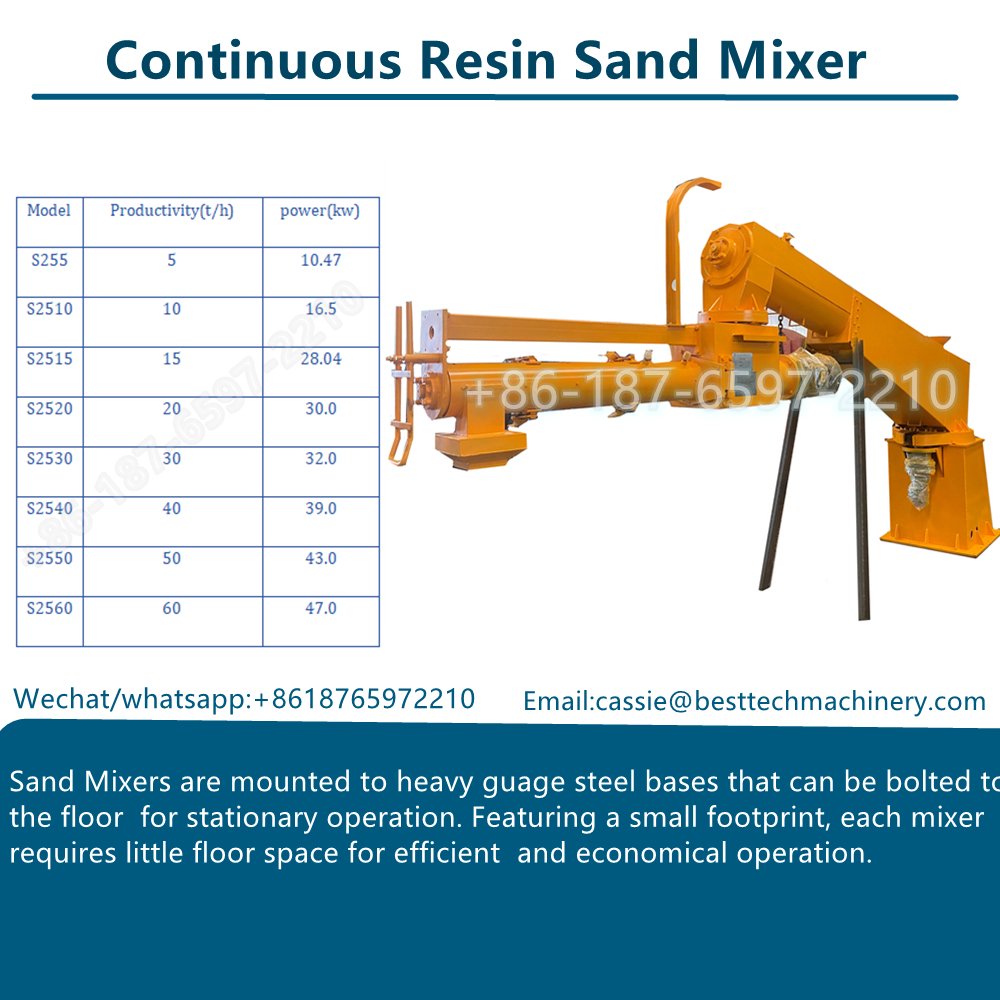
A resin sand mixing machine is an industrial device used in foundries to mix silica sand with liquid resin binders and hardening agents to produce a high-quality mold material for casting metal parts. The resulting resin-coated sand is used to make molds or cores that can withstand high temperatures during metal casting.
Purpose of the Mixing Machine
The resin sand mixing machine automates the blending process to:
- Ensure a uniform coating of sand with binder and hardener
- Maintain precise ratios of ingredients
- Provide consistent flow of mold-ready material
- Reduce waste and improve mold quality
Type Of Resin Sand Mixing Machine
1.Batch Type Mixer
- Mixes a set amount at a time
- Suitable for small or medium production
2.Continuous Type Mixer
- Mixes sand and chemicals in a steady flow
- Best for high-volume or automated foundries
Applications
Used in the no-bake (self-hardening) casting process to produce:
- Engine blocks
- Machine frames
- Pipe fittings
- Industrial parts requiring precise molds
Why Choose Resin Sand Mixing Machine in Foundry Plant?
Resin sand mixing machines play a pivotal role in modern foundry operations, offering unparalleled efficiency and consistency in sand preparation.
1. Enhanced Production Efficiency
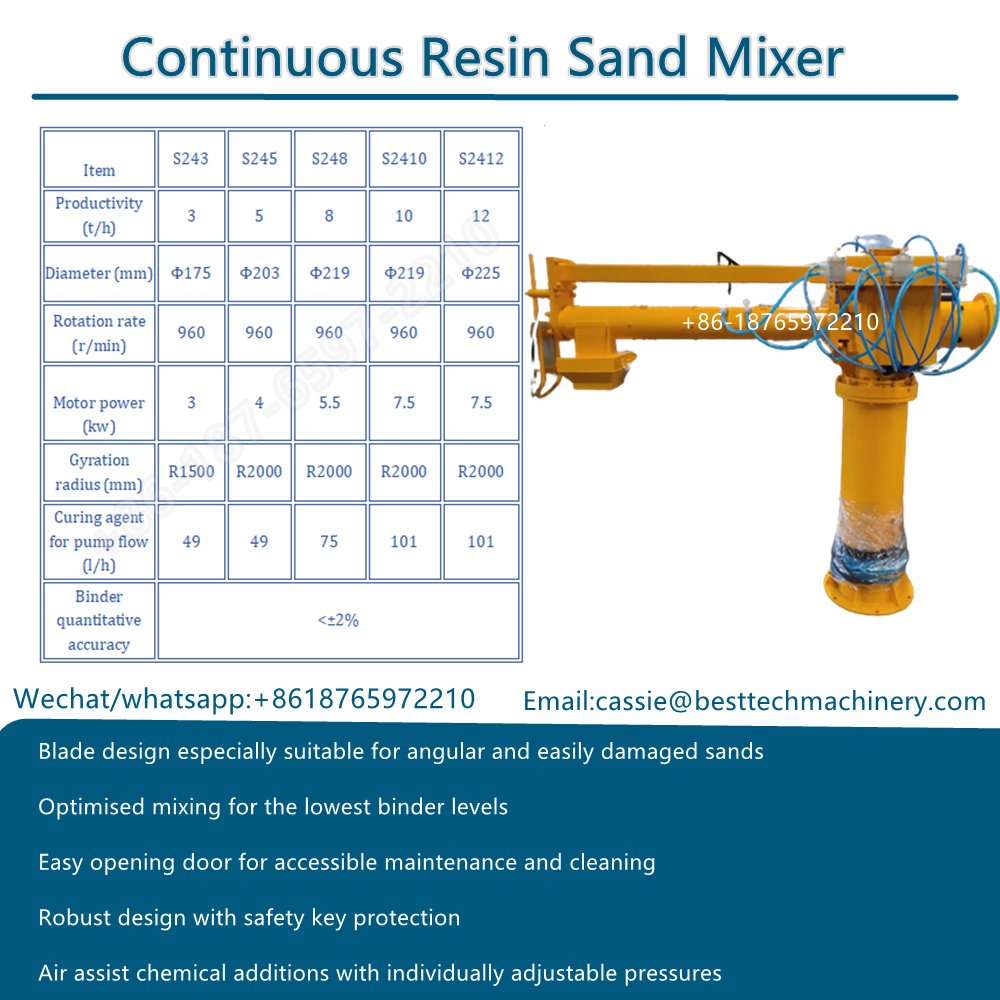
Resin sand mixers are designed for continuous operation and high-speed mixing, significantly reducing cycle times compared to manual or traditional methods. For example, models like the S25 Double Arm Resin Sand Mixer achieve productivity up to 60 t/h, ensuring rapid preparation of resin-coated sand for large-scale casting lines. Their automated systems, such as variable diaphragm pumps and precise sand proportion regulators, streamline workflows and minimize downtime.
2. Superior Sand Quality and Consistency
These machines ensure uniform mixing of resin, catalyst, and sand, which is critical for defect-free mold and core production. Advanced designs, like the rotor-type agitator and high-speed sand mixing cages, eliminate uneven clumping and ensure homogeneous sand properties.
3. Versatility for Diverse Sand Systems
Resin sand mixers support multiple sand types, including furan resin sand, silicate sand, and no-bake sand. Machines like the S24 Series are adaptable to both new and recycled sand, with adjustable ratios of old-to-new sand to meet specific production needs. This flexibility makes them suitable for automotive, machinery, and precision casting applications.
4. Reduced Material Waste and Cost Savings
By minimizing “head” and “tail” sand waste during mixing cycles, resin sand machines optimize material usage. The closed-loop sand reclamation systems in equipment like the S24 Resin Sand Regeneration Line recover up to 90% of used sand, drastically lowering raw material costs. Additionally, automated liquid binder dispensing reduces overuse of resins.
5. Durability and Low Maintenance
Constructed with abrasion-resistant materials (e.g., cemented carbide blades) and corrosion-resistant components, machines like the S11 Series Bowl Mixers withstand harsh foundry environments. Their modular design simplifies maintenance, while features like quick-open mixing cages facilitate easy cleaning.
Conclusion
Resin sand mixing machines are indispensable in metal casting operations, enabling precise preparation of chemically bonded sand for molds and cores. As foundries increasingly adopt advanced bonding systems (no-bake, cold-box, and shell molding), these mixers have evolved into sophisticated systems balancing precision, productivity, and process control.