
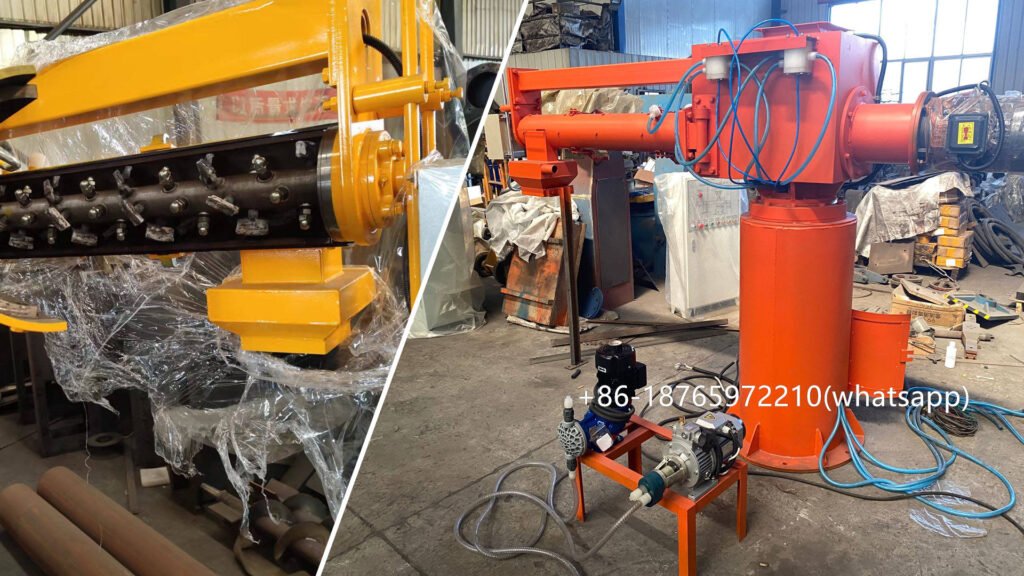
Continuous Sand Mixer is an essential piece of equipment in modern foundries, particularly for efficiently mixing sand, binders (such as resins), and additives to create high-quality molding sand. Unlike batch mixers, which mix a fixed amount of sand at a time, continuous sand mixers provide a steady, uninterrupted flow of mixed sand, making them ideal for high-volume production. This equipment helps ensure uniformity and consistency in the molding sand, crucial for producing high-quality metal castings.
How a Continuous Sand Mixer Works
In a continuous sand mixer, sand and binder materials are fed into the mixer continuously (in a controlled, steady manner). The sand is typically mixed with a resin binder and other additives to form a moldable sand mixture that can be used for creating molds and cores in metal casting processes.
- Sand Feeding: The raw sand is fed into the mixer via a conveyor or screw feeder.
- Binder Addition: The binder (like resin) is precisely metered and added to the sand stream. Some mixers also add other chemicals or additives (such as hardeners, anti-foam agents, etc.) depending on the process requirements.
- Mixing Process: Inside the mixer, various mixing blades or paddles continuously blend the sand and binder. The design of the mixing chamber and the paddles is key to achieving an even mix without over-heating or clumping.
- Output of Molding Sand: The uniformly mixed molding sand is continuously discharged from the mixer, ready for immediate use in the molding process.
Advantages of Continuous Sand Mixers
1.High Throughput and Productivity
Constant Production: Continuous mixers can run without stopping, providing a steady supply of mixed sand. This is ideal for high-volume foundries, where downtime for mixing would reduce overall productivity.
Reduced Batch Time: Since the process is continuous, it eliminates the downtime required to load and unload sand in batch mixers, speeding up production.
2.Uniformity and Consistency
Homogeneous Mix: Continuous mixers ensure that the sand, binder, and additives are consistently mixed throughout the entire batch. This uniformity leads to more predictable and reliable molding sand properties, which directly affects the quality of the castings.
Precise Control: The continuous nature of the process allows for better control over the ratios of sand to binder, ensuring consistent molding sand characteristics like strength, permeability, and flowability.
3.Efficiency in Binder Usage
Accurate Binder Control: Continuous sand mixers are equipped with precise binder dosing systems, reducing wastage and ensuring that the right amount of binder is used. This can lead to significant cost savings over time, as binder material is often expensive.
Optimal Binder Distribution: The continuous mixing process ensures that the binder is evenly distributed throughout the sand, which is crucial for the proper functioning of the mold.
4.Improved Mold Quality
Better Mold Strength: Consistent sand mixing results in molds with uniform strength, reducing defects like cracks or weak spots in castings.
Reduced Mold Variability: With continuous mixing, the potential for variations in mold quality is minimized, leading to fewer rejects and better overall quality control.
5.Automation and Integration
Automation Capabilities: Many continuous sand mixers can be integrated into automated foundry systems, allowing for remote monitoring and control. Automation helps optimize the entire production process, improving efficiency and reducing labor costs.
Integration with Sand Reclamation: In many modern foundries, continuous sand mixers are integrated with sand reclamation systems, allowing for a seamless flow from sand recycling to new sand mixing, further enhancing sustainability and cost-effectiveness.
6.Cost Savings
Energy Efficiency: Since continuous sand mixers are designed to handle large volumes efficiently, they often operate more energy-efficiently than batch mixers. This helps reduce overall energy consumption in the foundry.
Less Waste: The precision of the continuous process results in less sand wastage compared to traditional methods, where inconsistencies in mixing might result in overuse of materials.
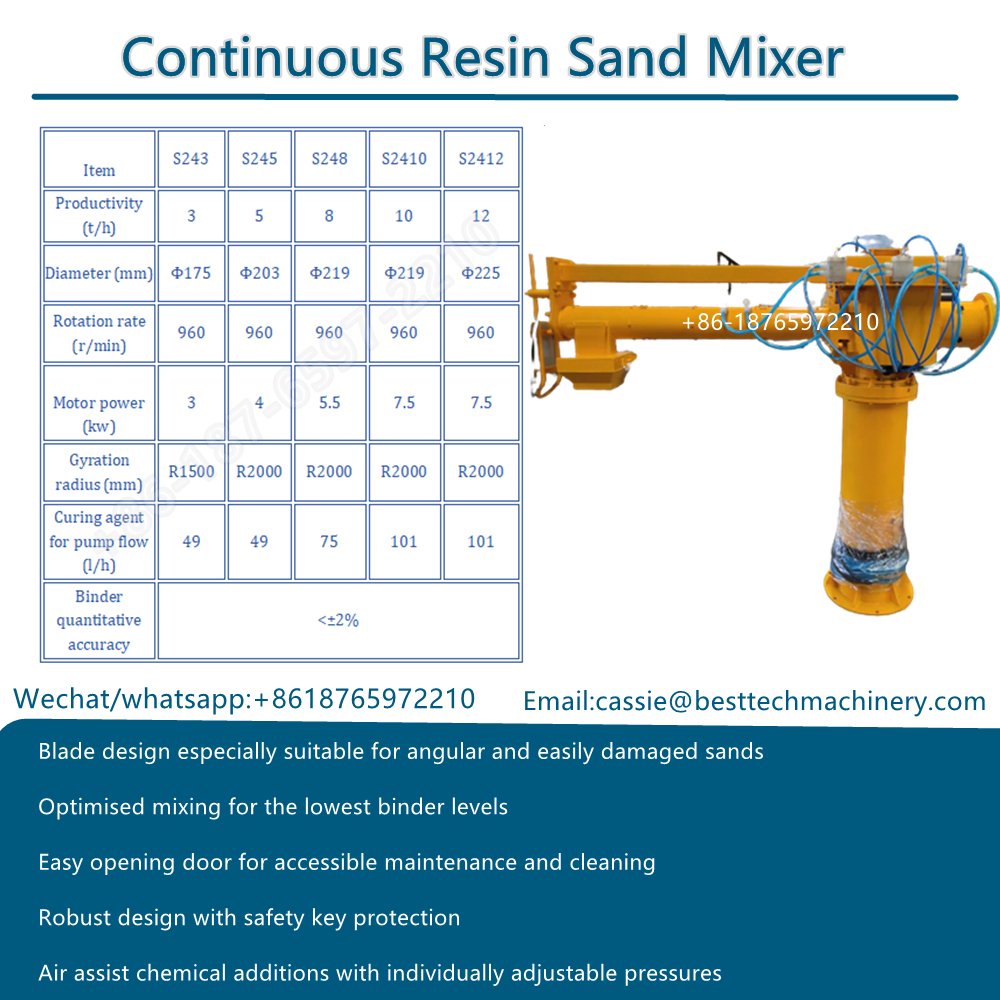
Applications of Continuous Sand Mixers
Continuous sand mixers are used in various metal casting processes where high-volume, high-quality molds are necessary. Some common applications include:
- Die Casting: Used in manufacturing products made from non-ferrous metals such as aluminum and zinc.
- Shell Molding: For the production of precision castings, especially in industries like aerospace or automotive.
- Investment Casting: Used to make molds for parts that require high accuracy and surface finish.
- Sand Core Production: To create sand cores that are inserted into molds to form internal cavities in castings.
Conclusion
Continuous sand mixers are a key technology for modern foundries, providing numerous benefits in terms of efficiency, consistency, and cost-effectiveness. By maintaining precise control over the sand-to-binder ratio and offering high throughput, they enable foundries to produce high-quality molding sand at a faster rate. This, in turn, results in better molds, fewer defects, and more competitive pricing in the casting market.