
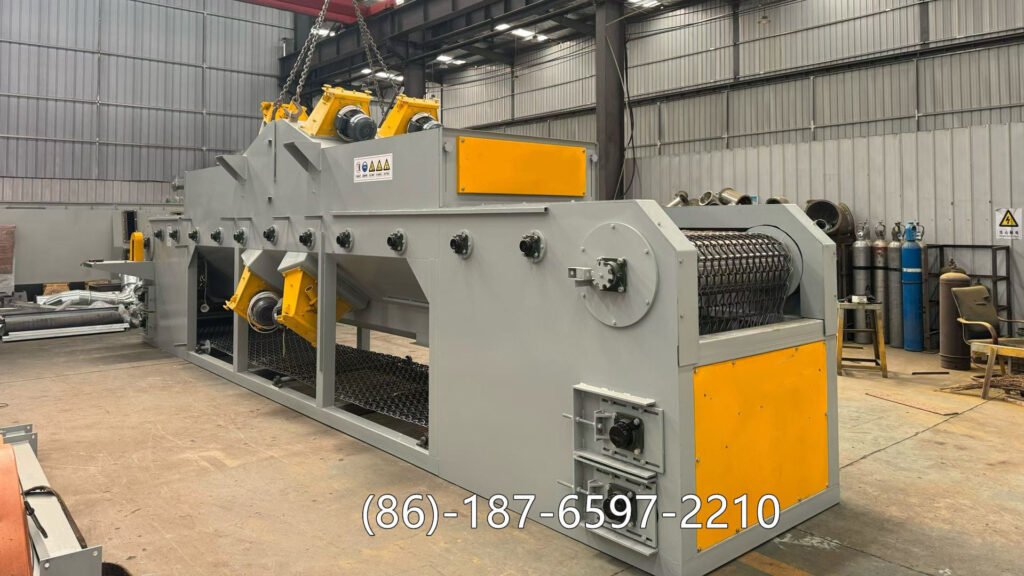
Wire mesh belt shot blasting machine is a continuous-pass type surface cleaning equipment mainly used for removing rust, oxide scale, sand, and burrs from various metal workpieces. It uses a heat-resistant wire mesh conveyor belt to deliver parts through a blasting chamber, where high-speed steel shots are thrown by blasting turbines to achieve uniform surface treatment.
This type of equipment is widely used in automotive parts, aluminum die-casting, steel plates, hardware tools, and heat-treated components.
Main Design Basis
When we design a wire mesh belt shot blasting machine, we must follow several important basis to guarantee stable blasting performance, long machine life, and reliable production output. The design principles come from practical foundry experience, equipment structure analysis, and continuous improvement from field feedback.
1. Workpiece Characteristics as Primary Design Reference
When we start the design, the first consideration is always the user’s workpiece.
- Material: aluminum, steel, stainless steel or other alloys influence abrasive type and blasting intensity.
- Workpiece size and thickness: directly affect mesh belt width, chamber size and turbine power.
- Surface requirement: light cleaning, rust removal, descaling, or heavy derusting decide the blasting speed and abrasive flow rate.
Because the wire mesh belt machine is continuous type, the workpiece loading condition must be fully understood to ensure smooth conveying and uniform blasting.
2. Conveyor Wire Mesh Belt Structure
The wire mesh belt is the “foundation” of the whole machine.
- Mesh belt material must be heat-resistant and wear-resistant.
- Mesh opening size should allow blasting media to fall through easily but still support the part.
- Belt tension system is designed to keep stable conveying without deviation.
- Support rollers and guide rails must be arranged to reduce deformation and extend service life.
For heavy parts, reinforced wire mesh or double-layer structure is usually required.
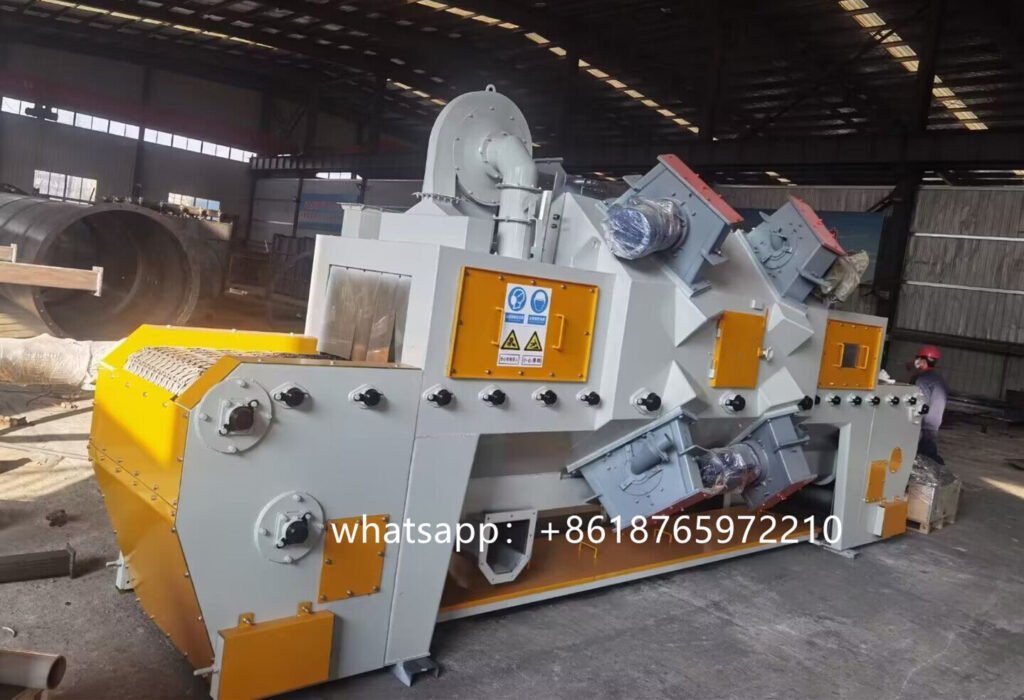
3. Blast Chamber Design and Wear Protection
Blast chamber design follows high-intensity blasting rules.
- Inside liners: use high manganese steel or alloy wear plates to resist long-term abrasive impact.
- Sealing structure: prevent steel shots from leaking out of the chamber.
- Optimized geometry: ensures maximum blasting coverage on workpiece surface.
A well-designed chamber will reduce maintenance time and improve blasting uniformity.
4. Turbine (Blasting Wheel) Layout and Parameters
The turbine is the core power of the machine.
- Wheel quantity and power are selected based on productivity, cleaning grade, and conveyor speed.
- Blast angle and position are carefully calculated to cover top, bottom, and sides of workpiece.
- Abrasive control valve ensures consistent shot flow rate.
Correct turbine layout is the key design factor to achieve efficient blasting and energy saving.
5. Abrasive Circulation and Separation System
The abrasive recycling system ensures stable blasting efficiency.
- Screw conveyors + bucket elevator return abrasives to storage hopper.
- Air separator removes dust, broken shots and impurities.
- Recycling efficiency must be high enough to maintain good abrasive quality.
Good separation extends turbine life and improves surface quality.
6. Dust Collector and Environmental Protection Requirements
Environmental standard is also an important design basis.
- Dust collector type: normally cartridge filter or bag filter.
- Air volume design: guarantee clean workshop environment.
- Negative pressure control: avoid dust leakage from blast chamber.
This ensures safe, clean and eco-friendly operation.
7. Safety and Maintenance Accessibility
Practical design in the workshop always focuses on safety and easy maintenance.
- Safety door interlock prevents turbine running when door is open.
- Inspection and maintenance windows allow fast access for liner replacement.
- Lubrication points must be designed for convenient routine maintenance.
Good safety design reduces operation risk and downtime.
Conclusion
The design basis of the wire mesh belt shot blasting machine mainly includes workpiece characteristics, mesh belt structure, blast chamber and turbine layout, abrasive recycling system, dust removal system, and safety considerations. With these design principles, engineers can ensure the machine achieves high cleaning efficiency, low maintenance cost, and long service life.