
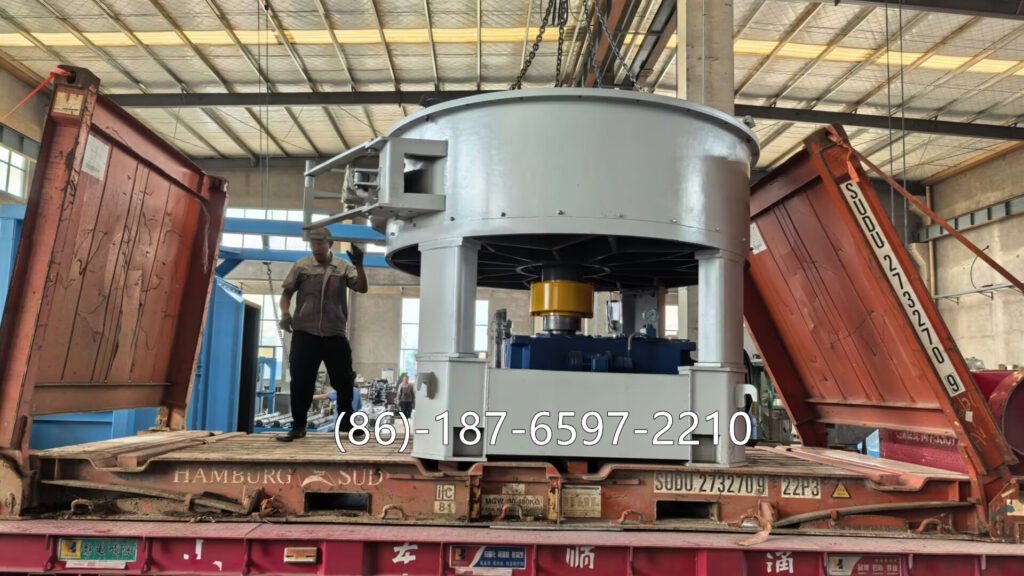
Efficiency rotor sand mixing machine is a specialized piece of foundry equipment used to prepare molding sand by thoroughly mixing base sand with binders, water, additives, or resins. Its main purpose is to produce uniform, high-quality sand suitable for making casting molds and cores.
Key Points Should Focus On When Choosing An Efficiency Rotor Sand Mixing Machine
In modern foundry production, sand mixing quality directly affects molding strength, surface finish, and casting yield rate. The efficiency rotor sand mixing machine is widely used for preparing green sand and resin sand due to its strong mixing ability and stable performance. However, selecting a suitable machine is not simple. Many technical and operational factors must be considered to ensure reliable production and cost control.
Sand Type and Mixing Requirement
First, the user must clarify the sand type to be processed. Different sands such as green sand, resin sand, or coated sand have different moisture, binder, and additive requirements. The rotor structure, blade shape, and liner material should match the sand characteristics. If the sand contains high clay or resin content, wear resistance and anti-sticking design become important.
Mixing uniformity is another key requirement. The machine should ensure even distribution of water, binder, and additives within short mixing time. A high-efficiency rotor design with strong turbulence can achieve better homogeneity.
Production Capacity
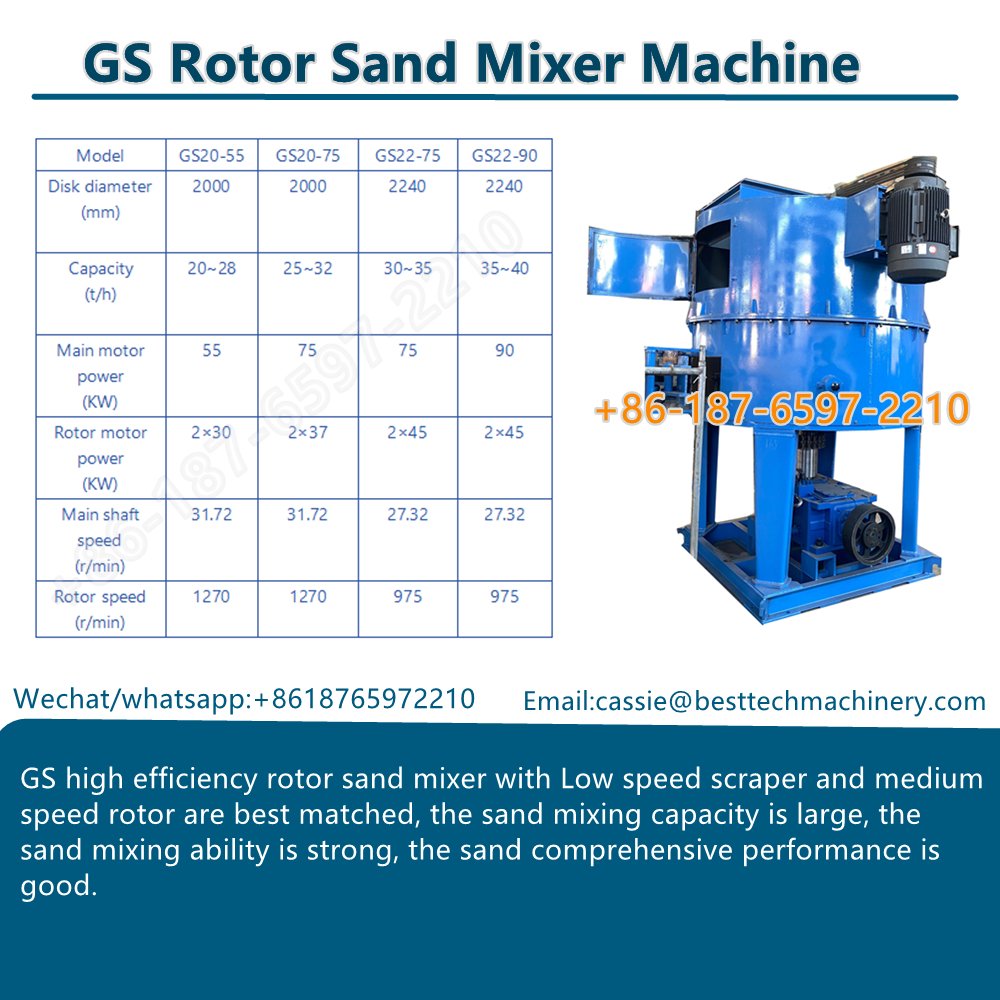
Production capacity should match the foundry’s molding line output. Engineers should check the batch size, mixing cycle time, and discharge speed. Oversized machines cause energy waste, while undersized machines limit production efficiency. It is recommended to calculate hourly sand demand and select a mixer with suitable rated capacity and reserve margin.
Rotor and Liner Structure
The rotor is the core component of the machine. Its rotation speed, blade angle, and material directly affect mixing effect and service life. Adjustable or replaceable blades can improve maintenance convenience. For liner plates, wear-resistant alloy steel or ceramic liners are preferred to reduce downtime.
Good sealing structure is also necessary to prevent dust leakage and ensure safe working environment.
Automation and Control System
Modern efficiency rotor sand mixers usually adopt PLC control. Automatic sand feeding, water addition, binder dosing, and timing control improve mixing accuracy and reduce operator error. Engineers should check control stability, parameter setting flexibility, and compatibility with the existing production line.
Maintenance and Operation Cost
Easy maintenance design saves long-term cost. Quick-opening discharge doors, accessible inspection ports, and standardized spare parts are recommended. Power consumption, lubrication system, and wear part replacement frequency should be evaluated to estimate total operating cost.
Supplier Technical Support
Reliable supplier support is important. Engineers should consider equipment installation guidance, training service, spare parts supply speed, and after-sales response capability. Good technical support ensures continuous production and reduces unexpected downtime.
Conclusion
Selecting an efficiency rotor sand mixing machine is not only equipment purchasing, but also a technical decision affecting foundry productivity and quality stability. By considering sand type, capacity, rotor structure, automation level, maintenance cost, and supplier service, engineers can choose the most suitable machine for long-term reliable operation.