
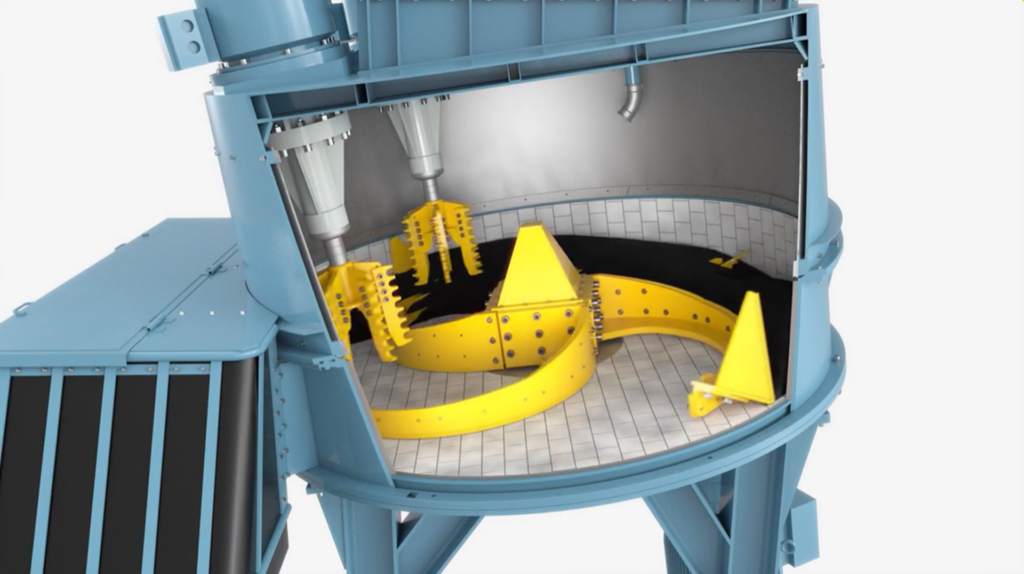
Still struggling with the efficiency of green sand mixing?
In the evolving landscape of modern foundry technology, achieving consistency, efficiency, and quality in mold and core production is critical. At the heart of this process lies the high-efficiency rotor sand mixer—a pivotal innovation that has transformed how foundries prepare and condition molding sand.
High-Efficiency Rotor Sand Mixers not only enhance sand quality but also significantly boost overall productivity, making them a cornerstone of contemporary foundry operations.
What is a High-Efficiency Rotor Sand Mixer?
A high-efficiency rotor sand mixer is a specialized industrial machine designed to blend molding sand with binders, additives, and moisture to create a homogeneous mix. Utilizing high-speed rotors equipped with strategically positioned blades, these mixers deliver rapid and uniform mixing, minimizing material waste and improving the final mold quality.
Applications Across Foundry Processes
High-efficiency rotor sand mixers are versatile and adaptable across various molding and core-making methods, including:
- Green Sand Molding
- Cold Box and Hot Box Core Making
- No-Bake Systems
- Resin-Coated Sand Preparation
This flexibility makes rotor mixers suitable for a wide range of metals, from iron and steel to non-ferrous alloys.
High-Efficiency Rotor Sand Mixer Core Benefits for Foundries
In modern foundry operations, the rotor sand mixer has become indispensable equipment for preparing consistent, high-quality molding sand. This advanced mixing technology offers significant improvements over traditional mixing methods, delivering superior performance that directly impacts production efficiency and casting quality.
Superior Homogeneity
- Rotor-driven mixing ensures even distribution of all materials—sand, clay, water, or resin binders—eliminating clumps and inconsistencies.
- The improved uniformity results in better mold strength and dimensional accuracy in castings.
Reduced Mixing Time
- High rotor speeds drastically cut down cycle times, enabling foundries to increase throughput without compromising quality.
- Faster mixing also reduces binder consumption and overall energy usage.
Energy and Resource Efficiency
- Optimized motor and rotor configurations reduce power consumption.
- Precise dosing systems help minimize waste of binders and additives.
Automation and Smart Control
- Integrated PLC systems and real-time monitoring tools allow operators to adjust mixing parameters (speed, time, moisture) based on specific requirements.
- This level of control ensures consistent sand properties across batches.
Durability and Maintenance
- Made with abrasion-resistant materials, rotor mixers are built for longevity.
- Modular components and easy access points simplify maintenance and reduce downtime.
High-efficiency rotor sand mixers represent a transformative technology for foundries seeking to improve their molding sand preparation. By delivering superior mixing quality, energy savings, and operational efficiency, these systems provide a compelling return on investment while enhancing final casting quality. Foundries upgrading to rotor mixer technology typically see payback periods of 12-18 months through reduced energy costs, lower binder consumption, and increased production capacity.

How to Choose the Right High-Efficiency Rotor Sand Mixer for Your Foundry
In the competitive foundry industry, selecting the optimal rotor sand mixer is critical to achieving consistent sand preparation, reducing operating costs, and maintaining high-quality castings. With multiple options available, understanding key selection criteria ensures your investment aligns with production demands and long-term operational goals.
Below is a step-by-step guide to making an informed decision.
Key Factors for Selection
1. Assess Production Requirements
- Batch Size & Capacity:
- Determine hourly sand preparation needs (e.g., 5 tons/hour vs. 50 tons/hour).
- Match mixer capacity to furnace output to avoid bottlenecks.
- Material Compatibility:
- Confirm the mixer handles your specific sand types (silica, chromite, etc.) and binder systems (resin, clay, or inorganic).
2. Evaluate Mixing Efficiency
- Homogeneity Rate:
- Prioritize mixers achieving ≥95% uniformity for defect-free molds.
- Cycle Time:
- Compare mixing durations (typically 45–120 seconds) to meet your line speed.
- Rotor Design:
- Opt for rotors with adjustable blades or wear-resistant coatings for longevity.
3. Energy Consumption & Sustainability
- Power Efficiency:
- Review kW/ton ratios—high-efficiency models use 30–40% less energy than traditional mixers.
- Smart Controls:
- Look for variable frequency drives (VFDs) to optimize energy use based on batch size.
4. Durability & Maintenance
- Construction Materials:
- Stainless steel or hardened alloy components resist abrasion and corrosion.
- Ease of Access:
- Choose designs with quick-open doors or modular parts for simplified cleaning/repair.
- Maintenance Schedule:
- Compare warranty terms and manufacturer support for spare parts.
5. Integration with Existing Systems
- Automation Compatibility:
- Ensure compatibility with PLCs, sensors, or Industry 4.0 platforms for seamless workflow.
- Footprint & Layout:
- Measure available space and verify mixer dimensions to avoid workflow disruptions.
6. Cost-Benefit Analysis
- Initial Investment vs. Lifetime Value:
- Calculate ROI by factoring energy savings, reduced binder use, and productivity gains.
- Vendor Reputation:
- Partner with suppliers offering proven reliability, technical support, and training.
Comparison Table: Rotor Mixer vs. Traditional Mixers
| Criteria | High-Efficiency Rotor Mixer | Traditional Paddle Mixer |
|---|---|---|
| Mixing Time | 45–90 seconds | 3–5 minutes |
| Energy Consumption | 15–75 kW | 25–100 kW |
| Homogeneity | 95–98% | 85–90% |
| Maintenance Frequency | Low (sealed bearings, fewer parts) | High (frequent blade replacements) |
| Noise Levels | 75–80 dB | 85–95 dB |
Choosing the right high-efficiency rotor sand mixer requires balancing technical specifications, operational needs, and budget constraints. By prioritizing mixing uniformity, energy savings, and ease of integration, foundries can enhance their sand preparation process while achieving a rapid return on investment. Partnering with reputable manufacturers and leveraging real-world testing ensures the selected system delivers long-term value in today’s demanding foundry environments.
Conclusion
As casting quality standards rise and environmental and cost pressures increase, foundries must invest in equipment that ensures efficiency without compromise. The high-efficiency rotor sand mixer stands out as a critical tool, enabling precise control over sand properties and elevating the quality and reliability of castings. For foundries aiming to remain competitive and forward-looking, this technology is not just an upgrade—it’s an essential.