
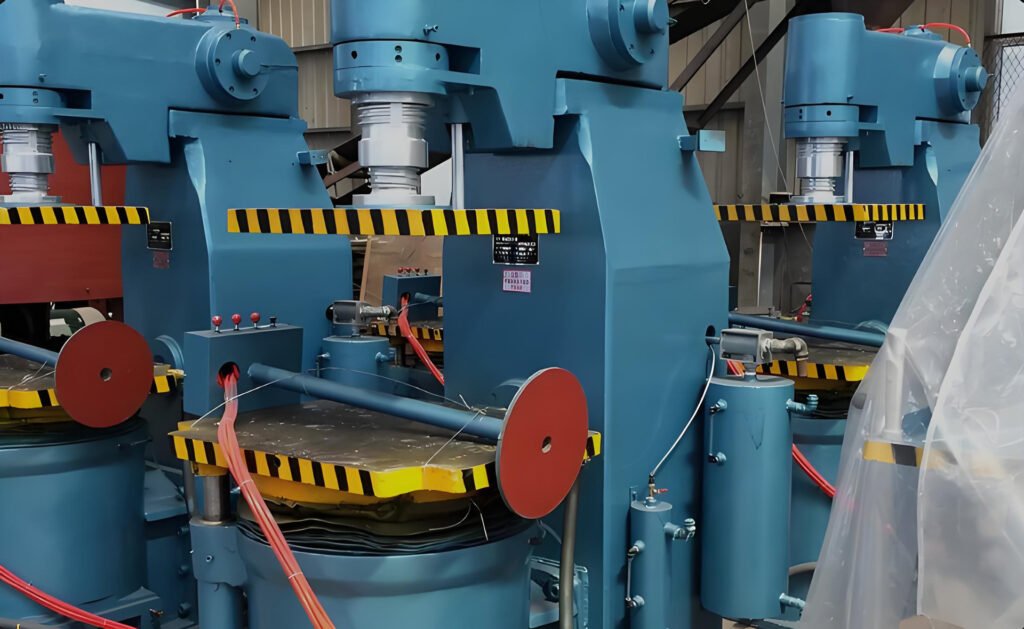
Still struggling with how to operate the your jolt squeeze molding machine?
A Jolt Squeeze Molding Machine is a type of mechanical molding machine used in foundries to produce sand molds for metal casting. It’s especially common in green sand molding processes.
In today’s era, how to better operate jolt squeeze molding machines to produce sufficient hardness sand molds might be a problem that troubles users.
Optimizing Jolt-Squeeze Molding Operations for Consistent Sand Mold Hardness
Modern foundries face increasing demands for dimensional accuracy in castings, making consistent mold hardness critical.
Jolt-squeeze machines, while cost-effective, require precise parameter control to achieve the required 80-90 B-scale hardness for quality molds.
In modern foundry operations, achieving consistent sand mold hardness with jolt squeeze molding machines remains critical for casting quality. Based on industry insights and technical principles, here’s a guide to enhance operational efficiency and mold performance:
Understanding Machine Mechanics
Jolt squeeze molding machines combine vibration (jolt) and compressive force (squeeze) to compact sand into molds. Key parameters influencing hardness include:
Jolt Intensity: Adjust the amplitude and frequency of vibrations to ensure uniform sand distribution without over-compaction.
Squeeze Pressure: Optimize hydraulic/pneumatic pressure settings based on mold size and sand type (e.g., green sand, resin-bonded sand).
Cycle Timing: Balance jolt duration and squeeze phases to avoid sand layer separation or incomplete compaction.
Material Preparation
Sand Quality: Use well-graded silica sand with optimal moisture content (typically 3–5%) to ensure bonding and reduce voids.
Additive Ratios: Incorporate bentonite or coal dust (for green sand) to improve plasticity and thermal stability.
Process Optimization
Pattern Alignment: Ensure patterns are securely fixed to prevent misalignment during jolting, which can create weak zones.
Layered Compaction: For deep molds, employ multi-stage jolt-squeeze cycles to achieve uniform density.
Real-Time Monitoring: Integrate sensors to track mold hardness during production and adjust parameters dynamically.
Maintenance and Calibration
Regular Lubrication: Maintain pneumatic/hydraulic systems to prevent pressure fluctuations.
Wear Inspection: Replace worn-out squeeze plates or jolt pistons to avoid uneven force distribution.
Software Calibration: Update control systems for precision in jolt-squeeze sequencing (critical for repeatability).
Troubleshooting Common Issues
Low Hardness: Check for insufficient squeeze pressure or degraded sand quality.
Surface Defects: Reduce jolt intensity if sand grains are fracturing, or increase binder content.
Inconsistent Results: Verify pattern alignment and ensure consistent sand feeding.
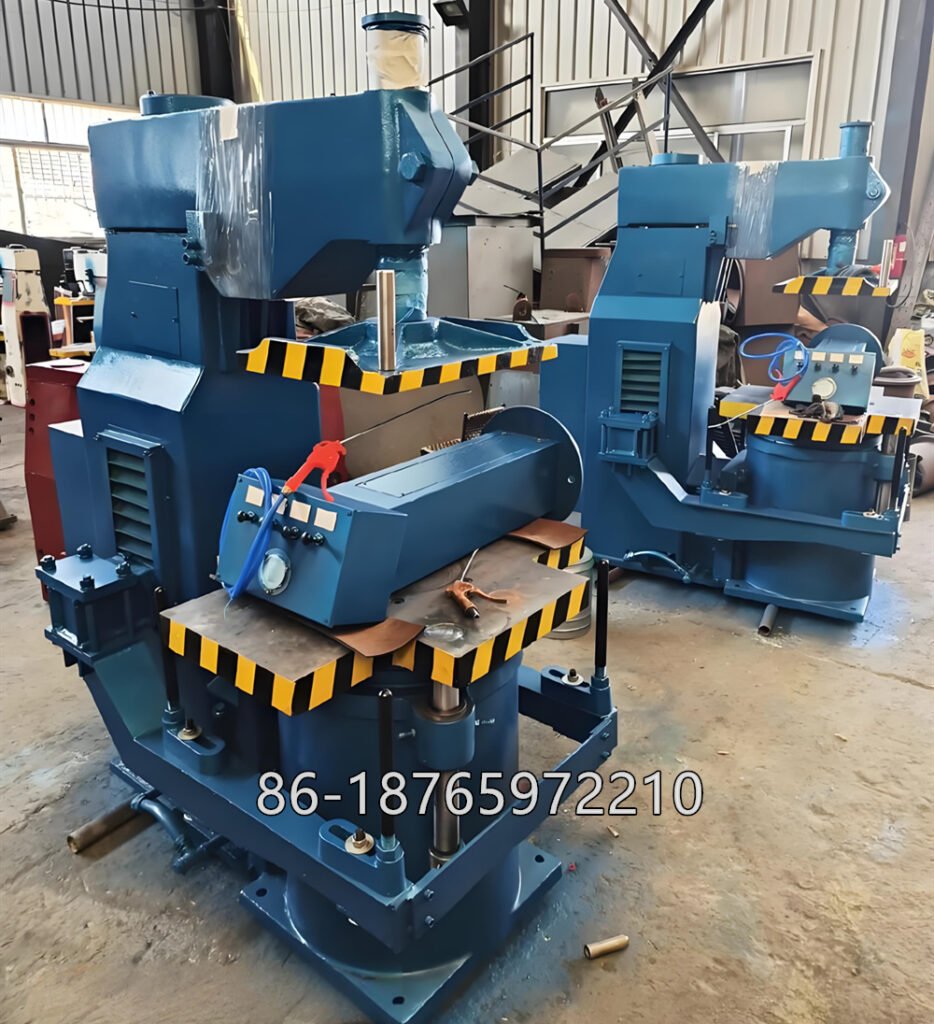
How Jolt Squeeze Molding Machine Works
Jolt-squeeze molding machines combine two fundamental compaction methods to produce consistent sand molds for metal casting. This dual-action mechanism makes them particularly effective for medium-duty castings in job shops and batch production environments.
Core Working Principle
The machine operates through sequential jolting and squeezing actions:
Jolting Phase
Rapid vertical acceleration (5-15g)
Sand particles rearrange into dense packing
Achieves 35-45% initial compaction density
Squeezing Phase
Hydraulic/pneumatic pressure (0.5-2.5 MPa)
Final compaction to 65-75% density
Creates sharp mold contours and uniform hardness
Key Components
- Jolt Mechanism
Pneumatic piston with quick-exhaust valve
Stroke length: 25-50mm
Impact frequency: 120-200 jolts/minute - Squeeze System
Hydraulic ram (30-150 ton capacity)
Pressure regulation valve
Floating squeeze head with self-aligning feature - Pattern Plate Assembly
T-slot mounting system
Cooling channels (for high-production cycles)
Quick-change design for pattern replacement
Operational Sequence
| Step | Process | Duration | Key Parameters |
|---|---|---|---|
| 1 | Flask positioning | 3-5 sec | Alignment tolerance ≤0.2mm |
| 2 | Sand filling | 5-8 sec | Sand moisture 3-5% |
| 3 | Jolting (10-20 cycles) | 8-15 sec | Impact energy 0.5-2.5 kJ |
| 4 | Squeezing | 3-6 sec | Pressure gradient ≤10% |
| 5 | Mold ejection | 4-7 sec | Ejection force <15% squeeze force |
Benefit
Handles complex patterns better than pure squeeze machines
Lower equipment cost vs. high-pressure molding systems
Suitable for mixed-batch production

Why Choose Jolt Squeeze Molding Machine?
Jolt squeeze molding machines are a cornerstone of modern foundry operations, offering a blend of efficiency, precision, and adaptability.
Below is a comprehensive analysis of why these machines are favored in manufacturing industries, supported by technical insights and practical applications.
1. Superior Mold Quality and Uniform Hardness
The jolt squeeze mechanism combines vibration (jolt) and pressure (squeeze) to compact sand uniformly in both the upper and lower sections of the mold. This dual-action process ensures consistent mold hardness, reducing defects like porosity, shrinkage, or uneven surfaces in castings. For example, the compressed air-driven system in jolt squeeze machines achieves tight sand packing around intricate patterns, ideal for complex geometries.
2. Cost-Effective and Energy-Efficient
Designed for small-to-medium foundries, these machines require low initial investment while delivering high productivity. Their energy-efficient operation minimizes power consumption compared to traditional high-pressure molding systems. Additionally, their portability (equipped with wheels) allows flexible deployment across workshops, reducing labor intensity and logistical costs.
3. Enhanced Production Efficiency
Automated Mold Drawing: Integrated pulsators and guide pins simplify mold release, reducing manual intervention and accelerating cycle times.
Adaptability: Suitable for diverse applications, such as lighting accessories, plumbing hardware, and automotive components.
Reduced Defects: By eliminating air gaps and ensuring uniform compaction, these machines minimize post-casting machining or rework.
4. Versatility in Material Handling
Jolt squeeze molding machines excel with various casting materials, including iron, aluminum, and non-ferrous alloys. Their design accommodates both low-pressure and high-pressure compaction modes, making them adaptable to different production scales.
5. Improved Ergonomics and Ease of Use
Operators benefit from simplified workflows, such as pre-programmed vibration sequences and ergonomic controls. Features like shock absorption in modern models further enhance workplace safety and reduce fatigue during prolonged use.
Conclusion
Jolt squeeze molding machines are a strategic choice for foundries seeking cost efficiency, high-quality output, and operational flexibility. Their ability to handle complex designs while maintaining low defect rates positions them as indispensable tools in competitive manufacturing landscapes. For technical specifications or case studies, refer to industry sources