
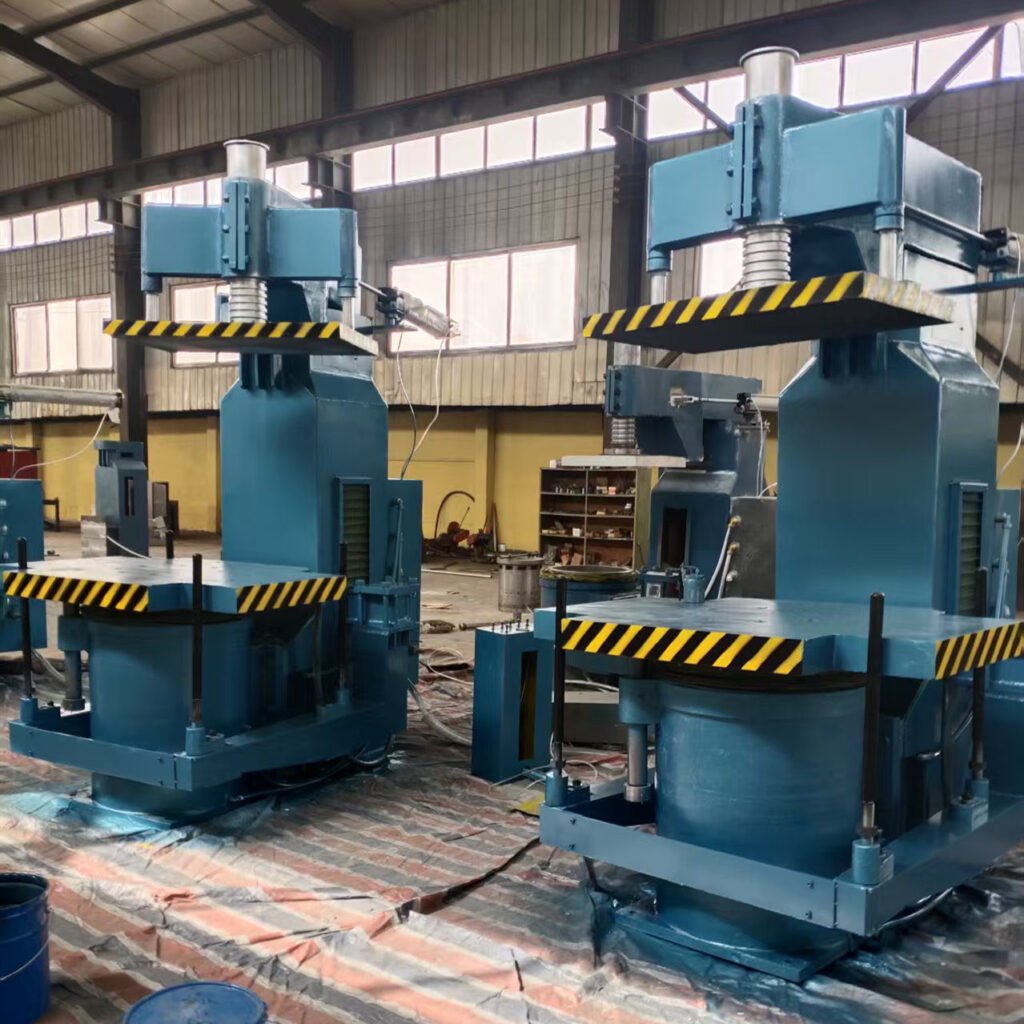
In modern manufacturing, mechanical molding has revolutionized traditional foundry processes by replacing labor-intensive manual methods with precision, efficiency, and scalability. Among the key innovations is the jolt squeeze molding machine, a cornerstone of automated sand casting.
Jolt Squeeze Molding Machine is a commonly used device in metal casting foundries for producing high-quality sand molds efficiently. It combines jolting and squeezing actions to compact molding sand around a pattern, ensuring accurate and durable mold cavities.
How the Mechanical Molding Jolt Squeeze Molding Machine Works
In modern foundry operations, jolt squeeze machines have emerged as essential equipment for creating high-quality sand molds with exceptional efficiency. These specialized machines combine controlled jolting action and mechanical compression to produce consistent molds critical for metal casting processes across industries.
Principles of Operation
The jolt squeeze molding machine operates through a combination of vibration (jolting) and compression (squeezing) to compact molding sand (typically green sand) around a pattern, creating dense, uniform molds. The process involves five key stages:
- Pattern and Flask Setup
A reusable pattern (shaped like the desired casting) is placed inside a mold flask (a two-part frame). The flask is divided into a cope (upper half) and a drag (lower half). - Sand Filling
Molding sand—a mixture of silica sand, clay, and moisture—is poured into the flask, covering the pattern. The sand must possess flowability to fill intricate details while retaining strength after compaction. - Jolting for Initial Compaction
The flask is subjected to rapid vertical jolts (controlled vibrations). These vibrations cause the sand particles to settle tightly around the pattern, eliminating air gaps and achieving partial compaction. - Squeezing for Final Density
A hydraulic or pneumatic press applies high-pressure force to the sand surface, further compressing it. This step ensures uniform density, critical for mold strength and dimensional accuracy. - Pattern Removal and Mold Assembly
After compaction, the pattern is extracted, leaving a precise cavity. The cope and drag halves are assembled, ready for molten metal pouring.
Advantages Over Manual Molding
- Speed and Efficiency: Automated cycles reduce mold production time from hours to minutes.
- Consistency: Mechanical precision eliminates human error, ensuring repeatable mold quality.
- Complex Geometries: High-pressure compaction captures fine details, enabling intricate castings.
- Labor and Cost Savings: Reduced reliance on skilled labor lowers operational costs.
Technological Innovations
Modern jolt squeeze machines integrate advanced features:
- Automated Control Systems: PLCs (Programmable Logic Controllers) optimize jolt frequency, squeeze pressure, and cycle timing.
- Real-Time Monitoring: Sensors detect sand density and moisture levels, adjusting parameters for optimal compaction.
- Hybrid Mechanisms: Some machines combine jolt-squeeze with vacuum or blow-fill techniques for enhanced performance.
- CNC Integration: Compatible with computer-aided designs for rapid prototyping and complex patterns.
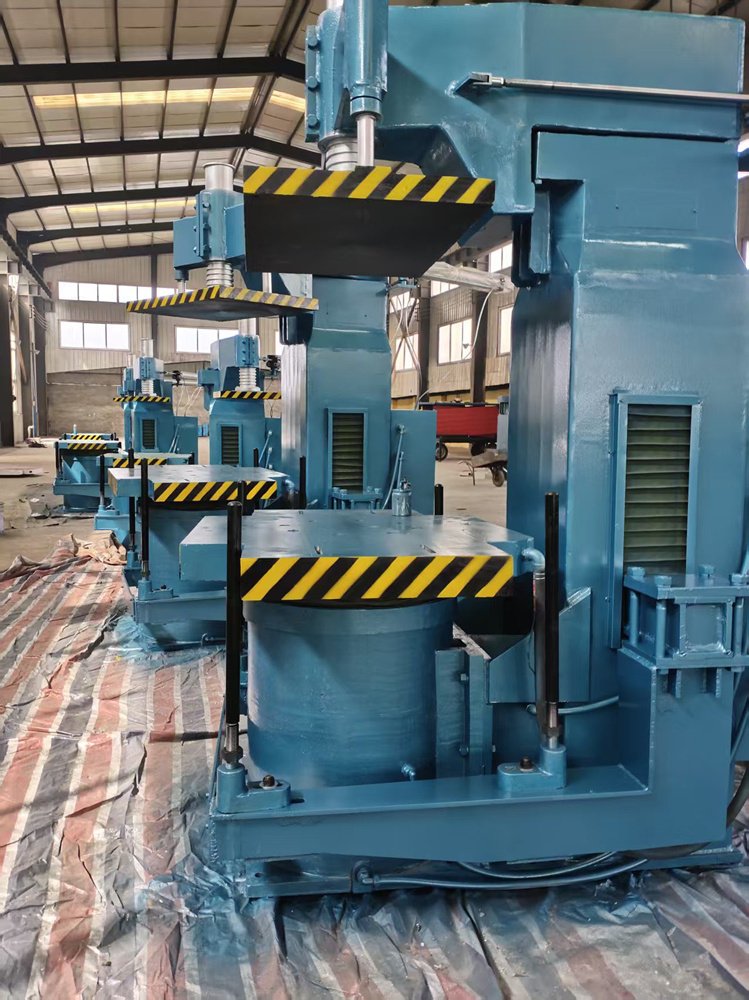
Why Choose Jolt Squeeze Molding Machine
In the competitive landscape of modern foundry operations, selecting the right molding equipment is critical to achieving efficiency, precision, and cost-effectiveness. Among the advanced solutions available, the jolt squeeze molding machine stands out as a preferred choice for manufacturers worldwide.
1. Unmatched Efficiency in High-Volume Production
Jolt squeeze molding machines excel in high-speed, repetitive production cycles. By automating the sand compaction process—combining jolting (vibration) and squeezing (compression)—these machines produce molds in seconds to minutes, far outpacing manual methods.
- Reduced Cycle Time: Automated sequences eliminate delays between mold preparation, compaction, and pattern removal.
- Continuous Operation: Designed for 24/7 industrial workflows, they maximize throughput in automotive, appliance, and machinery casting sectors.
2. Superior Mold Quality and Consistency
Human error and variability are inherent in manual molding, leading to defects like porosity or misalignment. Jolt squeeze machines ensure uniformity through precise mechanical control:
- Optimal Sand Density: The dual-action process (jolt + squeeze) compacts green sand uniformly, achieving ideal density for dimensional accuracy.
- Repeatability: Programmable settings guarantee identical mold quality across thousands of cycles, reducing scrap rates and rework.
3. Cost-Effectiveness and Labor Savings
Transitioning to jolt squeeze molding minimizes reliance on skilled labor while enhancing ROI:
- Lower Labor Costs: Automation reduces the need for manual sand ramming and pattern handling.
- Material Efficiency: Tight compaction reduces sand waste and minimizes casting defects, lowering material and energy costs.
- Long-Term Durability: Robust construction ensures minimal downtime and extended service life, even in demanding environments.
4. Versatility for Complex Castings
From intricate engine components to large industrial parts, jolt squeeze machines handle diverse geometries with ease:
- Fine Detail Reproduction: High-pressure squeezing captures complex pattern features, including thin walls and undercuts.
- Flexible Pattern Compatibility: Works with wood, metal, or 3D-printed patterns, supporting both traditional and modern prototyping.
5. Integration with Advanced Technologies
Modern jolt squeeze machines are designed for Industry 4.0 compatibility, offering:
- Smart Controls: PLCs and IoT-enabled systems monitor variables like sand moisture, jolt intensity, and squeeze pressure in real time.
- Data-Driven Optimization: Analytics software identifies trends to fine-tune processes and predict maintenance needs.
- Hybrid Systems: Some models integrate vacuum molding or automated sand feeding for enhanced versatility.
6. Sustainability and Environmental Benefite
As industries prioritize eco-friendly practices, jolt squeeze machines contribute to greener manufacturing:
- Reduced Energy Consumption: Efficient compaction mechanisms lower power usage compared to older hydraulic presses.
- Reusable Materials: Green sand (clay-bonded silica) is 95–98% recyclable, minimizing landfill waste.
- Lower Emissions: Consistent mold quality reduces metal pour defects, decreasing the need for secondary processing.
7. Competitive Edge in Key Industries
Jolt squeeze molding is indispensable in sectors demanding high precision and volume:
- Automotive: Engine blocks, transmission housings, and brake components.
- Aerospace: Turbine blades and lightweight structural parts.
- Consumer Goods: Plumbing fixtures, cookware, and decorative hardware.
The jolt squeeze molding machine is more than just a replacement for manual labor—it is a strategic investment in speed, quality, and sustainability. By delivering flawless molds at unmatched speeds, this technology empowers foundries to meet rising market demands while maintaining profitability. In an era where precision and efficiency define industrial success, choosing a jolt squeeze machine ensures your operation remains at the forefront of innovation.
Jolt Squeeze Molding Machine Operational Workflow
Step 1: Sand Filling
- Molding sand (a mixture of silica sand, clay, and additives) is poured into the mold box over the pattern plate.
Step 2: Jolting Phase
- The machine activates the jolting mechanism, rapidly lifting and dropping the mold box to create vertical vibrations.
- Purpose: This settles the sand particles evenly, filling intricate pattern details and removing air gaps.
Step 3: Squeezing Phase
- A hydraulic or pneumatic squeeze head compresses the sand horizontally or vertically.
- Purpose: Further densifies the sand, enhancing mold strength and surface finish79.
Step 4: Pattern Removal
- After compaction, the pattern plate is withdrawn, leaving a precise cavity in the sand mold.
Step 5: Mold Assembly
- Two mold halves (cope and drag) are assembled to form the complete mold for metal pouring.
Conclusion
The jolt squeeze molding machine exemplifies the synergy of mechanical engineering and automation, delivering precision and scalability to foundries worldwide. By transforming raw sand into robust molds in minutes, it underpins industries ranging from automotive to aerospace, proving indispensable in the era of mass production. As technology advances, these machines will continue to push the boundaries of what’s possible in metal casting.