

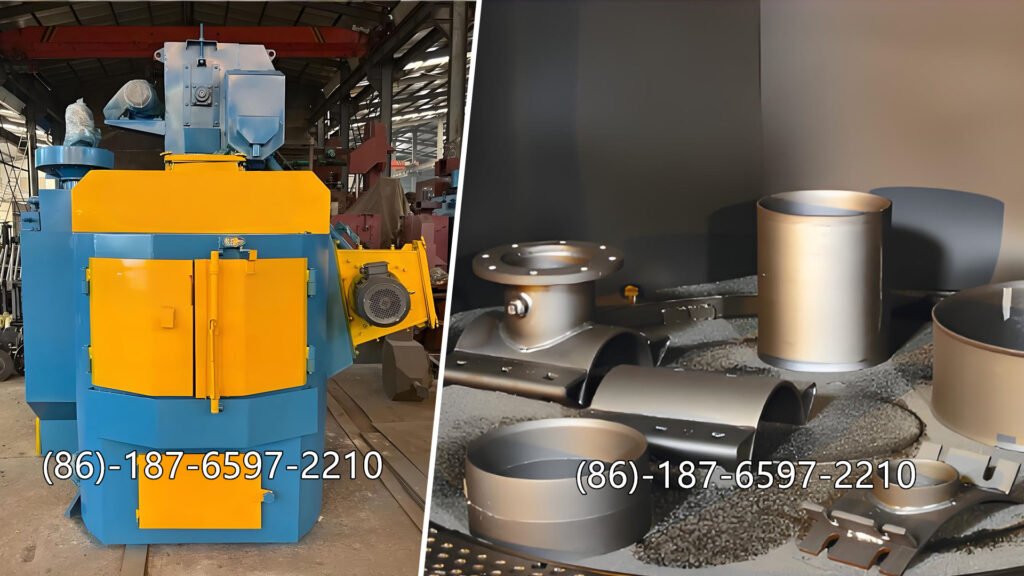
Turntable Shot Blasting Machine is a surface cleaning and strengthening equipment widely used in foundries, metal fabrication workshops, automotive parts plants, and precision machining industries.Its basic purpose is to remove rust, scale, sand, burrs, and surface contaminants from metal workpieces and improve surface roughness before painting, coating, or machining.
Turntable Shot Blating Machine Maintenance Schedule
From daily operation in the workshop keeping a turntable shot blasting machine running efficiently depends heavily on regular and proper maintenance. The machine works under high-impact and abrasive conditions, so timely inspections not only improve cleaning quality but also extend the overall service life of key components.
1. Daily Maintenance (Every Shift)
1.1 Check Abrasive Supply and Flow
- Verify that the steel shot quantity in the hopper is sufficient.
- Make sure the abrasive control valve opens and closes smoothly.
- Confirm that the shot flow to the turbine is stable and not blocked.
1.2 Inspect Turbine and Guard Plates
- Listen for abnormal vibrations or noise from the blasting wheel.
- Check the wear condition of the liners, control cage, and impeller blades.
- Remove accumulated dust or steel shot around the turbine housing.
1.3 Check Turntable Rotation
- Ensure the turntable rotates smoothly without jerking.
- Confirm the limit switch and drive motor respond correctly.
- Clean any steel shot or debris that may fall into the rails.
1.4 Vacuum and Dust Removal
- Verify the dust collector is operating normally.
- Check the pressure gauge and clean the filter bag/cassette if needed.
2. Weekly Maintenance
2.1 Tighten Bolts and Structural Parts
- Retighten the bolts on the turbine, housing, drive belts, and turntable.
- Inspect for any cracks around the blasting chamber.
2.2 Check Abrasive Circulation System
- Clean the screening drum or magnetic separator.
- Make sure the elevator and screw conveyor are not clogged.
- Observe whether the abrasive mix has excessive fines and remove them.
2.3 Inspect Electrical Components
- Test the emergency stop, interlock switches, and safety doors.
- Check wiring for looseness or overheating.
3. Monthly Maintenance
3.1 Replace Severely Worn Turbine Parts
- Inspect impeller blades, control cage, and side liners.
- Replace any components worn close to their minimum thickness.
3.2 Turntable System Lubrication
- Lubricate all turntable bearing points and drive components.
- Check the condition of the reducer oil and replenish if required.
3.3 Inspect Blasting Chamber Interior
- Check manganese liners or rubber liners for wear or deformation.
- Confirm seals, gaskets, and hinges are in good condition.
4. Quarterly or Semi-Annual Maintenance
4.1 Thorough Abrasive Cleaning
- Remove all abrasive from the machine.
- Clean the hopper, elevator casing, and screw conveyors completely.
4.2 Testing Machine Accuracy
- Measure turbine shot flow distribution using calibration plates.
- Adjust the control cage angle to ensure uniform blasting coverage.
4.3 Dust Collector Deep Service
- Replace filter cartridges or bags if pressure difference is too high.
- Inspect the pulse valve for leaks.
5. Yearly Maintenance (Annual Overhaul)
5.1 Full Machine Inspection
- Disassemble the turbine for complete internal cleaning and measurement.
- Inspect motor bearings, reducers, turntable chains, and gear meshing.
5.2 Structural and Safety Review
- Check the integrity of the blasting chamber steel plates.
- Conduct a full electrical safety inspection and rewire if necessary.
5.3 Upgrade or Replace Wear Components
- Replace the full set of critical wear liners.
- Check shot blasting media quality and refresh the entire abrasive mix.
Conclusion
A turntable shot blasting machine is a reliable cleaning system, but only when consistent maintenance is practiced. In my experience, performing the above schedule not only prevents unexpected downtime but also keeps the machine running at optimal blasting efficiency.
With proper care, the machine can operate stably for many years and deliver high-quality surface cleaning results for castings, forgings, and precision components.