
Struggling with how to choose the core shooting machine?
A core shooting machine is a foundry machine that creates sand cores by injecting (shooting) sand mixed with a binder into a core box (mold).
Selecting the right core shooting machine is crucial for enhancing basketball training efficiency and achieving performance goals.
Core Shooting Machines: Revolutionizing Sand Core Production in Foundries
Core shooting machines have become indispensable assets in modern foundries, offering an efficient and precise method for manufacturing sand cores – the critical components used to create internal cavities and complex geometries in metal castings. By automating the core-making process, these machines significantly enhance production consistency while reducing labor costs.
What Is Sand Core?
The sand core is later used inside molds to form complex hollow parts in metal castings (like engine blocks, valves, pumps).
What Is A Core Shooting Machine?
A core shooting machine is an automated foundry machine that produces sand cores by forcefully injecting a mixture of sand and binder into a mold (called a core box).
The process, known as core shooting, ensures high-density, dimensionally stable cores that can withstand the extreme conditions of metal casting. These machines are critical for producing engine blocks, pump housings, valve bodies, and other components requiring precise internal features.
Working Principle
The core shooting process utilizes compressed air to propel a sand-binder mixture (typically resin-bonded sand) into a precisely machined core box at high velocity. This injection method ensures complete cavity filling and uniform density throughout the core. The binder then cures through thermal or chemical processes, creating a strong, dimensionally stable sand core ready for metal pouring.
Key Components
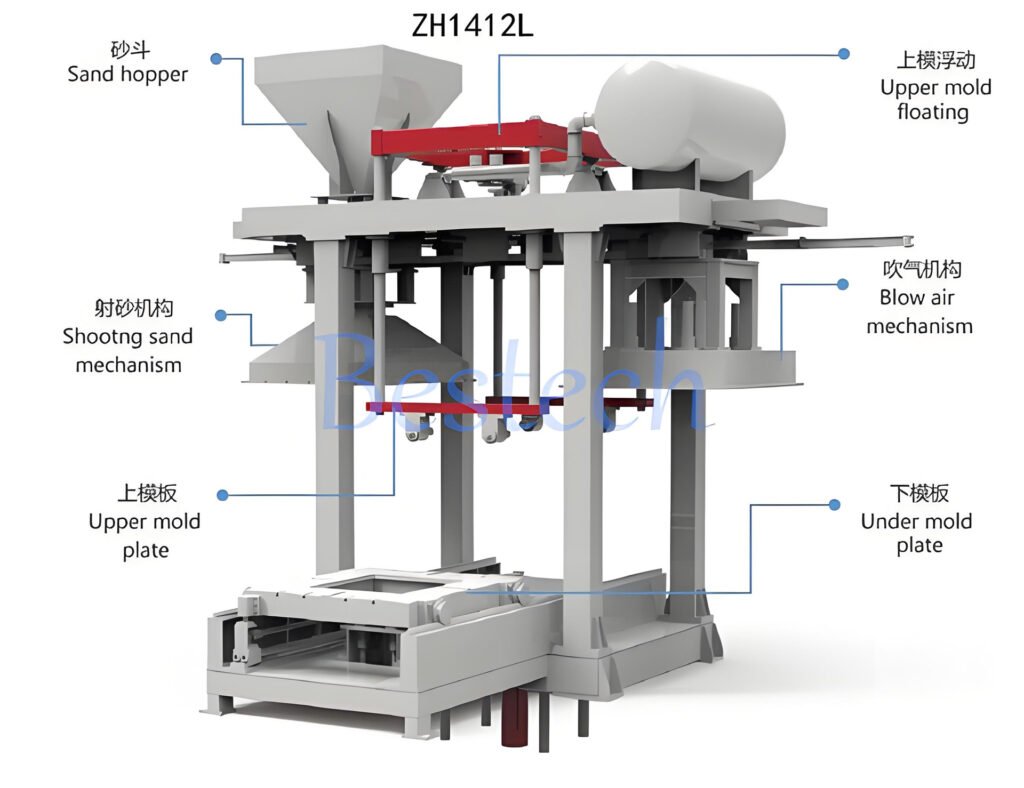
- Shooting Head: The pressurized chamber where sand and binder are mixed and accelerated
- Core Box: The mold defining the core’s shape, usually made from metal for durability
- Sand Storage System: Maintains optimal sand temperature and moisture levels
- Binder Delivery System: Precisely meters and injects bonding agents
- Curing Station: Accelerates binder hardening through heating or gas exposure
Key Factors To Consider When Chooseing A Core Shooting Machine
Choosing a core shooting machine should align with your training goals, budget, and space constraints. Prioritize durability, adjustability, and technological features to maximize ROI.
1. Understand Your Training Objectives
- Skill Development: Identify whether you aim to improve accuracy, endurance, or agility. Machines with adjustable shooting angles (e.g., 10–30°) and variable ball release speeds cater to diverse skill levels .
- Frequency of Use: For professional teams or frequent users, prioritize durable models with robust construction (e.g., stainless steel frames) .
2. Evaluate Machine Types
- Manual vs. Automated: Manual machines (e.g., portable rebounders) suit occasional practice, while automated systems with motorized ball return mechanisms save time during intensive drills .
- Multi-Functional Features: Look for machines that integrate core-strength exercises (e.g., balance boards) or simulate game scenarios (e.g., variable shot distances) .
3. Consider Technical Specifications
- Ball Release Mechanism: Opt for models with precise motor control to mimic human shooting trajectories. Some advanced systems use AI algorithms to analyze shooting patterns .
- Adjustability: Adjustable height (6–10 feet), angle, and ball pressure settings ensure adaptability for different player sizes and skill levels .
4. Budget and Cost-Benefit Analysis
- Entry-Level Models: Basic machines (e.g., portable rebounders) cost 200–200–500, ideal for casual players.
- Professional Systems: Automated machines with data analytics may exceed $2,000 but offer long-term ROI for teams and academies .
5. Space and Portability
- Indoor/Outdoor Use: Check if the machine requires assembly or can be easily moved. Collapsible designs (e.g., foldable rebounders) suit home use .
- Footprint: Ensure the machine fits your training area. Compact models (e.g., 3×3 feet) are suitable for small gyms .
A Foundry Workhorse for Precision Sand Core Production
In metal casting, creating hollow spaces or intricate internal cavities in cast components requires specialized tools called sand cores. These cores act as temporary molds inside the main mold, shaping molten metal into complex geometries. Core shooting machines are advanced industrial devices designed to manufacture these sand cores efficiently and accurately.
Types of Core Shooting Machines
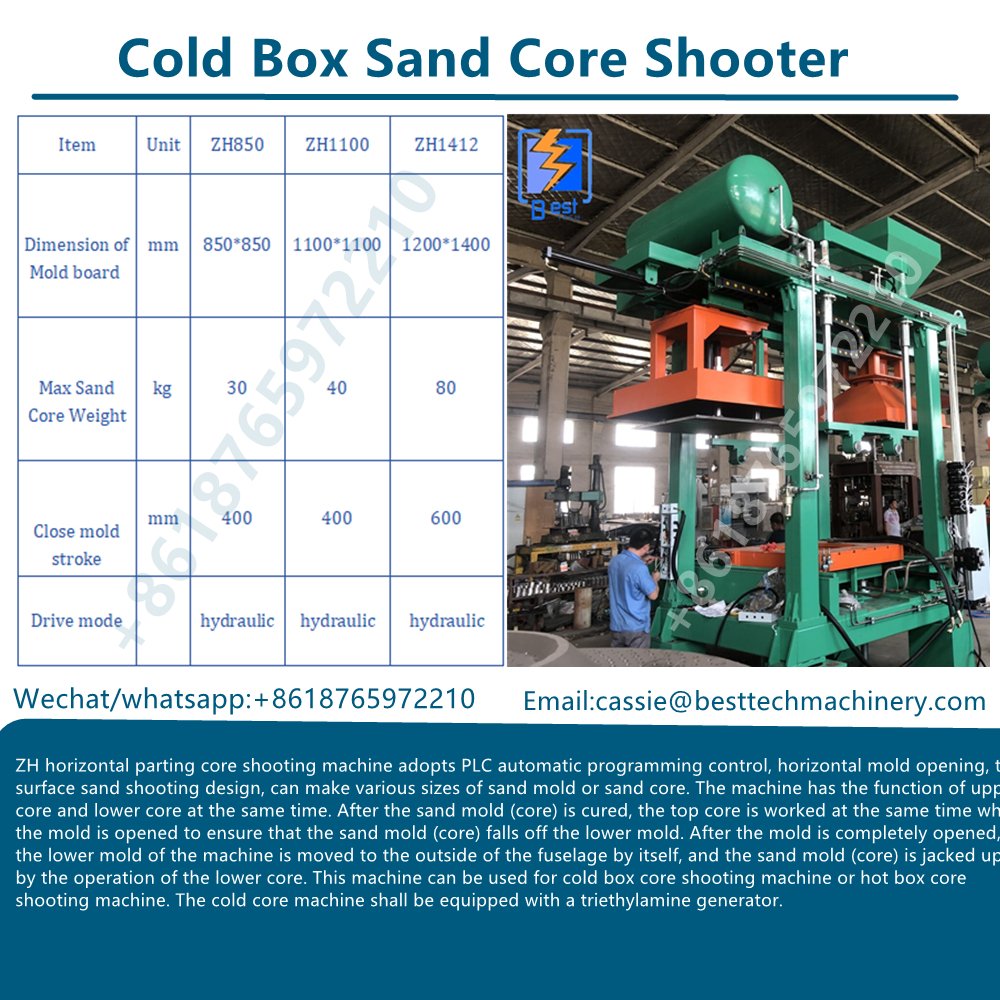
Cold Box Machines: Use gaseous catalysts (e.g., amine) to cure cores at room temperature.
Hot Box Machines: Apply heat (150–250°C) to activate thermosetting binders.
Shell Core Machines: Create hollow cores by partially curing resin-coated sand on heated core boxes.
Vertical vs. Horizontal: Orientation depends on core size and production requirements.
Advantages Over Traditional Core-Making
- Speed: Produces cores in seconds/minutes vs. hours with manual methods.
- Precision: Achieves tight tolerances (±0.2 mm) for complex shapes.
- Consistency: Automated systems eliminate human error.
- Material Efficiency: Minimizes sand waste through controlled injection.
- Labor Savings: Reduces reliance on skilled workers for ramming or hand-forming cores.
Applications
Core shooting machines are vital in industries requiring high-quality castings:
- Automotive: Engine blocks, cylinder heads, transmission cases.
- Aerospace: Turbine blades, structural components.
- Heavy Machinery: Hydraulic parts, pump housings, valve bodies.
- Consumer Goods: Appliances, plumbing fixtures.
Why Core Shooting Matters
Modern casting demands lightweight, high-strength parts with intricate internal channels. Core shooting machines enable this by:
Creating cores with thin walls (as small as 3 mm).
Incorporating complex cooling passages or fluid paths.
Supporting high-volume production for cost-effective manufacturing.
Conclusion
Core shooting machines are the backbone of efficient foundry operations, combining speed, precision, and automation to meet the growing demands of metal casting industries. As manufacturers increasingly adopt advanced alloys and lightweight designs, these machines will continue to evolve, integrating smart technologies like IoT sensors and AI-driven process optimization to further enhance quality and sustainability.