
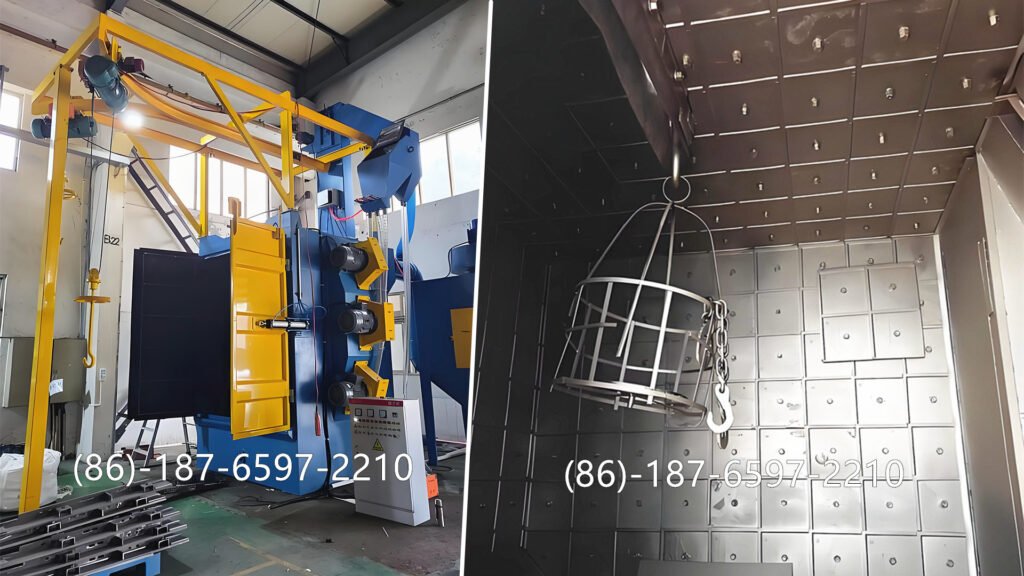
Hanger shot blasting machine is a type of surface cleaning and finishing equipment commonly used in foundries, metal fabrication workshops, and automotive or aerospace parts production. It is designed to remove rust, scale, sand, paint, and surface defects from medium to large workpieces that can be hung during the blasting process.
Key Considerations for Choosing Hanger Shot Blasting Machine
Selecting a suitable hanger shot blasting machine is an important decision for any metalworking or foundry workshop. The correct equipment improves surface finish quality, boosts productivity, and lowers long-term maintenance costs. Based on daily workshop experience, I always focus on the following critical points before making a purchase.
1. Workpiece Type and Size Range
The most important factor is what parts will be blasted. Hanger machines are ideal for medium to large components that can be hung and rotated. Check the maximum diameter, height, and weight of parts. If dimensions are close to the limit, productivity and lifespan may suffer. Always choose extra capacity to handle future jobs.
2. Production Output Requirement
Consider the cycle time needed to keep up with production. Continuous hanger machines are suitable for high-volume operations, while batch type machines are better for smaller orders or varied parts. Proper matching prevents bottlenecks in surface preparation.
3. Material and Surface Cleanliness Standard
Steel castings, forgings, aluminum parts, and profiles have different blasting behaviors. The type of shot, blasting power, and required cleanliness (such as Sa2.5) must match your product specification. Higher performance turbines reduce processing time and energy cost.
4. Abrasive Circulation System Efficiency
A good separator, wear-resistant liners, and dust filtration ensure stable abrasive quality. Poor circulation leads to uneven blasting and higher consumption of shot. I always check whether the design allows easy inspection and quick replacement of wear parts.
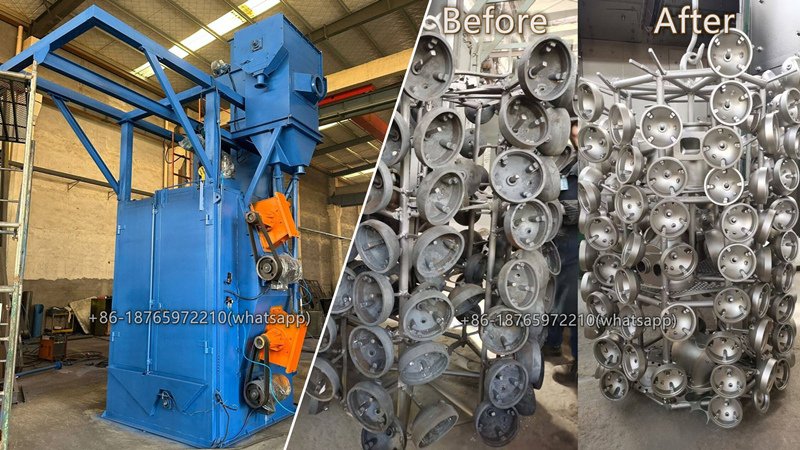
5. Workpiece Handling and Automation Level
Smooth loading and unloading reduce labor and improve safety. Options include manual hooks, power-and-free conveyor lines, or robotic integration. Automation improves consistency and long-term cost efficiency, especially for repetitive batches.
6. Dust Collector Performance and Safety
Dust extraction must meet environmental requirements and protect workers. Cartridge filter systems with automatic cleaning are preferred. Also, explosion-proof design is necessary if blasting aluminum or other combustible dust materials.
7. Maintenance Accessibility and Spare Parts Support
Look for a structure that allows fast access to turbines, bearings, and linings. Availability of local after-sales service and quick spare part delivery keeps downtime low. A complicated structure without proper support will cause long stoppages.
8. Overall Cost vs. Lifecycle Value
Lowest purchase price is not the best choice. Consider power consumption, wear part longevity, automation options, and installation cost. A machine with better turbines and materials usually delivers higher value over years of operation.
Conclusion
Choosing the right hanger shot blasting machine requires more than checking a catalog. Understanding real workshop requirements ensures the equipment fits the job and delivers reliable performance. A well-designed system will upgrade your surface preparation quality and secure long-term cost savings.