
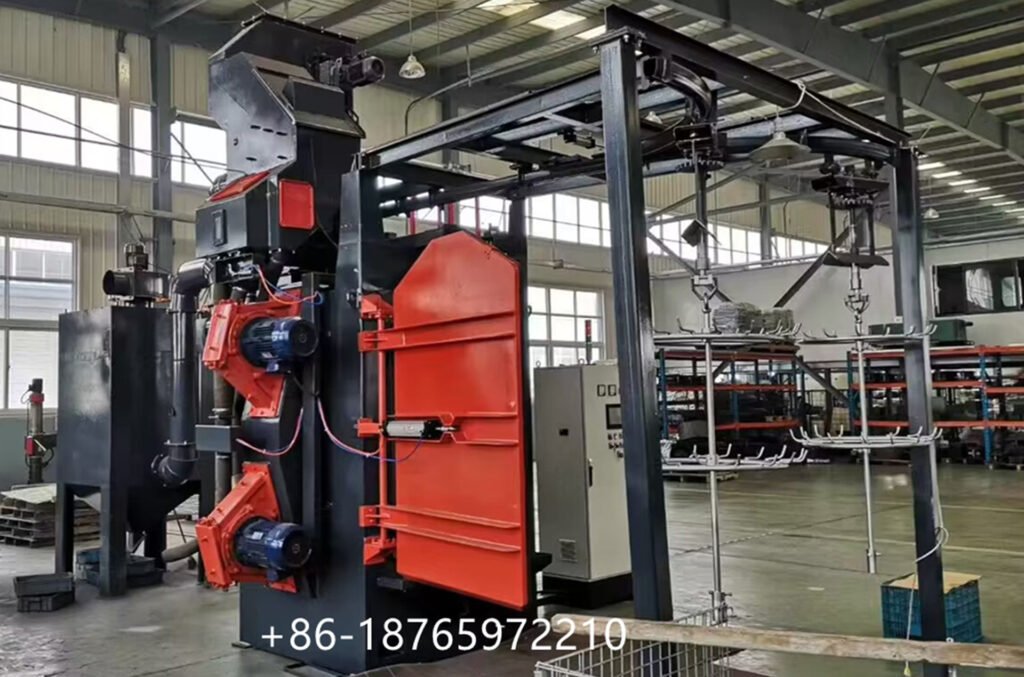
Hanger shot blasting machine is an industrial surface cleaning and finishing equipment used to remove rust, scale, paint, and other contaminants from metal parts by blasting them with high-speed abrasive (usually steel shots or grit).
Practical Maintenance And Troubleshooting Tips
The hanger shot blasting machine is one of the most important pieces of surface cleaning equipment in our workshop. It works continuously under tough conditions, so regular maintenance and quick troubleshooting are essential to keep it running efficiently and safely.
1. Daily Maintenance
Every shift, before and after operation, I always check the key parts of the machine:
- Blast Wheel – Make sure it runs smoothly and there is no abnormal vibration or noise. If the shot flow is weak or uneven, it could mean the control cage or blades are worn or blocked.
- Abrasive Level – Keep enough steel shot in the storage hopper. Low shot quantity reduces cleaning efficiency and increases wear on the wheel.
- Dust Collector – Check the filters and make sure suction is strong. Clogged filters or broken seals will cause dust leakage and poor air quality in the workshop.
- Lubrication – Add grease to bearings, chains, and gearboxes according to the maintenance plan. Lack of lubrication will shorten the life of moving parts.
- Safety Switches – Test emergency stops and limit switches daily. These are small steps but very important for safety.
2. Weekly and Monthly Maintenance
Once a week, I carry out a deeper inspection.
- Blast Wheel Parts – Check the impeller, control cage, and blades for wear. If one blade is badly worn, I usually replace all blades together to keep the balance.
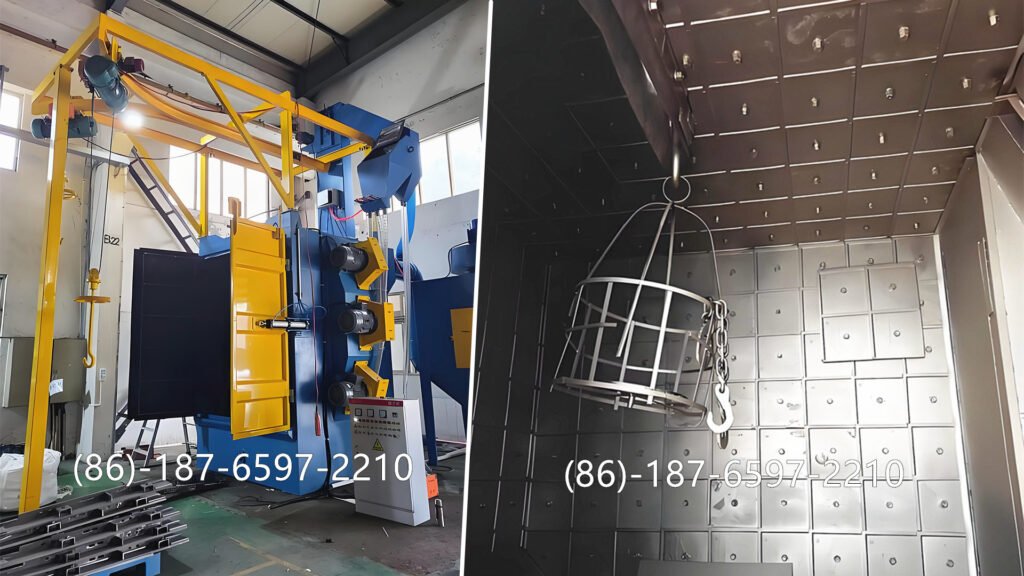
- Liners and Rubber Curtains – The chamber liners and entrance curtains protect the cabinet from shot impact. Replace them when they become thin or torn.
- Elevator and Separator – Tighten the elevator belt, check buckets for cracks, and clean the separator screen. If the separator adjustment is wrong, dirty or oversized particles will go back into the blasting system.
- Hook and Drive Unit – Observe the rotation of the hook and movement of the trolley. Any abnormal sound may indicate a problem with the gearbox or motor bearings.
3. Common Problems and Solutions
| Problem | Possible Cause | Solution |
|---|---|---|
| Uneven cleaning or poor blasting result | Worn blades or control cage, low shot flow | Replace worn parts, check shot feed valve |
| Excessive dust emission | Filter bags damaged, air leaks in duct | Replace filters, seal leaks |
| Abnormal vibration or noise | Loose bolts, unbalanced wheel, worn bearings | Tighten bolts, rebalance wheel, replace bearings |
| Hook not rotating | Motor or gearbox failure, sensor issue | Check motor current, inspect limit switches |
| Shot accumulation in elevator bottom | Belt slip, bucket blockage | Adjust belt tension, remove blockage |
4. Preventive Maintenance Tips
From experience, I can say that preventive maintenance is always better than emergency repair.
- Keep a maintenance logbook and write down all checks, even small ones.
- Use genuine spare parts to avoid imbalance and poor fit.
- Observe machine current and air pressure during operation — sudden changes usually mean something is wrong.
- Train operators regularly, so everyone knows how to detect problems early.
5. Safety Precautions
Before opening any door or doing maintenance, switch off the main power and lock it. Never enter the blasting chamber while the blast wheel is running. Always wear proper PPE — helmet, gloves, goggles, and ear protection.
Conclusion
Good maintenance keeps our hanger shot blasting machine working efficiently and safely. When we take care of the details every day, we avoid big breakdowns and production delays. A well-maintained machine gives better surface quality, longer life, and peace of mind in the workshop.