
Struggling with No Bake Sand Recycling?
Challenges and Solutions in Modern Foundry Practices
The adoption of no-bake sand recycling systems has become critical for foundries aiming to reduce waste, lower costs, and meet environmental regulations.
No Bake Sand Reclamation Introduction
No-bake sand systems, such as resin-bonded sands (e.g., PEPSET resin sands), are widely used in metal casting due to their dimensional stability and reduced energy requirements compared to traditional green sands.
However, the reuse of spent no-bake sand (reclamation) is critical for minimizing waste, reducing raw material costs, and aligning with environmental regulations.
No Bake Sand Reclamation Process Overview
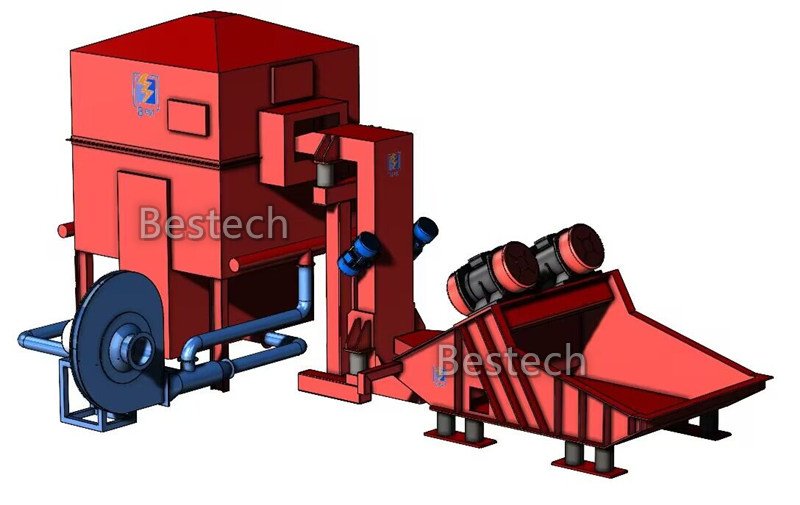
Used sand collection → crushing → stripping → recycling → dust removal → cooling → mixing → reuse.
1.Screening and Separation: Removing large debris and oversize particles using vibrating screens.
2.Thermal or Mechanical Treatment:
Thermal methods: Burning off residual resin and organic contaminants via rotary kilns or fluidized beds.
- Heating sand to 500–800°C in a furnace to combust organic binders (e.g., furan or phenolic resins).
- This step improves sand reuse rates but requires energy optimization to balance cost and efficiency.
Mechanical methods: Grinding hardened sand lumps to restore particle size distribution.
- Crushing and Screening: Used sand molds are crushed to break down clusters, followed by screening to remove large debris and metal particles.
- Attrition: High-speed mechanical agitation (e.g., centrifugal units) removes residual binders and coatings from sand grains.
3.Dust Removal and Cooling:
Cyclonic separators or bag filters remove fine particulates.
Cooled sand is then ready for reuse or further treatment.

No-Bake Sand Recycling: Challenges and Solutions
No-bake sand, widely used in foundries for its cost-effectiveness and adaptability, faces significant recycling challenges due to binder residues, thermal degradation, and contamination.
Key Challenges in No-Bake Sand Recycling
1.Material Separation and Contamination
Residual binders (e.g., furan or sodium silicate) often adhere to sand particles, complicating separation and leading to contamination. This reduces the recycled sand’s quality, affecting mold strength and dimensional accuracy .
2.Energy and Cost Efficiency
High-energy consumption during sand cooling, mixing, and regeneration can offset cost savings. For example, systems like continuous resin sand mixers require precise control of old/new sand ratios to maintain productivity, but energy waste remains a concern .
3.Equipment Maintenance
Aggressive binders and abrasive sand particles accelerate wear on machinery, such as no-bake molding line components. This increases downtime and maintenance costs .
4.Environmental Compliance
Uncontrolled emissions from resin decomposition and dust generation pose regulatory risks. Foundries must balance recycling efficiency with emissions control .
Solutions and Innovations
1.Advanced Separation Technologies
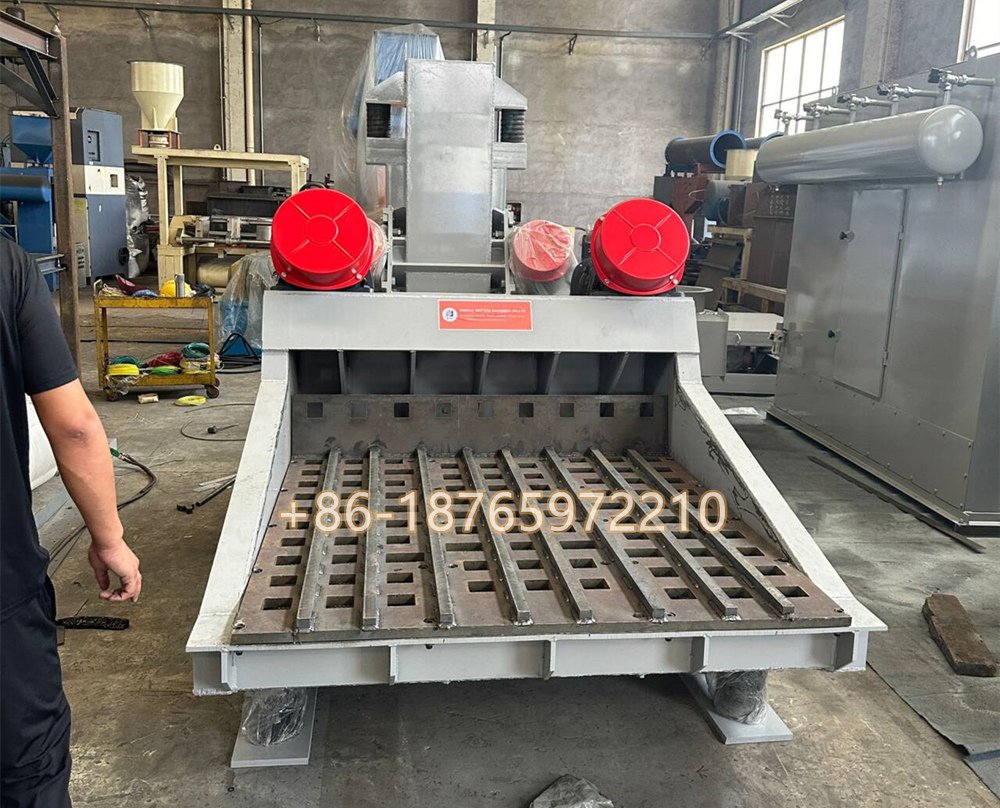
- Implement vibratory screens or air classifiers to remove fine particles and binder residues.
- Use thermal desorption or chemical treatment to degrade residual binders, enhancing sand reusability .
2.Process Optimization
- Adjust mixer parameters (e.g., residence time, binder ratios) to minimize contamination. For instance, the S24 series resin sand mixer allows real-time sand ratio adjustments, improving consistency .
- Adopt closed-loop systems to recycle cooling water and dust, reducing resource waste .
3.Automation and Monitoring
- Deploy sensors and AI-driven analytics to monitor sand moisture, binder levels, and equipment health. This minimizes human error and predicts maintenance needs .
4.Eco-Friendly Binders
- Replace traditional resins with water-based or bio-derived binders that decompose more safely, aligning with environmental standards .
The Importance of No-Bake Sand Recycling in the Foundry Industry
Why No Bake Sand recycling important in the foundry industry?
No-bake sand recycling is not merely an optional practice but a strategic imperative for the foundry industry. By prioritizing sustainability, cost savings, and innovation, foundries can achieve long-term resilience while contributing to global environmental goals.
The foundry industry relies heavily on molding sands to produce high-quality castings.
Among various types of molding sands, no-bake sand (also known as air-set sand) has gained prominence due to its efficiency and versatility in resin-bonded systems.
However, the increasing environmental and economic pressures have made recycling no-bake sand a critical practice.
1.Environmental Sustainability
- Reduction of Waste: Recycling no-bake sand minimizes the volume of spent sand sent to landfills. According to industry reports, foundries generate millions of tons of waste sand annually, much of which can be reclaimed.
- Conservation of Natural Resources: Virgin silica sand is a finite resource. Recycling extends its lifespan and reduces the need for mining, aligning with global sustainability goals .
- Lower Carbon Footprint: Reusing sand reduces energy consumption associated with raw material extraction and processing, thereby cutting greenhouse gas emissions.
2. Economic Benefits
- Cost Efficiency: Recycling no-bake sand reduces the demand for new raw materials and resin binders, directly lowering production costs. For example, foundries using reclaimed sand can save up to 30% on material expenses.
- Resource Optimization: Effective sand recycling systems, such as vibratory equipment and reclaimers, enable foundries to maintain consistent sand quality while maximizing reuse rates.
3. Technical Advancements in Recycling
- Advanced Reclamation Technologies: Innovations like vibratory screens, de-lustering systems, and thermal treatment allow foundries to remove contaminants (e.g., residual resin, oxides) and restore sand properties for reuse.
4. Regulatory Compliance
- Governments worldwide are enforcing stricter waste management regulations. Recycling no-bake sand helps foundries avoid penalties and meet environmental compliance requirements.
5. Future-Proofing the Industry
- Adoption of Green Practices: As industries shift toward circular economy models, sand recycling is a cornerstone of sustainable foundry operations. Initiatives like integrating reclaimed sand into “green sand” systems further enhance eco-efficiency .
- Innovation in Binders: Research into bio-based resins and low-emission binders is making no-bake sand recycling even more viable, reducing dependency on non-renewable resources.
No Bake Sand Reclamation Key Advantage
- Cost Efficiency: Reduces demand for virgin silica sand by up to 90%.
- Environmental Impact: Lowers landfill waste and energy consumption associated with raw sand mining.
- Consistency: Recycled sand maintains mechanical properties when properly treated, ensuring quality castings
Conclusion
No-bake sand reclamation is a cornerstone of sustainable foundry practices. By adopting efficient reclamation techniques and investing in innovation, manufacturers can achieve economic and environmental goals while maintaining high casting standards.