
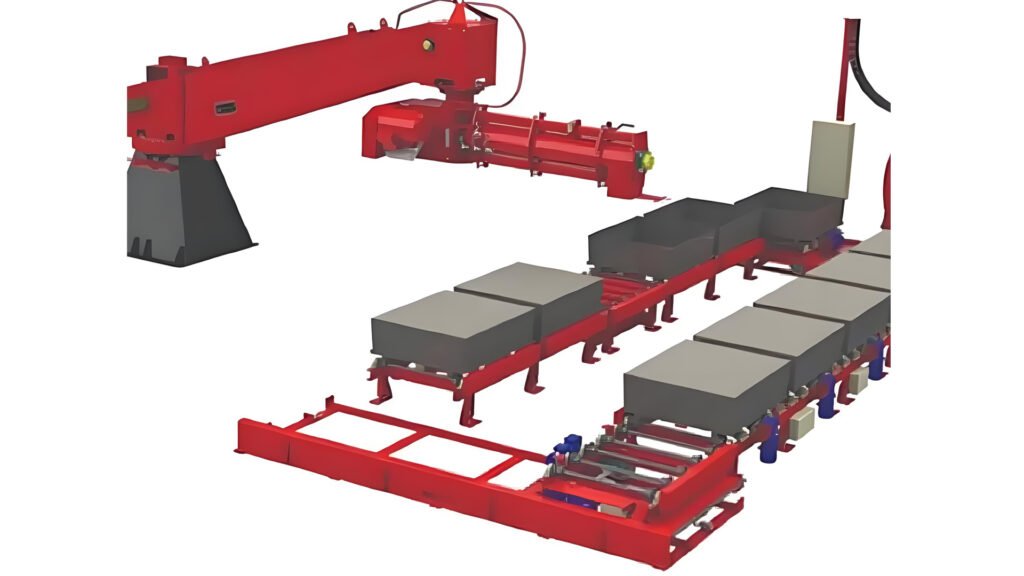
Struggling with the traditional mixing of phenolic resin sand?
Phenolic Resin Sand Mixing Machines are specialized equipment used primarily in the foundry industry for the preparation of sand molds using phenolic resin binders. These machines mix resin, hardener, and sand to produce a moldable mixture that sets at room temperature, typically used in cold box or no-bake molding processes.
Phenolic resin-coated sand is a cornerstone of foundry operations, critical for producing high-strength molds and cores in metal casting. However, traditional mixing methods—reliant on manual processes and outdated equipment—are increasingly scrutinized for their inefficiencies, inconsistent quality, and environmental drawbacks.
How Traditional Phenolic Resin Sand Mixing Works
Batch Processing:
Sand, phenolic resin (novolac or resole), and catalyst (e.g., hexamine) are manually weighed and loaded into open-top mixers.
Cold Mixing:
Agglomeration occurs at ambient temperatures, requiring extended mixing times (15–30 minutes per batch).
Manual Quality Control:
Operators visually inspect resin coverage, leading to variability in curing performance.
Key Inefficiencies
- Low Throughput
Batch processing limits output to 2–5 tons/hour, creating bottlenecks in high-volume foundries.
Frequent downtime for cleaning and reloading further reduces productivity. - Inconsistent Resin Distribution
Cold mixing struggles to achieve uniform resin coating, resulting in:
“Resin-rich” and “resin-poor” zones within the sand.
Up to 20% higher scrap rates due to weak mold sections. - High Energy Consumption
Post-mixing thermal reactivation (120–150°C) is often required to compensate for poor resin activation during mixing.
Energy usage per ton averages 30–50 kWh, 40% higher than modern systems. - Labor-Intensive Operations
Manual resin dosing and mixing adjustments increase labor costs and human error risks. - Environmental Impact
Open mixing releases volatile organic compounds (VOCs) like formaldehyde.
Dust emissions exceed 15 mg/m³ in uncontrolled setups, violating OSHA/EPA standards.
What Is A Phenolic Resin Sand Mixing Machine?
Phenolic resin sand mixing machines are specialized industrial equipment designed to produce high-quality resin-coated sand for foundry applications. These machines blend silica sand with phenolic resin and catalysts to create durable, heat-resistant molds and cores for metal casting. With their ability to ensure uniformity, consistency, and optimal resin activation, they play a pivotal role in modern foundries prioritizing precision, cost-efficiency, and environmental compliance.
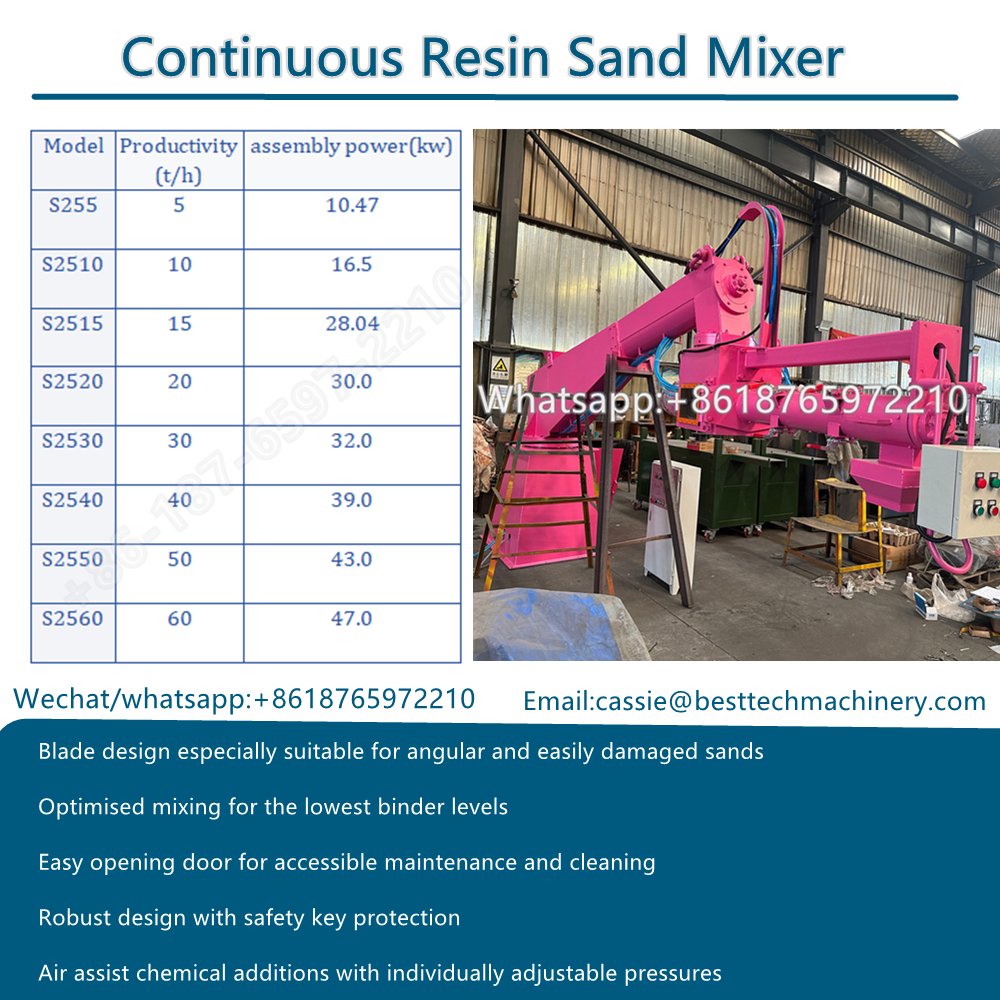
Phenolic Resin Sand Mixing Machine Working Principle
The machine operates through a systematic process:
Material Feeding: Silica sand, phenolic resin (typically novolac or resole types), and catalysts (e.g., hexamethylenetetramine) are precisely metered into the mixing chamber.
Thermal Activation: The sand is heated to 120–150°C to lower resin viscosity and enhance adhesion.
Intensive Mixing: High-speed blades or rotors uniformly coat sand grains with resin while ensuring catalyst dispersion.
Cooling & Discharge: The coated sand is cooled to prevent premature curing and discharged into storage or molding systems.
Advanced systems integrate closed-loop temperature control and real-time viscosity monitoring to optimize resin curing kinetics.
Key Components
Mixing Chamber:
Constructed from wear-resistant alloys to withstand abrasive sand.
Equipped with dual-axis agitators or rotor-stator systems for thorough blending.
Resin Injection System:
Precision gear pumps or pneumatic injectors for controlled resin dosing (±1% accuracy).
Anti-clog nozzles and heated delivery lines.
Dust Collection Unit:
Cyclone separators or bag filters to capture volatile organic compounds (VOCs) and particulates.
PLC Control Panel:
Programmable logic controllers with HMI interfaces for recipe management, process automation, and fault diagnostics.
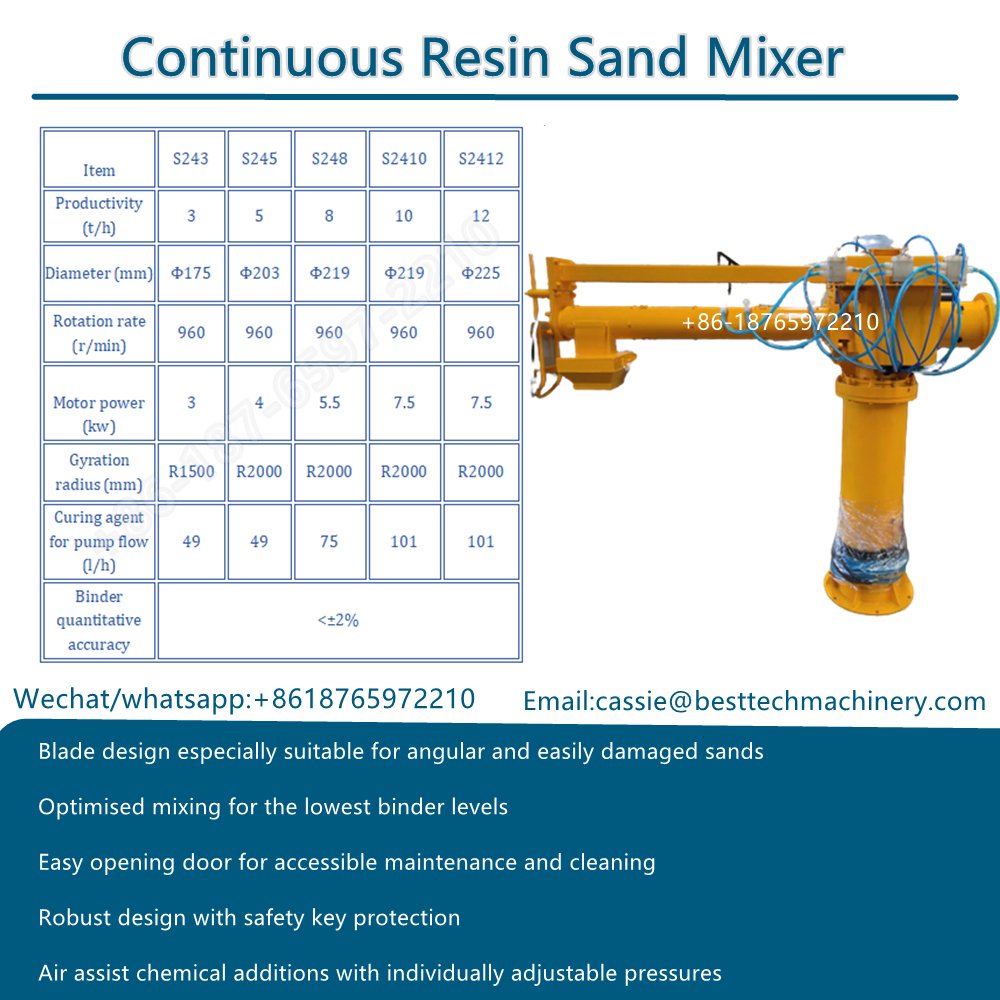
Advantages Over Conventional Mixers
Superior Coating Uniformity:
Achieves 95–98% resin coverage on sand grains, minimizing binder waste.
Fast Cycle Times:
Processes 5–30 tons/hour, depending on machine capacity.
Energy Efficiency:
Recovers waste heat for preheating incoming sand (energy savings up to 20%).
Low Emissions:
Closed-loop systems reduce VOC emissions by 50% compared to open mixing methods.
Adaptability:
Compatible with alkaline phenolic resin, furan resin, or hybrid binder systems.
How Phenolic Resin Sand Mixing Machines Revolutionize Foundry Production Efficiency
In foundry operations, the quality and efficiency of resin-coated sand production directly impact mold/core strength, casting defects, and overall profitability. Traditional manual mixing methods are increasingly replaced by phenolic resin sand mixing machines, which leverage automation, precision engineering, and advanced process control to deliver unprecedented gains in productivity, consistency, and cost savings.
1.Automation Eliminates Human Error
- Precision Dosing Systems:
Automated weighfeeders and PLC-controlled resin injectors ensure ±0.5% accuracy in resin-to-sand ratios, eliminating overuse or undercoating.
Example: A foundry in Germany reduced resin waste by 18% after switching to automated dosing.
- Closed-Loop Process Control:
Real-time sensors monitor sand moisture, temperature, and grain size, dynamically adjusting mixing parameters for optimal resin activation.
2.Continuous Mixing vs. Batch Processing
- Traditional Batch Systems:
Limited to 2–5 tons/hour with frequent downtime for loading, mixing, and cleaning. - Continuous Mixing Machines:
Process 10–25 tons/hour without interruption, using rotary turbines or twin-screw designs for non-stop material flow.
Result: A Chinese automotive foundry boosted output by 300% while reducing labor costs by 40%.
3.Integrated Thermal Activation
- Heating jackets or induction systems preheat sand to 80–120°C during mixing, achieving:
- Faster resin curing: Cycle times reduced by 30–50% compared to cold mixing.
- Energy savings: Eliminates the need for post-mixing oven treatments, cutting energy use by up to 35%.
4.Superior Resin Utilization
High-speed agitators or rotor-stator mechanisms ensure 95–98% resin coverage on sand grains.
Benefits:
- Lower binder consumption (saves $8–12/ton in material costs).
- Reduced scrap rates from weak molds (defects drop from 12% to <3%).
Conclusion
Phenolic resin sand mixing machines are indispensable for foundries aiming to produce high-integrity castings while meeting stringent environmental standards. By combining advanced automation, precision mixing, and sustainable practices, these machines empower manufacturers to stay competitive in an era of rapid technological and regulatory evolution. Future advancements in IoT integration and green chemistry will further redefine their role in smart foundries.