
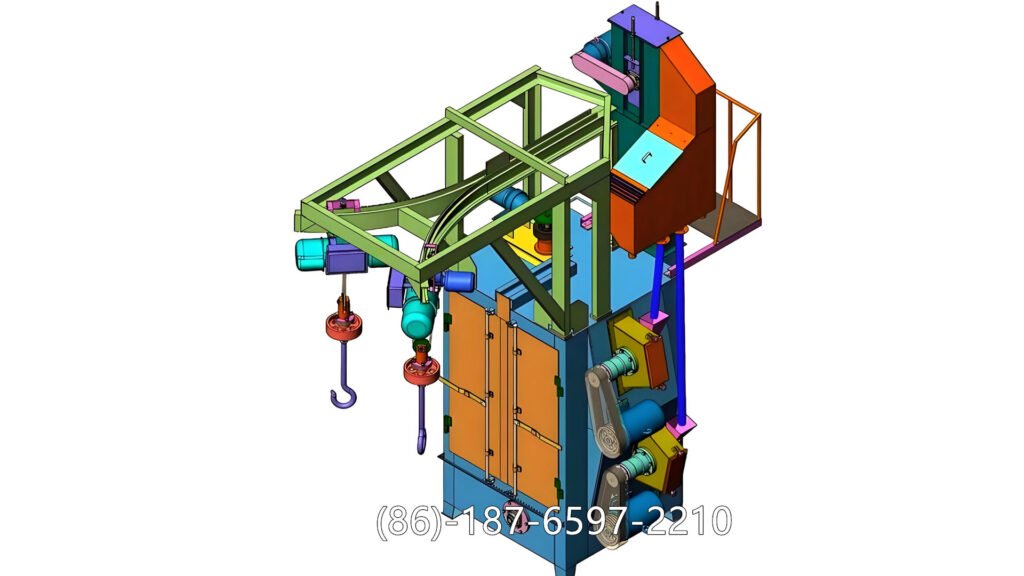
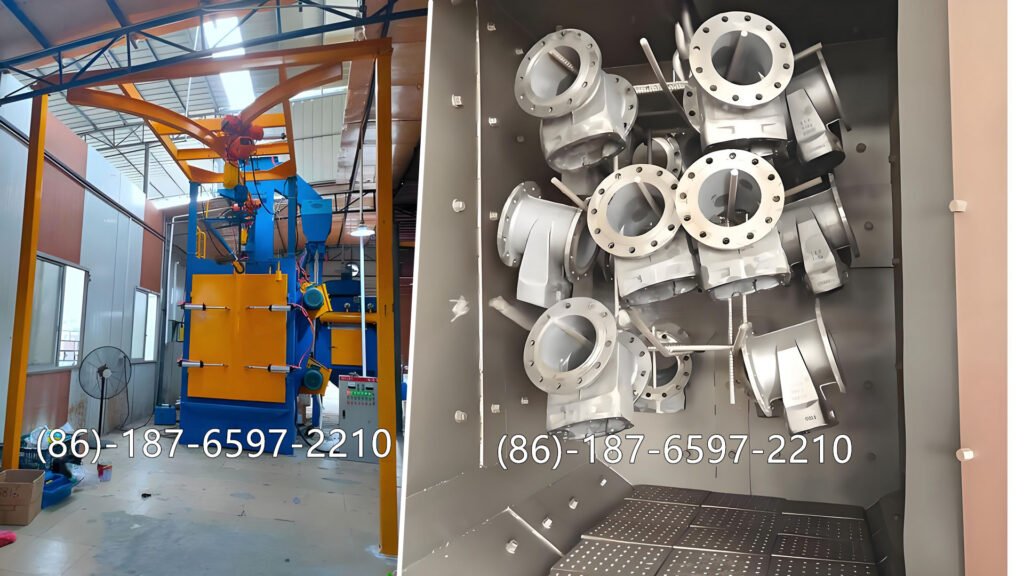
Hanger shot blasting machine is an industrial surface cleaning and finishing machine used to remove rust, scale, paint, and other contaminants from metal parts. It is called a “hanger” type because the workpieces are hung on a hook or hanger inside the blasting chamber during cleaning.
Regular Inspection and Maintenance
Working with hanger shot blasting machines on a daily basis, that regular inspection and maintenance are essential for keeping the machine in peak working condition. A well-maintained shot blasting machine not only delivers consistent cleaning quality but also extends equipment life and reduces downtime. Here’s how we manage it in our workshop.
1. Daily Inspection Before Operation
Every day before starting the machine, we carry out a visual and functional check to ensure safe operation.
Key points include:
- Check the blast wheel housing and blades for any wear or cracks. Damaged blades can cause imbalance and reduce blasting efficiency.
- Inspect the rubber curtains and chamber liners to ensure they are not torn or excessively worn. These protect the chamber from shot damage.
- Confirm the tightness of bolts and fasteners on the blasting unit, hanger system, and doors. Vibration can loosen them over time.
- Ensure shot flow and recycling system are running smoothly — no blockages or leakage in the screw conveyors or elevator.
2. Weekly Maintenance Tasks
Once a week, we perform deeper checks to prevent long-term damage.
We focus on:
- Inspecting bearings and lubrication points on the blast wheel motor and elevator shafts. Proper greasing reduces friction and prevents overheating.
- Checking the separator efficiency. Dust and undersized shots should be removed to maintain uniform blasting performance.
- Cleaning the dust collector filters to ensure stable airflow and prevent dust accumulation inside the cabinet.
- Verifying safety switches and limit sensors — these are critical for protecting both the operator and the equipment.
3. Monthly and Quarterly Checks
Longer maintenance intervals focus on major components and performance testing.
These include:
- Replacing worn blast wheel blades, liners, and impellers as part of preventive maintenance.
- Inspecting hanger hooks and rotation systems for smooth operation and balance. Misalignment can cause uneven blasting.
- Calibrating the shot flow rate to match production requirements.
- Checking motor vibration and temperature levels to detect any early signs of mechanical failure.
4. Record Keeping and Continuous Improvement
We maintain a detailed maintenance logbook where every inspection, repair, and part replacement is recorded. This helps track wear patterns and predict future maintenance needs. Over time, this data allows us to optimize spare part inventory and schedule downtime efficiently.
5. Benefits of Regular Maintenance
From experience, the results are clear:
- Reduced downtime due to fewer unexpected failures.
- Consistent blasting quality and surface finish.
- Extended service life of major components.
- Improved safety for workshop personnel.
Final Thoughts
Regular inspection and maintenance may seem routine, but it’s the foundation of reliable production. In our foundry, we treat it as a daily discipline — not just a checklist. A well-maintained hanger shot blasting machine keeps the workflow steady, the surface quality high, and the team confident in every operation.