
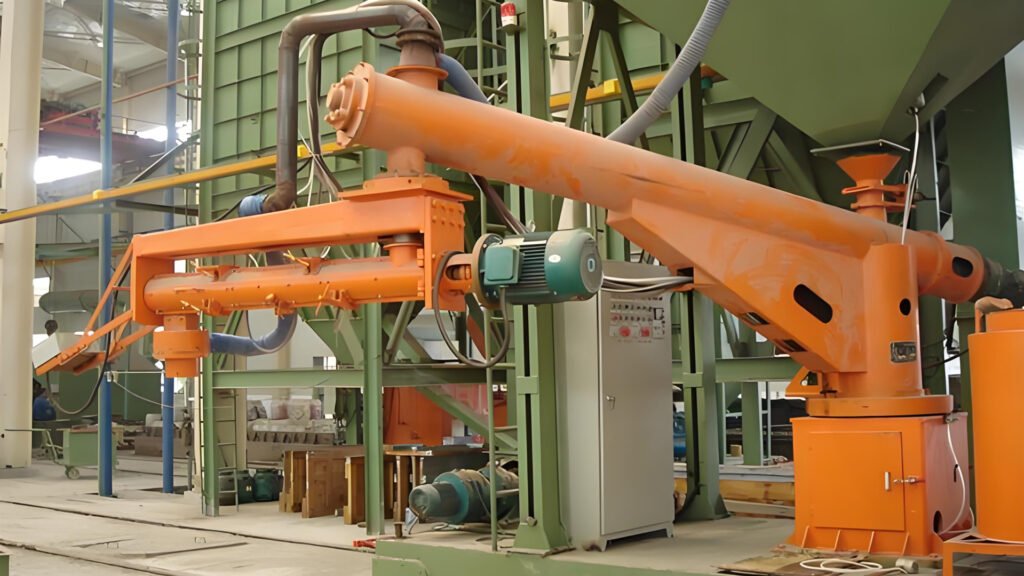
Struggling with the mixing of casting sand?
Resin sand mixer is a specialized industrial machine used in foundries to mix resin, hardener (catalyst), and sand to produce a uniform resin-coated sand mixture. This mixture is commonly used for making high-strength sand molds and cores in no-bake casting processes.
Resin Sand Mixer Introduction
Resin sand mixers are pivotal in the manufacturing of high-strength sand molds and cores, particularly in no-bake casting systems. These machines blend resin, catalyst (hardener), and sand into a homogeneous mixture, which solidifies into durable molds without requiring external heat.
Working Principle and Key Components
Resin sand mixers operate by uniformly coating sand grains with resin and catalyst. The process involves:
- Mixing Mechanism: Rotor blades or high-speed impellers ensure thorough integration of sand, resin, and catalyst .
- Precision Dispensing: Automated systems control resin-to-sand ratios (typically 1–3% resin by weight) to optimize curing and mold strength .
- Reclamation Integration: Advanced models incorporate sand recycling, removing impurities like burnt resin and iron particles from used sand for reuse .
Key components include:
- Rotor/Blade Assembly: Ensures rapid and even distribution of binding agents.
- Resin Spray System: Atomizes liquid resin for consistent coating.
- PLC Controls: Enable programmable mixing cycles and real-time adjustments.
Applications in Foundry Technology
Resin-coated sand is widely used for:
- Complex Castings: Produces molds with high dimensional accuracy and smooth surfaces, ideal for automotive and machinery parts .
- Large-Scale Components: Suitable for castings ranging from dozens of kilograms to several tons, such as industrial valves and pump housings .
- No-Bake Systems: Eliminates oven curing, reducing energy consumption and cycle times.
Advantages Over Traditional Methods
- Superior Mold Strength: Resin-bonded sand achieves higher hardness and thermal stability compared to green sand .
- Reduced Defects: Minimizes sand inclusions and surface porosity, enhancing casting quality .
- Material Efficiency: Closed-loop sand reclamation systems reduce waste and material costs by up to 30% .
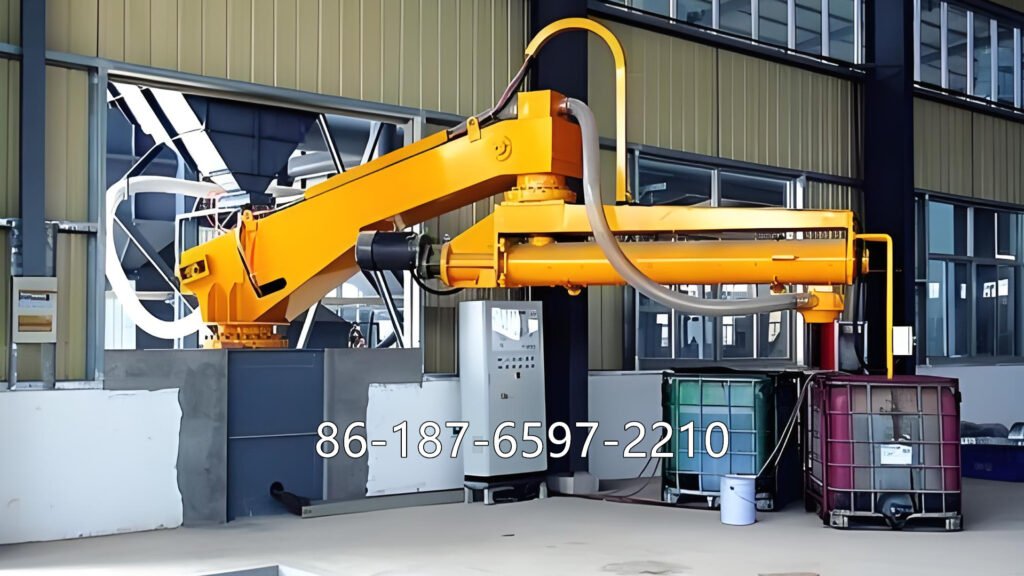
The Crucial Role of Resin Sand Mixing in the Foundry Industry
Resin sand mixing is a cornerstone of modern foundry processes, directly influencing casting quality, production efficiency, and cost control. This article explores why precise resin sand mixing is indispensable in the foundry industry, supported by technical insights and practical applications.
1. Ensuring Uniformity for Optimal Mold Integrity
Resin sand mixtures must achieve homogeneity to guarantee consistent mold strength and dimensional accuracy. Advanced mixing equipment, such as double-arm resin sand mixers, employs electric variable diaphragm pumps to stabilize binder flow and ensure even distribution of resin and additives . Uniform mixing minimizes defects like gas porosity or sand inclusions, which are critical for high-precision castings in automotive or aerospace industries.
2. Balancing Old and New Sand Ratios
Efficient recycling of resin sand is vital for sustainability. Mixers integrate proportioning systems to regulate the ratio of reclaimed and fresh sand. This not only reduces material waste but also maintains the optimal chemical composition required for mold stability.
3. Short Mixing Time and Clean Material Flow
Modern mixers prioritize speed without compromising quality. Equipment like the S25 double-arm movable mixer achieves rapid mixing cycles (e.g., 10t/h capacity) while eliminating “head” or “tail” sand residues. This design minimizes downtime for cleanup and enhances production throughput, crucial for high-volume foundries .
4. Adaptability to Diverse Sand Systems
Resin sand mixers are engineered to handle both resin-bonded and silicate sand systems. Features like open-cage walls allow easy adjustments for different sand types or binder formulations. Such flexibility is essential for foundries producing varied castings, from iron engine blocks to aluminum alloy components.
5. Enhancing Process Control and Maintenance
Advanced mixers incorporate user-friendly maintenance designs. For example, removable panels and accessible agitator blades simplify cleaning and part replacement. Real-time monitoring systems further enable operators to track mixing parameters (e.g., binder flow rate, sand moisture), ensuring repeatability and reducing human error.
Why Resin Sand Mixers Are Widely Used in Foundry Plants
Resin sand mixers have become indispensable in modern foundry plants due to their efficiency, precision, and adaptability.
High Mixing Efficiency and Consistency
Resin sand mixers ensure rapid and uniform blending of sand, binders (e.g., furan resin), and curing agents. For example:
- Short mixing cycles (e.g., 1.5–15 tons/hour capacity) reduce production downtime .
- Dual-stage mixing systems (low-speed conveying + high-speed agitation) achieve homogeneity, critical for mold/core quality .
- Automated material dosing minimizes human error, ensuring precise ratios of sand, resin, and catalysts .
Cost-Effectiveness and Material Savings
- Reduced Resin Consumption: Advanced mixing mechanisms (e.g., rotor-type blades) optimize resin distribution, lowering glue usage by up to 20% compared to traditional methods .
- Minimal Waste: Clean discharge systems leave negligible residue, reducing material loss .
- Low Maintenance: Abrasion-resistant components (e.g., carbide-surfaced blades) extend equipment lifespan beyond 2,000 hours .
Versatility Across Foundry Applications
- Adaptability to Different Binders: Compatible with no-bake furan, phenolic, or cold-box resin systems, supporting diverse casting processes .
- Scalability: Models range from small batch mixers (e.g., 1.5 t/h) to continuous systems (e.g., 45 t/h), catering to both small workshops and large-scale production lines .
- Integration with Automation: PLC-controlled systems enable seamless coordination with sand reclaimers, molders, and conveyors .
Environmental and Operational Benefits
- Dust Suppression: Closed designs and integrated dust collectors reduce airborne particulates, aligning with workplace safety standards .
- Energy Efficiency: Optimized power consumption (e.g., 4–60 kW depending on capacity) lowers operational costs .
- Ease of Cleaning: Openable mixing chambers simplify maintenance and residue removal .
Enhanced Product Quality
- Consistent Mold Strength: Precise control over curing agent dispersion minimizes defects like gas porosity or weak cores.
- Customizable Parameters: Adjustable mixing angles, conveyor speeds, and baffle positions allow fine-tuning for specific alloys or casting geometries.
Conclusion
Resin sand mixers are indispensable in modern foundries, enabling efficient production of high-integrity molds for diverse industries. Innovations in automation, material recycling, and smart controls continue to enhance their performance and sustainability. As casting technologies evolve, these machines will remain central to achieving precision and cost-efficiency in metalworking.