
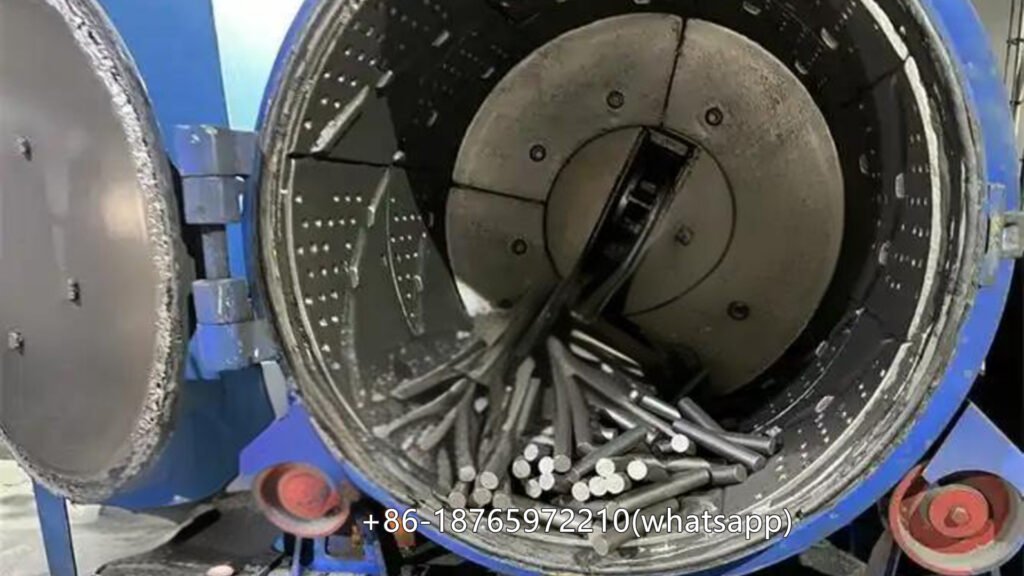
A rotary drum shot blasting machine is a type of shot blasting equipment designed for cleaning, surface preparation, and finishing of small to medium-sized parts. It uses a rotating drum (or barrel) to tumble the parts while abrasive media is projected at them by high-speed blast wheels. This tumbling action ensures thorough exposure of all surfaces to the abrasive, which results in a uniform surface treatment.
How It Works:
Rotary Drum (Tumbling Barrel):
- The parts are placed into a rotating drum or barrel. The drum rotates continuously, causing the parts inside to tumble and collide with each other and the inner walls of the drum.
- This tumbling action ensures that all surfaces of the parts are exposed to the abrasive media as they move through the blasting chamber.
Blast Wheels:
- The machine is equipped with one or more blast wheels positioned around the drum. These wheels spin at high speed and propel abrasive media (like steel shots, grit, or other types of abrasives) at the tumbling parts.
- The blast wheels use centrifugal force to accelerate the abrasive particles and direct them toward the workpieces at high velocity.
Abrasive Media:
- The abrasive media is typically made of materials like steel shots, steel grit, or other specialized media such as ceramic beads, depending on the type of part and the desired finish.
- The media strikes the parts and removes contaminants such as rust, scale, dirt, or old coatings, and it also prepares the surface for subsequent processes like painting or coating.
Abrasive Recovery:
- After striking the parts, the abrasive media falls to the bottom of the drum, where it is collected by an abrasive recovery system (such as a screw conveyor, bucket elevator, or vibratory screen).
- This recovery system separates out any debris or contaminants, and the clean abrasives are sent back into the system for reuse.
Dust Extraction:
- As the blasting process generates dust and debris, a dust extraction system is used to remove these particles from the air.
- The dust is typically captured through vacuum systems or filters, keeping the machine and work area clean.
Workpiece Movement:
- The tumbling of parts in the drum ensures that all surfaces are evenly exposed to the abrasive media. The rotation also helps to break up any contaminants or unwanted materials stuck to the parts.
- The rotating drum allows for a consistent and uniform surface treatment, even for parts with complex shapes or multiple surfaces.
Finished Parts
- After the blasting cycle is complete, the parts are unloaded from the machine. Depending on the application, they may undergo further processes like coating, painting, or inspection.
Key Benefits of Rotary Drum Shot Blasting Machines:
- Efficient Surface Cleaning: The tumbling action of the drum ensures that all surfaces of the parts are evenly treated, providing consistent and thorough cleaning.
- High Throughput: Rotary drum shot blasting machines are designed to handle large volumes of parts in a single batch, making them ideal for high-volume production.
- Versatile: They can process a wide variety of parts, including castings, forged parts, metal components, and other small to medium-sized items. They are particularly well-suited for parts that require multiple surface treatments.
- Cost-Effective: The ability to recycle abrasive media reduces material costs over time, making rotary drum shot blasting machines an economical solution for many manufacturing operations.
- Automated Process: These machines can be integrated into fully automated production lines, reducing the need for manual intervention and improving overall productivity.
Applications:
Rotary drum shot blasting machines are widely used in industries where surface cleaning and preparation are crucial, such as:
- Foundries: Cleaning metal castings and removing any residual sand or scale after molding.
- Automotive: Surface preparation of parts like engine blocks, crankshafts, wheels, and small automotive components.
- Aerospace: Cleaning and finishing of aerospace components, including castings and engine parts.
- Metalworking: Deburring, cleaning, and finishing metal parts like fasteners, gears, and other small components.
- Construction and Heavy Equipment: Surface cleaning of structural steel components, such as beams, frames, and brackets.
- Tool Manufacturing: Cleaning and finishing of tools or dies before coating or further machining.
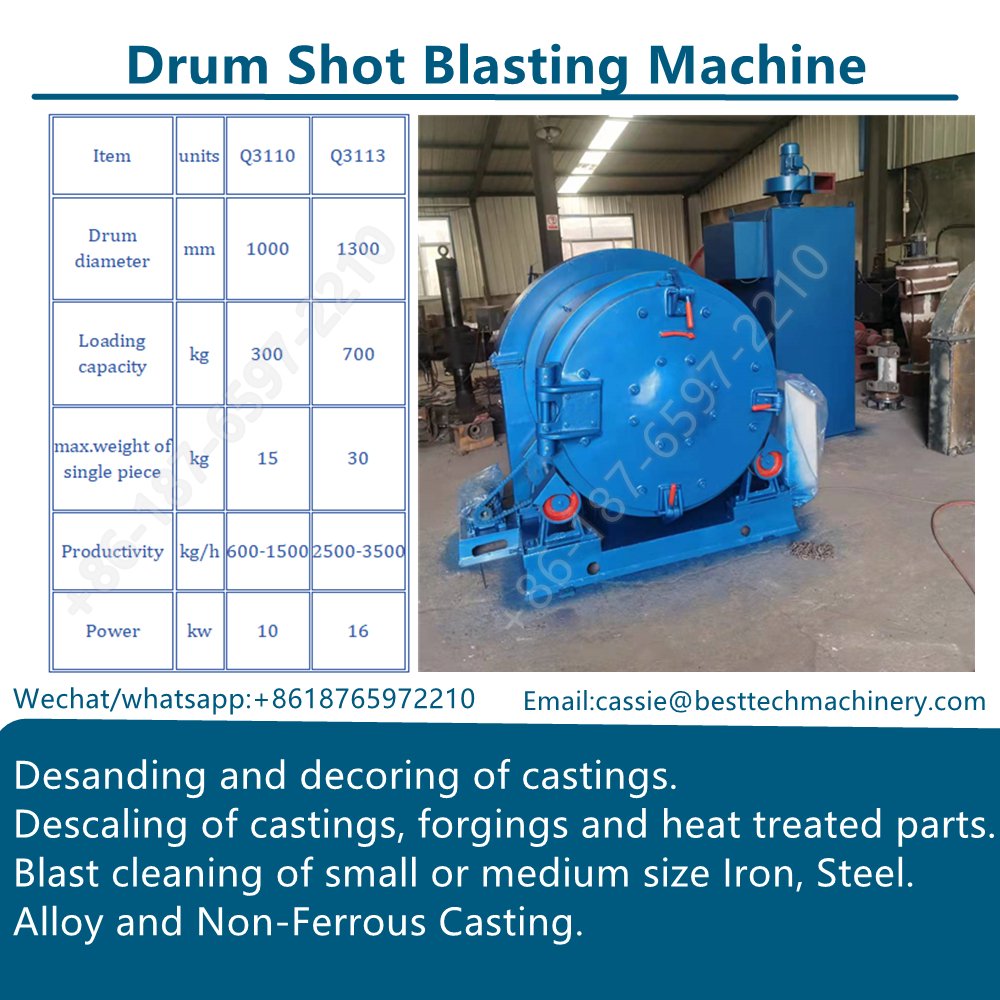
Advantages:
- Even Treatment: The tumbling action ensures that all parts receive uniform exposure to the abrasive media, which is essential for consistent surface finishing.
- High Capacity: Rotary drum blasters can handle large batches of small or medium-sized parts, making them ideal for high-throughput operations.
- Versatility: These machines are suitable for processing a variety of materials, including steel, aluminum, and other alloys, as well as parts with complex shapes or multiple surfaces.
- Reduced Labor: Automation of loading, processing, and unloading reduces manual labor and increases operational efficiency.
Conclusion
A rotary drum shot blasting machine is a versatile and efficient solution for cleaning, deburring, and surface preparation of small to medium-sized parts. Its ability to handle large batches and provide uniform coverage makes it ideal for industries like foundries, automotive, aerospace, and metalworking. The recycling of abrasive media helps reduce operational costs, and the ability to integrate automation improves overall productivity.