
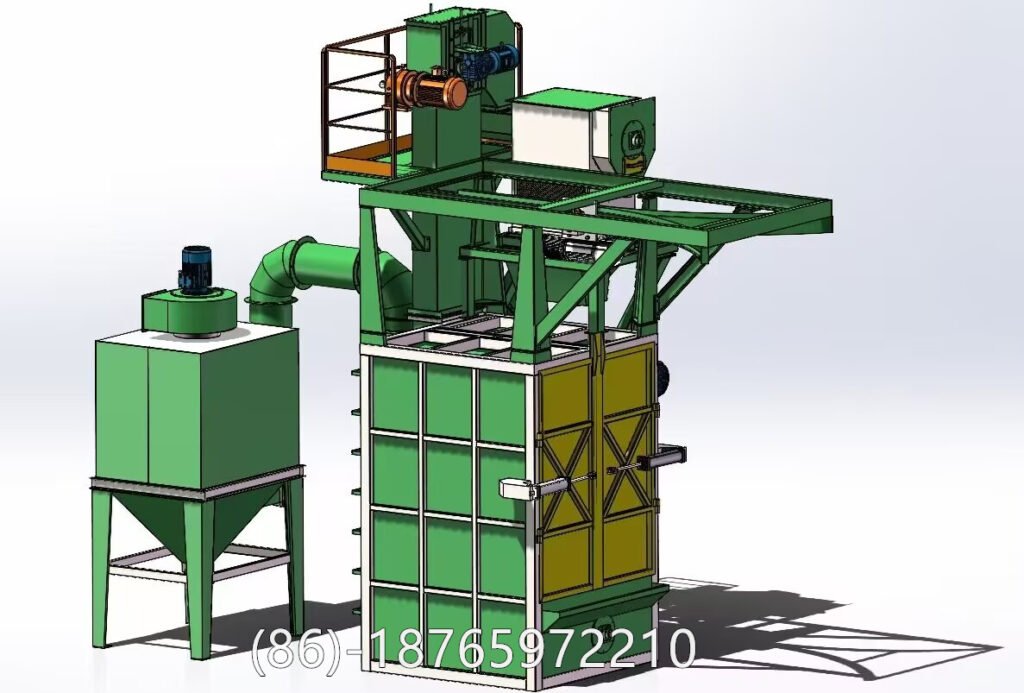
If you work in foundry or metal fabrication workshop, you know one thing clearly:
Hanger shot blasting machine is powerful.
And powerful equipment must be respected.
This machine can clean rust, remove scale, improve surface finish.
But if you ignore safety, it can also damage equipment, destroy parts, or even hurt people.
As machine manufacturer, I always tell my team:
Efficiency is important.
But safety is the first productivity.
Let’s talk seriously about safety when operating hanger shot blasting machine.
Introduction
In metal fabrication and foundry workshops, the Hanger Shot Blasting Machine is widely used for removing rust, scale, and sand from castings, weldments, and structural steel components.
However, due to high-speed abrasive projection and rotating mechanical systems, this equipment presents potential safety risks if not properly managed.
From practical workshop engineering experience, safe operation depends not only on machine design, but also on operator awareness, preventive inspection, and compliance with international safety standards.
This guide outlines essential safety measures and operational precautions.
1. Understanding Operational Risk Factors
Before operating the equipment, personnel must understand the main hazards:
1.1 Mechanical Risks
- Blasting wheel rotation speed: up to 2,800–3,000 rpm
- Abrasive projection velocity: 60–80 m/s
- Suspended load movement
- Rotating hook system
1.2 Environmental Risks
- Noise levels: 85–100 dB
- Dust generation
- Steel shot rebound
- Electrical control systems
Without proper protection, risks include impact injury, hearing damage, electric shock, and respiratory irritation.
2. Pre-Operation Safety Inspection Checklist
Before starting the machine, operators should conduct systematic inspection.
2.1 Mechanical Safety Check
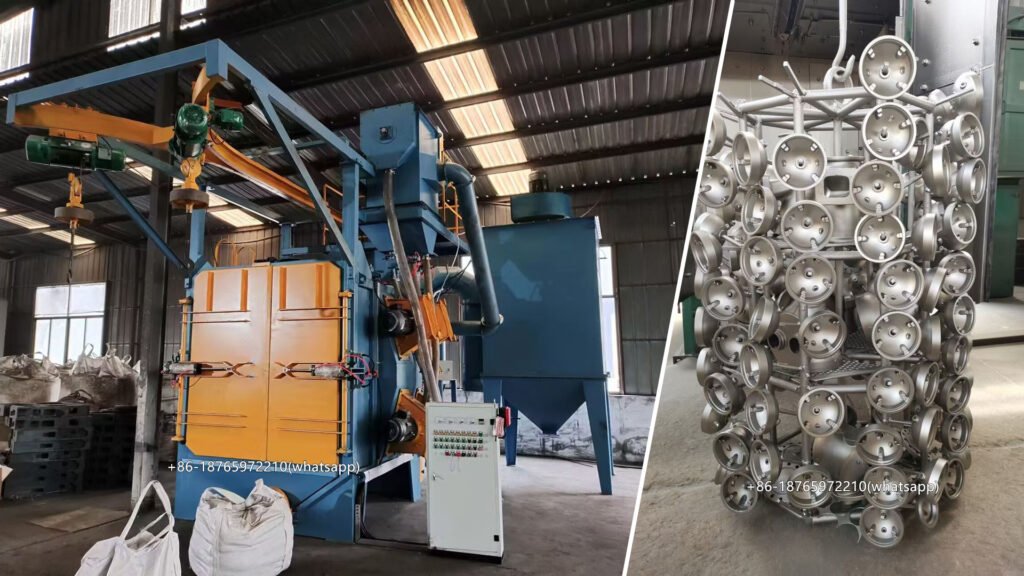
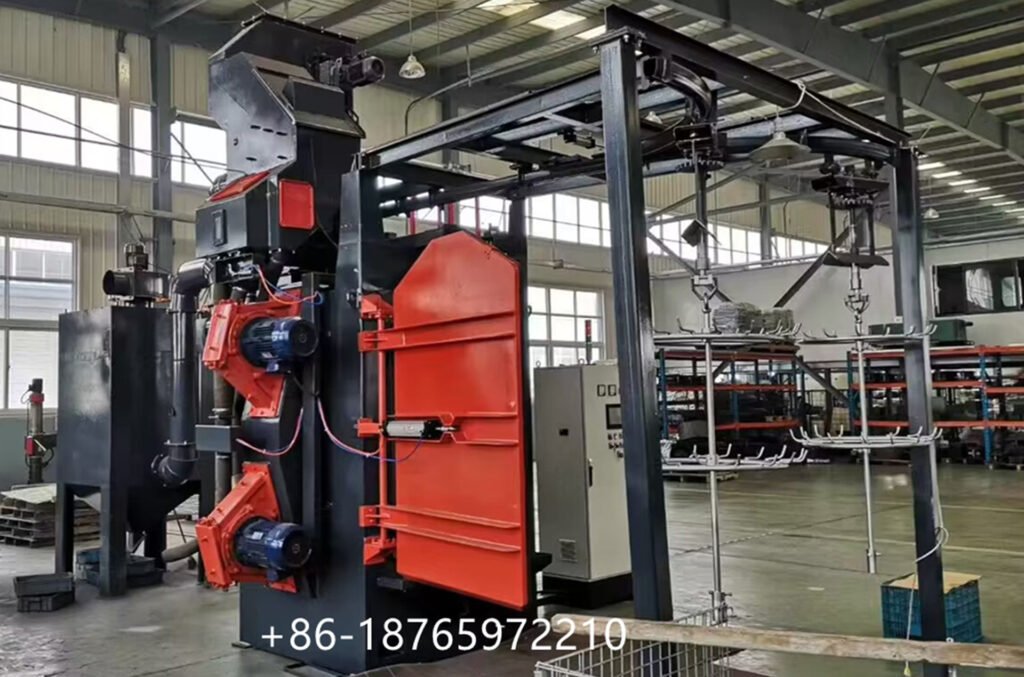
- Confirm chamber door is fully closed and sealed
- Verify door safety interlock function
- Check hanger hook locking mechanism
- Inspect liner plates and guards
- Ensure no foreign objects inside chamber
The machine must never operate with safety interlocks bypassed.
2.2 Electrical System Check
- Confirm stable voltage supply
- Test emergency stop button
- Check motor current display
- Inspect grounding system
Electrical grounding and protection must comply with ISO 12100 (Safety of Machinery – Risk Assessment and Risk Reduction).
2.3 Abrasive Circulation System Check
- Confirm correct shot level
- Inspect bucket elevator belt tension
- Check separator airflow condition
- Remove broken abrasive
Blocked circulation may cause overload or motor overheating.
3. Personal Protective Equipment (PPE)
Proper PPE is mandatory during operation.
Required equipment:
- Safety helmet
- Protective goggles
- Hearing protection
- Anti-dust mask (if necessary)
- Safety gloves
- Steel-toe shoes
According to OSHA, hearing protection is required when workplace noise exceeds 85 dB over an 8-hour exposure period.
4. Safe Operating Procedures
4.1 Loading Workpieces
- Do not exceed rated load capacity
- Balance workpieces evenly
- Ensure secure hook connection
- Keep clear of suspended loads
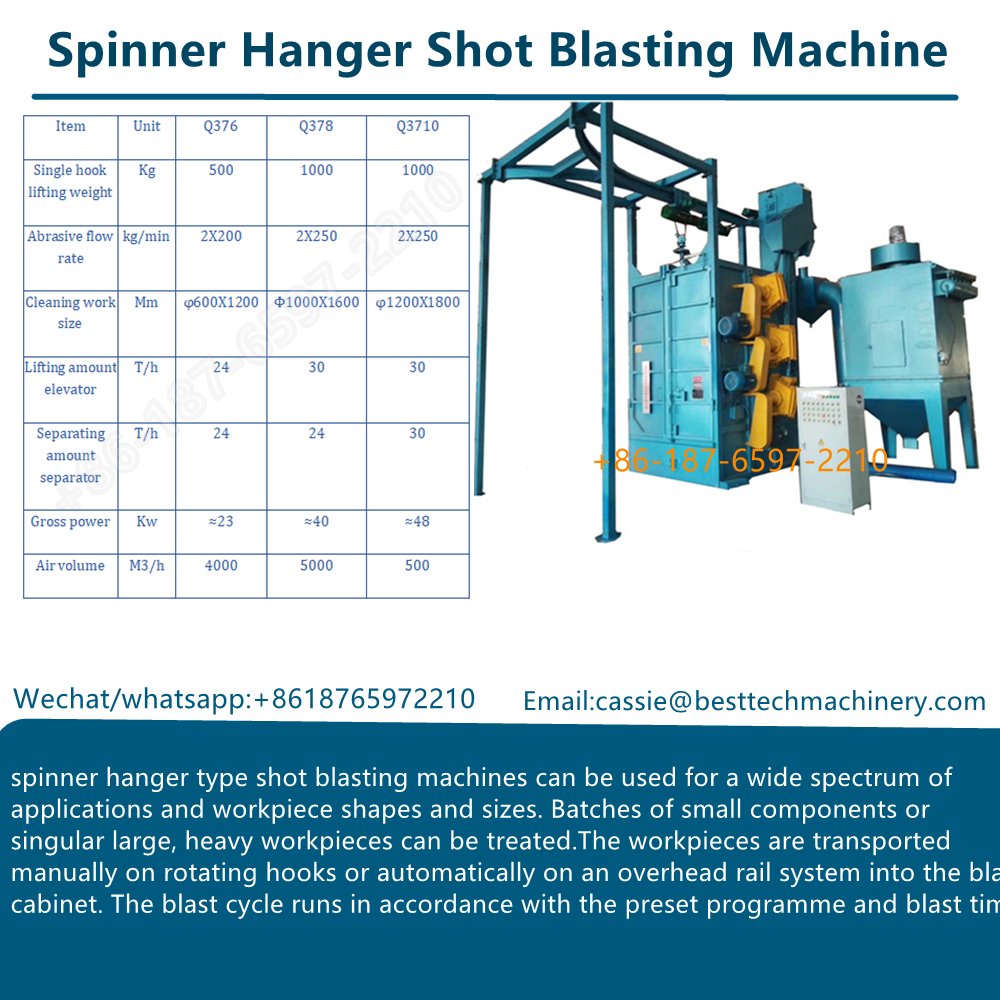
Typical hanger load capacity: 500–2,000 kg depending on machine model.
4.2 Standard Startup Sequence
To avoid mechanical stress and dust leakage:
- Start dust collector
- Start bucket elevator and screw conveyor
- Start blasting wheels
- Start hook rotation
Incorrect startup sequence may cause abrasive accumulation.
4.3 During Operation
- Do not open chamber door
- Monitor vibration and abnormal noise
- Observe motor current readings
- Ensure dust collector pressure difference remains 800–1200 Pa
If abnormal vibration or high current is detected, stop machine immediately.
4.4 Standard Shutdown Procedure
- Stop abrasive feed
- Stop blasting wheels
- Continue dust collector for 2–3 minutes
- Stop elevator and conveyor
This reduces dust accumulation and internal wear.
5. Lockout and Maintenance Safety
Before maintenance:
- Disconnect main power supply
- Apply lockout/tagout procedure
- Confirm zero-energy state
- Wait for blasting wheel complete stop
Energy isolation procedures should follow safety guidelines outlined by ANSI and OSHA.
Never perform maintenance while the machine is energized.
6. Environmental Safety Control
6.1 Dust Control
Dust collection systems should comply with:
- ISO 11124 (Metallic blasting abrasives requirements)
- Workplace emission regulations
Regular filter cleaning is required to prevent fire hazard and health risks.
6.2 Noise Control
Noise reduction measures:
- Install sound insulation panels
- Maintain proper liner thickness
- Avoid worn blades (which increase vibration noise)
6.3 Fire Prevention
Preventive measures include:
- Regular dust removal
- No open flame near machine
- Proper electrical grounding
- Periodic inspection of wiring
7. Safety Management and Operator Training
Effective safety management requires:
- Standard Operating Procedures (SOP)
- Monthly safety inspection
- Regular operator training
- Maintenance log documentation
- Emergency response drills
Human factors account for most industrial accidents; proper training significantly reduces risk.
8. Common Unsafe Practices to Avoid
From real workshop cases:
- Operating with damaged door seal
- Ignoring abnormal vibration
- Overloading hanger capacity
- Using low-quality abrasive
- Skipping daily inspection
Most accidents occur due to negligence rather than equipment failure.
9. Frequently Asked Questions (FAQ)
Q1: What is the safe noise exposure level?
According to OSHA guidelines, hearing protection is required when noise exceeds 85 dB for extended exposure.
Q2: Can the chamber door be opened during operation?
No. Interlock systems must remain functional at all times.
Q3: Why must dust collector start before blasting wheel?
To prevent dust leakage and ensure negative pressure inside chamber.
Conclusion
The Hanger Shot Blasting Machine is a powerful surface preparation solution, but it operates in a high-energy mechanical environment.
By implementing strict inspection procedures, proper PPE usage, correct startup/shutdown sequence, and compliance with international safety standards, workshops can:
- Prevent workplace accidents
- Protect operator health
- Reduce equipment damage
- Maintain stable production efficiency
In industrial surface treatment, safety is not only a regulation requirement — it is the foundation of sustainable operation and long-term productivity.