
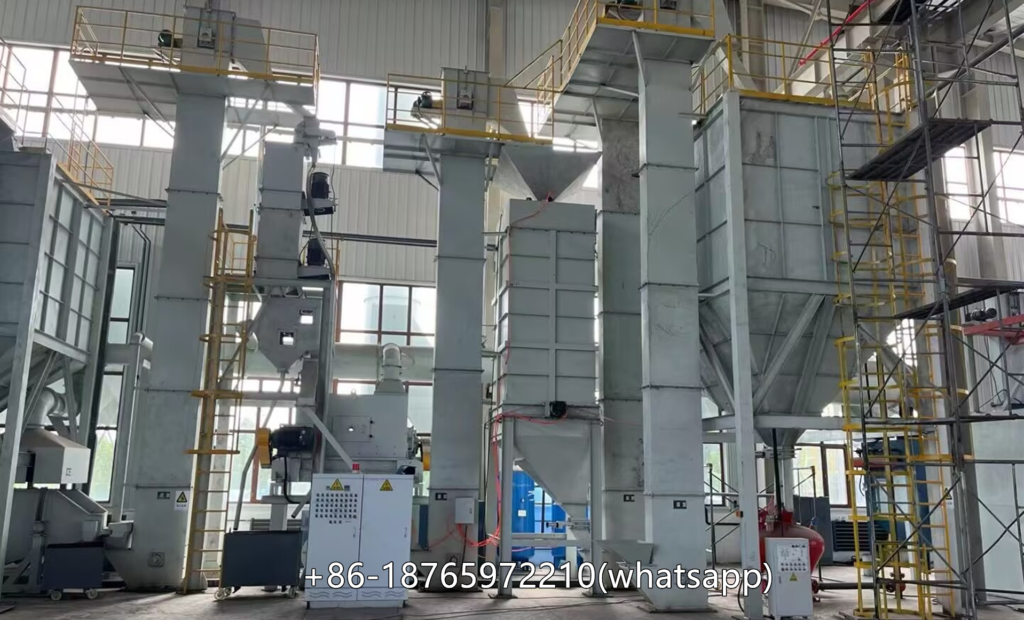
A resin sand recovery line in a sand reclamation system is a specialized setup designed to handle and recycle resin – bonded sand used in foundry processes.
Sand Reclamation System Components
- Feeding Equipment: This includes conveyors or hoppers that transport the used resin sand from the casting area to the recovery line. It ensures a continuous and controlled supply of the sand for processing.
- Crushing and Disintegrating Equipment: Machines like sand crushers and disintegrators are used to break down the used sand molds or cores into smaller particles. This helps in separating the resin – coated sand grains and preparing them for further processing.
- Binder Removal Equipment: The key component is an attrition scrubber or a thermal reclamation unit. The attrition scrubber uses mechanical friction to remove the resin binder from the sand grains’ surface, while the thermal reclamation unit heats the sand to a high temperature to burn off the resin binder.
- Separation Equipment: Air classifiers, sieves, and magnetic separators are employed. Air classifiers separate the sand from fine dust and lightweight impurities based on their different settling velocities in an air stream. Sieves remove oversized particles and fine powders, ensuring the sand particle size is within the desired range. Magnetic separators extract any ferrous metal contaminants present in the sand.
- Cooling Equipment: After the reclamation process, the sand is often hot. Cooling equipment such as cooling drums or fluid – bed coolers is used to lower the sand temperature to a suitable level for reuse, typically to around room temperature.
- Storage and Distribution System: Reclaimed sand is stored in silos or bins until it is needed for the next casting cycle. From there, it is distributed to the molding stations through conveyors or other transport mechanisms.
Working Process
- Feeding: Used resin sand is fed into the recovery line at a consistent rate.
- Crushing and Disintegrating: The sand molds or cores are broken into smaller pieces to increase the surface area and make it easier to remove the binder.
- Binder Removal: The resin binder is removed from the sand grains either by mechanical attrition or thermal treatment. In the case of thermal reclamation, the sand is heated to a temperature where the resin binder decomposes and burns off, leaving the clean sand grains.
- Separation: The sand is then passed through a series of separation processes to remove dust, fines, and contaminants. This ensures that the reclaimed sand has a high purity and the correct particle size distribution.
- Cooling: The hot reclaimed sand is cooled to a temperature that is suitable for reuse in the molding process. This helps in preventing any adverse effects on the new resin – sand mixture and ensures proper mold formation.
- Storage and Distribution: The cooled and reclaimed sand is stored and then distributed to the molding areas as needed for the production of new molds and cores.

Advantages
- Cost Reduction: By reusing the resin sand, the need to purchase large quantities of new sand is reduced, resulting in significant cost savings. Additionally, the reduced waste disposal costs contribute to overall cost – effectiveness.
- Environmental Friendliness: It helps conserve natural sand resources and reduces the amount of waste sent to landfills. This is beneficial for the environment and aligns with sustainable development goals.
- Improved Casting Quality: The reclaimed sand has a more consistent quality compared to virgin sand, which leads to better – quality molds and cores. This, in turn, improves the dimensional accuracy and surface finish of the castings, reducing defects and increasing the overall quality of the final products.
Maintenance and Troubleshooting
Regular Inspection: Regular inspection of the equipment is necessary to identify any signs of wear, damage, or clogging. This includes checking the conveyor belts for tears, the crushers and disintegrators for worn – out parts, and the sieves and separators for blockages.
Cleaning and Lubrication: Keeping the equipment clean is essential to prevent the build – up of sand, dust, and resin residue, which can affect its performance. Regular lubrication of moving parts is also required to reduce friction and ensure smooth operation.
Replacing Worn – out Parts: Parts such as crusher hammers, attrition scrubber paddles, and conveyor belts are prone to wear and need to be replaced regularly to maintain the efficiency of the recovery line.
Troubleshooting Common Issues: Some common issues in a resin sand recovery line include poor binder removal, inconsistent sand quality, and equipment breakdowns. For example, if the binder removal is not complete, it could be due to insufficient heating in the thermal reclamation furnace or improper operation of the attrition scrubber. In such cases, adjustments to the temperature, residence time, or equipment settings may be required. Inconsistent sand quality can be caused by problems in the separation or classification processes, which may need to be recalibrated. Equipment breakdowns can often be traced to electrical faults, mechanical failures, or improper maintenance, and require prompt repair or replacement of the faulty components.
Benefits of Sand Reclamation
- Reduces raw sand consumption
- Lowers disposal and environmental costs
- Improves mold and casting quality
- Enhances foundry sustainability
Conclusion
A resin sand recovery line is a crucial part of a foundry’s sand reclamation system, especially for processes that use resin – bonded sand. It enables the efficient recycling and reuse of sand, bringing multiple benefits to the foundry’s operations.