
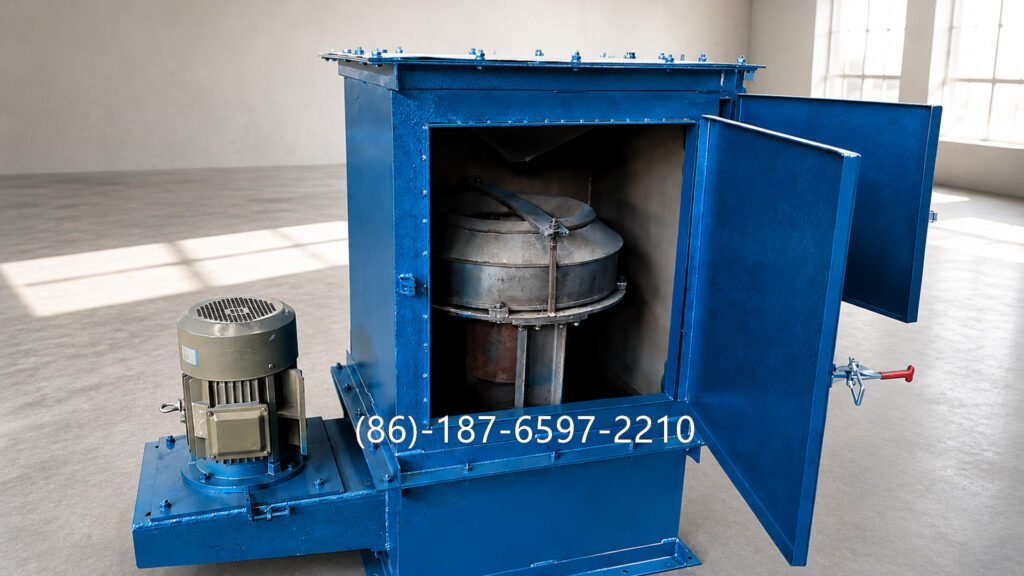
Why Is Your Reclaimed Sand Quality Still Too Low?
Many foundries have already invested in:
- Resin sand crushing machines
- Shakeout machines
- Dust collection systems
- Sand screening equipment
Yet they still experience:
❌ Low reclaimed sand quality
❌ High Loss on Ignition (LOI)
❌ Excessive resin residue
❌ Poor mold strength
❌ High new sand consumption
❌ Rising production costs
The reason is simple.
Primary crushing alone cannot completely remove the resin film attached to the sand grains.
To produce high-quality reclaimed sand, every modern foundry needs a Secondary Resin Sand Reclamation Machine.
It is the core equipment that transforms crushed resin sand into reusable molding sand with consistent quality.
What Is a Secondary Resin Sand Reclamation Machine?
Secondary Resin Sand Reclamation Machine is designed to mechanically scrub and polish resin-coated sand grains after primary crushing.
Instead of crushing the sand again, it uses:
- High-speed friction
- Sand-to-sand attrition
- Controlled mechanical scrubbing
to remove residual resin films while protecting the silica sand grains.
The result is:
✔ Cleaner reclaimed sand
✔ Higher reclamation efficiency
✔ Better molding performance
✔ Lower raw material costs
Why Secondary Reclamation Is Essential
After primary crushing, reclaimed sand still contains:
- Residual resin binder
- Carbon deposits
- Fine dust
- Hardened binder films
If these contaminants remain, they will cause:
Poor Mold Performance
- Reduced compactability
- Lower core strength
- Unstable permeability
Casting Defects
- Gas porosity
- Blowholes
- Sand inclusions
- Surface roughness
Higher Operating Costs
- Increased new sand usage
- Higher resin consumption
- More rejected castings
Secondary reclamation removes these contaminants before the sand returns to production.
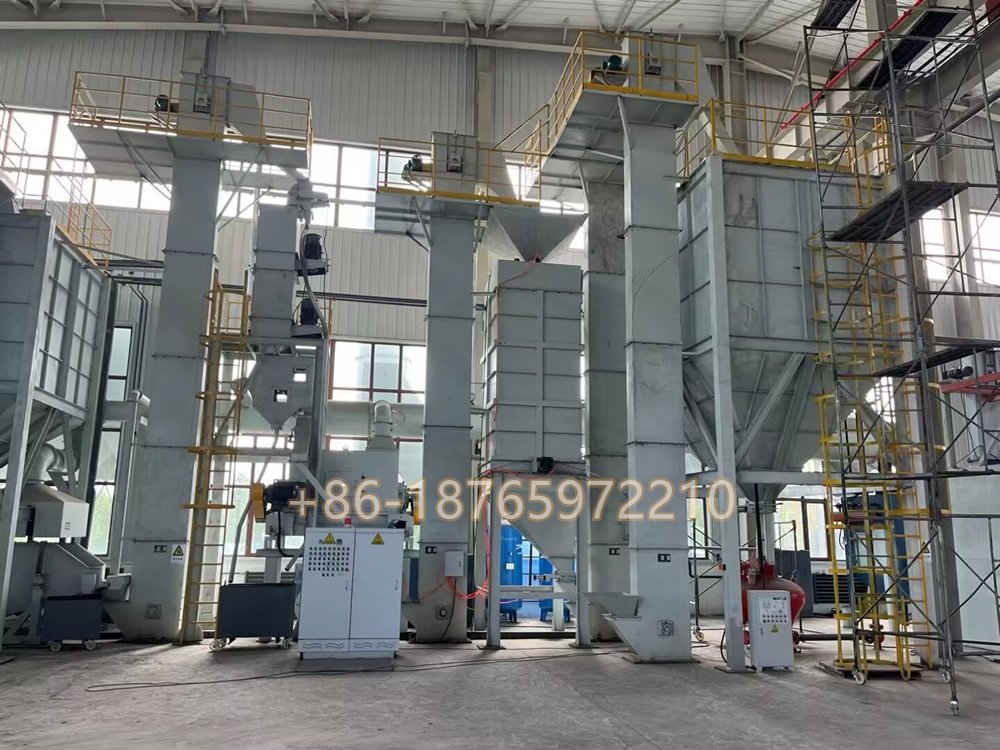
How the Secondary Resin Sand Reclamation Machine Works
Step 1 — Feeding Crushed Resin Sand
The machine receives pre-crushed sand from:
- Resin Sand Crushing Machine
- Shakeout Machine
- Sand Conveying System
Step 2 — High-Speed Mechanical Attrition
The rotor spins at high speed, creating intense friction between sand particles.
This process:
- Removes residual resin films
- Separates bonded particles
- Preserves silica sand integrity
Step 3 — Dust Separation
Released resin powder and fine particles are extracted through an integrated dust collection system.
This keeps the reclaimed sand clean and reduces airborne dust.
Step 4 — Sand Classification
Clean sand is discharged for:
- Fine screening
- Cooling
- Storage
- Sand mixing
before reuse in the molding process.
Technical Parameters
| Item | Specification |
|---|---|
| Processing Capacity | 3–25 T/H |
| Sand Recovery Rate | Up to 98%* |
| Residual Binder Removal | ≥90% |
| Rotor Speed | 900–1800 RPM |
| Motor Power | 22–75 kW |
| Applicable Sand | Furan, Phenolic, Alkaline Phenolic, No-Bake Resin Sand |
| Dust Collection | Pulse Jet Dust Collector |
| Automation | PLC + HMI Optional |
| Operation Mode | Continuous Automatic |
Recovery performance depends on binder type, sand condition, and the complete reclamation process.
Key Advantages of Our Secondary Resin Sand Reclamation Machine
1. High Sand Recovery Rate
Advanced mechanical attrition removes resin efficiently while protecting sand grains.
Benefits include:
✔ Up to 98% reusable sand recovery
✔ Lower fresh sand purchases
✔ Improved resource utilization
2. Improve Reclaimed Sand Quality
Uniform and clean reclaimed sand provides:
- Better mold strength
- Improved core quality
- More stable permeability
- Better casting surface finish
This helps reduce scrap rates and improve customer satisfaction.
3. Lower Resin Binder Consumption
Cleaner reclaimed sand requires less new binder during molding.
Customers typically achieve:
- Lower resin usage
- Lower catalyst consumption
- More consistent mixing results
4. Reduce Production Costs
Higher reclaimed sand utilization leads to:
- Lower silica sand purchases
- Reduced landfill costs
- Lower transportation expenses
- Lower operating costs
5. Support Sustainable Foundry Manufacturing
Efficient sand recycling helps foundries:
- Reduce industrial waste
- Lower carbon emissions
- Improve environmental compliance
- Achieve sustainability targets
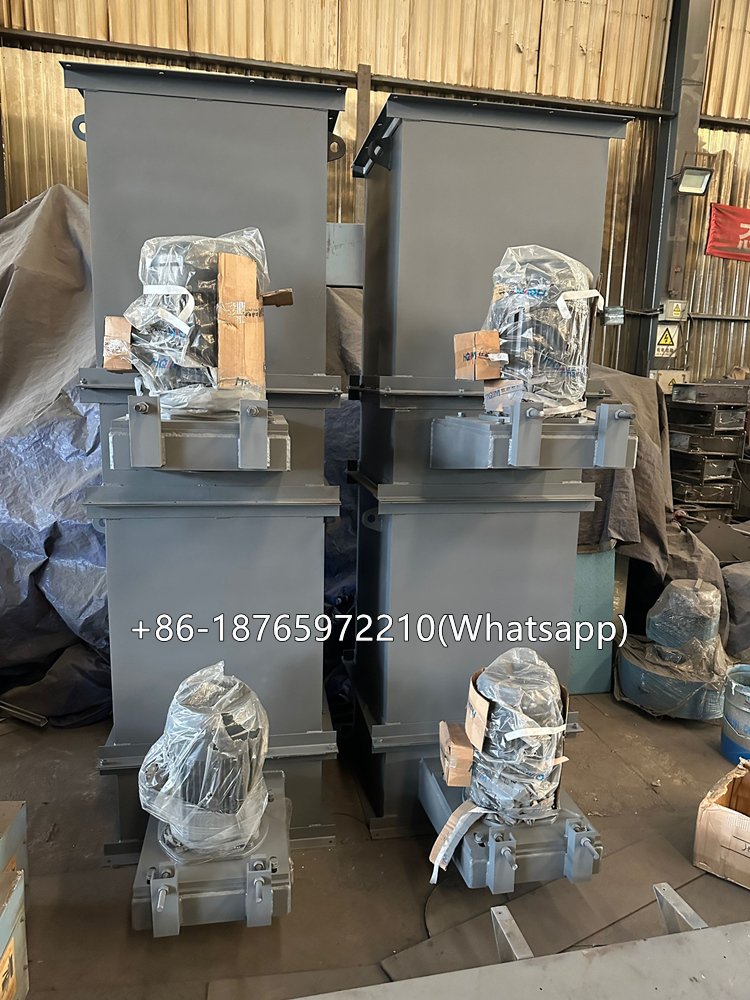
Typical Applications
The Secondary Resin Sand Reclamation Machine is widely used in:
Steel Casting Foundries
For recycling no-bake resin bonded sand.
Iron Foundries
Improving reclaimed sand quality for large-scale production.
Valve & Pump Manufacturers
Producing high-strength cores and molds.
Wind Power Casting Plants
Handling large volumes of reclaimed resin sand.
Heavy Machinery Foundries
Supporting continuous automated sand recycling.
Secondary Reclamation Machine vs Conventional Mechanical Reclaimer
| Feature | Secondary Resin Sand Reclamation Machine | Conventional Reclaimer |
| Resin Film Removal | Excellent | Moderate |
| Sand Grain Protection | Excellent | Good |
| Reclaimed Sand Quality | High | Medium |
| Dust Removal Efficiency | High | Moderate |
| Sand Recovery Rate | Up to 98% | Lower |
| Long-Term Operating Cost | Lower | Higher |
Common Foundry Problems Solved
Problem: High Residual Resin
Solution: High-speed attrition removes stubborn binder films.
Problem: Low Sand Recovery
Solution: Improved cleaning increases reclaimed sand utilization.
Problem: High Resin Consumption
Solution: Cleaner sand reduces fresh binder requirements.
Problem: Poor Casting Surface Finish
Solution: High-quality reclaimed sand improves mold quality.
Why Choose Our Secondary Resin Sand Reclamation Machine?
Heavy-Duty Industrial Construction
Designed for 24/7 continuous foundry production.
High-Efficiency Attrition Chamber
Optimized rotor design maximizes resin removal while minimizing sand breakage.
Wear-Resistant Components
Key parts are manufactured from:
- High-chromium alloy
- Heat-treated steel
- Replaceable wear liners
for extended service life.
Intelligent PLC Automation
Optional features include:
- Touchscreen operation
- Automatic parameter adjustment
- Production monitoring
- Remote diagnostics
- Fault alarm system
Complete Turnkey Engineering
We provide:
- Process analysis
- Equipment selection
- Capacity calculation
- Plant layout
- Installation
- Commissioning
- Operator training
- After-sales technical support
Frequently Asked Questions
Which resin bonded sands can be processed?
Suitable for:
- Furan resin sand
- Phenolic resin sand
- Alkaline phenolic sand
- No-bake resin bonded sand
Can this machine be integrated into an existing reclamation line?
Yes.
It connects easily with:
- Resin Sand Crushing Machines
- Fine Hexagonal Screens
- Fluidized Cooling Beds
- Dust Collection Systems
Will mechanical attrition damage the silica sand?
No.
The machine is designed to remove resin films while preserving valuable silica sand grains.
What recovery rate can be achieved?
With a complete reclamation system, many customers achieve:
90–98% reclaimed sand utilization, depending on resin type and production conditions.
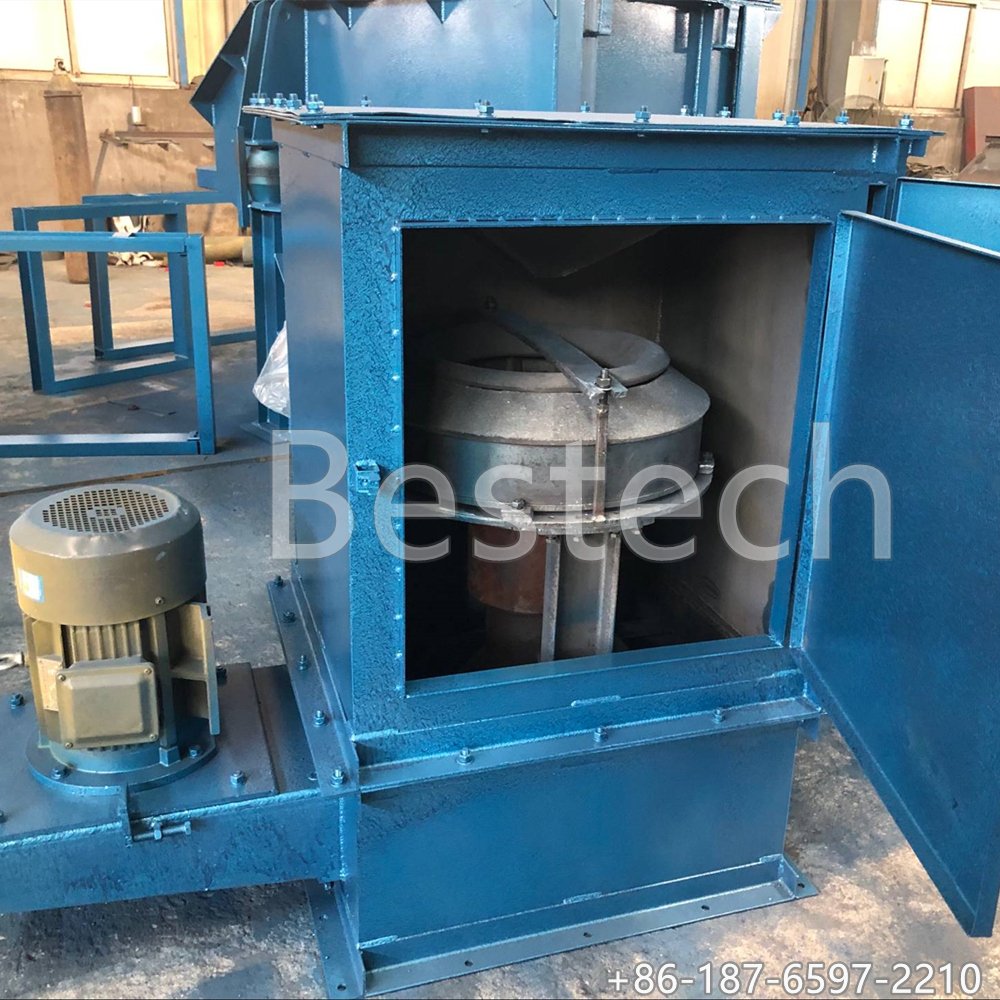
Build a Smarter and More Profitable Sand Reclamation System
High-quality reclaimed sand is the foundation of stable casting production.
By installing a Secondary Resin Sand Reclamation Machine, foundries can:
- Increase reclaimed sand quality
- Reduce raw material costs
- Lower binder consumption
- Improve casting consistency
- Reduce environmental impact
- Maximize return on investment
This is one of the fastest ways to improve both profitability and sustainability.
Request Your Customized Resin Sand Reclamation Solution Today
Looking for a reliable Secondary Resin Sand Reclamation Machine?
Our engineering team provides:
Free Engineering Consultation
✔ Resin sand analysis
✔ Capacity calculation
✔ Equipment selection
✔ Plant layout optimization
✔ Energy consumption evaluation
✔ ROI calculation
Contact Us Today For:
✔ Detailed Technical Proposal
✔ Competitive Factory Quotation
✔ Complete Resin Sand Recycling Line Design
✔ Turnkey Engineering Solution
✔ Installation & Commissioning Support
Simply send us:
- Annual casting capacity
- Resin binder type
- Current reclamation process
- Required processing capacity
- Workshop layout
Our engineers will deliver a customized solution and quotation within 24 hours.