

In foundry operations, shakeout is a critical process that occurs after the casting has solidified but before it undergoes finishing or inspection. It involves the removal of the metal casting from its mold and breaking apart the mold material, which typically consists of sand, shell, or other materials. The main purpose of the shakeout process is to separate the casting from the mold, clean it from any residual sand or debris, and prepare it for further processing.
What Is The Shakeout Process in Foundry?
The shakeout is a core component of a foundry’s casting process. It removes residual sand from the casting mold by shaking the casting until the sand has separated from the casting. The casting then moves down the process for cleaning and finishing, while residual sand remains.
Purpose of Shakeout Machine
- Separation of the Casting and Mold: After the molten metal solidifies in the mold, the cast piece must be separated from the mold material. This is done to ensure that the casting can be processed further, inspected, or sent for finishing.
- Breaking the Mold: The shakeout process helps in breaking the sand (or other mold materials) that were used to form the mold around the casting.
- Cleaning: Shakeout removes most of the residual sand and other debris that may be attached to the casting’s surface, preparing it for subsequent finishing operations like fettling (removal of gates, risers, and other imperfections).
- Reclaiming Sand: The sand that is removed in the shakeout can often be reclaimed and reused for future molds, depending on the quality of the sand and the reclamation process used.
Shakeout Process In Foundry
The shakeout process can vary slightly depending on the type of mold used and the complexity of the casting, but the general steps are as follows:
- Cooling of the Casting: After pouring, the metal casting is allowed to cool and solidify inside the mold. The mold material, typically sand or shell, must also cool down sufficiently before the shakeout process begins to prevent damage to the casting.
- Shaking and Vibrating: In most foundries, mechanical shakeout machines (which use vibrations, impact forces, or tumbling actions) are used to break the mold and remove sand from the casting. These machines may include:
Rotary Shakeout Machines: These are typically used for large molds. The mold is placed in a rotating drum where vibration and centrifugal force shake the sand loose.
Vibratory Shakeout Systems: These systems use high-frequency vibrations to help break apart the mold and shake off the sand from the casting.
Impact Shakeout: Some systems use mechanical impact, such as hammers or hoppers, to break the mold material away. - Separation of Sand and Casting: Once the mold is broken apart, the sand and debris are separated from the casting. Typically, this involves sieving the sand through mesh or screens to ensure only clean sand is separated and that the casting is left relatively free of loose particles.
- Sand Recovery: In most cases, after shaking out, the sand is collected, screened, and sent for reclamation if it is of usable quality. Reclaimed sand is then recycled back into the molding process.
- Inspection of Casting: After shakeout, the casting is inspected for defects, and any necessary finishing work, such as removal of gates, risers, or parting lines, is carried out. This is often done by hand (fettling) or with mechanical tools.
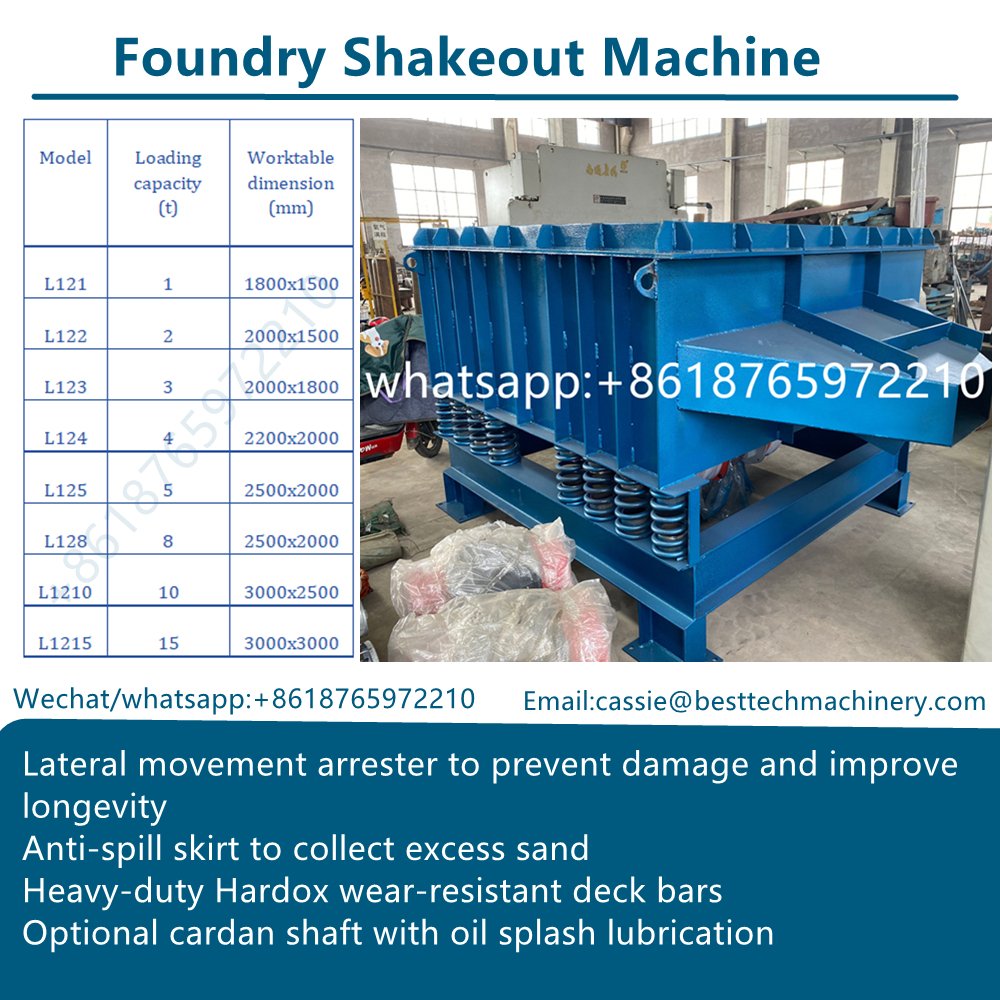
Advantages of Shakeout Process
- Efficient Sand Recovery: Shakeout is an effective way to recover and recycle mold sand, making it more economical and environmentally friendly.
- Improved Surface Quality: The process helps to clean the casting by removing excess sand and impurities, leading to a better surface finish after the fettling process.
- Faster Processing: It accelerates the casting preparation process, allowing the casting to move on to subsequent stages (such as finishing, inspection, and quality control) more quickly.
Summary
The shakeout process in foundry operations is essential for removing the mold from the casting, cleaning it, and reclaiming valuable mold material (like sand). The process needs to be efficient and gentle enough to avoid damaging the casting while ensuring that sand and other debris are effectively removed.