
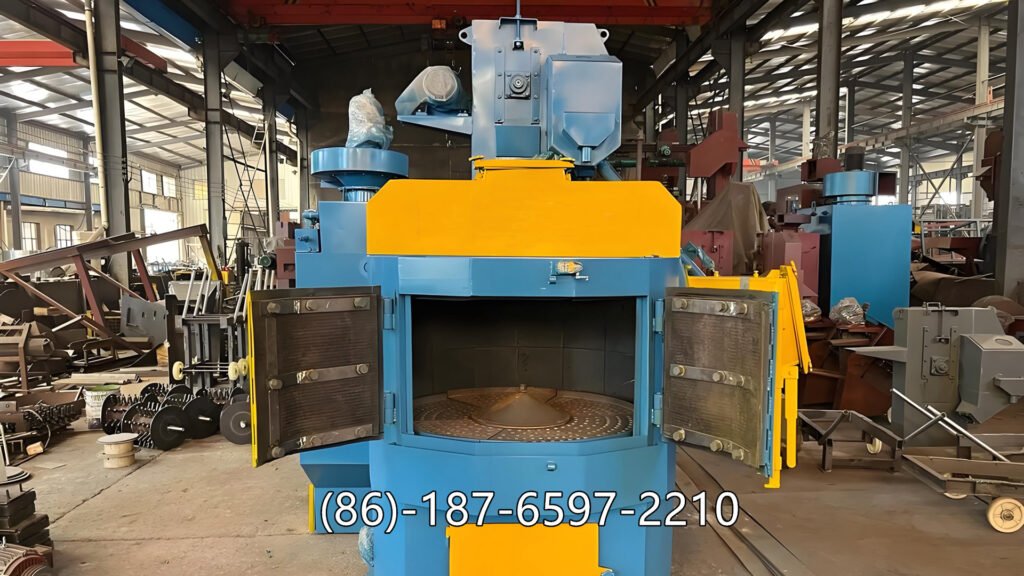
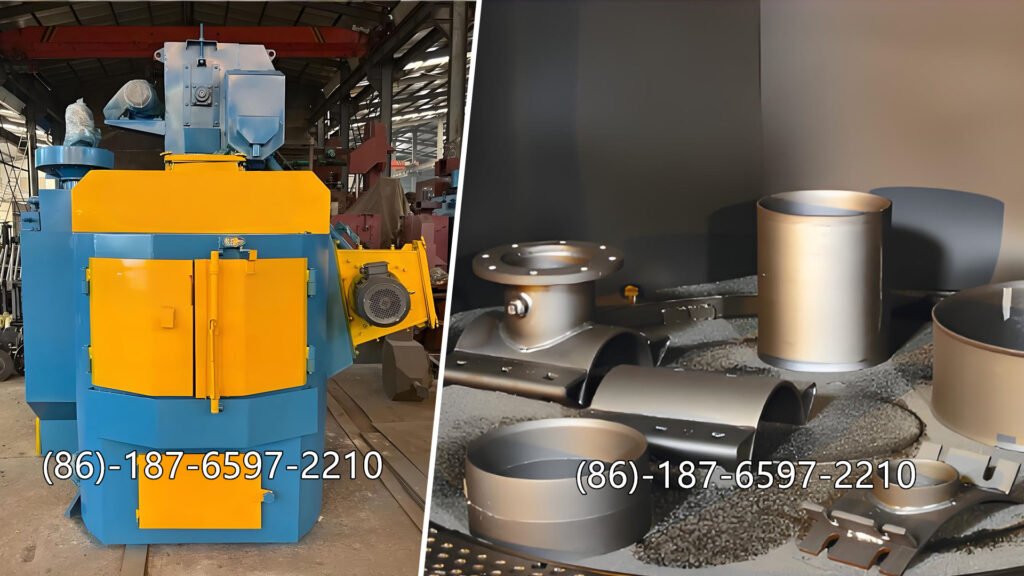
Turntable shot blasting machine is a type of shot blasting equipment where the workpieces are placed on a rotating circular table inside an enclosed blasting chamber. As the turntable rotates, the high-speed blast wheels throw steel shots onto the surfaces of the parts, removing rust, scale, paint, and sand, or preparing the surface for coating.
Key Advantages And Practical Operating Methods To Help Ensure Better Cleaning Results And Longer Equipment Life
Turntable shot blasting machine is one of the most efficient and stable surface-treatment devices for cleaning castings, forgings, and various metal parts.
1. Main Advantages of the Turntable Shot Blasting Machine
1) Stable and Uniform Cleaning Quality
The turntable rotates at a constant speed, allowing multiple workpieces to be exposed evenly to the abrasive stream. Compared with manual sandblasting or irregular tumbling machines, it provides more consistent surface roughness and uniform shot coverage.
2) Suitable for a Wide Range of Workpiece Shapes
This machine is especially effective for flat parts, discs, small castings, gears, valves, and irregular components. Parts can be placed directly on the table, and for taller workpieces, we can adjust the turntable spacing or use a multi-table design.
3) High Space Utilization and Easy Loading
The structure is compact. Operators only need to open the door, load the workpieces, and start the cycle. This saves labor and improves work efficiency, especially during continuous cleaning tasks.
4) Reduced Wear and Lower Maintenance Cost
Because the workpieces remain stationary on the rotating turntable, collision and impact between parts are minimized. This reduces abrasive loss, liner wear, and machine downtime.
5) Automated Control and Stable Production Cycle
Modern units use PLCs for shot flow rate, blast wheel speed, turntable speed, and cycle time. Once parameters are set, the machine can run repeated, stable cleaning cycles, making it easier to maintain consistent quality.
2. How to Operate the Turntable Shot Blasting Machine Properly
1) Pre-Operation Inspection
Before every shift, we check:
- Whether the turntable rotates smoothly
- Shot blasting wheels for abnormal sounds
- Abrasive level in the storage hopper
- Wear condition of blades, liners, and control cages
- Dust collector air pressure and filter status
Ensuring these conditions prevents sudden failures during operation.
2) Correct Loading Method
- Workpieces must be placed evenly and should not overlap.
- Avoid stacking heavy parts in the same position; this affects cleaning uniformity.
- Keep materials away from the edge to avoid interfering with door sealing.
Proper loading directly affects cleaning efficiency.
3) Start-Up and Blasting Process
After closing the door:
- Start the dust collector
- Start the turntable
- Start the blast wheels
- Begin the automatic cleaning cycle
The abrasive flows onto the workpieces at high speed, and the turntable ensures a full 360° coverage.
4) Unloading and Post-Operation Handling
Once the cycle ends:
- Stop the blast wheels
- Allow the dust collector to run for a few more seconds
- Open the door and wait for remaining dust to settle
- Remove the workpieces carefully (they may still be warm)
5) Daily Maintenance Tips
From long-term workshop practice, these points are essential:
- Replace worn blades and liners in time
- Clean accumulated dust from the sealing area
- Check shot abrasive condition and remove contaminants
- Ensure bearings and turntable drive are well lubricated
- Periodically inspect the dust collector and replace filter bags if needed
Good maintenance always leads to better cleaning quality and longer equipment life.
Conclusion
The turntable shot blasting machine is reliable, easy to operate, and ideal for achieving uniform surface cleaning across various parts. With proper loading, correct parameter settings, and consistent maintenance, it becomes a highly efficient tool in any foundry or metalworking workshop.