
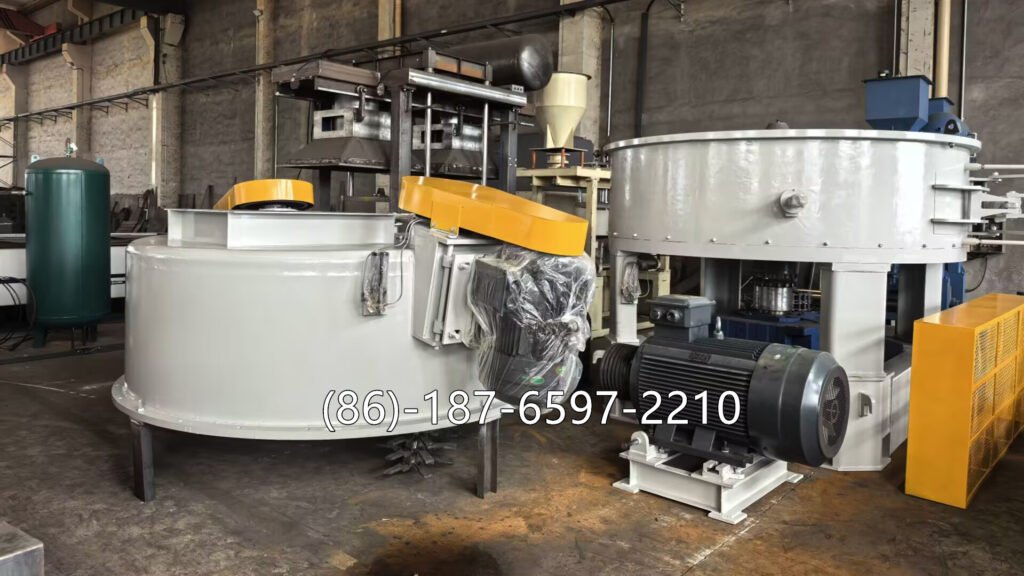
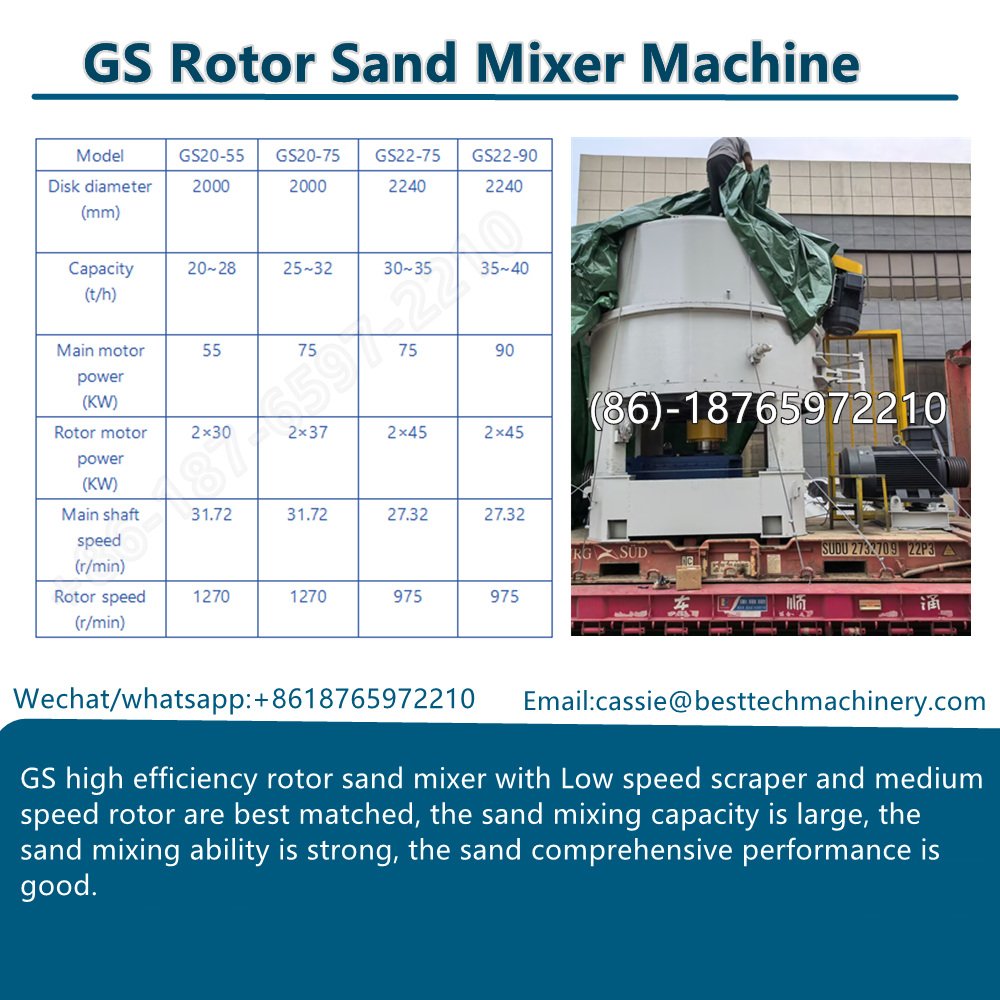
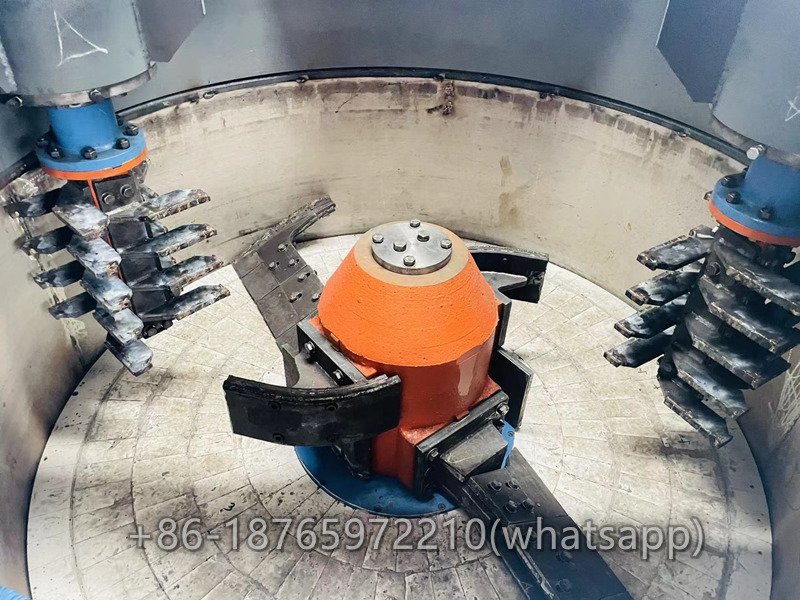
Efficiency Rotor Sand Mixing Machine is a high-performance foundry equipment used for preparing molding sand or core sand. It adopts a high-speed rotating rotor to generate strong shearing, rolling, and throwing actions inside the mixing pan. Through this working principle, sand grains, binder, and additives are mixed quickly and uniformly to produce high-quality molding sand.
Compared with traditional roller or paddle mixers, the efficiency rotor mixer features faster mixing time, better binder coating, and more stable sand properties. It is widely applied in resin sand, furan sand, and no-bake sand preparation systems in modern foundries.
Common Faults And Troubleshooting Methods
Efficiency rotor sand mixing machine is an important equipment in modern foundry for preparing molding sand. It adopts high-speed rotor mixing principle, which can achieve uniform sand coating and accurate binder distribution in short time. In actual production, continuous operation and heavy load working conditions may cause some typical problems. Understanding these problems and solving them correctly is necessary for stable sand quality and long service life of the machine.
1. Uneven Mixing Quality
Problem Description
After mixing, sand shows local agglomeration, uneven binder distribution, and unstable sand strength.
Main Causes
- Rotor blade wear serious
- Blade gap between rotor and pan too large
- Mixing time not enough
- Binder spraying not uniform
Troubleshooting Method
- Check blade wear condition and replace in time
- Adjust blade clearance according to design requirement
- Increase mixing time reasonably
- Clean or adjust binder spray nozzles
Engineering Note:
Blade clearance directly influences sand turbulence. Improper clearance easily creates dead mixing area.
2. Sand Temperature Too High
Problem Description
Mixed sand temperature rises quickly, causing premature binder curing and poor sand flowability.
Main Causes
- Rotor speed too high
- Mixing time too long
- Reclaimed sand temperature too high
Troubleshooting Method
- Reduce rotor speed by inverter control
- Optimize mixing cycle
- Cool reclaimed sand before feeding
Engineering Note:
Control sand temperature below binder reaction temperature is key point for resin sand system.
3. Abnormal Vibration and Noise
Problem Description
Machine vibrates obviously during operation, with abnormal noise and bearing heating.
Main Causes
- Rotor dynamic imbalance
- Bearing wear
- Foundation bolts loose
Troubleshooting Method
- Carry out rotor dynamic balancing
- Replace worn bearings
- Tighten base fixing bolts
Engineering Note:
Long-term vibration accelerates structural fatigue and should be handled immediately.
4. Binder Feeding Failure
Problem Description
Binder flow unstable, inaccurate dosage, or no spraying.
Main Causes
- Binder pump fault
- Filter or pipeline blockage
- Air leakage in pipeline
Troubleshooting Method
- Check and calibrate binder pump
- Clean filter and pipelines
- Seal pipeline connections
Engineering Note:
Accurate binder feeding determines final sand strength stability.
5. Discharge Difficulty
Problem Description
Sand sticks in mixing pan, discharge gate opens slowly, residual sand remains.
Main Causes
- Discharge door jam
- Sand moisture too high
- Pan liner worn
Troubleshooting Method
- Clean and lubricate discharge mechanism
- Control sand moisture
- Repair or replace pan liner
6. Electrical Control Problems
Problem Description
Sudden machine stop, alarm signal from sensors, inverter fault.
Main Causes
- Motor overload
- Sensor failure
- Loose wiring connection
Troubleshooting Method
- Check motor current load
- Replace faulty sensors
- Fix electrical terminals
Daily Maintenance Suggestions
- Check rotor blades every shift
- Lubricate bearings weekly
- Inspect binder system monthly
- Record vibration and noise condition
- Replace wear parts periodically
Engineering Principle:
Good maintenance is cheaper than unplanned production stop.
Conclusion
Efficiency rotor sand mixing machine is a key unit for high-quality sand preparation. Most operational problems come from wear, improper adjustment, or poor maintenance. By applying correct troubleshooting methods and regular inspection, the mixer can maintain stable working condition, improve sand quality, and support continuous foundry production.