
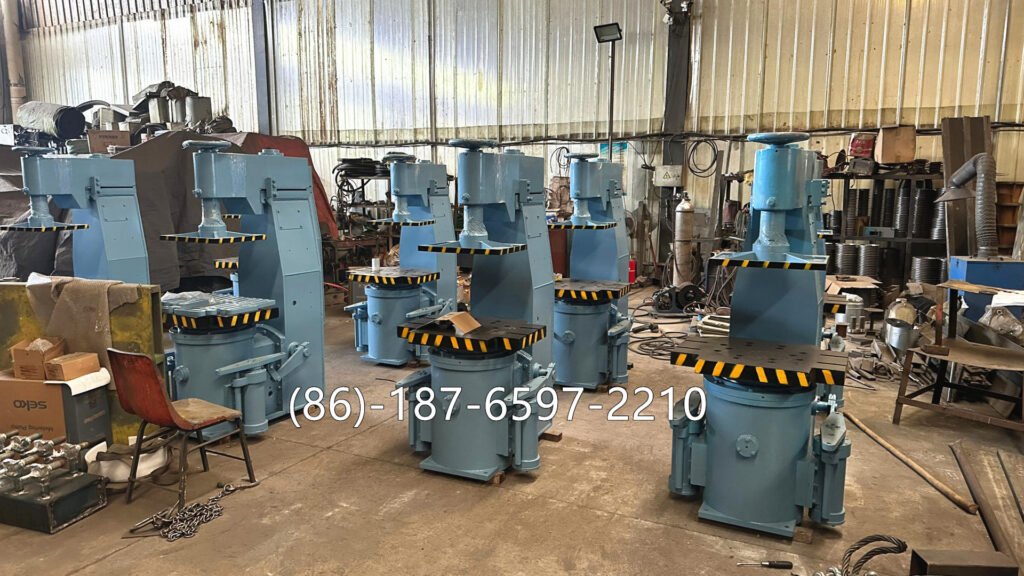
Jolt squeeze sand molding machine is widely used in foundries due to its stable molding quality, simple structure, and high adaptability for green sand processes. However, during long-term operation, various problems may occur because of improper operation, insufficient maintenance, or wear of mechanical and pneumatic components.
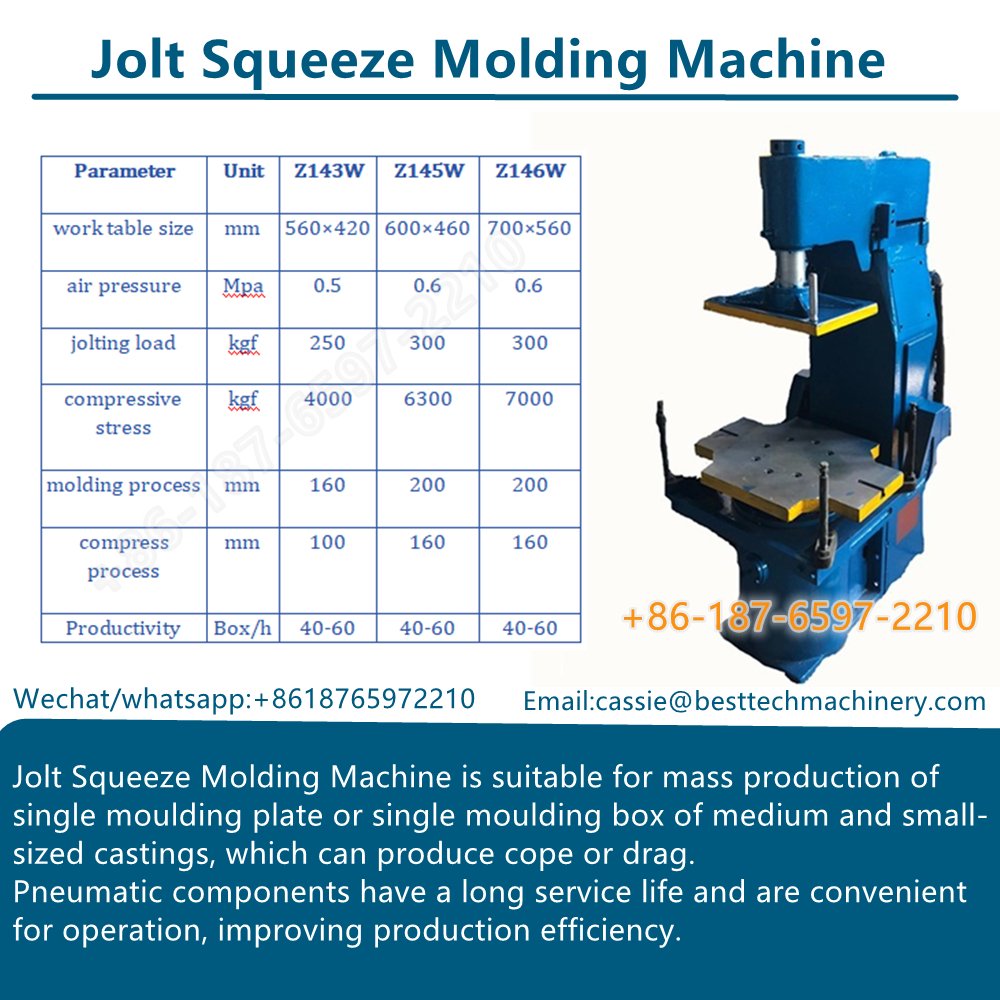
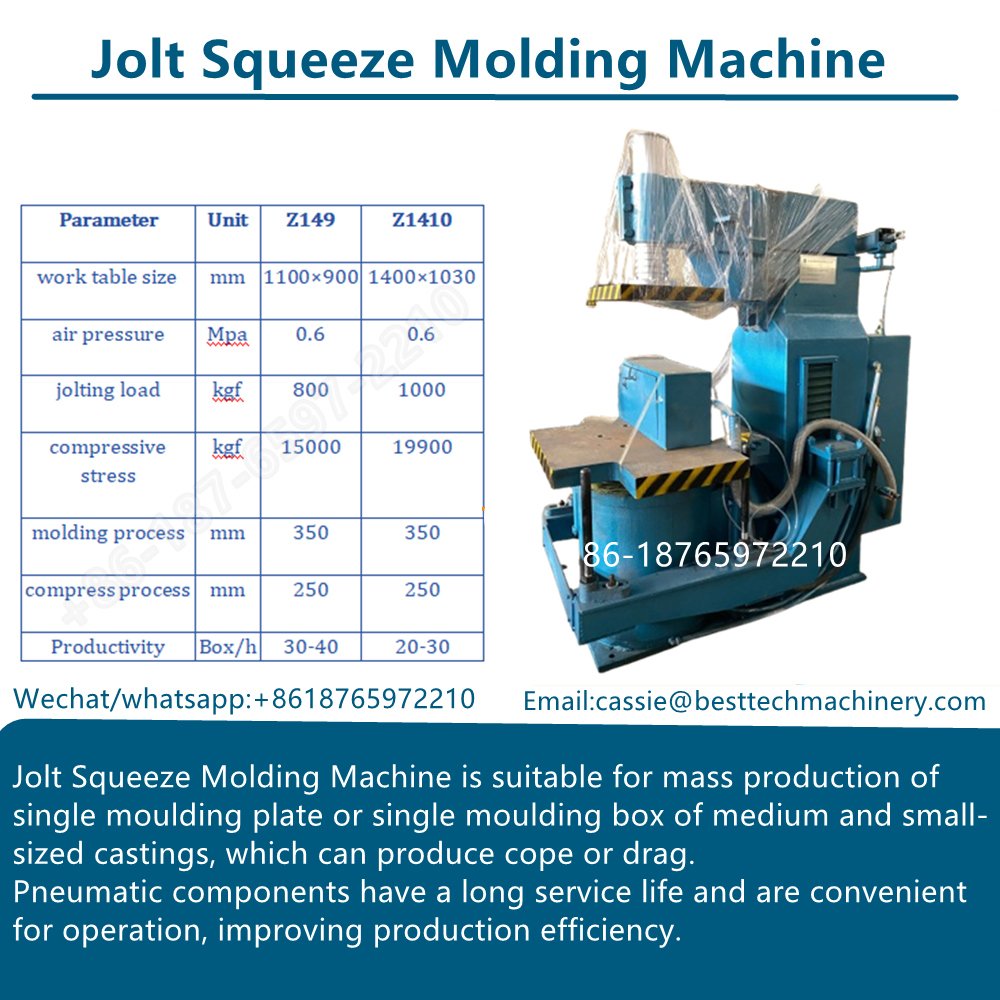
Jolt squeeze sand molding machine is a traditional and widely used foundry machine designed to produce green sand molds for metal casting. It forms molds by combining two mechanical actions—jolting and squeezing—to achieve uniform sand compaction and sufficient mold strength.
Common Faults, Root Causes, And Effective Troubleshooting Methods
1. Uneven Sand Compaction
Symptoms
- Mold hardness is inconsistent
- Casting defects such as sand inclusion or loose edges
- Upper and lower mold density differs
Possible Causes
- Insufficient jolt force or unstable jolt frequency
- Uneven squeeze pressure distribution
- Improper sand moisture or poor sand mixing quality
- Worn jolt piston or air leakage in pneumatic system
Troubleshooting Measures
- Check and adjust jolt air pressure according to process requirements
- Inspect squeeze cylinder and platen alignment
- Ensure sand moisture content is within the recommended range
- Replace worn seals and eliminate air leakage
2. Insufficient Jolt Action
Symptoms
- Sand does not fill pattern corners properly
- Mold surface is rough
- Reduced molding efficiency
Possible Causes
- Low compressed air pressure
- Blocked air lines or dirty air filters
- Excessive friction in jolt mechanism
- Hydraulic or pneumatic valve malfunction
Troubleshooting Measures
- Verify air supply pressure and air compressor performance
- Clean or replace air filters and pipelines
- Lubricate moving parts of the jolt system
- Inspect and repair control valves
3. Squeeze Pressure Not Enough
Symptoms
- Mold strength is low
- Mold deformation during pattern stripping
- High scrap rate during pouring
Possible Causes
- Insufficient squeeze cylinder pressure
- Worn piston seals
- Incorrect squeeze time setting
- Hydraulic oil leakage (for hydraulic squeeze systems)
Troubleshooting Measures
- Adjust squeeze pressure to standard operating values
- Replace damaged seals and check cylinder condition
- Increase squeeze holding time if necessary
- Inspect hydraulic system for leaks
4. Mold Sticking to Pattern
Symptoms
- Mold breaks during pattern withdrawal
- Poor surface finish of mold cavity
- Reduced production efficiency
Possible Causes
- Excessive sand moisture
- Insufficient or uneven mold hardness
- Worn or dirty pattern surface
- Inadequate pattern draft angle
Troubleshooting Measures
- Reduce sand moisture and improve sand control
- Optimize jolt and squeeze parameters
- Clean and polish pattern surfaces regularly
- Review pattern design and draft angle
5. Abnormal Noise and Vibration
Symptoms
- Unusual knocking or vibration during jolt
- Machine instability
- Accelerated wear of components
Possible Causes
- Loose bolts or worn bearings
- Misalignment of jolt table
- Excessive jolt pressure
- Structural fatigue of machine frame
Troubleshooting Measures
- Tighten all fasteners and inspect bearings
- Check table alignment and foundation condition
- Adjust jolt pressure to recommended level
- Reinforce or repair structural components
6. Control System Malfunction
Symptoms
- Machine does not respond to control signals
- Incomplete jolt or squeeze cycles
- Frequent emergency stops
Possible Causes
- Faulty limit switches or sensors
- Electrical wiring issues
- PLC or relay malfunction
- Poor grounding
Troubleshooting Measures
- Inspect and replace damaged sensors and switches
- Check electrical connections and wiring integrity
- Reset or reprogram PLC if required
- Ensure proper grounding and stable power supply
7. Preventive Maintenance Recommendations
From an engineering maintenance perspective, preventive maintenance is the most effective way to reduce failures:
- Perform daily inspection of air pressure, oil level, and fasteners
- Lubricate moving parts regularly
- Keep pneumatic and hydraulic systems clean
- Record operating parameters and fault history
- Train operators to follow standard operating procedures
Conclusion
Troubleshooting a jolt squeeze sand molding machine requires both theoretical knowledge and practical experience. Most common problems are related to air pressure control, sand quality, mechanical wear, and improper parameter settings.
By understanding the root causes and applying systematic troubleshooting methods, foundries can significantly improve molding quality, extend equipment service life, and ensure stable and efficient production.