
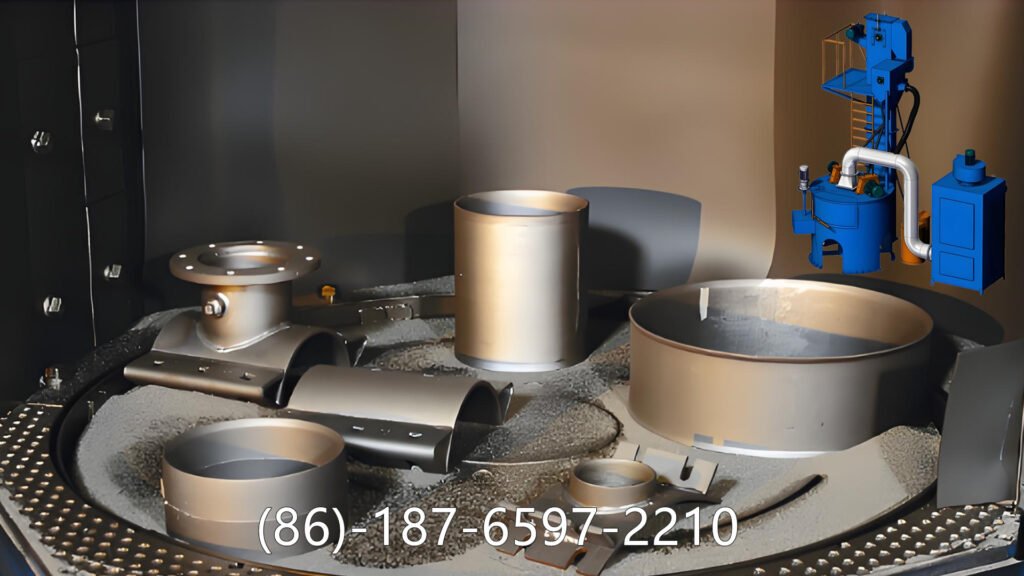
Tired of Unplanned Downtime? Common Rotary Table Blaster Issues & How to Fix Them.
Rotary Table Shot Blasting Machine is a workhorse, but when it underperforms, your entire production line feels the pinch. Whether it’s uneven cleaning or excessive vibration, most issues stem from a few common culprits.
Introduction
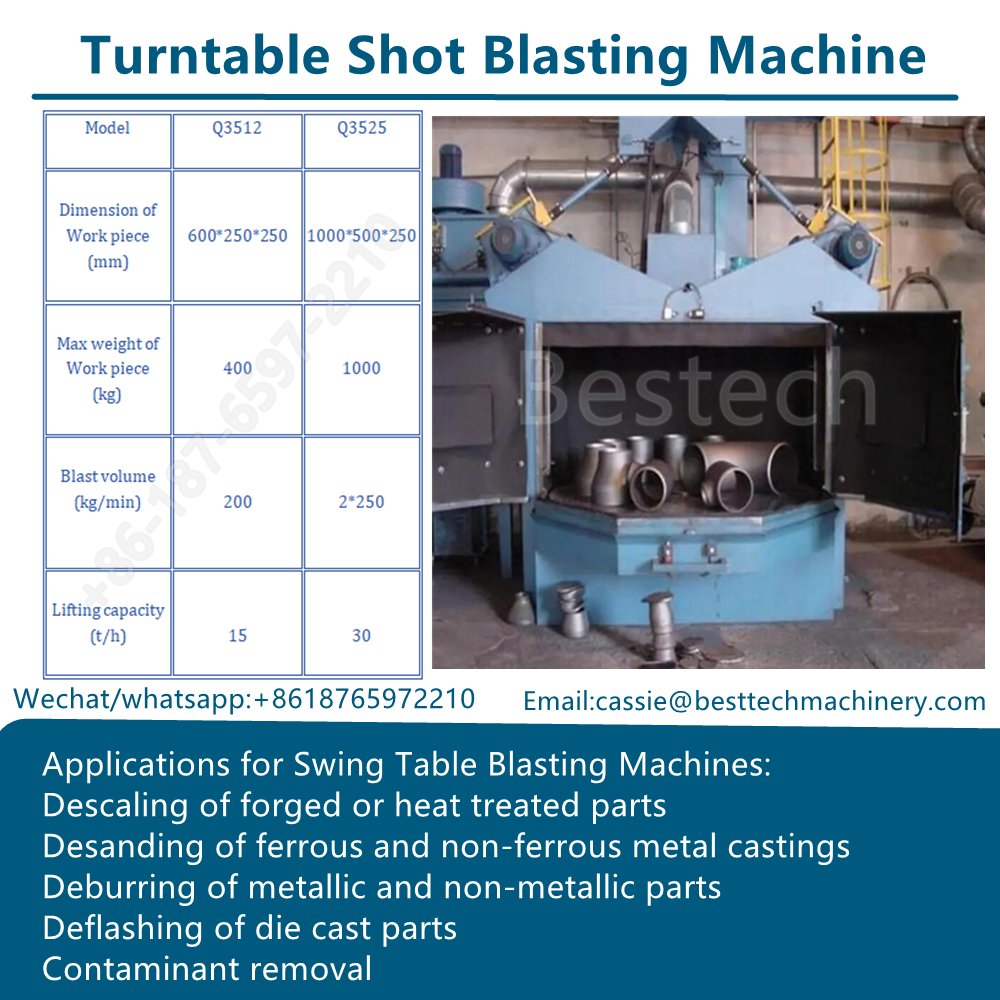
In many foundry and metal surface treatment workshops, the rotary table shot blasting machine is widely used for cleaning castings, forgings, and heat-treated components. Because of its compact structure, stable operation, and uniform blasting coverage, this type of equipment is especially suitable for medium and small batch production.
However, during long-term operation, the machine may experience certain problems such as insufficient cleaning effect, abnormal vibration, shot circulation issues, or dust removal problems.
As a workshop engineer, understanding the typical faults and troubleshooting methods of a rotary table shot blasting machine can significantly reduce downtime and improve production efficiency.
This article summarizes common operational issues, their causes, and practical solutions based on engineering experience.
1 Structure of a Rotary Table Shot Blasting Machine
Before troubleshooting, it is important to understand the main components of the equipment.
A standard rotary table shot blasting machine generally consists of the following systems:
- Shot blasting turbine system
- Rotary table workpiece carrier
- Abrasive circulation system
- Bucket elevator
- Screw conveyor
- Separator
- Dust collection system
- Electrical control system
The blasting turbines accelerate steel shots at high speed, projecting them onto the surface of the workpiece while the rotary table rotates slowly to ensure uniform surface treatment.
The machine is typically designed according to international surface preparation standards such as:
- ISO 8501-1 — Surface preparation grades of steel before coating
- SAE J444 — Steel shot and grit specifications
- ISO 11124 / ISO 11125 — Metallic blasting abrasives standards
2 Common Problems During Operation
Although rotary table shot blasting machines are designed for continuous operation, some common faults may occur during production.
Typical issues include:
- Poor cleaning results
- Uneven blasting coverage
- Abnormal noise from turbine
- Shot circulation failure
- Dust leakage or excessive dust emission
- Rotary table rotation problems
Most of these issues are related to wear parts, abrasive circulation, or maintenance conditions.
3 Troubleshooting Guide for Rotary Table Shot Blasting Machine
The following table summarizes typical problems and recommended solutions.
| Problem | Possible Cause | Recommended Solution |
|---|---|---|
| Poor surface cleaning | Low shot velocity or worn turbine blades | Replace worn blades and check turbine speed |
| Uneven blasting effect | Incorrect workpiece placement | Adjust loading method and ensure balanced distribution |
| Excessive machine vibration | Turbine impeller imbalance | Inspect impeller and rebalance or replace components |
| Abrasive not circulating | Screw conveyor blockage | Clean conveyor and remove foreign objects |
| Insufficient shot supply | Shot storage hopper empty | Add new steel shots according to SAE J444 specification |
| Dust leakage | Damaged dust collector filter | Replace filter cartridge and check sealing system |
| Rotary table does not rotate | Motor or reducer failure | Inspect drive motor, gearbox, and transmission chain |
| Shot blasting efficiency decreasing | Abrasive wear or contamination | Replace worn shots and clean separator |
Routine inspection and preventive maintenance can eliminate most of these problems before they affect production.
4 Key Components That Require Regular Inspection
To maintain stable operation, several critical components should be inspected regularly.
4.1 Shot Blasting Turbine
The turbine is the core component responsible for generating high-speed abrasive flow.
Important wear parts include:
- Blasting blades
- Control cage
- Distributor
- Impeller
If blades wear beyond 20–25% of their original thickness, blasting efficiency will drop significantly.
Regular replacement ensures stable cleaning performance.
4.2 Abrasive Circulation System
The abrasive recycling system consists of:
- Screw conveyor
- Bucket elevator
- Separator
Any blockage or misalignment in these components can interrupt the shot circulation process.
Engineers should inspect the elevator belts, bearings, and separator airflow regularly.
4.3 Dust Collection System
Shot blasting generates large amounts of dust and fine particles.
A properly functioning dust collector helps:
- Maintain workshop air quality
- Protect machine components
- Improve blasting visibility
Dust collector filters should be cleaned or replaced periodically to maintain airflow efficiency.
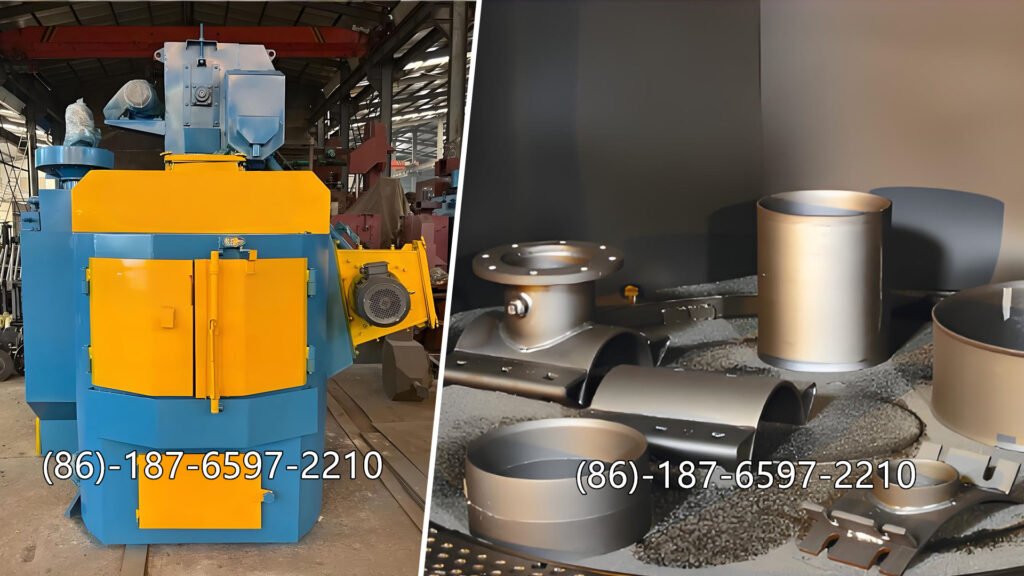
5 Typical Technical Parameters
The specifications of rotary table shot blasting machines may vary depending on the model and manufacturer.
Below is a typical configuration example.
| Parameter | Typical Value |
|---|---|
| Table diameter | 800 – 2000 mm |
| Maximum workpiece weight | 500 – 1500 kg |
| Shot blasting turbine power | 7.5 – 15 kW |
| Abrasive flow rate | 150 – 250 kg/min |
| Table rotation speed | 2 – 5 rpm |
| Dust collector air volume | 4000 – 6000 m³/h |
These parameters ensure efficient cleaning performance while maintaining stable machine operation.
6 Preventive Maintenance Recommendations
Proper maintenance significantly reduces equipment failures.
Workshop engineers usually follow several preventive maintenance practices.
Daily Inspection
- Check turbine noise and vibration
- Inspect shot circulation condition
- Observe dust collector operation
Weekly Maintenance
- Clean separator and conveyor
- Inspect wear parts of turbine blades
- Lubricate bearings and drive components
Monthly Maintenance
- Check elevator belt tension
- Inspect electrical control system
- Measure abrasive consumption rate
A systematic maintenance schedule helps ensure long-term equipment reliability.
Conclusion
The rotary table shot blasting machine is an efficient solution for cleaning metal castings and components in foundry and fabrication industries. However, like any industrial equipment, it requires proper monitoring and maintenance to ensure optimal performance.
By understanding common faults, inspecting key components regularly, and following a preventive maintenance plan, engineers can significantly reduce machine downtime and improve surface treatment quality.
For workshops aiming to maintain stable blasting performance, establishing a standardized troubleshooting and maintenance procedure is essential.