
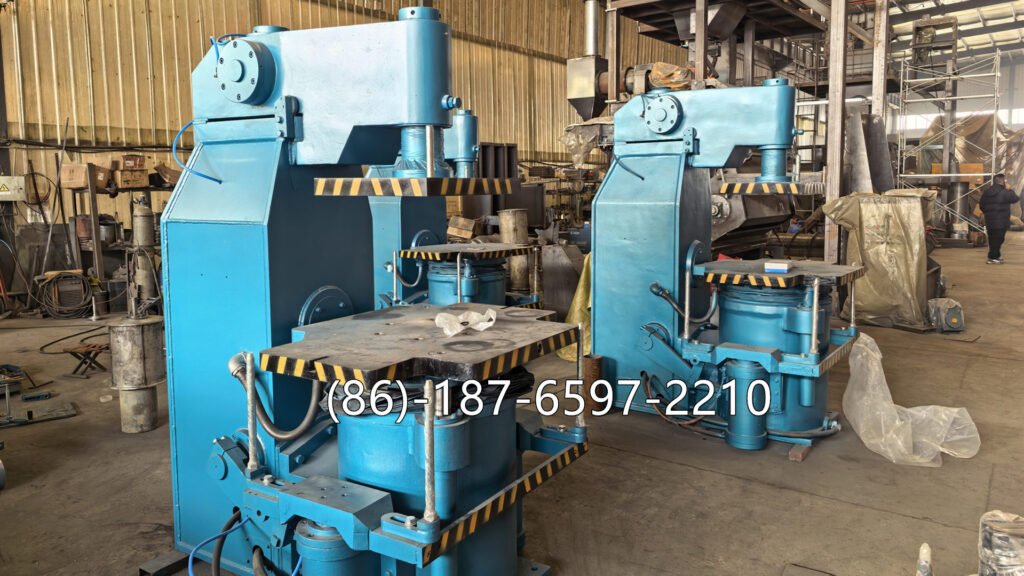
Why does the Jolt Squeeze Molding Machine remain a staple in foundries worldwide?
Jolt squeeze sand molding machine solves the fundamental challenge of green sand casting: achieving uniform mold density without complex, high-cost automation.
Introduction
In modern green sand casting workshops, the Jolt Squeeze Sand Molding Machine remains one of the most reliable and cost-effective molding solutions. Although automated molding lines are widely adopted in high-volume production, many small and medium-sized foundries continue to rely on this equipment because of its stable compaction performance, simple structure, and manageable investment cost.
From an engineering standpoint, understanding the mechanical principles and production advantages of this machine is essential for improving mold quality, minimizing casting defects, and extending equipment service life.
1. What Is a Jolt Squeeze Sand Molding Machine?
Jolt Squeeze Sand Molding Machine is a mechanical compaction system used in green sand casting processes. It combines:
- Jolt compaction (dynamic impact force)
- Squeeze compaction (static pressure force)
By integrating these two compaction methods, the machine achieves more uniform sand density throughout the mold cavity, making it particularly suitable for small and medium iron castings.
2. Mechanical Structure and Core Components
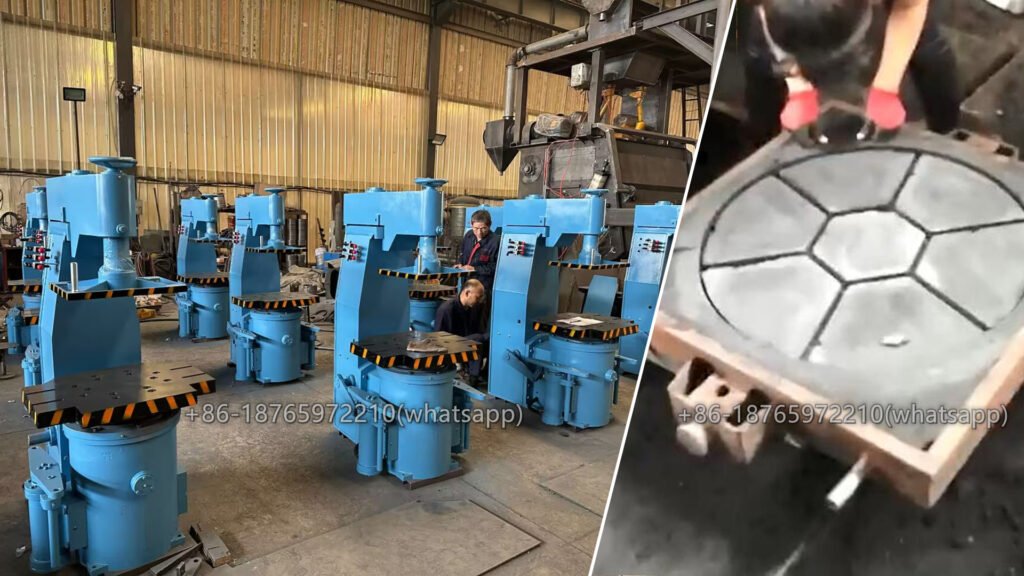
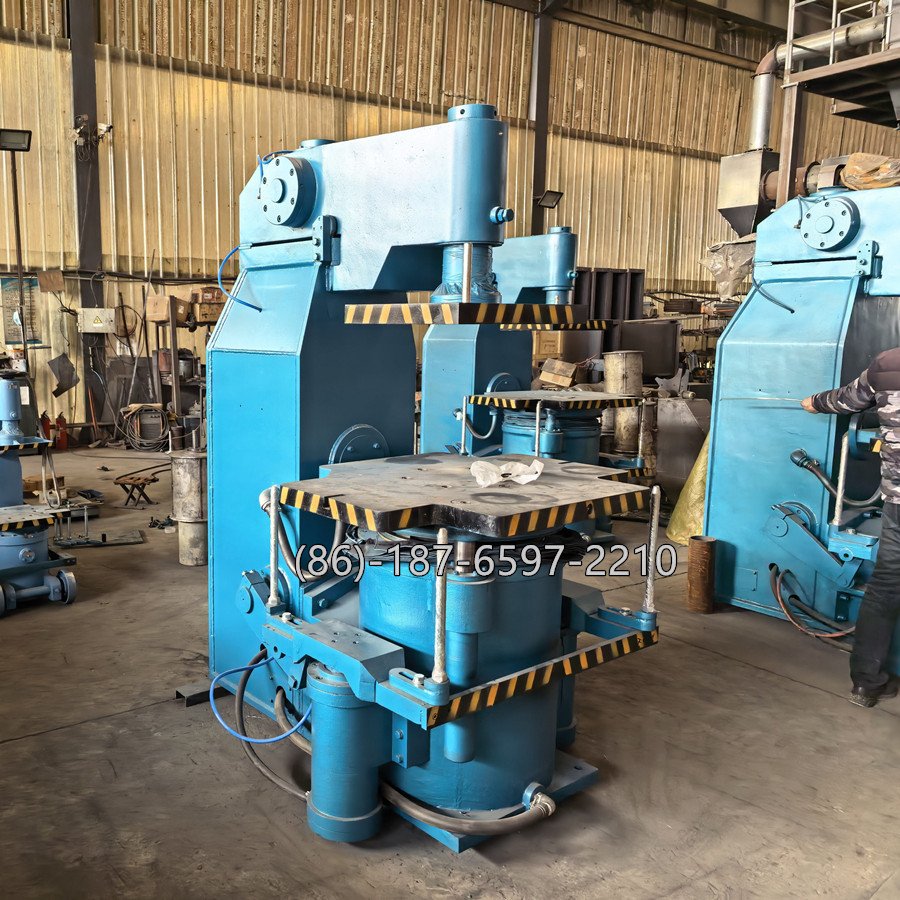
The machine typically consists of:
- Heavy-duty machine frame
- Jolt cylinder
- Squeeze cylinder
- Pattern plate system
- Flask positioning system
- Pneumatic control unit
- Hydraulic system (optional)
- Electrical control cabinet
Each system must operate synchronously to ensure stable molding accuracy and repeatability.
3. Working Mechanics of Jolt and Squeeze Compaction
3.1 Jolt Compaction Principle
The jolt mechanism uses repeated vertical impact to compact sand.
Operational Process
- The flask filled with green sand is positioned on the working table.
- Compressed air enters the jolt cylinder.
- The table rises rapidly.
- The table drops suddenly under gravity.
- Repeated impacts densify the sand.
Typical Technical Parameters
| Parameter | Typical Range |
|---|---|
| Jolt frequency | 60–120 times/min |
| Jolt stroke | 50–100 mm |
| Working air pressure | 0.5–0.7 MPa |
| Air consumption | 0.3–0.6 m³ per cycle |
The jolt stage mainly increases sand density in the lower mold section.
3.2 Squeeze Compaction Principle
After jolt compaction, the squeeze head applies static pressure from above.
Operational Process
- The squeeze head descends.
- Pneumatic or hydraulic pressure is applied.
- Sand is compacted uniformly.
Typical Technical Parameters
| Parameter | Typical Range |
|---|---|
| Squeeze pressure | 0.6–1.0 MPa |
| Squeeze stroke | 150–300 mm |
| Mold hardness | 80–95 (Green hardness tester) |
| Cycle time | 20–40 seconds |
The squeeze stage enhances:
- Surface finish quality
- Mold strength
- Dimensional stability
4. Sand Control Parameters for Stable Performance
To achieve optimal results, green sand properties should be controlled within:
- Moisture content: 3.0–4.5%
- Compactability: 35–45%
- Permeability: 80–140
- Sand temperature: below 45°C
Stable sand properties are equally important as machine performance.
5. International Standards and Compliance References
Although jolt squeeze machines are mechanical systems, casting quality and safety should follow international standards:
- ISO 8062 – Dimensional tolerances for castings
- ASTM International E10 / E18 – Hardness testing methods
- DIN EN 1247 – Foundry machinery safety requirements
Compliance with these standards enhances production consistency and export credibility.
6. Benefits of Using Jolt Squeeze Sand Molding Machine
6.1 Stable Mold Hardness
The combination of dynamic and static compaction improves density uniformity and reduces defects such as:
- Sand inclusion
- Blowholes
- Surface roughness
6.2 Economical Equipment Investment
Compared with fully automatic molding lines:
- Lower initial investment
- Lower maintenance cost
- Suitable for flexible production
This makes it ideal for growing foundries.
6.3 Easy Maintenance and Serviceability
Maintenance tasks mainly include:
- Pneumatic inspection
- Lubrication management
- Seal replacement
- Bolt tightening
The mechanical structure is simple, reducing downtime risk.
6.4 Production Flexibility
The machine is suitable for:
- Gray iron castings
- Ductile iron castings
- Small steel castings (with appropriate sand strength)
It supports medium batch production and diverse casting types.
7. Maintenance Recommendations
For long-term stable operation:
- Maintain air pressure between 0.5–0.7 MPa
- Lubricate guide columns daily
- Drain water from air filter every shift
- Replace sealing rings periodically
- Check vibration and structural bolts weekly
Preventive maintenance reduces unexpected failures by over 60%.
8. Frequently Asked Questions (FAQ)
Q1: Why combine jolt and squeeze methods?
Jolt improves lower mold density, while squeeze ensures uniform upper compaction. The combination balances hardness distribution.
Q2: What production capacity can be expected?
Typically 80–150 molds per hour depending on flask size and operator efficiency.
Q3: Is hydraulic squeeze better than pneumatic?
Hydraulic systems provide more stable and higher pressure, suitable for higher hardness requirements.
Conclusion
The Jolt Squeeze Sand Molding Machine remains a practical and cost-effective solution in green sand casting production.
By understanding its mechanical principles, controlling sand parameters, and implementing preventive maintenance strategies aligned with international standards, foundries can achieve:
- Consistent mold quality
- Reduced casting defects
- Longer equipment lifespan
- Improved production efficiency
For small and medium-sized foundries, it continues to be a dependable and economical molding technology.