
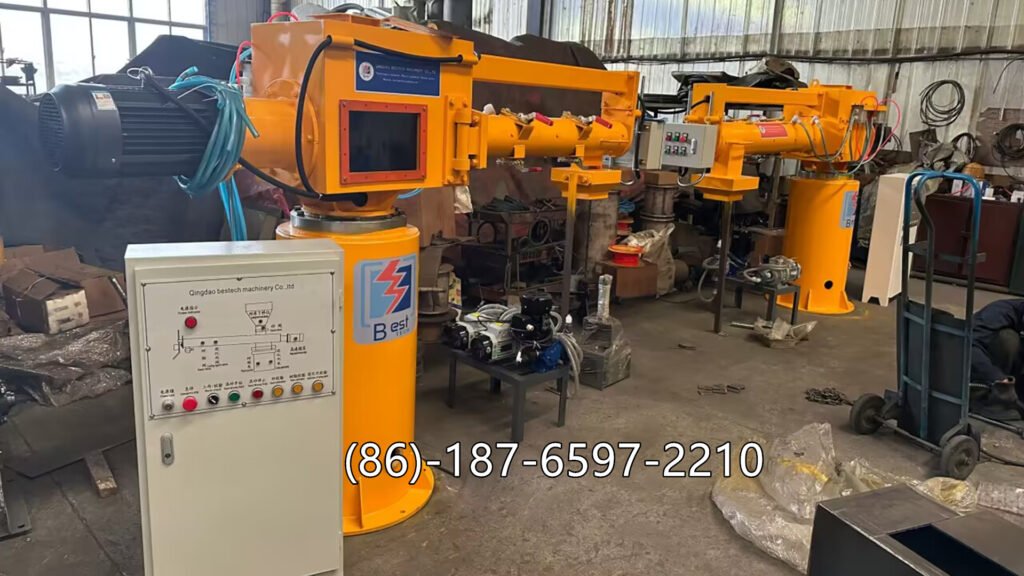
Resin sand mixing machine is a key piece of equipment used in the foundry industry to prepare resin-bonded sand for making molds and cores. Its main function is to uniformly mix base sand with resin binder and hardener according to a precise ratio, so the mixed sand has proper strength, flowability, and curing performance.
1. Introduction
Resin sand mixing machine is one of the key equipment in modern foundry industry. It is mainly used to mix raw sand with resin binder and hardener according to certain proportion, so as to produce high-quality resin sand for mold and core making. Understanding its working principle is very important for improving sand quality, reducing defects, and ensuring stable production.
2. Basic Composition of Resin Sand Mixing Machine
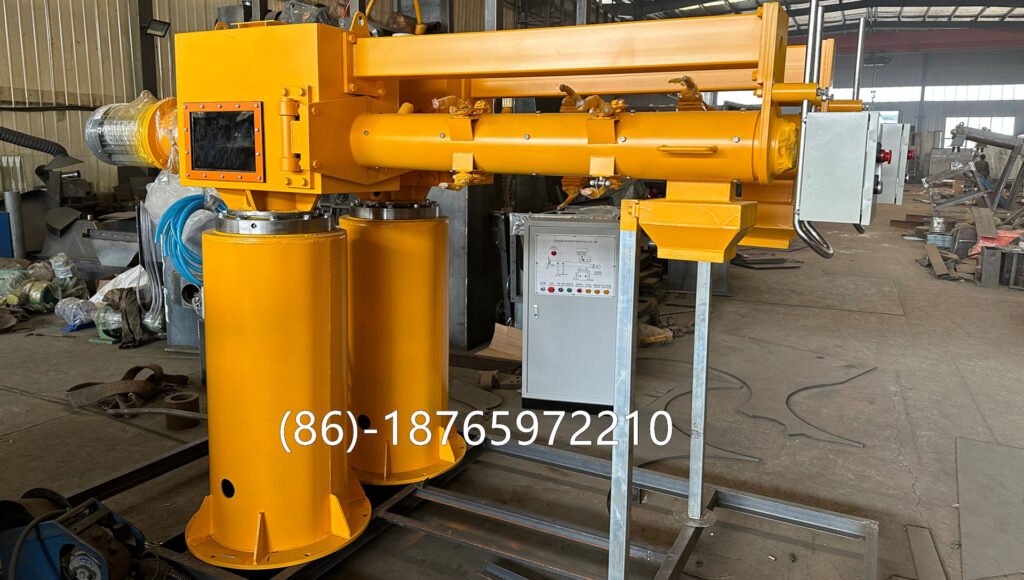
A typical resin sand mixing machine is mainly composed of the following parts:
- Sand feeding system
- Resin and hardener dosing system
- Mixing chamber
- Mixing rotor or blades
- Discharge system
- Electrical control system
Each component cooperates with each other to ensure accurate proportioning and uniform mixing.
3. Working Principle of Resin Sand Mixing Machine
The working process of resin sand mixing machine can be divided into several steps.
3.1 Sand Feeding Process
Firstly, the prepared base sand is transported into the mixing chamber through belt conveyor, bucket elevator, or screw feeder. The sand flow is controlled to ensure stable feeding amount, which is the foundation for accurate mixing ratio.
3.2 Binder and Hardener Addition
After the sand enters the mixing chamber, resin binder and hardener are added simultaneously through the dosing system. The addition amount is controlled by flow meters or weighing devices, ensuring precise proportion according to process requirements.
3.3 High-Efficiency Mixing Process
Inside the mixing chamber, high-speed rotating mixing rotor or blades force the sand particles to move in strong convection and shearing motion. During this process, resin and hardener are evenly coated on the surface of each sand grain. This ensures good sand fluidity, proper strength, and stable curing performance.
3.4 Uniform Discharge of Mixed Sand
After sufficient mixing time, the finished resin sand is discharged through the outlet at the bottom or side of the machine. The discharge process is smooth and continuous, which is convenient for downstream molding or core-making equipment.
4. Control and Automation Principle
Modern resin sand mixing machines are usually equipped with PLC control system. Parameters such as sand feeding rate, resin dosage, mixing time, and discharge interval can be accurately set and adjusted. This automation not only improves production efficiency, but also ensures consistency of sand quality.
5. Advantages of Scientific Working Principle
Based on the above working principle, resin sand mixing machine has the following advantages:
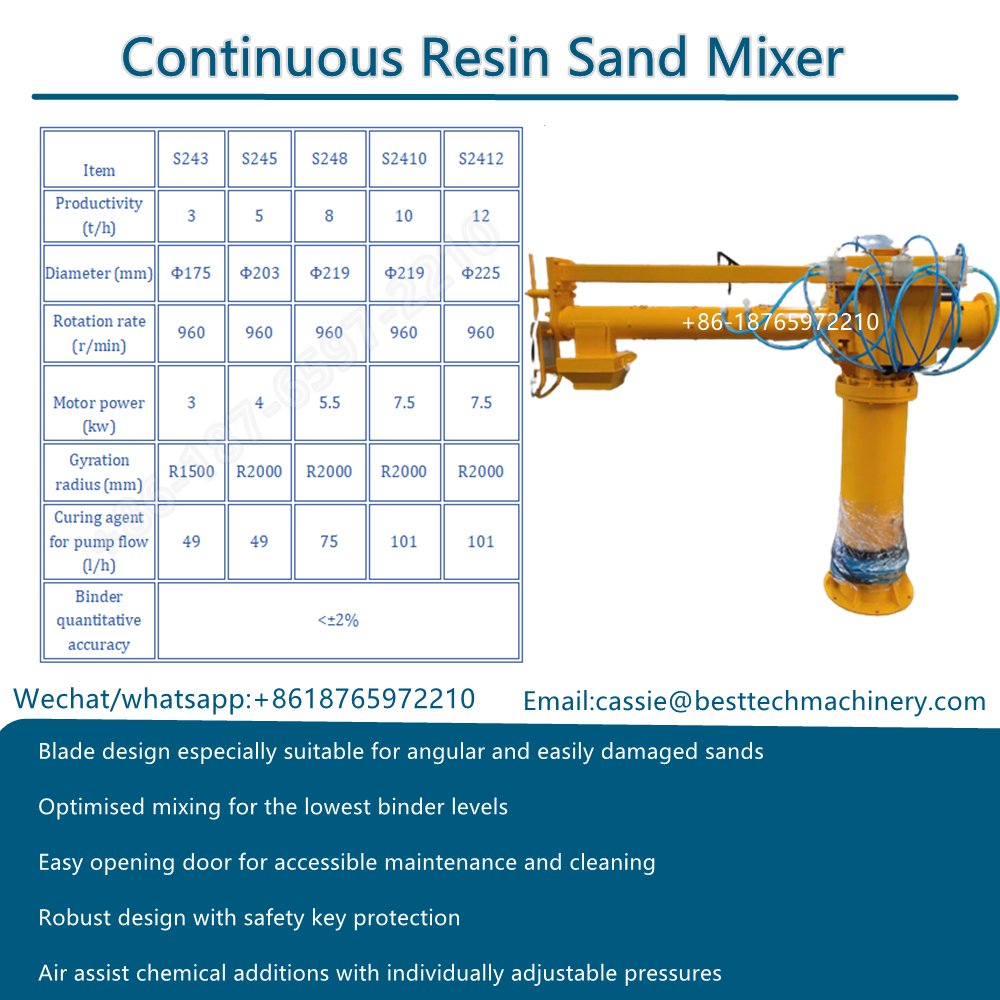
- Uniform mixing and stable sand quality
- Accurate resin and hardener proportion
- High mixing efficiency and low energy consumption
- Reduced sand waste and production cost
- Easy operation and maintenance
6. Conclusion
In conclusion, the working principle of resin sand mixing machine is centered on accurate proportioning and efficient mixing. Through reasonable structural design and advanced control system, the machine can continuously produce high-quality resin sand, which plays an important role in improving casting quality and production stability in foundry industry.