
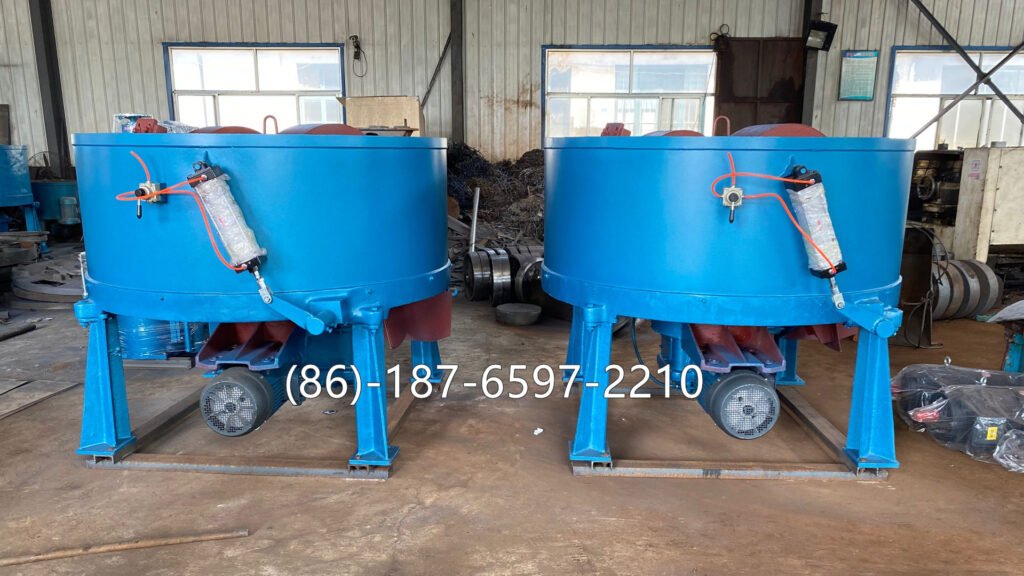
Foundry roller sand mixer is a heavy-duty mixing machine that combines rolling, kneading, and shearing actions to thoroughly mix sand, binder (such as bentonite), water, and additives. Its main purpose is to produce molding sand with stable strength, uniform moisture, and good permeability.
Unlike simple paddle or blade mixers, the roller sand mixer uses high-pressure rollers to improve sand bonding quality rather than just stirring the materials.
Benefits Of Roller Sand Mixer
In modern foundry production, the quality of molding sand directly determines casting accuracy, surface finish, and production stability. Among various sand preparation equipment, the foundry roller sand mixer has become one of the most reliable and widely used solutions, especially in green sand molding lines.
1. Working Principle Overview
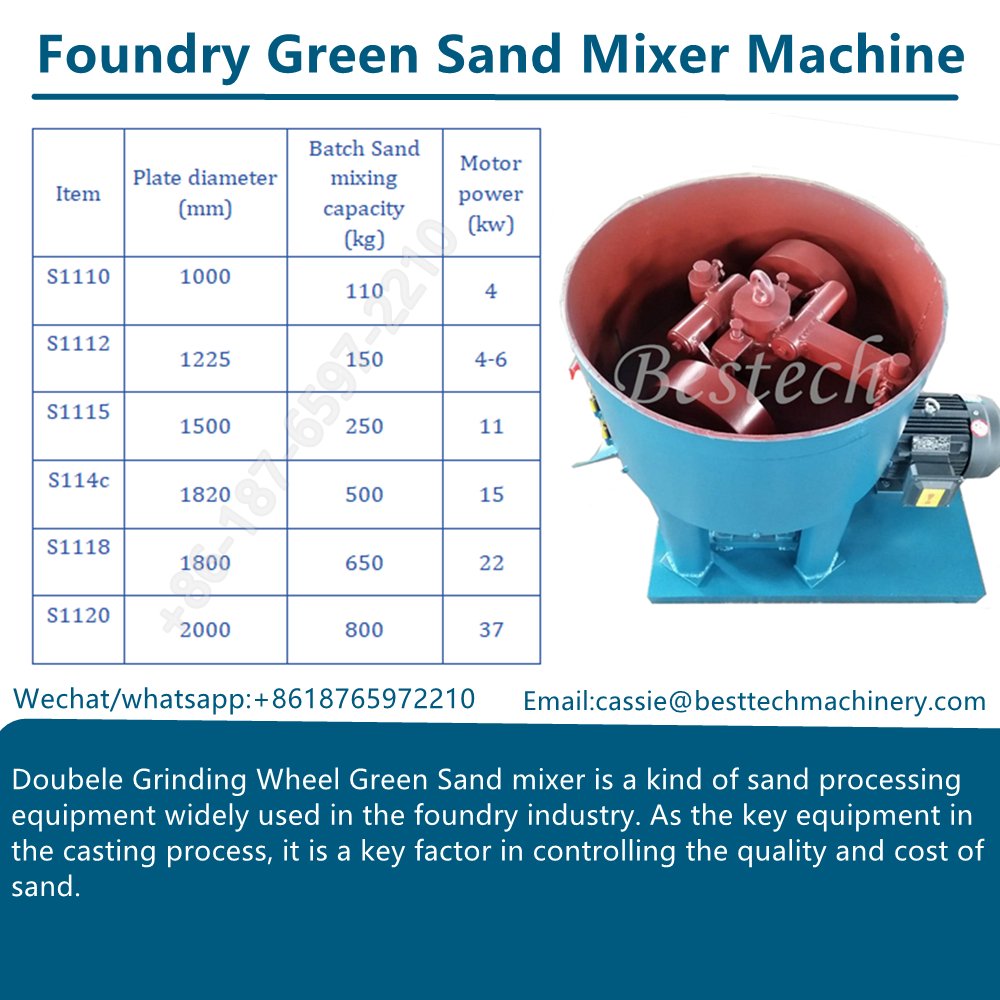
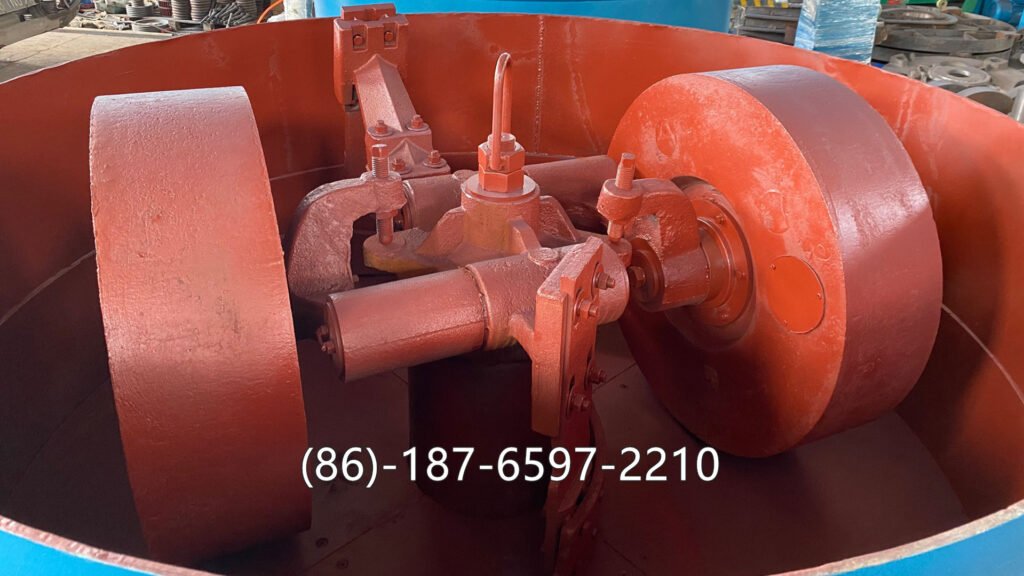
A foundry roller sand mixer mainly consists of mixing pan, grinding rollers, plows, scraper arms, and discharge system. During operation, raw sand, bentonite, water, and additives are fed into the mixing pan. The rotating plows continuously turn over the sand, while the heavy rollers apply strong rolling and grinding force.
This combined action of rolling, kneading, and shearing ensures that moisture and binder are uniformly distributed and that sand grains are properly coated. Compared with simple stirring, this process produces sand with higher compactability and consistency.
2. Excellent Sand Quality Stability
One of the biggest advantages of a roller sand mixer is its ability to produce stable and repeatable sand properties. The rolling pressure of the wheels breaks agglomerates and improves clay activation, resulting in:
- Uniform moisture distribution
- Stable green strength
- Better permeability control
For foundries aiming at continuous mass production, this stability significantly reduces casting defects such as sand inclusion, scabbing, and blowholes.
3. Strong Adaptability to Different Sand Systems
From an engineering point of view, roller sand mixers show strong adaptability. They are suitable for:
- Green sand with bentonite
- Recycled return sand with varying moisture
- Sand systems with different clay contents
By adjusting roller pressure, mixing time, and water addition, the same machine can meet different production requirements, making it a flexible choice for both small and medium-sized foundries.
4. High Mixing Efficiency with Low Sand Damage
Unlike high-speed mixers, the roller sand mixer works at relatively low rotational speed but high pressure. This design achieves efficient mixing without excessive sand grain breakage. As a result:
- Sand grain size distribution remains stable
- Reclamation load is reduced
- Overall sand system life is extended
This balance between efficiency and sand protection is highly valued in long-term foundry operation.
5. Simple Structure and Reliable Operation
From a maintenance engineer’s perspective, the roller sand mixer features a simple and robust mechanical structure. Key wear parts such as rollers and liners are easy to inspect and replace. Daily maintenance mainly includes lubrication and cleaning, which helps minimize unexpected downtime.
Its stable operation makes it suitable for harsh foundry environments with dust, vibration, and continuous workload.
6. Contribution to Cost Control
Although the initial investment of a roller sand mixer may be higher than basic mixers, its long-term economic benefits are clear:
- Reduced binder and water consumption
- Lower casting rejection rate
- Decreased maintenance and reclamation costs
These factors contribute to lower production cost per casting and faster return on investment.
Conclusion
Foundry roller sand mixer is not just a mixing machine, but a key process equipment ensuring sand quality and production stability. Its ability to deliver consistent sand properties, adapt to various sand systems, and operate reliably under industrial conditions makes it an essential choice for modern foundries pursuing quality and efficiency.
By unleashing the full benefits of a roller sand mixer through proper operation and maintenance, foundries can significantly improve casting quality while maintaining cost competitiveness.