
Introduction
In modern foundry production, resin bonded sand processes such as furan resin and alkaline phenolic resin are widely used for manufacturing steel and iron castings. These molding processes provide high strength and excellent dimensional accuracy.
However, they also generate a large amount of used resin sand after casting shakeout.
If this sand is discarded directly, it will cause:
- High raw sand consumption
- Large waste disposal cost
- Environmental pressure
To solve these problems, many foundries install an Integrated Resin Sand Reclamation System.
This system allows used sand to be processed, cleaned, and reused in the molding process. With proper reclamation technology, foundries can recycle up to 80–95% of used sand, significantly reducing production costs.
1 What Is an Integrated Resin Sand Reclamation System
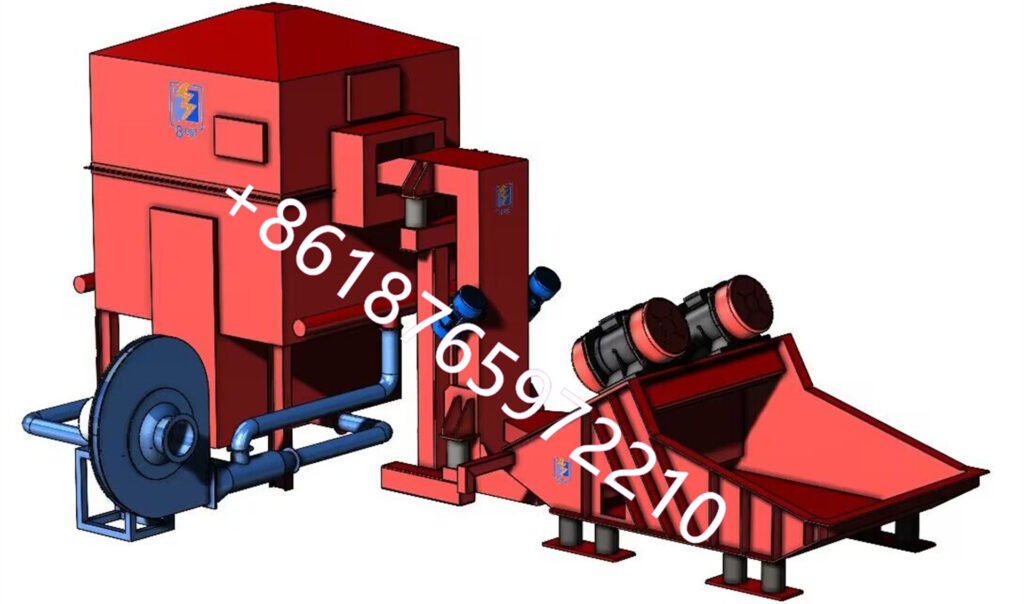
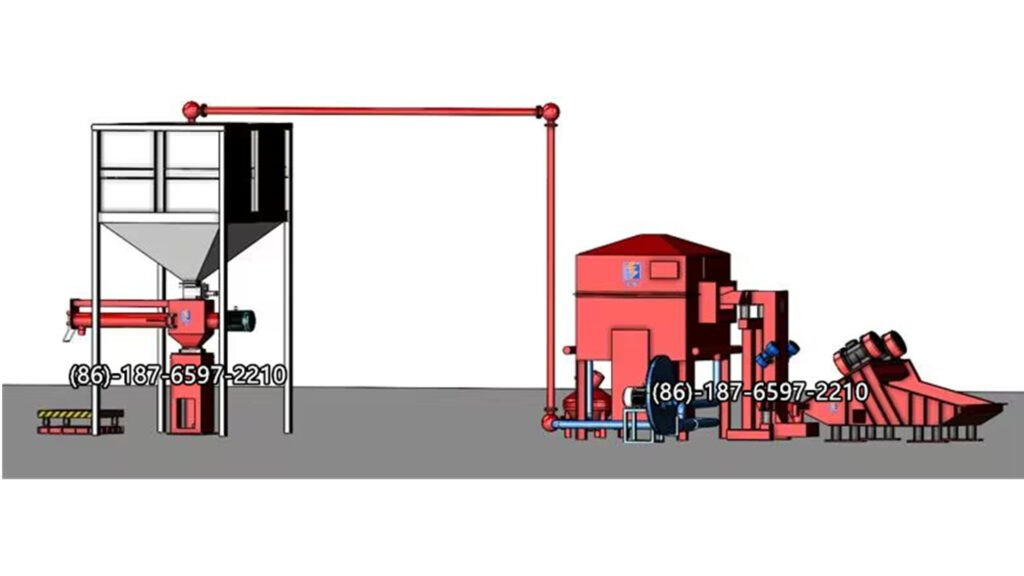
An Integrated Resin Sand Reclamation System is a complete processing line designed to recycle and regenerate used resin sand produced during casting operations.
The system typically includes:
- Sand crusher
- Mechanical sand reclaimer
- Thermal reclamation furnace
- Sand cooling system
- Vibrating screen
- Dust collection system
- Sand storage and conveying equipment
These systems follow foundry material standards such as:
- American Foundry Society guidelines for reclaimed sand quality
- ISO 11126
The main objective is to remove residual binder films and impurities from sand grains, restoring the sand so it can be reused in the molding process.
2 Working Principle of the Sand Reclamation System
The sand reclamation process usually involves several stages.
Sand Crushing
After casting shakeout, used sand lumps are broken into smaller particles by a sand crusher.
This step prepares the sand for further processing.
Mechanical Sand Reclamation
Mechanical reclamation removes part of the binder film through friction and collision between sand particles.
High-speed rotating blades create strong rubbing forces that strip the resin layer from the sand surface.
Mechanical systems usually achieve 70–85% binder removal efficiency.
Cooling and Screening
After thermal processing, sand must be cooled and screened.
This step removes:
- dust particles
- metal fragments
- oversized sand grains
Finally, the reclaimed sand is transported to storage silos and reused in molding production.

3 Major Benefits of an Integrated Sand Reclamation System
Installing an integrated resin sand reclamation system offers multiple advantages for foundry operations.
Significant Reduction in Raw Sand Consumption
Silica sand is one of the main raw materials in casting production.
With sand reclamation technology, foundries can reduce new sand usage by 60–90%, depending on the production process.
This leads to significant cost savings.
Lower Waste Disposal Costs
Waste sand disposal can become expensive due to environmental regulations.
By recycling sand internally, foundries can reduce landfill waste and transportation costs.
This also supports compliance with industrial environmental requirements.
Improved Sand Quality Stability
Reclaimed sand that is properly processed often has stable grain size distribution and reduced impurities.
This helps improve:
- mold strength
- surface finish of castings
- dimensional accuracy
Stable sand properties also reduce casting defects such as gas porosity.
Better Environmental Protection
Modern sand reclamation systems include efficient dust collection units to control airborne particles.
Reducing waste sand disposal also lowers the environmental impact of foundry production.
Long-Term Economic Benefits
Although installing a sand reclamation system requires initial investment, the long-term economic benefits are significant.
Cost savings come from:
- reduced raw sand purchasing
- lower waste disposal fees
- lower transportation cost
- reduced binder consumption
For many foundries, the typical investment payback period is 1–3 years.
4 Typical Technical Parameters of the System
The specifications of integrated sand reclamation systems depend on foundry production capacity.
A typical system may include the following parameters.
| Parameter | Typical Value |
|---|---|
| Processing capacity | 5 – 30 tons/hour |
| Mechanical reclamation power | 22 – 55 kW |
| Thermal furnace temperature | 650 – 800°C |
| Sand recovery rate | 80 – 95% |
| Dust collector airflow | 6000 – 15000 m³/h |
| Residual binder content | <0.2% |
These parameters ensure efficient sand recovery and stable system operation.
5 Typical Applications in Foundry Production
Integrated resin sand reclamation systems are widely used in many casting industries.
Common applications include:
- steel casting foundries
- iron casting plants
- automotive casting production
- pump and valve manufacturing
- heavy machinery casting
These industries produce large volumes of resin bonded sand that can be efficiently recycled.

6 Maintenance Recommendations for Stable Operation
To ensure long service life and consistent performance, foundries should implement regular maintenance procedures.
Daily Inspection
- check conveyor and elevator operation
- monitor dust collector performance
- inspect abnormal noise
Weekly Maintenance
- clean screening equipment
- inspect mechanical reclaimer wear parts
- lubricate bearings
Monthly Maintenance
- inspect thermal furnace lining
- check temperature control system
- analyze reclaimed sand quality
Preventive maintenance helps ensure the system operates reliably for many years.
Conclusion
The Integrated Resin Sand Reclamation System has become an essential technology in modern foundry operations. By recycling used resin sand and restoring its quality, the system significantly reduces production costs while improving environmental sustainability.
With sand recovery rates reaching 80–95%, foundries can dramatically reduce raw material consumption and waste disposal. Combined with proper maintenance and system design, sand reclamation technology provides long-term economic and environmental benefits.
For foundries aiming to improve efficiency and reduce operating costs, adopting an integrated sand reclamation system is a practical and strategic investment.