

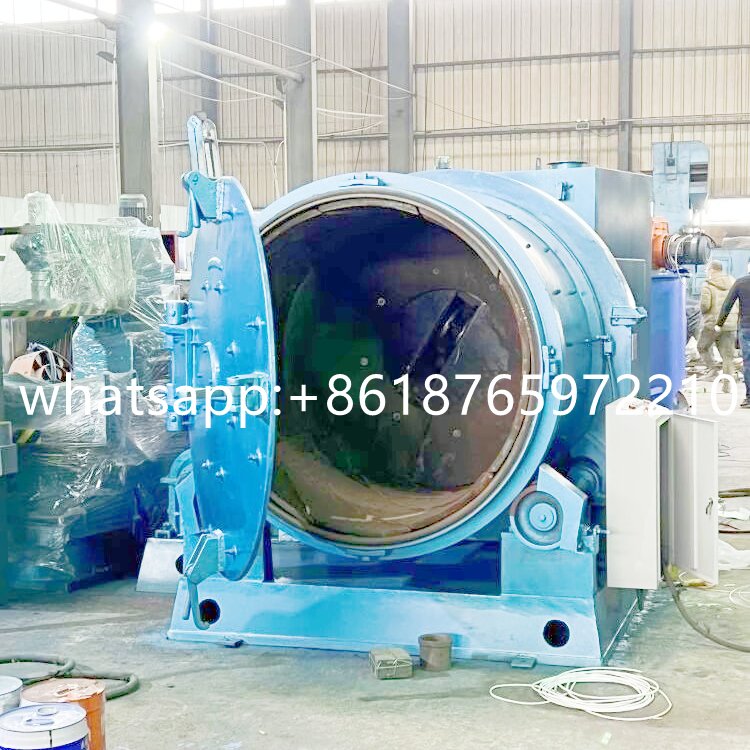
Rotary drum shot blasting machine is a specialized industrial machine designed to clean, descale, or prepare surfaces of metal or other materials through a process called shot blasting. It is commonly used in industries such as automotive, aerospace, and metal fabrication to improve surface quality, remove rust, scale, or old coatings, and prepare parts for subsequent finishing processes like painting or plating.
Drum type shot blasting machine cleans and prepares small to medium-sized parts by blasting abrasive materials at high speeds. Components rotate inside a cylindrical drum, ensuring consistent exposure and thorough cleaning on all sides. This machine is ideal for batch processing, providing an efficient solution for high-volume operations.
Key Features and Working Mechanism
Rotary Drum Design:The machine has a rotating drum or barrel where parts are loaded. The rotation ensures that all surfaces of the parts are exposed to the blasting media (e.g., steel shots or grits).
This makes it ideal for cleaning small to medium-sized parts with complex geometries, such as castings, forgings, or fasteners.
Shot Blasting Process:High-speed turbines or blast wheels propel abrasive materials onto the parts in the drum.
The abrasive impact removes contaminants, scales, and imperfections from the surfaces.
Parts Movement:The continuous rotation of the drum ensures even exposure of all parts to the abrasive media.
This movement also prevents damage or deformation by avoiding direct impact from the abrasive at one spot.
Dust Collection and Recycling:The machine typically includes a dust collection system to remove debris and contaminants.
The blasting media is often recycled through a separation and filtration system, ensuring efficient and sustainable operation.
Applications
Surface Preparation: For parts that need further treatments like painting, coating, or plating.
Rust and Scale Removal: Cleans rust, scale, or old coatings from metal surface.
Deburring and Deflashing: Removes burrs or excess material from machined parts.
Peening: Enhances the fatigue strength of components by creating a uniform compressive stress layer.
Advantages
High productivity for batch cleaning of small and medium parts.
Uniform and efficient cleaning due to the rotary movement.
Cost-effective for mass production environments.
How rotary drum shot blasting machine works?
A rotary drum shot blasting machine works by using high-speed abrasive media to clean, descale, or prepare the surfaces of parts placed inside a rotating drum. Here’s a step-by-step explanation of how it works:
- Loading the Parts
Parts to be cleaned are placed into the rotary drum or barrel. These are usually small- to medium-sized items such as bolts, castings, or forgings.
The drum is designed to hold a batch of parts securely while allowing them to tumble freely during the blasting process. - Rotary Drum Motion
The drum rotates continuously during the operation. This tumbling motion:
Ensures all surfaces of the parts are exposed to the abrasive media.
Prevents damage by avoiding prolonged impact on any single spot.
Provides uniform cleaning or surface preparation. - Abrasive Media Propulsion
Inside the machine, high-speed blast wheels or turbines propel abrasive media (e.g., steel shots, grits, or other abrasives) toward the parts.
The abrasive media strikes the parts with high energy, effectively removing:
Rust
Scale
Old paint or coatings
Burrs or flashing
Surface contaminants - Separation and Media Recycling
After striking the parts, the abrasive media falls into a recycling system:
Separators remove dust, debris, and fine particles from the used media.
Clean and reusable abrasive is returned to the blasting process.
This recycling minimizes waste and reduces operational costs. - Dust Collection
A dust collector system extracts airborne particles, contaminants, and waste material generated during blasting.
This keeps the workspace clean and ensures compliance with environmental and safety standards. - Unloading the Parts
Once the blasting process is complete, the drum stops rotating, and the cleaned parts are unloaded.
They can be transported to subsequent processing stages, such as painting, coating, or inspection.
Key Components of Drum Type Shot Blasting Machines
Drum type shot blasting machine is made up of several essential components, each one pulling its weight to get the job done:
- Rotating Drum The drum is where all the action happens. As it rotates, each part gets evenly blasted, ensuring a thorough clean.
- Blast Wheel The blast wheel is the powerhouse of the machine, launching abrasive materials at high speed to clean surfaces.
- Dust Collector This part filters out dust and debris, keeping the workspace clean and extending the life of the machine.
- Control Panel Here’s where you manage the settings, adjusting things like drum speed and blast strength.
Conclusion
This type of machine is valued for its ability to handle large quantities of small or medium-sized parts with minimal manual intervention, making it a go-to solution for many manufacturing operations.