
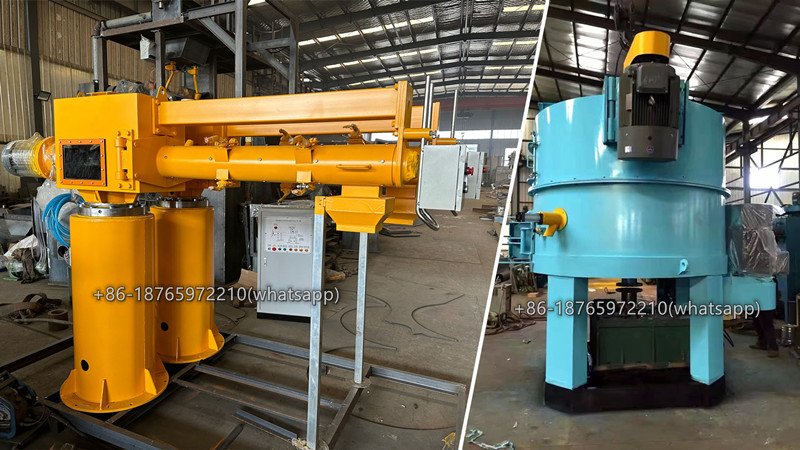
The primary difference between a resin sand mixer and a green sand mixer lies in the type of sand they process and the binding method used.
Resin Sand Mixer
What is a resin sand mixer?
Resin sand mixer is a machine designed to blend sand with chemical resins and catalysts (or hardeners) to create a strong and durable molding material for casting processes. It ensures uniform mixing of the resin with the sand to produce consistent, high-quality molds or cores used in metal casting.
Key features of a resin sand mixer
1.Mixing Components:
Sand: Typically silica sand or specialty sands suited for casting.
Resin Binder: Can be phenolic, furan, epoxy, or other chemical resins.
Catalyst/Hardener: Added to initiate the chemical reaction and harden the mixture.
2.Design:
Continuous Mixers: Designed for high-speed production lines, where sand and resin are continuously fed into the mixer.
Batch Mixers: Process sand and resin in controlled batches for precision.
3.Mixing Process:
Sand is fed into the mixer through a hopper.
Resin and catalyst are metered and added to the sand in precise proportions.
The mixture is blended in a mixing chamber using rotating blades or paddles to ensure uniform coating of sand particles.
4.Output:
The mixed resin sand is discharged, ready to be packed into molds or cores.
The mixture quickly hardens due to the chemical reaction, producing rigid molds.
Resin sand mixer Application
Resin sand mixer ideal for high-precision casting, especially for metals like steel or aluminum that require smooth surface finishes and intricate details.
Green Sand Mixer
What is a green sand mixer?
Green sand mixer is a machine used to blend sand, water, and clay (typically bentonite) into a consistent mixture for creating molds in metal casting processes. The term “green sand” refers to the moist, pliable nature of the sand mixture, not its color. Green sand is widely used in foundries for its affordability, reusability, and ease of handling.
Key features of a green sand mixer
1.Mixing Components:
Sand: Silica sand is the most commonly used base material.
Clay Binder: Bentonite clay acts as the binding agent, giving the sand its strength and plasticity.
Water: Moisture is added to activate the clay and create the necessary moldability.
Optional Additives: Materials like coal dust or other organic compounds may be included to improve mold properties or casting finishes.
2.Design:
Batch Mixers: Mix materials in smaller, controlled quantities for precision.
Continuous Mixers: Automatically feed sand, clay, and water for high-production environments.
Equipped with rotating paddles or blades to ensure even mixing and prevent clumping.
3.Mixing Process:
Raw sand, clay, and water are added to the mixer.
Paddles or blades rotate to evenly distribute the components and achieve the desired consistency.
The mixture is discharged as a pliable, cohesive mass, ready for mold-making.
4.Output:
Produces green sand with the correct moisture and binding strength to be shaped into molds.
Green sand mixer Application
Green sand mixer ideal for iron, and non-ferrous metal castings, used for creating molds in high-volume production of metal castings.
Conclusion
Resin sand mixer is indispensable for high-precision and high-performance casting applications, making it a critical component in modern foundries.
Green sand mixer is an essential piece of equipment in foundries focusing on high-volume, cost-effective casting production while maintaining a balance of quality and reusability.