
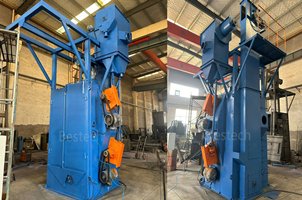
Hanger shot blasting machine is a type of surface cleaning equipment that uses high-speed abrasive flow to remove rust, scale, sand, or paint from metal surfaces. Workpieces are suspended on hooks or hangers and rotated automatically inside the blast chamber for uniform surface cleaning.
Reasons for Choosing Hanger Shot Blasting Machine
In metalworking and foundry production lines, achieving a clean, durable, and well-prepared metal surface is the foundation for every successful coating or machining process. Over the years, we’ve tested various types of shot blasting equipment, but when it comes to handling complex or delicate workpieces, the hanger shot blasting machine consistently proves to be the most reliable and efficient choice.
1. Ideal for Complex and Irregular Workpieces
Unlike conveyor or tumble-type shot blasting machines, the hanger type allows us to suspend workpieces on hooks or hangers.
This makes it extremely flexible — capable of cleaning large, heavy, or oddly shaped components without causing impact damage.
In our workshop, we often use it for castings, welded structures, and fabricated frames that can’t roll or rotate on belts. The hanger design ensures every side of the part gets fully blasted.
2. Gentle Handling, No Surface Damage
For precision parts or thin-walled components, surface impact must be controlled carefully.
Because the hanger shot blasting system keeps each part separate and stationary on hooks, there’s no part-to-part collision during the process.
This results in clean surfaces without deformation, which is critical before painting, galvanizing, or assembly.
3. Superior Cleaning Uniformity
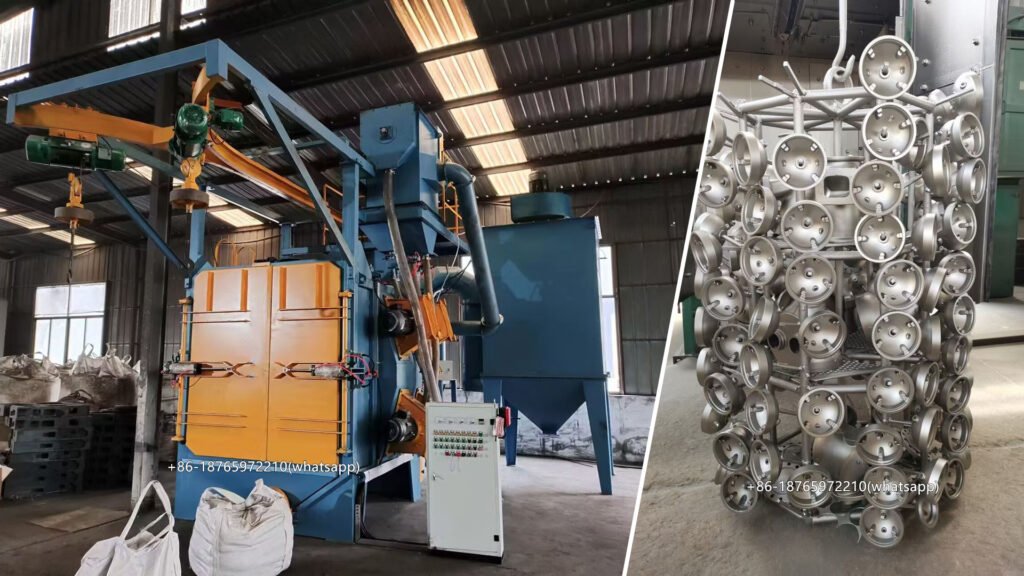
The automatic rotation of the hanger during blasting ensures that every surface — from inner corners to outer edges — receives uniform exposure to the abrasive stream.
In comparison to manual blasting or tumble systems, this method produces a consistent surface profile that improves coating adhesion and extends product lifespan.
4. Efficient Workflow Integration
Modern hanger shot blasting machines can be fully automated and integrated with conveyor or robotic systems.
This means parts can move directly from welding or casting to blasting, then to painting or inspection, without manual transfer.
For our production line, this automation has significantly reduced labor, improved cycle time, and minimized handling errors.
5. Cleaner and Safer Operation
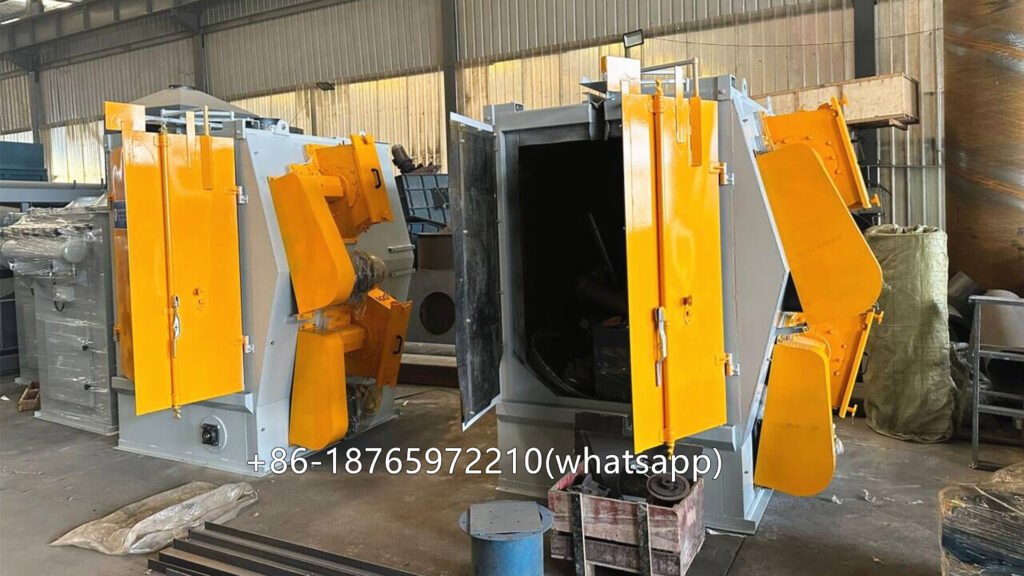
Each hanger machine is equipped with an enclosed blast chamber and a dust collection system.
This not only keeps the air in the workshop clean but also reduces abrasive loss and extends the lifespan of the machine’s internal components.
The result is a cleaner working environment and less downtime for maintenance.
6. High Return on Investment
While the initial cost of a hanger shot blasting machine might be higher than simpler systems, its long-term operational savings make it worthwhile.
Reduced labor, lower material waste, fewer damaged parts, and consistent quality all translate into better cost efficiency and improved productivity for the workshop.
Conclusion
From an engineer’s perspective, the hanger shot blasting machine is not just another piece of cleaning equipment — it’s a high-precision, low-maintenance solution that ensures superior surface preparation for all types of metal parts.
Its flexibility, automation potential, and consistent results make it a top choice for any modern foundry or metal fabrication facility looking to improve surface quality and production efficiency.
FAQ: Hanger Shot Blasting Machine
1. What is a hanger shot blasting machine?
A hanger shot blasting machine is a surface cleaning and finishing system used to remove rust, scale, sand, or paint from metal workpieces.
Parts are hung on hooks or hangers, then rotated inside a blast chamber, where high-speed steel shots clean all surfaces efficiently and evenly.
2. What types of parts can it clean?
It’s ideal for:
- Castings and forgings (steel, iron, aluminum)
- Welded structures and fabricated frames
- Heat-treated or machined components
- Automotive, aerospace, and construction parts
Basically, any component that’s too large, heavy, or irregularly shaped for a tumble or conveyor-type machine.
3. How does it work?
- Loading – Parts are hung on hooks or a rotating hanger system.
- Blasting – High-speed blast wheels propel steel shots onto the surfaces.
- Rotation – The hanger rotates for 360° coverage.
- Dust Collection – Built-in filters remove dust and fine debris.
- Unloading – Clean parts are ready for coating or assembly.
4. What are the key advantages?
- No part collision or damage (since each part hangs separately)
- Uniform cleaning for complex surfaces
- Suitable for large and irregular shapes
- Automated operation improves productivity
- Efficient dust collection ensures cleaner working conditions
5. What sizes or models are available?
Hanger shot blasting machines come in different configurations, such as:
- Single hook – For small batch or manual loading
- Double hook (Y-type) – Allows one hanger to blast while the other loads/unloads, improving throughput
- Monorail or continuous type – For large-scale, automated production lines
6. What blasting media are used?
Common abrasive media include:
- Steel shots – For general cleaning and descaling
- Steel grit – For rougher surface profiles
- Stainless steel shots – For non-ferrous materials or high-finish requirements
The media type depends on the desired surface finish and material hardness.
7. Is it suitable for delicate parts?
Yes. Because parts are individually suspended and not tumbling against each other, the hanger shot blasting machine is excellent for precision or thin-walled components where surface protection is crucial.
8. How is dust controlled?
Each machine includes a cartridge or bag-type dust collector that removes airborne particles generated during blasting.
This ensures environmental compliance and maintains clean air quality in the workshop.
9. Can it be integrated into automated production lines?
Absolutely. Modern hanger systems can be connected to conveyor lines, robotic arms, or painting booths, enabling continuous, fully automated surface preparation without manual handling.
10. What maintenance does it require?
Routine maintenance includes:
- Checking blast wheel liners and blades for wear
- Monitoring abrasive flow rate and separator condition
- Cleaning or replacing dust collector filters
- Regular lubrication and inspection of hanger rotation systems
Proper maintenance ensures long service life and consistent cleaning quality.
11. What industries use hanger shot blasting machines?
- Foundry and casting plants
- Automotive manufacturing
- Aerospace and railway industries
- Steel fabrication and construction equipment
- Machinery and heavy equipment workshops
12. What surface quality can be achieved?
Depending on blasting time and abrasive selection, hanger machines can achieve SA 2.5–SA 3 cleanliness (ISO 8501-1 standard) — ideal for paint, coating, or welding preparation.