
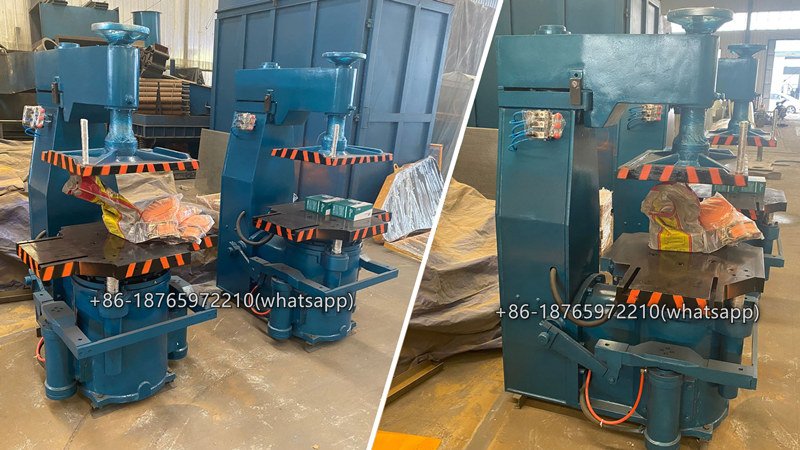
Jolt Squeeze Moulding Machine is a type of sand casting equipment used primarily in foundries to create molds for metal casting. The machine works through two distinct actions—jolting and squeezing—which help to compact the sand around the pattern and form a high-quality mold. The combination of these actions ensures the mold has the desired strength, density, and shape, which are critical for producing defect-free castings. Choosing a Jolt Squeeze Moulding Machine can be a smart decision for foundries and casting operations due to its unique combination of efficiency, precision, and flexibility.
How Jolt Squeeze Moulding Machine Works?
Jolting Action (Vibration):
The mold flask containing the sand and pattern is subjected to rapid vertical vibrations, or “jolting.”
The vibration helps to evenly distribute and settle the sand around the pattern. This reduces air pockets and helps ensure that the mold takes the exact shape of the pattern.
Squeezing Action (Compaction):
After the jolt, the mold is subjected to a squeezing action, where pressure is applied to compact the sand further.
The squeeze action solidifies the mold, ensuring it has high density and strength, which is necessary for withstanding the molten metal during pouring.
Mold Removal:
Once the sand has been compacted, the mold is removed from the pattern, and it is ready for use in metal casting.
Key Features of the Jolt Squeeze Moulding Machine
Two-Step Process: The combination of jolting and squeezing ensures that the sand mold is compacted to the right density, leading to higher-quality castings.
Automatic or Semi-Automatic Operation: Many modern machines feature automated controls to handle the jolting and squeezing actions, improving consistency and reducing labor.
Compact Design: These machines tend to have a compact design that is suitable for both small and medium-sized foundries, with minimal space requirements.
Pattern Versatility: They can be used with various types of patterns, including both metal and non-metallic patterns, depending on the material being cast.
Versatile Sand Usage: The Jolt Squeeze machine is adaptable to different types of molding sands, such as green sand or chemically bonded sand.
Why Choose Jolt Squeeze Moulding Machine?
- High Precision & Consistency
Jolt Squeeze Moulding offers high precision in the production of molds. The process ensures consistent mold quality, which is critical for producing high-quality metal castings with tight tolerances. - Better Mold Strength
The “jolt” action followed by the “squeeze” action increases the density and strength of the mold. This allows for improved resistance to heat and pressure during the casting process, leading to better surface finish and fewer casting defects. - Cost-Effective
Jolt Squeeze machines are often cost-effective in terms of both initial investment and operational expenses. The simplicity of the machine design allows for lower maintenance costs and long-term durability. - Adaptability
These machines can handle a variety of sand types and casting materials, making them versatile in different foundry applications. They are often used for producing both ferrous and non-ferrous metal castings. - Faster Moulding Process
The quick cycle times associated with Jolt Squeeze machines lead to increased production rates. This can be particularly beneficial in industries with high production demands or tight lead times. - Compact and Space-Efficient
Compared to other types of molding machines, Jolt Squeeze machines tend to be more compact, making them suitable for facilities where space is limited. - Improved Surface Finish
The compaction process involved with the jolt and squeeze actions helps in reducing defects like sand inclusions and rough surfaces on the final castings, leading to a smoother surface finish. - Automation and Control
Many modern Jolt Squeeze Moulding Machines are equipped with automation and digital control systems, which allow for precise control over the molding process and help improve the overall efficiency and repeatability. - Environmental Benefits
These machines are often more environmentally friendly compared to some other molding methods. The reduced use of binder and lower energy consumption during the molding process can contribute to a greener manufacturing process. - Low Sand Waste
The precision of the Jolt Squeeze system means that it requires less sand to create a mold of the desired quality, which can reduce material waste and costs. - Versatile Molding Patterns
The process allows for the molding of complex patterns and parts with intricate designs, which can be difficult or expensive to achieve with other molding systems.
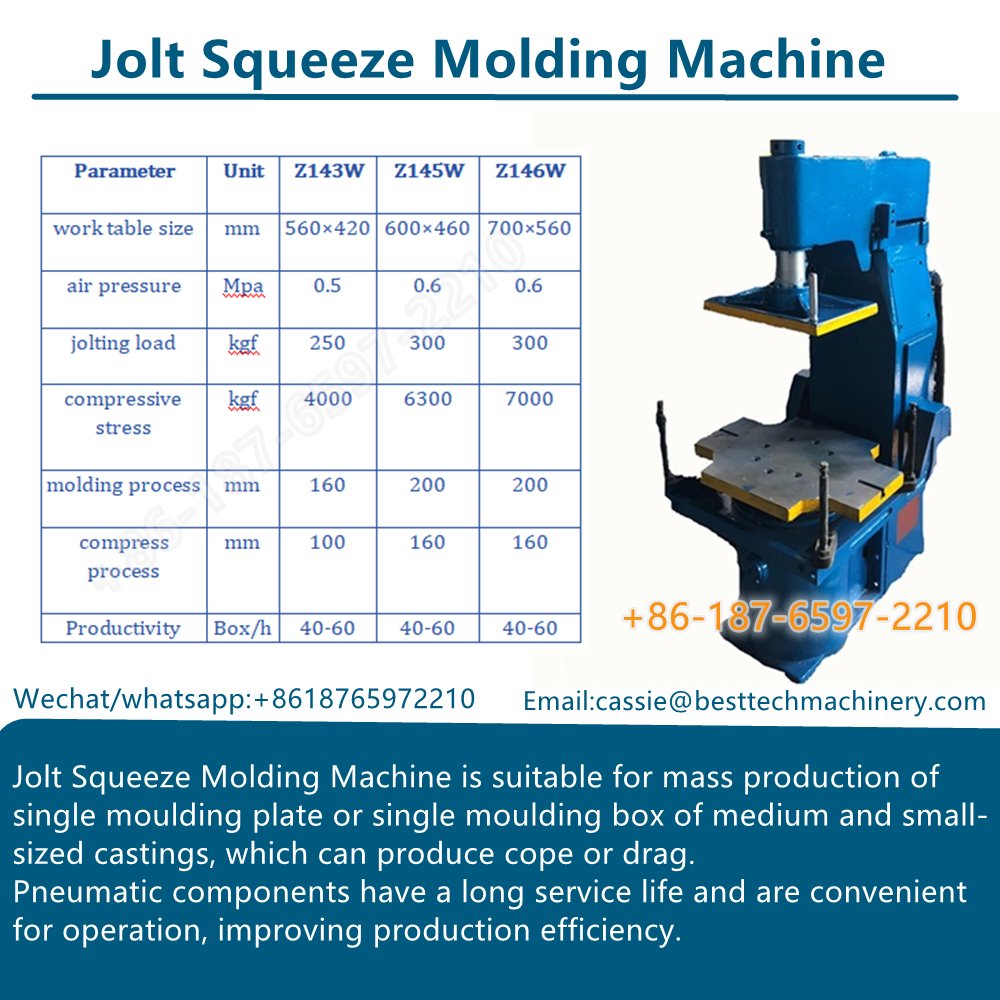
Jolt Squeeze Moulding Machine Advantages
High Precision and Consistency: The jolt and squeeze process results in precise mold dimensions and consistent mold quality.
Strong Molds: The squeezing action provides high-density molds that can withstand the heat and pressure of molten metal.
Faster Molding Cycle: The process is typically faster than traditional hand molding methods, improving overall foundry efficiency.
Reduced Defects: The tightly compacted sand reduces defects like sand inclusions, improving the surface finish of castings.
Lower Material Waste: The precise compaction reduces sand waste, making it a more material-efficient process.
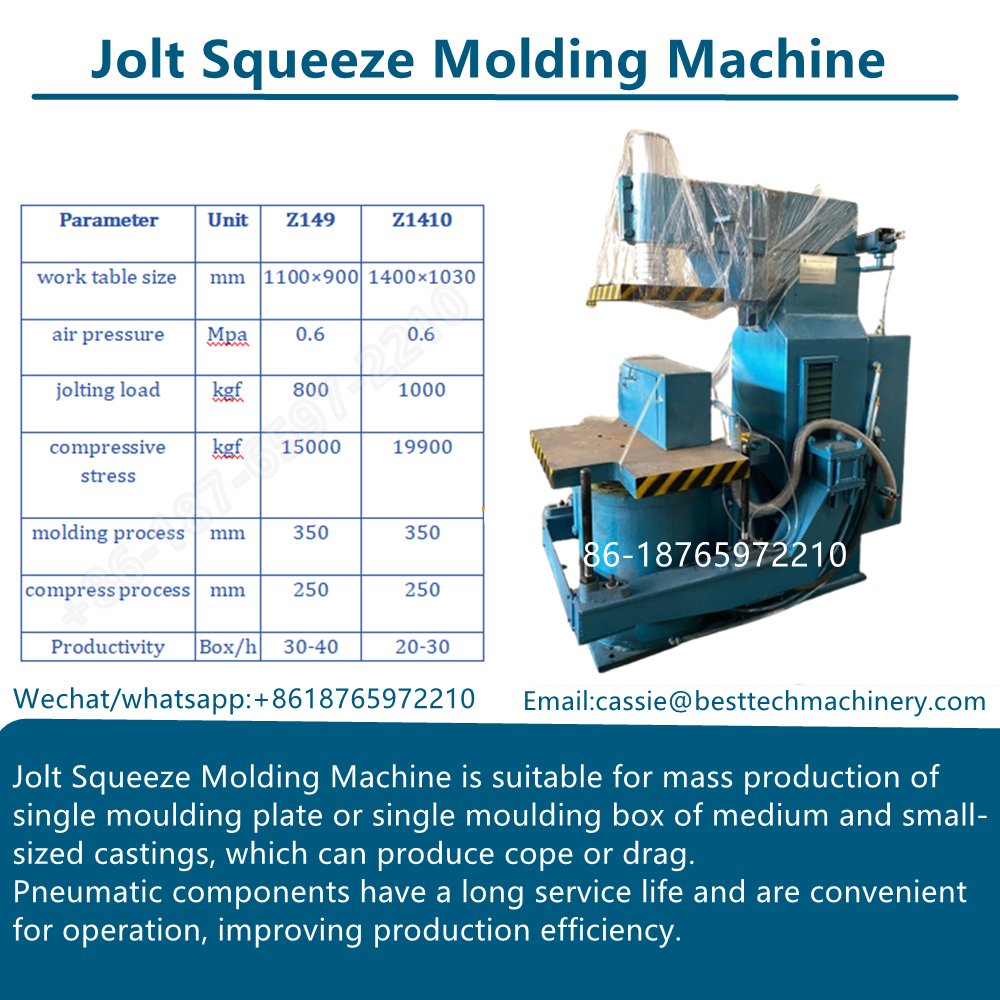
Jolt Squeeze Moulding Machine Application
Jolt Squeeze Moulding Machines are used for casting a variety of metal products, including:
- Automotive Parts: Engine blocks, transmission cases, etc.
- Industrial Components: Pumps, valves, and other machinery parts.
- Small to Medium Castings: They are suitable for producing both small and medium-sized castings with intricate designs.
Conclusion:
Jolt Squeeze Moulding Machine is an efficient and versatile tool for foundries that need to produce high-quality sand molds. The combination of jolting and squeezing results in molds with excellent compaction and strength, which are crucial for producing high-precision metal castings. This machine improves productivity, consistency, and quality while reducing material waste and operational costs.