
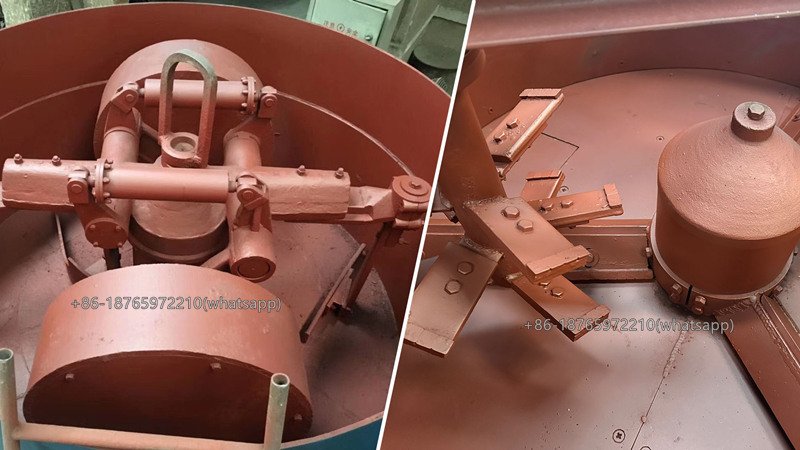
Roller sand mixers and rotor sand mixers are both used in foundries and other industries to mix sand for casting and molding purposes. However, they have key differences in their design, mixing mechanisms, and applications.
What is a Roller Sand Mixer?
Roller sand mixer is a type of industrial mixing machine used primarily in foundries to prepare molding sand by combining sand, binders (such as clay or resin), and other additives. It is designed to ensure a uniform mixture with good compactability and binding strength, which is essential for high-quality casting molds.
Structure & Mechanism:
Consists of heavy rollers that rotate over a sand bed.
The rollers exert pressure and shear force to mix the sand thoroughly.
Often equipped with scrapers to improve mixing efficiency.
Advantages:
Provides uniform mixing and compaction of sand.
Reduces voids and improves sand permeability.
Application
Ideal for green sand mixing in foundries.
Used in applications where high compactability is required.
What Is A Rotor Sand Mixer
Rotor sand mixer is an industrial machine used for rapidly and efficiently mixing sand with binders and additives in foundries and other industries. It utilizes high-speed rotating blades or paddles to create a turbulent mixing action, ensuring uniform distribution of materials.
Structure & Mechanism:
Uses high-speed rotating blades or paddles to mix sand.
The rotor creates turbulence, ensuring rapid and homogeneous mixing.
Often includes adjustable speed settings for better control.
Advantages:
Faster mixing compared to roller sand mixers.
Better distribution of binders and additives.
More energy-efficient for continuous mixing operations.
Applications:
Suitable for high-speed and high-precision sand preparation processes.
Conclusion:
If compaction and uniformity are the priority (e.g., green sand preparation), a roller sand mixer is preferable.
If speed and efficiency are crucial (e.g., green sand, resin sand preparation), a rotor sand mixer is a better choice.