
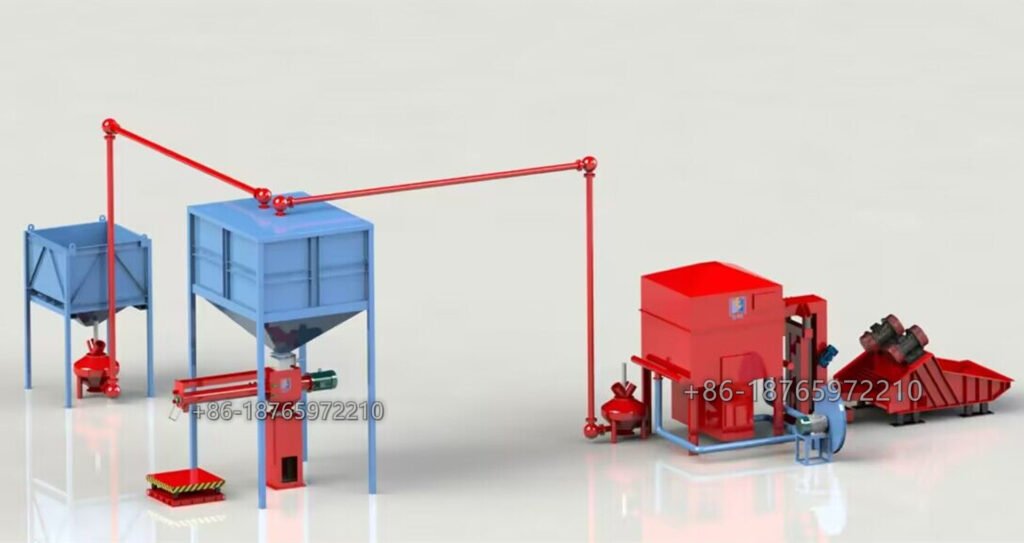
Automatic foundry solutions, particularly for casting machines and equipment, focus on automating the casting process to improve efficiency, precision, and overall productivity. These machines and systems are designed to minimize manual intervention, optimize resource usage, and enhance product consistency.
Key Casting Machines And Equipment Used In Modern Foundries
- Automatic Molding Machines
Horizontal & Vertical Molding Lines: These machines are designed to automate the process of making molds for casting. They use sand, clay, or other materials to form molds into which molten metal is poured.
Shell Molding Machines: These are used for producing shell molds in processes like investment casting or lost-wax casting. Shell molding machines ensure precise and high-quality molds. - Automatic Pouring Systems
Automated Pouring Machines: These systems handle the pouring of molten metal into molds with precision and control. They help to reduce spillage, prevent burns, and improve consistency.
Robotic Pouring Systems: Robots are increasingly used for pouring in foundries, as they can work in extreme heat, handle precise pouring, and maintain high levels of consistency. - Core Making Machines
Shell Core Machines: Used to produce cores for casting parts with hollow sections. These machines can be automated for greater precision and speed.
Cold Box Core Machines: These machines use a chemical bonding process for core production, and when automated, they help increase production rates and reduce defects. - Casting Cooling Systems
Cooling Tunnels: After the metal is poured into molds, cooling systems are necessary to cool the metal at a controlled rate to avoid defects. These cooling systems can be automated to control air or water flow.
Automated Heat Treatment Furnaces: After casting, parts may undergo heat treatment to improve their mechanical properties. Automated furnaces can adjust temperature profiles and times without manual intervention. - Casting Finishing Machines
Shot Blasting Machines: Used to clean castings by shooting abrasive media at the surface. Automated shot blasting systems ensure uniform cleaning of parts.
Grinding and Polishing Machines: After casting, parts often need grinding and polishing for a smoother finish. Automatic machines can handle this efficiently. - Casting Inspection and Quality Control Systems
Automated X-Ray & CT Scanners: Used for non-destructive testing of castings to detect internal defects such as porosity, cracks, and inclusions.
Vision Inspection Systems: High-resolution cameras and AI-driven software can inspect the exterior of castings for surface defects and ensure parts meet quality standards.
Ultrasonic Testing: Automated ultrasonic testing equipment can quickly detect material flaws and inconsistencies that are not visible to the naked eye. - Material Handling and Transport Systems
Automated Guided Vehicles (AGVs): These vehicles are used for transporting raw materials, molds, and finished castings around the foundry with minimal human intervention.
Conveyor Systems: Used for automating the movement of materials and castings from one stage to the next, reducing labor and increasing throughput. - Furnace Automation Systems
Induction Furnaces: Automated induction furnaces are used to melt metal. They can be precisely controlled for temperature and melting time, increasing energy efficiency and reducing waste.
Electric Arc Furnaces (EAF): Used in steelmaking, these automated furnaces can be optimized for temperature control and energy usage, improving the overall cost-effectiveness of the process. - Casting Sand Reclamation Systems
Automated Sand Reclamation Machines: These machines are used to recycle used sand from molds and cores. Sand reclamation is critical for cost control and reducing the environmental impact of the casting process. - Robotic Handling Systems
Robotic Arms for Mold Handling: Robots can load and unload molds, arrange cores, or transport castings within the foundry, streamlining the process and reducing the need for human labor in dangerous or strenuous environments.
Robotic Sand Rammers: Automated systems can be used to compact sand in molds, ensuring uniform density and reducing mold defects.
Benefits of Automated Foundry Solutions:
- Consistency & Precision: Automated machines can repeat tasks with high precision, leading to consistently high-quality castings.
- Increased Productivity: Automation reduces cycle times, allowing the foundry to produce more parts with fewer resources.
- Improved Safety: By automating high-risk tasks such as pouring molten metal and handling heavy molds, worker safety is improved.
- Lower Costs: Automation can reduce labor costs, minimize material waste, and optimize energy usage, leading to a more cost-effective operation.
- Data-Driven Decisions: Automation systems often come with built-in data logging, enabling foundries to track production metrics, machine performance, and quality control, allowing for continuous improvement.
Conclusion
Automatic foundry solutions refer to automated systems and technologies designed to streamline and optimize the processes involved in metal casting and foundry operations.
These automated systems are being increasingly integrated with Industry 4.0 technologies, allowing for connected, smart foundries where production is optimized based on real-time data analytics.