

To ensure safe and effective operation of a Jolt Squeeze Sand Molding Machine, there are several key considerations that operators and foundry managers should keep in mind. These considerations help maintain workplace safety, product quality, and machine longevity.
Jolt squeeze sand molding machines are critical in sand casting processes, offering efficiency and precision in producing high-quality molds.
However, improper operation or maintenance can lead to safety hazards or defects in castings.
Introduction Jolt Squeeze Sand Molding Machine
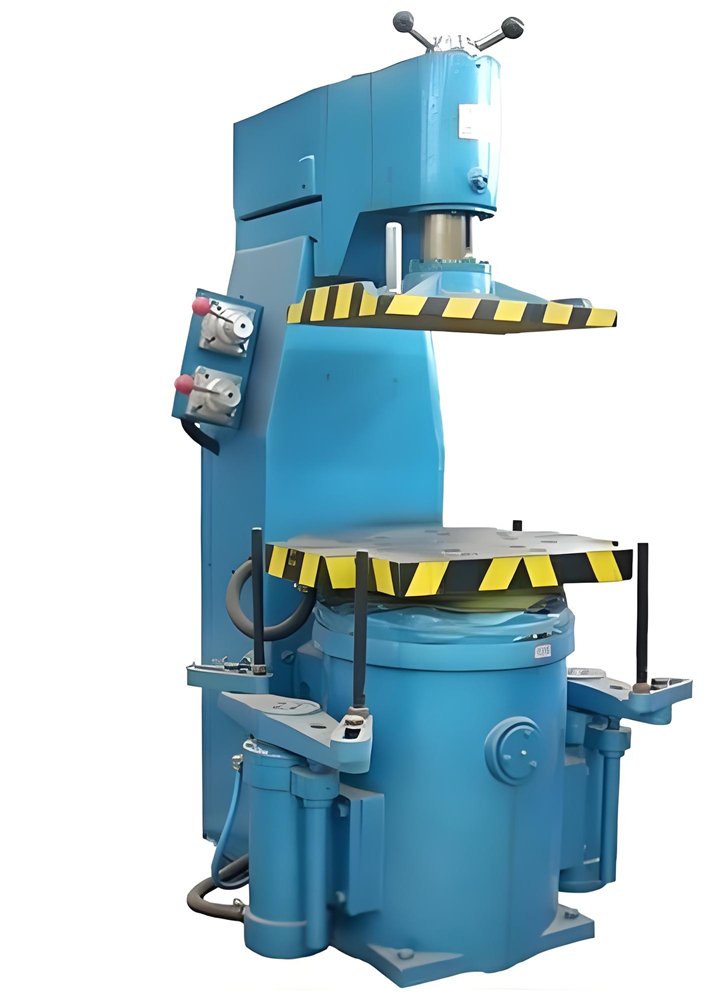
A Jolt Squeeze Sand Molding Machine is a critical piece of equipment in foundries for producing high-quality sand molds used in metal casting.
Jolt Squeeze Sand Molding Machine by combining jolting (vibratory compaction) and squeezing (mechanical compression), this machine ensures uniform sand density around patterns, creating precise mold cavities for castings like machinery parts, plumbing valves, and decorative components .
What Is A Jolt Squeeze Sand Molding Machine?
A Jolt Squeeze Sand Molding Machine is a type of foundry equipment used to create sand molds for metal casting. It shapes and compacts green sand (a mixture of sand, clay, and water) around a pattern using two main actions: jolting and squeezing.
How It Works
Pattern Placement:
A pattern (the shape of the part to be cast) is placed in a molding flask.
Sand Filling:
Green sand is poured into the flask, covering the pattern.
Jolt Phase:
The machine lifts and drops the flask multiple times (like a fast shake).
This helps sand settle and loosely fill all spaces around the pattern.
Squeeze Phase:
A ram or plate presses down on the sand to compact it tightly.
This ensures the mold has good strength and surface finish.
Mold Removal:
The mold is removed, the pattern is taken out, and the mold is ready for metal pouring.
Key Considerations for Safe and Effective Use
1. Operator Safety
- Training: Ensure all operators are properly trained in using the machine, including startup, operation, emergency shutdown, and basic troubleshooting.
- PPE (Personal Protective Equipment): Use safety glasses, gloves, hearing protection, and steel-toe boots.
- Emergency Stops: Verify that emergency stop buttons are accessible and functional.
- Guarding & Shields: Make sure all moving parts are properly guarded to prevent accidental contact.
2. Machine Setup & Maintenance
- Daily Inspections: Check for wear, leaks, loose parts, and proper alignment before operation.
- Lubrication: Maintain proper lubrication of mechanical parts per manufacturer specs.
- Pneumatic/Hydraulic Systems: Regularly inspect for leaks and ensure consistent pressure during the squeeze phase.
- Pattern and Flask Alignment: Misalignment can damage molds or the machine and reduce mold accuracy.
3. Sand Quality & Preparation
- Sand Consistency: Use the correct sand mixture with appropriate moisture and clay content.
- Sand Conditioning: Pre-condition sand to ensure even compaction during jolting and squeezing.
- Avoid Overfilling: Excess sand can lead to poor compaction and damage the machine.
4. Proper Jolting and Squeezing Parameters
- Adjust Jolt Frequency & Height: Too much jolting can damage patterns or over-compact the mold.
- Monitor Squeeze Pressure: Ensure correct pressure for the mold size and sand type; over-squeezing can distort patterns.
- Cycle Timing: Maintain proper timing for consistent mold quality.
5. Pattern Handling
- Clean & Dry Patterns: Moisture or debris on the pattern can affect mold quality.
- Durable Materials: Use patterns made from metal or reinforced plastic for better wear resistance.
6. Quality Control
- Inspect Molds: Regularly check for mold defects like cracks, poor edges, or loose sand.
- Trial Runs: Do test molds when switching patterns or changing sand mix to ensure consistency.
How to maximize the benefits of jolt squeeze sand molding machines?
To maximize the benefits of a Jolt Squeeze Sand Molding Machine, it’s essential to focus on process optimization, regular maintenance, quality control, and operator training.
1. Optimize Machine Settings
Jolt Frequency & Height:
- Set the correct number and height of jolts based on the sand and pattern complexity.
- Too much jolting may cause sand segregation or pattern damage.
Squeeze Pressure & Time:
- Use just enough pressure to compact the sand without damaging the pattern.
- Adjust squeeze time based on mold size and sand moisture content.
2. Use Quality Patterns & Flasks
Accurate, Durable Patterns:
- Use patterns made of aluminum, wood, or resin with good surface finish and dimensional accuracy.
Proper Flask Fit:
- Ensure flask and pattern alignment is tight and repeatable to avoid mold shift or flash.
3. Maintain Sand Quality
Correct Sand Mixture:
- Maintain ideal moisture (2–4%) and clay content (7–10% depending on recipe).
Regular Sand Testing:
- Monitor grain fineness number (GFN), compactability, and strength.
Reconditioning:
- Recycle and condition return sand properly to reduce waste and improve consistency.
4. Implement Preventive Maintenance
Routine Inspections:
- Check wear on rams, cylinders, jolting mechanism, and bearings.
Lubrication:
- Follow manufacturer guidelines to keep mechanical parts running smoothly.
Hydraulic/Pneumatic System Checks:
- Inspect pressure regulators, lines, and seals to avoid leaks and uneven squeezing.
5. Train Operators Thoroughly
Teach operators:
Safe operation procedures
Troubleshooting techniques
Basic machine and pattern care
Encourage consistent handling to avoid mold quality variation due to operator error.
6. Monitor & Analyze Mold Quality
Inspect molds for defects like cracks, soft spots, flash, and misalignment.
Use defect data to adjust machine settings or sand mix.
Track key metrics like mold hardness and dimensional accuracy.
7. Streamline the Workflow
Minimize downtime between cycles.
Use a well-organized pattern storage and sand handling system.
Position tools and materials for quick access during setup.
Why Choose Jolt Squeeze Sand Molding Machine?
Choosing a Jolt Squeeze Sand Molding Machine can be a smart and cost-effective decision for many foundries, especially when producing small to medium-sized castings.
1. Reliable and Proven Technology
Jolt squeeze machines have been used for decades and are known for reliability and consistency.
Simple mechanical design with fewer complex parts means lower downtime and easier maintenance.
2. Cost-Effective for Small and Medium Production
Ideal for low to medium production volumes where full automation isn’t necessary.
Lower investment cost compared to high-end automated molding lines.
Great return on investment for small foundries or job shops.
3. Good Mold Quality
Produces dense, uniform molds with strong edges and good surface finish.
The combined jolting and squeezing ensures accurate reproduction of pattern details.
4. Versatility
Suitable for a wide range of castings—from automotive and agricultural parts to industrial valves and machine bases.
Can handle different flask sizes and varied sand types.
Works well with green sand, which is reusable and easy to manage.
5. Simple Operation & Maintenance
Easy to train operators—no need for high-tech knowledge.
Basic preventive maintenance keeps it running for years.
Spare parts are widely available and inexpensive.
How We Provide Exceptional Technical Support for Jolt Squeeze Sand Molding Machines
we prioritize delivering unparalleled technical support to ensure seamless operation and longevity of our Jolt Squeeze Sand Molding Machines. Below is our comprehensive approach:
1. Pre-Sale Consultation & Customization
Our technical team collaborates closely with clients to tailor solutions for specific production needs. For instance, our Z1410 model features a fuselage box structure and microseism squeeze molding technology, optimized for high-pressure efficiency (0–100 kgf compressive stress) and surface toughness. We provide:
Technical Parameter Optimization: Adjusting worktable dimensions (up to 1400×1030 mm) and flask capacity (1000×800×350 mm) to match casting requirements.
Cost-Effective Design: Balancing productivity (20–40 molds/hour) with energy efficiency.
2. 24/7 Rapid Response & Multi-Language Support
Leveraging a decade of global export experience , our multilingual team ensures:
Real-Time Troubleshooting: Addressing operational issues like sand compaction irregularities or hydraulic system faults within 24 hours.
Documentation Assistance: Providing clear English manuals, schematics, and compliance certifications (CE, ISO, BV).
3. On-Site Installation & Training
To maximize machine performance, we offer:
Step-by-Step Setup Guidance: Deploying engineers to oversee installation, calibration, and safety checks (e.g., compress plate alignment within 750 mm tolerance) .
Hands-On Workshops: Training operators in mold alignment, resin sand mixing, and preventive maintenance for dust collectors or shot blasting units .
4. Post-Sale Maintenance & Spare Parts Network
We minimize downtime through:
Predictive Maintenance Plans: Monitoring wear-prone components like jolt cylinders or squeeze pistons
Global Spare Parts Inventory: Guaranteeing same-day shipment of critical replacements (e.g., hydraulic seals, sand mixers) via sea or air freight .
5. Continuous Improvement & Feedback Integration
By analyzing client feedback, we refine machine designs and support protocols.
Recent upgrades include:
Automated Sand Feeding Systems: Reducing manual intervention in resin sand casting lines.
Enhanced Data Logging: Integrating IoT sensors for real-time performance tracking
Conclusion
Jolt squeeze molding machines are indispensable in modern foundries, balancing precision, efficiency, and scalability. Advances in automation and structural design.