Q324 Crawler Shot Blasting Machine Selection Guide
Learn how to choose a Q324 crawler shot blasting machine based on capacity, workpiece size, blasting efficiency, abrasive use, maintenance and cost.Skip to content
Get Consultation
+86 18765972210
(Whatsapp)
Blog
Home
Blog
Catalog
How to Choose the Right Q324 Crawler Shot Blasting Machine? Capacity, Efficiency & Cost Guide
Choosing a Q324 crawler shot blasting machine is not simply about comparing prices. For foundries, metalworking factories, casting manufacturers, and surface-treatment companies, the right machine must match your workpiece weight, batch size, required cleaning grade, production capacity, abrasive consumption, and long-term operating cost.
A properly configured Q324 crawler shot blasting machine can remove sand, rust, scale, oxide, and surface contaminants from castings and metal parts while improving production consistency and reducing manual cleaning work.
But here is the key question:
How do you know which Q324 configuration is actually right for your production line?
This guide explains the most important factors—from capacity and blasting performance to abrasive recovery, maintenance, energy consumption, and total cost of ownership—so you can make a better purchasing decision.
What Is a Q324 Crawler Shot Blasting Machine?
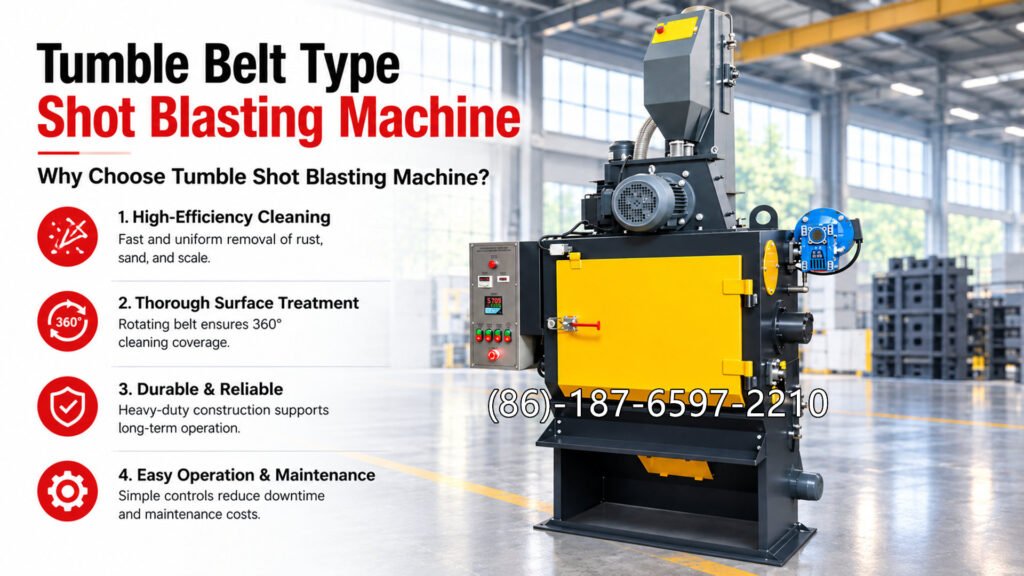
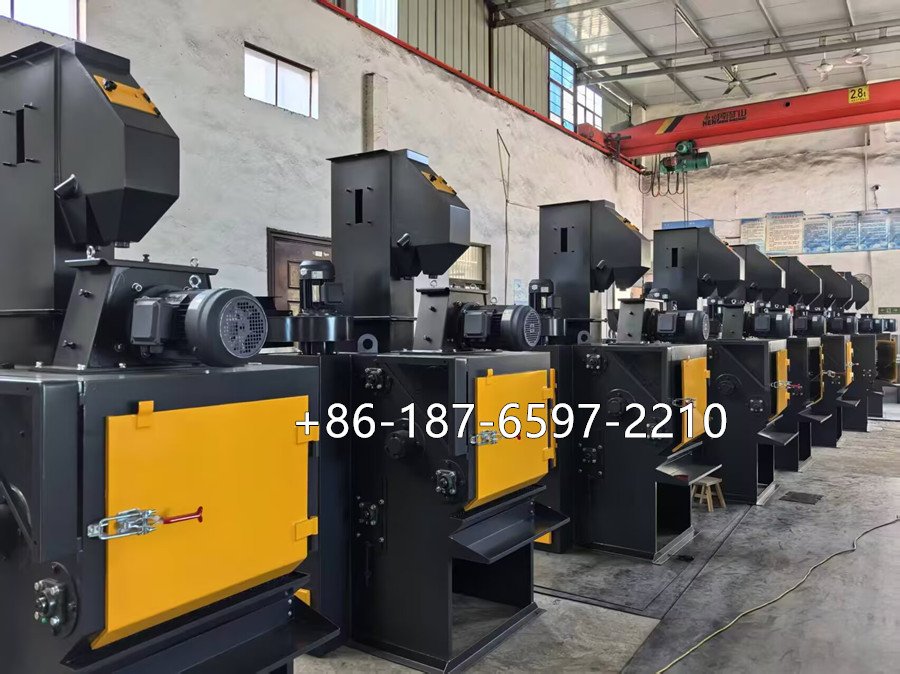
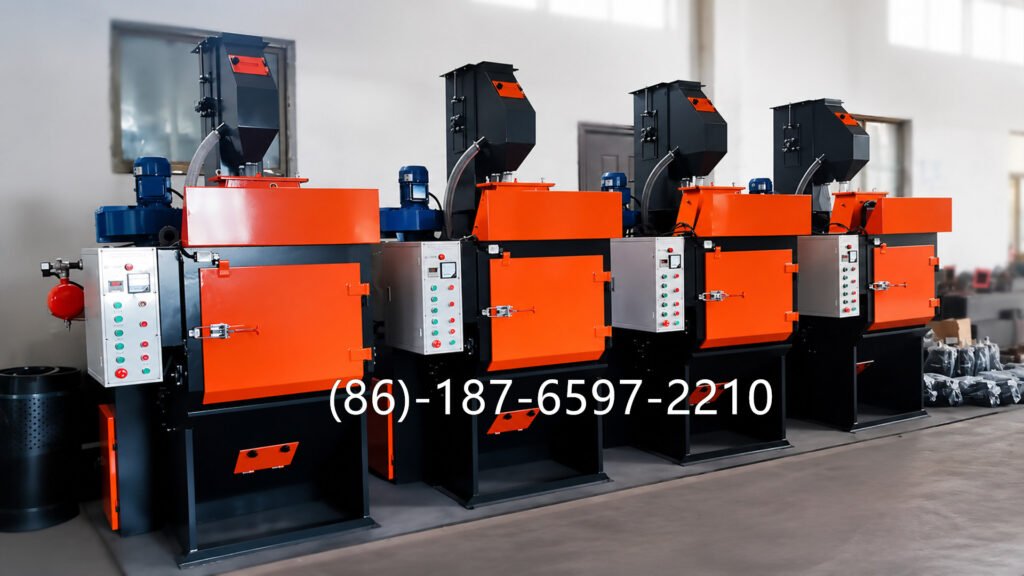
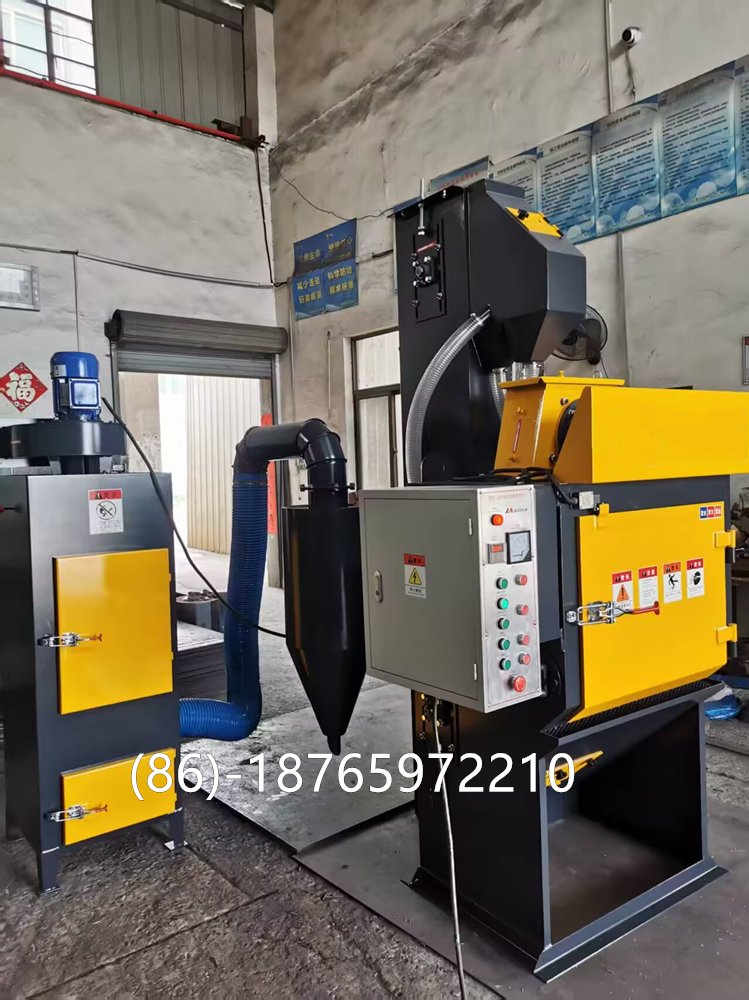
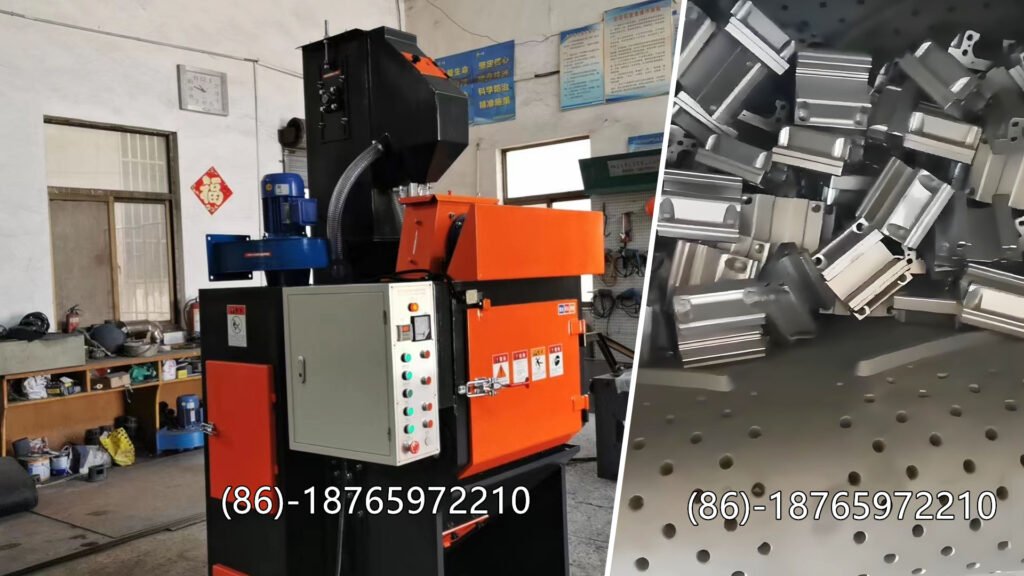
Q324 crawler shot blasting machine is a batch-type tumble blasting machine designed for cleaning and surface preparation of castings, forgings, metal components, and other suitable workpieces.
Unlike a continuous roller conveyor shot blasting machine, the Q324 works by loading a batch of parts into a perforated crawler belt or rubber track.
During operation:
The crawler rotates and continuously tumbles the workpieces.
The blast wheel accelerates metallic abrasive to high velocity.
Abrasive impacts the exposed surfaces of the parts.
Sand, rust, oxide scale, and contaminants are removed.
Used abrasive and debris fall through the crawler openings.
The abrasive recovery system separates reusable abrasive from dust and waste.
Cleaned parts are discharged after the blasting cycle.
This combination of tumbling + controlled abrasive impact + abrasive recovery makes the Q324 particularly suitable for batch processing.
Why Do Factories Choose Q324 Instead of Manual Cleaning?
Manual grinding and pneumatic-tool cleaning may appear inexpensive when production volume is low.
But once production increases, labor becomes one of the biggest hidden costs.
A Q324 crawler shot blasting machine can help factories reduce:
Manual grinding work
Cleaning labor
Processing time
Inconsistent surface quality
Rework caused by incomplete cleaning
Abrasive waste
Operator exposure to dust and noise
Dependence on skilled manual cleaning
The biggest advantage is not simply “faster blasting.”
It is repeatable batch processing.
Instead of asking:
“Can an operator clean this casting?”
the production team can ask:
“How many kilograms can we process per batch, and how many batches can we complete per hour?”
That is a much better way to calculate production cost.
The First Selection Factor: Workpiece Weight
Before buying a Q324, determine the maximum individual workpiece weight and the total batch weight.
These two numbers are not the same.
For example:
Part A = 8 kg
Part B = 12 kg
Part C = 15 kg
40 pieces per batch
Total batch weight = 480 kg
The machine must be able to handle both:
Individual impact load + total batch load.
Heavy castings can create significant impact and mechanical loading inside the crawler.
Therefore, when selecting a machine, provide the supplier with:
Maximum single-piece weight
Average piece weight
Batch weight
Part dimensions
Part shape
Part material
Loading method
Engineering Rule
Do not select the machine only according to the average weight.
The maximum workpiece condition is usually more important.
The Second Selection Factor: Batch Capacity
Capacity is one of the most important purchasing parameters.
A typical Q324-type crawler shot blasting machine may be engineered around a batch load in the range of approximately:
Parameter
Typical Engineering Reference
Machine Type
Q324 Crawler Shot Blasting Machine
Blasting Method
Batch tumble blasting
Typical Batch Load
Approx. 200–400 kg
Maximum Load
Configuration dependent
Blast Wheel
1–2 units
Blast Wheel Power
Approx. 7.5–11 kW/unit
Abrasive
Steel shot / steel grit
Abrasive Recovery
Automatic
Dust Removal
Bag or cartridge filter
Control System
Electrical control / PLC optional
Loading
Manual / hoist / automatic optional
Application
Castings, forgings, metal components
Important: These are general engineering reference values, not a universal Q324 specification. Final parameters should be determined according to the supplier’s actual design, workpiece characteristics, required production capacity, and blasting test results.
How to Calculate Q324 Production Capacity
Do not confuse:
Batch Capacity
with
Hourly Production Capacity.
A machine may process 300 kg per batch, but this does not mean the factory automatically gets 300 kg/hour.
You need to consider the complete cycle.
Simple Capacity Formula
Hourly Capacity ≈ Batch Load × 60 ÷ Total Cycle Time
For example:
Batch load = 300 kg
Blasting time = 8 minutes
Loading/unloading = 4 minutes
Total cycle = 12 minutes
Then:
300 × 60 ÷ 12 = 1,500 kg/hour
The theoretical calculation is approximately:
1.5 tons/hour
Actual production will depend on:
Workpiece geometry
Loading efficiency
Blasting time
Operator handling
Cleaning requirement
Part nesting
Abrasive flow
Machine availability
Maintenance downtime
Therefore, for B2B purchasing, always ask for tested or estimated net production capacity, not only nominal batch capacity.
What Determines Q324 Blasting Efficiency?
A common purchasing mistake is to compare machines only by blast wheel motor power.
Motor power matters—but it is not the entire story.
Actual cleaning efficiency depends on:
1. Blast Wheel Design
The blast wheel determines how efficiently abrasive is accelerated and distributed.
Important factors include:
Wheel diameter
Blade design
Wheel speed
Abrasive flow
Throwing pattern
Wear resistance
2. Abrasive Flow
Too little abrasive:
→ slow cleaning
Too much abrasive:
→ higher consumption and unnecessary mechanical loading
The goal is stable abrasive flow, not simply maximum flow.
3. Workpiece Tumbling
The crawler must expose different surfaces of the parts to the abrasive stream.
Good tumbling helps reduce:
Shadow areas
Unblasted surfaces
Manual rework
4. Blasting Time
Longer blasting does not always mean better productivity.
The correct objective is:
Minimum cycle time + required surface quality.
How to Choose Between Different Q324 Configurations
Before requesting a quotation, classify your production.
Option A — Small Batch Production
Suitable for:
Job shops
Small foundries
Mixed castings
Low-volume production
Priorities:
Flexible loading
Low initial investment
Easy operation
Simple maintenance
Option B — Medium-Volume Production
Suitable for:
Casting factories
Automotive component suppliers
Machinery component manufacturers
Forging plants
Priorities:
Higher batch capacity
Shorter cycle time
Automatic abrasive recovery
Reliable dust collection
Better automation
Option C — High-Volume Production
If your production exceeds the practical capacity of a single Q324, consider:
Larger crawler shot blasting machine
Multiple Q324 machines
Automatic loading/unloading
Continuous shot blasting system
Integrated casting cleaning line
Do not force a batch machine into a continuous-production application.
Sometimes buying two smaller machines provides better production flexibility than buying one oversized machine.
Steel Shot or Steel Grit: Which Abrasive Should You Use?
Abrasive selection directly affects:
Cleaning speed
Surface profile
Abrasive consumption
Dust generation
Equipment wear
Final coating performance
For many steel and cast-metal applications, metallic abrasives such as steel shot and steel grit are commonly used.
ISO 11124-3:2018 specifies requirements for high-carbon cast-steel shot and grit, including hardness, density, structural characteristics, defects, and chemical composition. The standard covers 14 grades of shot and 11 grades of grit.
Steel Shot
Generally preferred when the objective is:
Cleaning
Desanding
Surface conditioning
Repeated abrasive reuse
Steel Grit
Often selected when a more aggressive cutting action or specific surface profile is required.
The correct abrasive should be selected according to:
Material hardness
Surface contamination
Required cleaning grade
Surface profile
Part thickness
Machine configuration
Surface Cleaning Grade: Do Not Ignore Sa 2½
If your castings or steel components will subsequently be painted or coated, surface preparation requirements become more important.
ISO 8501-1:2007 defines rust grades and preparation grades for steel substrates and provides written descriptions and representative photographic references for surface cleanliness assessment.
Common customer requirements may include:
Sa 2
Sa 2½
Sa 3
However, a Q324 machine should not be advertised as automatically guaranteeing a specific Sa grade for every workpiece.
Actual results depend on:
Initial surface condition
Material
Abrasive type
Abrasive size
Blast wheel performance
Exposure time
Workpiece geometry
Part loading
Machine configuration
For critical applications, request a sample blasting test before final machine selection.
Surface Profile Is Also Important
Cleaning and surface profile are not the same thing.
A surface can look clean but still have an unsuitable profile for the next coating process.
ISO 8503-2:2012 describes a visual and tactile comparator procedure for assessing the profile produced by abrasive blast cleaning. The standard applies to surfaces blast-cleaned with shot or grit and covers Sa 2½ and Sa 3 surfaces when the required overall blast-cleaned appearance is present.
Therefore, if your customer specifies a surface profile, include it in the RFQ.
For example:
Required surface cleanliness: Sa 2½ Required surface profile: XX–XX μm
This gives the machine supplier much better information for abrasive and process selection.
Q324 Machine Cost: Look Beyond the Purchase Price
The cheapest quotation is not necessarily the lowest-cost machine.
We need a Q324 crawler shot blasting machine for cast-iron components. Maximum part weight is 15 kg, average part weight is 8 kg, batch load is approximately 300 kg, required production is 1.2 tons/hour, and the main purpose is casting sand removal and surface cleaning.
This gives the engineering team enough information to recommend the configuration.
Frequently Asked Questions
What is the capacity of a Q324 crawler shot blasting machine?
Typical Q324-type machines may handle several hundred kilograms per batch, but actual hourly production depends on batch load, blasting time, loading/unloading time, workpiece geometry, and required cleaning result.
What materials can a Q324 blast?
Typical applications include cast iron, cast steel, steel components, forgings, and other suitable metal parts. The final recommendation depends on workpiece geometry, weight, hardness, and required surface finish.
Is Q324 suitable for castings?
Yes. Q324 crawler shot blasting machines are commonly used for batch cleaning of castings, especially for removing molding sand, oxide, rust, and surface contaminants.
Can Q324 achieve Sa 2½?
A suitably configured machine may be used for applications targeting Sa 2½, but the actual result depends on the workpiece, abrasive, blasting parameters, and machine configuration. A sample blasting test should be used for confirmation.
ISO 8501-1 provides the surface-cleanliness classification framework, while ISO 8503-2 provides a comparator-based method for evaluating blast-cleaned surface profile for applicable Sa 2½ and Sa 3 surfaces.
What abrasive should be used in a Q324?
Steel shot or steel grit are common choices. Abrasive selection should consider material, contamination, required cleaning grade, surface profile, and equipment design.
How can I reduce Q324 operating costs?
Focus on:
Proper abrasive selection
Effective abrasive recovery
Correct abrasive flow
Efficient dust separation
Preventive maintenance
Wear-part management
Optimized blasting cycles
Is a Q324 better than a hanger shot blasting machine?
Not necessarily. Q324 is generally better suited to batch tumbling of suitable smaller and medium-sized parts, while hanger machines are more suitable for larger, fragile, or geometrically complex components that should not tumble against each other.
What determines the Q324 shot blasting machine price?
We’re here to help! Whether you need more information about our products or services, our team is ready to assist. Don’t hesitate to reach out—we’re just a message away!