

Looking for a Q324 crawler shot blasting machine factory that can provide more than a standard catalog machine?
For foundries, casting manufacturers, forging plants, machinery factories, and metal component suppliers, the real challenge is not simply finding a low-cost shot blasting machine. The machine must match the workpiece weight, batch capacity, cleaning requirement, production target, abrasive system, dust collection, and factory workflow.
A reliable Q324 manufacturer should therefore provide more than a machine body.
You need:
Engineering Design + Manufacturing + Blasting Test + OEM/ODM Customization + Quality Control + Installation Support + Spare Parts
This guide explains how a factory-direct Q324 crawler shot blasting machine supplier can provide a more complete solution—from standard machine configuration to customized OEM/ODM production.
1. Q324 Crawler Shot Blasting Machine Factory: What Should You Actually Buy?
When buyers search for a Q324 crawler shot blasting machine factory, they are usually looking for one of three things:
- A reliable standard Q324 machine
- A customized machine for specific castings or metal parts
- A long-term OEM/ODM manufacturing partner
These requirements are different.
A standard machine may be enough for a general foundry application.
But if your workpieces have unusual:
- Dimensions
- Weight
- Shape
- Surface contamination
- Production volume
- Loading method
- Cleaning requirements
then a standard catalog specification may not be enough.
A professional manufacturer should be able to modify the machine around your actual production process.
That is the difference between buying a machine and buying an engineered shot blasting solution.
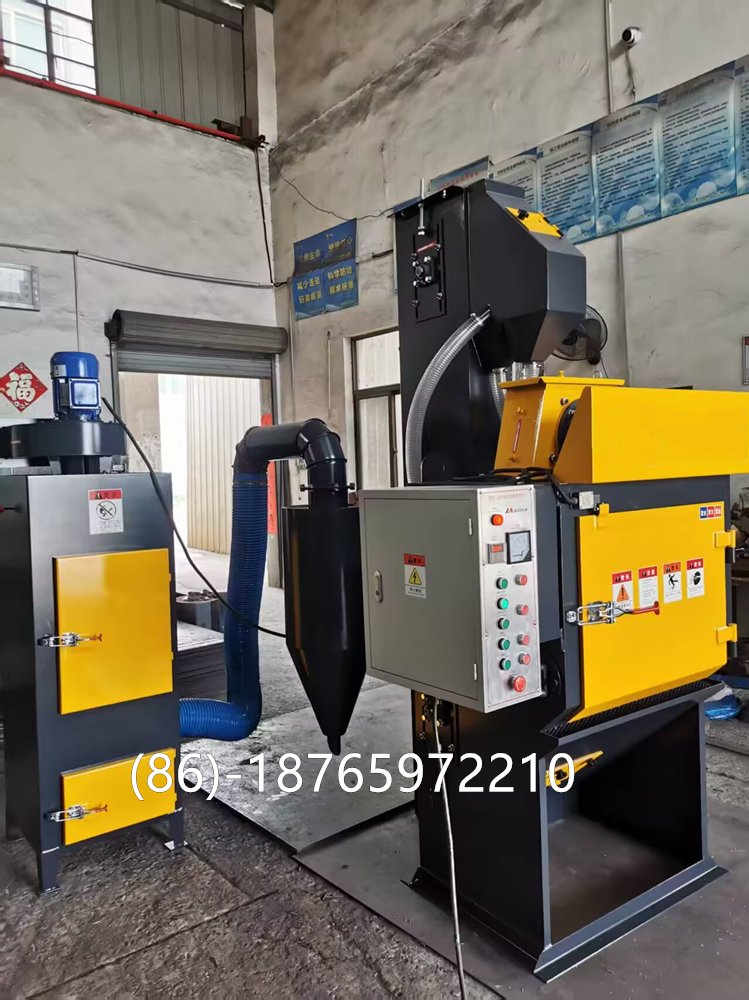
2. What Is a Q324 Crawler Shot Blasting Machine?
Q324 is a batch-type crawler shot blasting machine designed for cleaning suitable castings, forgings, metal components, and other parts that can be safely tumbled.
The workpieces are loaded into the crawler chamber.
During blasting:
Crawler Rotation → Workpiece Tumbling → Abrasive Impact → Surface Cleaning → Abrasive Recovery → Separation → Reuse
The blast wheel accelerates steel abrasive toward the workpieces while the crawler continuously changes the orientation of the parts.
This allows abrasive to reach multiple surfaces during the blasting cycle.
Typical applications include:
- Cast iron castings
- Steel castings
- Aluminum and non-ferrous components, subject to process suitability
- Forged components
- Machinery parts
- Automotive components
- Agricultural machinery parts
- General metal components
The exact suitability should always be confirmed through a workpiece test, especially for fragile, sharp-edged, delicate, or high-value components.
3. Why Buy Q324 Directly From a Factory?
A factory-direct supplier can provide several advantages over a trading company.
3.1 Direct Engineering Communication
Instead of passing technical information through several intermediaries, buyers can communicate directly with the machine engineering team.
This is particularly important when discussing:
- Workpiece weight
- Blast wheel configuration
- Crawler material
- Abrasive circulation
- Dust collection
- Automation
- Electrical specifications
3.2 OEM Customization
A factory can modify the machine according to your requirements.
Possible OEM options include:
- Machine dimensions
- Machine color
- Brand/logo
- Electrical components
- Control cabinet
- PLC/HMI
- Safety system
- Dust collector
- Loading system
- Unloading system
- Crawler specification
- Blast wheel configuration
3.3 ODM Engineering
ODM goes beyond changing the logo or color.
An ODM project may involve modifying:
- Machine structure
- Blasting chamber
- Abrasive circulation
- Loading system
- Workpiece handling
- Automation
- Dust collection
- Production-line integration
This is useful for distributors and industrial equipment companies that need a differentiated product rather than a standard machine.
4. Typical Q324 Crawler Shot Blasting Machine Parameters
The following table can be used as a general engineering reference for a Q324-type machine.
| Parameter | Typical Reference |
|---|---|
| Machine Type | Q324 Crawler Shot Blasting Machine |
| Blasting Method | Batch tumble blasting |
| Typical Batch Load | Approx. 200–400 kg |
| Maximum Individual Part | Configuration dependent |
| Blast Wheel | 1–2 units |
| Blast Wheel Power | Approx. 7.5–11 kW/unit |
| Abrasive | Steel shot / steel grit |
| Abrasive Circulation | Automatic |
| Separator | Air-wash / abrasive separator |
| Dust Collector | Bag / cartridge type |
| Control | Electrical control / PLC optional |
| Loading | Manual / hoist / automatic optional |
| Unloading | Manual / automatic optional |
| Application | Castings, forgings, metal components |
| Machine Configuration | Standard / OEM / ODM |
Important: These are reference ranges rather than a universal Q324 specification. Different manufacturers use different designs and configurations. Final parameters should be determined from the actual workpiece, required capacity, blasting result, and machine layout.
5. Q324 Capacity: How Much Can It Process?
For B2B buyers, batch capacity is only one part of production capacity.
For example:
A machine may have a:
300 kg batch load
but actual output depends on the complete cycle.
Production Capacity Formula
Hourly Capacity ≈ Batch Load × 60 ÷ Total Cycle Time
For example:
- Batch load: 300 kg
- Blasting: 8 minutes
- Loading: 2 minutes
- Unloading: 2 minutes
Total cycle:
12 minutes
Estimated theoretical capacity:
300 × 60 ÷ 12 = 1,500 kg/hour
However, actual production may be lower because of:
- Part arrangement
- Operator handling
- Workpiece geometry
- Required cleaning grade
- Maintenance
- Abrasive loading
- Production interruptions
Therefore, a professional factory should discuss real production requirements, not simply advertise the largest possible batch weight.
6. Which Workpieces Are Suitable for Q324?
The Q324 is particularly suitable for parts that can withstand controlled tumbling.
Typical examples include:
Foundry Castings
- Valve bodies
- Pump components
- Gear housings
- Machine bases
- Brackets
- Automotive castings
- General iron castings
Forged Parts
- Connecting components
- Mechanical parts
- Agricultural components
- General steel forgings
Metal Components
- Small machinery parts
- Hardware components
- Industrial fittings
- General fabricated components
The machine may not be suitable for:
- Extremely fragile parts
- Parts that cannot tolerate part-to-part impact
- Very long workpieces
- Very large single components
- Parts requiring non-tumbling handling
For these applications, a hanger, roller conveyor, mesh belt, or specialized shot blasting system may be more appropriate.
7. Q324 Crawler Design: Why Tumbling Matters
The crawler is not simply a loading platform.
It controls how the parts move through the blasting zone.
During operation, workpieces repeatedly change position.
This helps expose different surfaces to the abrasive stream.
A good crawler design should provide:
- Stable movement
- Appropriate opening ratio
- Adequate mechanical strength
- Good abrasive passage
- Suitable workpiece handling
- Easy maintenance
For heavy-duty applications, crawler construction and wear protection become particularly important.
8. Rubber Crawler or Steel Crawler?
The crawler material should be selected according to the application.
Rubber Crawler
Commonly used for:
- General castings
- Medium-weight components
- Applications where reduced part impact is desirable
Potential advantages include:
- Flexible handling
- Lower part-to-part impact
- Suitable for general batch blasting
Steel Crawler
May be considered for:
- Heavy-duty applications
- Specific high-load conditions
- Applications requiring higher mechanical resistance
The final selection depends on:
- Maximum part weight
- Part temperature
- Part geometry
- Sharp edges
- Impact sensitivity
- Production cycle
A good factory should recommend the crawler after reviewing actual workpiece information.
9. Blast Wheel: The Core of Q324 Cleaning Performance
The blast wheel is one of the most important components of a crawler shot blasting machine.
Its performance influences:
- Abrasive velocity
- Abrasive distribution
- Cleaning speed
- Abrasive consumption
- Blade wear
- Overall productivity
When evaluating a Q324 supplier, ask for more than:
“What is the motor power?”
Also ask:
- What is the wheel design?
- What is the abrasive flow?
- What is the wheel speed?
- What is the blade material?
- How are wear parts protected?
- What is the expected blade service life?
- Can the wheel be replaced or maintained easily?
Higher motor power alone does not guarantee better cleaning.
The complete blasting system must work together.
10. Abrasive System: Where Efficiency and Operating Cost Meet
A Q324 crawler shot blasting machine should have an effective abrasive circulation and separation system.
A typical process is:
Blast Wheel → Workpiece → Crawler → Recovery → Separator → Clean Abrasive → Blast Wheel
The separator removes unsuitable material such as:
- Broken abrasive
- Casting sand
- Dust
- Small debris
- Contaminants
Reusable abrasive is returned to the blasting process.
This reduces abrasive waste and stabilizes blasting performance.
ISO 11124-3:2018 specifies requirements for high-carbon cast-steel shot and grit, including hardness, density, structural requirements, defects, and chemical composition. ISO states that these abrasives are commonly used where abrasive recovery and reuse are available.
11. Steel Shot vs Steel Grit for Q324
Both steel shot and steel grit may be used depending on the required result.
Steel Shot
Typically suitable for:
- Sand removal
- General cleaning
- Rust removal
- Surface conditioning
- Repeated abrasive reuse
Steel Grit
May be selected when:
- More aggressive cutting action is required
- Heavier scale needs to be removed
- A specific surface profile is required
The abrasive size and hardness should be selected according to the actual workpiece.
Do not simply choose the largest abrasive available.
The correct abrasive is the one that achieves the required cleaning result at an acceptable operating cost.
12. Surface Cleaning Standards: Sa 2, Sa 2½ and Sa 3
For applications involving subsequent painting or coating, surface preparation requirements should be defined before purchasing the machine.
ISO 8501-1:2007 establishes rust grades and preparation grades for steel surfaces and provides written descriptions and representative photographic examples for assessing surface cleanliness. The standard remains published, while ISO/DIS 8501-1 is currently under development as its replacement.
Common customer requirements include:
- Sa 2
- Sa 2½
- Sa 3
However, the Q324 should not be considered capable of achieving a specific Sa grade simply because the machine is labeled Q324.
Actual results depend on:
- Initial surface condition
- Abrasive type
- Abrasive size
- Abrasive hardness
- Blast wheel performance
- Blasting time
- Workpiece geometry
- Part loading
- Machine configuration
For demanding applications:
Send actual workpieces for a blasting test before finalizing the machine.
13. Surface Profile: An Important Specification for Coating Applications
Surface cleanliness and surface profile are two different requirements.
If the blasted parts will be painted, coated, or otherwise protected, the required surface profile may need to be specified separately.
ISO 8503-2:2012 provides a comparator procedure for assessing the surface profile produced by abrasive blast cleaning. It applies to shot- or grit-blasted steel surfaces and, under the conditions specified in the standard, to Sa 2½ and Sa 3 surfaces.
Therefore, an RFQ should specify both:
Surface Cleanliness: Sa 2½
and, where required:
Surface Profile: XX–XX μm
This gives the manufacturer a much clearer basis for selecting:
- Abrasive size
- Abrasive hardness
- Blast intensity
- Blasting time
- Wheel configuration
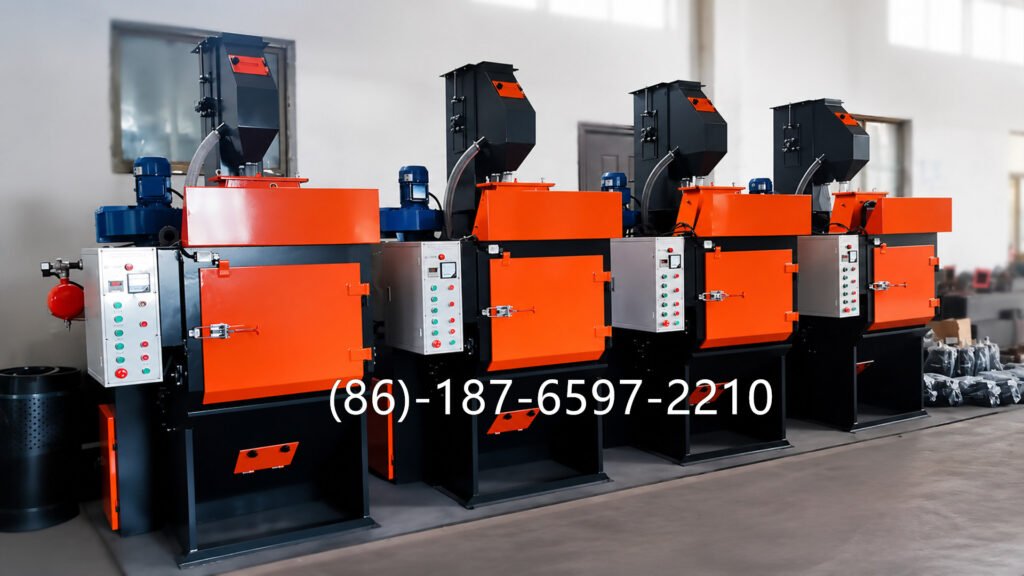
14. Dust Collector: Do Not Treat It as an Accessory
A crawler shot blasting machine generates dust from:
- Casting sand
- Rust
- Oxide
- Broken abrasive
- Surface contaminants
The dust collector therefore directly affects:
- Working environment
- Visibility
- Filter life
- Maintenance
- Machine cleanliness
- Production stability
A complete Q324 solution may include:
- Dust collection chamber
- Fan
- Filter system
- Dust discharge
- Ductwork
- Differential pressure monitoring
The dust collector should be sized according to the machine and process rather than simply selected from a standard catalog.
15. Q324 Safety Design
Shot blasting involves high-speed abrasive and moving mechanical components.
A properly engineered machine should incorporate suitable safety measures such as:
- Door safety interlocks
- Emergency stop
- Blast wheel protection
- Electrical protection
- Access protection
- Abrasive leakage protection
- Maintenance access
- Warning labels
- Safe discharge design
For machines intended for the EU market, CE compliance is a conformity process rather than simply a generic “quality certificate.”
EU Regulation 2023/1230 defines CE marking as an indication that machinery conforms to applicable Union harmonisation legislation. Where the applicable conformity assessment demonstrates compliance, the manufacturer draws up the EU Declaration of Conformity and affixes the CE marking.
For an EU project, ask the supplier to clarify:
- Applicable machinery legislation
- Risk assessment
- Technical documentation
- EU Declaration of Conformity
- Safety documentation
- Applicable harmonized standards
- CE marking status
16. What Does OEM Mean for a Q324 Shot Blasting Machine?
OEM is useful when a buyer already has an established brand or distribution network.
The factory can manufacture the Q324 according to the buyer’s requirements.
OEM customization may include:
Branding
- Company logo
- Nameplate
- Machine color
- Product model
- User manual branding
Electrical System
- Local voltage
- Frequency
- Electrical components
- Control cabinet
- PLC brand
- HMI language
Machine Configuration
- Dust collector
- Blast wheel
- Crawler
- Loading system
- Unloading system
- Safety components
This allows distributors to sell the machine under their own brand while using the manufacturing capability of the factory.
17. What Does ODM Mean for Q324?
ODM is more engineering-focused.
Instead of simply changing the logo, the customer can request a modified design.
For example:
Standard Q324
→ Modified crawler
→ Modified loading height
→ Different workpiece inlet
→ Customized dust collector
→ Automated loading
→ Automatic unloading
→ PLC production control
→ Integrated conveyor
→ Complete customized blasting cell
This is particularly valuable for:
- Equipment distributors
- Foundry groups
- Large manufacturers
- Industrial automation companies
- Engineering contractors
18. Q324 Factory Quality Control
A reliable manufacturer should control quality at several stages.
Raw Material Inspection
Check:
- Steel plate
- Structural components
- Wear-resistant materials
- Electrical components
- Bearings
- Motor components
Welding Inspection
Important areas include:
- Blasting chamber
- Structural frame
- Crawler support
- Dust duct
- Hopper
- Machine body
Component Inspection
Check:
- Blast wheel
- Motor
- Bearings
- Crawler
- Separator
- Electrical cabinet
Assembly Inspection
Check:
- Alignment
- Rotation
- Sealing
- Electrical wiring
- Safety interlocks
Factory Testing
The completed machine should be checked for:
- Empty-load operation
- Crawler movement
- Blast wheel rotation
- Abrasive circulation
- Dust collection
- Electrical control
- Emergency stop
- Safety interlocks
19. Sample Blasting Test: The Best Way to Verify a Q324
A factory catalog cannot tell the complete story.
A sample test can.
For a serious B2B project, send:
- Actual workpiece
- Part drawing
- Weight
- Material
- Surface condition
- Required cleaning grade
- Production target
The manufacturer can then evaluate:
Loading → Blasting → Separation → Discharge → Surface Result
The test should record:
- Batch weight
- Blasting time
- Abrasive type
- Abrasive size
- Cycle time
- Surface appearance
- Cleaning result
- Production estimate
This is much more useful than simply comparing product brochures.
20. Q324 Shot Blasting Machine Cost: What Determines the Price?
A factory quotation can vary significantly depending on configuration.
Major cost factors include:
Machine Size
Larger chambers require more steel and structural components.
Blast Wheel
More wheels or higher-power wheels increase the machine cost.
Dust Collector
Larger air volume and higher filter capacity increase system cost.
Automation
Automatic loading and unloading can significantly increase investment but may reduce labor cost.
Electrical Configuration
PLC, HMI, VFD, remote monitoring, and premium electrical components affect the final quotation.
OEM Requirements
Custom colors, logos, documentation, packaging, and electrical standards may affect cost.
Installation
On-site installation and commissioning should be quoted separately when required.
21. Lowest Price vs Lowest Total Cost
Buyer should not ask only:
A better question is:
“What is the total cost of producing one ton of cleaned parts?”
Consider:
| Cost Item | What to Compare |
|---|---|
| Machine Investment | Initial purchase |
| Labor | Operators required |
| Abrasive | Consumption and replacement |
| Electricity | Installed power and operating time |
| Wear Parts | Blade, liner, crawler |
| Filters | Replacement frequency |
| Maintenance | Labor and spare parts |
| Downtime | Production losses |
| Cleaning Quality | Rework rate |
This gives you a much more realistic picture of machine value.
22. Why Factory-Direct OEM/ODM Can Be Better for Distributors
For distributors, the machine price is only part of the business.
A factory partner should ideally provide:
- Stable machine quality
- Consistent specifications
- OEM branding
- Technical drawings
- Product photos
- Manuals
- Spare parts
- Installation instructions
- Marketing support
- Remote technical support
- Customization capability
This allows the distributor to build a longer-term product line instead of selling a one-off machine.
23. Q324 Customization Options
A Q324 crawler shot blasting machine can potentially be customized in several areas.
Mechanical
- Machine dimensions
- Crawler size
- Chamber lining
- Blast wheel position
- Loading height
- Discharge height
Electrical
- Voltage
- Frequency
- PLC
- HMI
- VFD
- Control cabinet
Abrasive System
- Separator
- Elevator
- Recovery conveyor
- Abrasive storage
- Automatic abrasive feeding
Dust Collection
- Bag filter
- Cartridge filter
- Fan capacity
- Duct configuration
- Automatic dust discharge
Automation
- Automatic loading
- Automatic unloading
- Hoist
- Conveyor
- Robotic handling
- Production-line integration
24. Q324 Production Line Integration
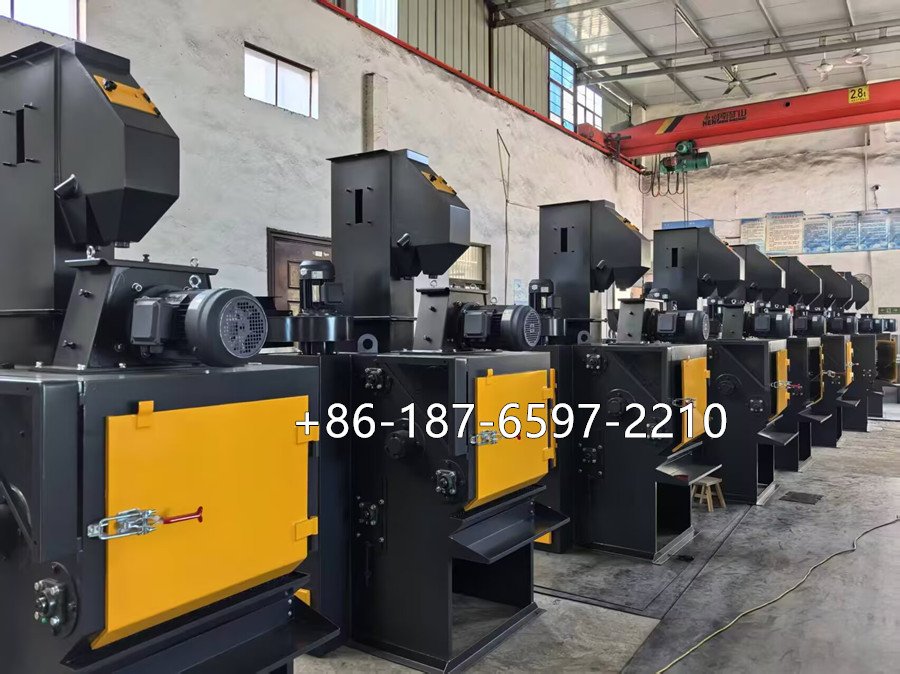
The Q324 does not have to operate as an isolated machine.
For higher production requirements, it can be integrated with:
Casting → Shakeout → Shot Blasting → Inspection → Grinding → Painting
or:
Loading → Q324 Blasting → Automatic Unloading → Inspection → Packaging
Possible integrations include:
- Hoists
- Conveyors
- Vibratory equipment
- Dust collection
- Sorting stations
- Inspection systems
- Grinding stations
For factories planning future expansion, it is often worth discussing integration during the initial machine design.
25. Q324 Factory Selection Checklist
Before choosing a supplier, check these 12 points:
1. Does the supplier have an actual manufacturing facility?
2. Can they provide machine drawings?
3. Can they customize the machine?
4. Can they perform sample blasting tests?
5. Can they provide wear-part information?
6. Can they provide abrasive specifications?
7. Can they design the dust collection system?
8. Can they adapt the electrical system?
9. Can they provide installation support?
10. Can they supply spare parts?
11. Can they provide technical documentation?
12. Can they support OEM/ODM projects?
If the answer is “yes” to most of these questions, you are evaluating a manufacturing partner rather than simply a machine reseller.
26. Q324 Factory Acceptance Test Checklist
Before shipment, buyers should consider checking:
Mechanical
- Crawler operation
- Blast wheel rotation
- Bearings
- Sealing
- Machine body
- Wear plates
Abrasive System
- Abrasive circulation
- Separator operation
- Recovery system
- Abrasive leakage
Dust Collection
- Fan rotation
- Filter installation
- Dust discharge
- Duct connections
Electrical
- Motor direction
- Control cabinet
- PLC/HMI
- Emergency stop
- Safety interlocks
Documentation
- Operation manual
- Maintenance manual
- Electrical drawings
- Spare parts list
- Test records
- Conformity documentation where applicable
27. Q324 B2B RFQ Template
To receive an accurate quotation from a Q324 crawler shot blasting machine factory, send the following information.
Workpiece Information
Workpiece:
Cast iron / cast steel / forging / other
Material:
Maximum part size:
L × W × H = __________
Maximum single-piece weight:
__________ kg
Average piece weight:
__________ kg
Required batch weight:
__________ kg
Workpiece photos/drawings:
Available / Not available
Production Requirements
Required production:
__________ kg/hour
Working hours/day:
Number of batches/day:
Loading method:
Manual / Hoist / Automatic
Unloading method:
Manual / Automatic
Surface Requirements
Initial condition:
- Casting sand
- Rust
- Oxide scale
- Mill scale
- Other
Required cleaning grade:
- Sa 2
- Sa 2½
- Sa 3
- Customer-specific requirement
Surface profile:
__________ μm
Machine Requirements
Machine: Q324 Crawler Shot Blasting Machine
OEM: Yes / No
ODM: Yes / No
PLC: Yes / No
HMI: Yes / No
Dust collector: Yes / No
Automatic loading: Yes / No
Automatic unloading: Yes / No
Power supply:
Installation country:
28. What Should a Q324 Manufacturer Include in the Quotation?
A professional quotation should clearly identify:
Machine
- Model
- Machine dimensions
- Batch capacity
- Blast wheel
- Motor power
- Crawler specification
Abrasive System
- Separator
- Recovery system
- Abrasive capacity
- Elevator/conveyor where applicable
Dust Collector
- Type
- Air volume
- Filter specification
- Fan power
Electrical
- Voltage
- Frequency
- PLC
- HMI
- VFD
- Control cabinet
Commercial
- Machine price
- Spare parts
- Packaging
- Delivery
- Installation
- Commissioning
- Warranty
- Payment terms
A clear quotation makes supplier comparison much easier.
29. Frequently Asked Questions
Is Q324 a tumble shot blasting machine?
Yes. Q324 is commonly used as a crawler/tumble batch shot blasting machine for suitable castings and metal components.
What is the main advantage of a Q324?
Its main advantage is batch cleaning of suitable parts through continuous tumbling and abrasive impact, making it suitable for many foundry and metal-component applications.
Can Q324 be customized?
Yes. Depending on the manufacturer, customization can include machine dimensions, crawler configuration, blast wheel, dust collector, electrical system, loading/unloading, PLC/HMI, and production-line integration.
Can you provide OEM Q324 machines?
An OEM factory can manufacture the machine with customer-specific branding, electrical requirements, documentation, colors, nameplates, and selected configuration changes.
Can you provide ODM Q324 machines?
Yes, an ODM project can involve deeper mechanical, electrical, automation, and process modifications based on the customer’s application.
Can Q324 remove casting sand?
Yes. Casting sand removal is one of the common applications of crawler/tumble shot blasting, provided the workpiece is suitable for tumbling.
Can Q324 remove rust and scale?
Yes, with appropriate abrasive selection and blasting parameters. The actual cleaning performance depends on the initial surface condition and required cleaning grade.
Can Q324 achieve Sa 2½?
A properly engineered Q324 system can be designed for applications requiring high levels of blast cleaning, but Sa 2½ should be confirmed through actual testing rather than assumed from the machine model.
What abrasive does Q324 use?
Steel shot and steel grit are common choices. The correct abrasive depends on workpiece material, contamination, cleaning requirement, and surface profile.
How long does a Q324 machine last?
Service life depends heavily on construction quality, workload, abrasive management, maintenance, and replacement of wear parts. A good preventive-maintenance program is essential.
How do I get a Q324 quotation?
Send your workpiece photos or drawings, maximum part weight, batch weight, production target, surface condition, cleaning requirement, and installation country. The manufacturer can then recommend a suitable configuration.
30. Q324 Crawler Shot Blasting Machine Standards & References
ISO 8501-1:2007 — Surface Cleanliness
ISO 8501-1:2007 specifies rust grades and preparation grades for steel surfaces and provides visual descriptions and representative photographs for surface cleanliness assessment. ISO currently lists the 2007 edition as published/current, while ISO/DIS 8501-1 is under development as the replacement.
ISO 8503-2:2012 — Surface Profile
ISO 8503-2:2012 provides a comparator procedure for assessing the profile produced by abrasive blast cleaning and covers shot and grit abrasive applications under the conditions specified in the standard.
ISO 11124-3:2018 — Metallic Blast-Cleaning Abrasives
ISO 11124-3:2018 specifies requirements for high-carbon cast-steel shot and grit, including hardness, density, structural requirements, defects, and chemical composition. The standard remains current following its 2024 review.
EU Machinery Regulation (EU) 2023/1230
For machinery placed on the EU market, Regulation (EU) 2023/1230 establishes machinery safety and conformity requirements. Where applicable conformity assessment demonstrates compliance, manufacturers draw up the EU Declaration of Conformity and affix CE marking.
Note: CE marking is a regulatory conformity marking, not simply a generic product-quality certificate. The exact conformity-assessment route depends on the machinery and applicable legislation.
31. SEO Content Cluster for Q324 Shot Blasting Machine
To build stronger topical authority around the Q324 product page, publish supporting articles such as:
Commercial Content
- Q324 Crawler Shot Blasting Machine Price Guide
- Q324 Shot Blasting Machine Manufacturer vs Trader
- How to Choose a Q324 Shot Blasting Machine
- Q324 Shot Blasting Machine Capacity Guide
- Q324 Shot Blasting Machine OEM & ODM Solutions
Technical Content
- Q324 Shot Blasting Machine Working Principle
- Q324 Blast Wheel Design and Abrasive Flow
- Q324 Crawler Shot Blasting Machine Maintenance
- Steel Shot vs Steel Grit for Crawler Blasting
- How to Reduce Shot Blasting Abrasive Consumption
Application Content
- Q324 Shot Blasting Machine for Cast Iron
- Q324 Shot Blasting Machine for Steel Castings
- Casting Sand Removal by Shot Blasting
- Shot Blasting Machine for Forged Components
- Foundry Casting Surface Cleaning Equipment
This creates a strong content structure:
Q324 Product Page → Technical Guides → Application Pages → Buyer Guides → RFQ
32. Need a Customized Q324 Crawler Shot Blasting Machine?
Don’t ask for a machine price based only on the model number.
Send your actual production information:
Workpiece Photos / Drawings
Maximum Part Weight
Average Part Weight
Batch Weight
Production Capacity
Surface Condition
Required Cleaning Grade
Surface Profile
Loading & Unloading Method
Installation Country
Our engineering team can evaluate the application and recommend:
- Q324 machine configuration
- Blast wheel capacity
- Crawler specification
- Abrasive system
- Separator
- Dust collector
- Automation level
- OEM/ODM modifications
- Spare parts package
From Standard Q324 to Fully Customized OEM/ODM Solution
Send your workpiece data → Get an engineering recommendation → Perform a sample blasting test → Confirm the configuration → Receive the final quotation.
This process helps you buy the right machine instead of simply buying the cheapest machine.
33. Final Takeaway
A reliable Q324 crawler shot blasting machine factory should not compete only on machine price.
The real value comes from the complete solution:
Stable Manufacturing + Correct Blasting Technology + OEM/ODM Capability + Abrasive Recovery + Dust Collection + Safety + Technical Support + Spare Parts
For standard casting cleaning, a properly configured Q324 can provide a practical batch blasting solution.
For distributors, OEM and ODM capabilities create opportunities to build a private-label product line.
For foundries and manufacturers, customized engineering can help match the machine to actual production requirements.
And for every serious B2B project, the best starting point is not the catalog.
It is the workpiece.
Give the factory your parts, production target, and cleaning requirements—and let the engineering team design the Q324 around your process.