
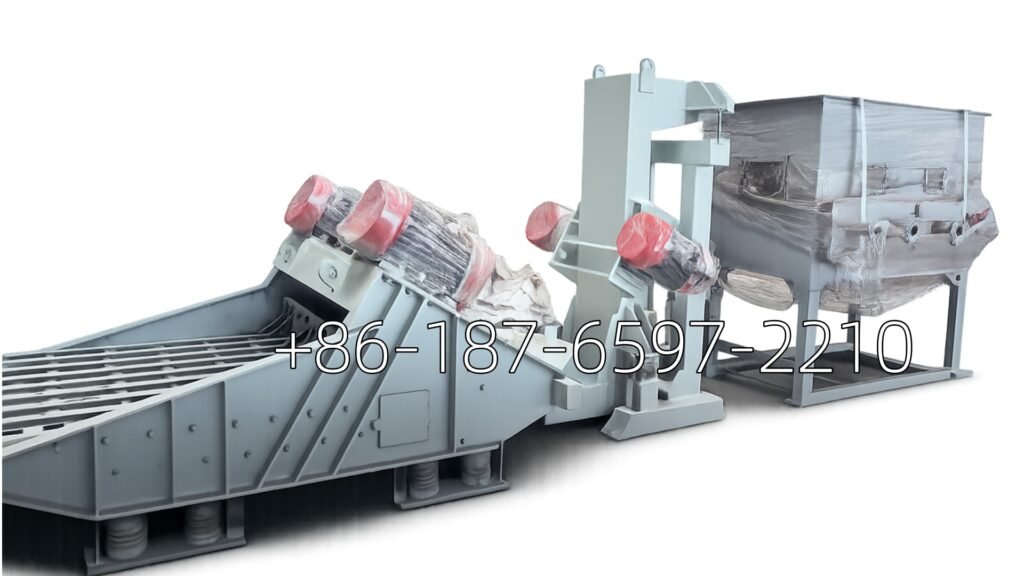
Recover More Sand, Reduce Production Costs, and Build a Smarter Foundry with a High-Efficiency No-Bake Resin Sand Reclamation System.
Why Every Modern Foundry Needs an Efficient Resin Sand Reclamation System
For foundries using no-bake resin bonded sand, raw material costs continue to rise while environmental regulations become increasingly stringent.
Discarding used sand after every molding cycle results in:
- High silica sand purchasing costs
- Increased resin and catalyst consumption
- Expensive landfill disposal
- Unstable molding quality
- Higher production costs
- Reduced profitability
Efficient No Bake Resin Sand Reclamation System transforms waste into reusable production material by mechanically removing residual binder films, separating impurities, cooling reclaimed sand, and returning it to the molding process.
The result is lower production costs, improved casting quality, and a more sustainable manufacturing operation.
What Is a No Bake Resin Sand Reclamation System?
A No Bake Resin Sand Reclamation System is an integrated production line that restores used resin bonded sand for reuse in foundry molding.
The system combines multiple processing stages into one continuous operation, including:
- Vibratory Shakeout Machine
- Resin Sand Crushing Machine
- Secondary Mechanical Sand Reclaimer
- Fine Hexagonal Screen
- Fluidized Sand Cooling Bed
- Bucket Elevator
- Screw Conveyor
- Pulse Jet Dust Collector
- PLC Intelligent Control System
Each stage is engineered to maximize sand recovery while maintaining consistent reclaimed sand quality.
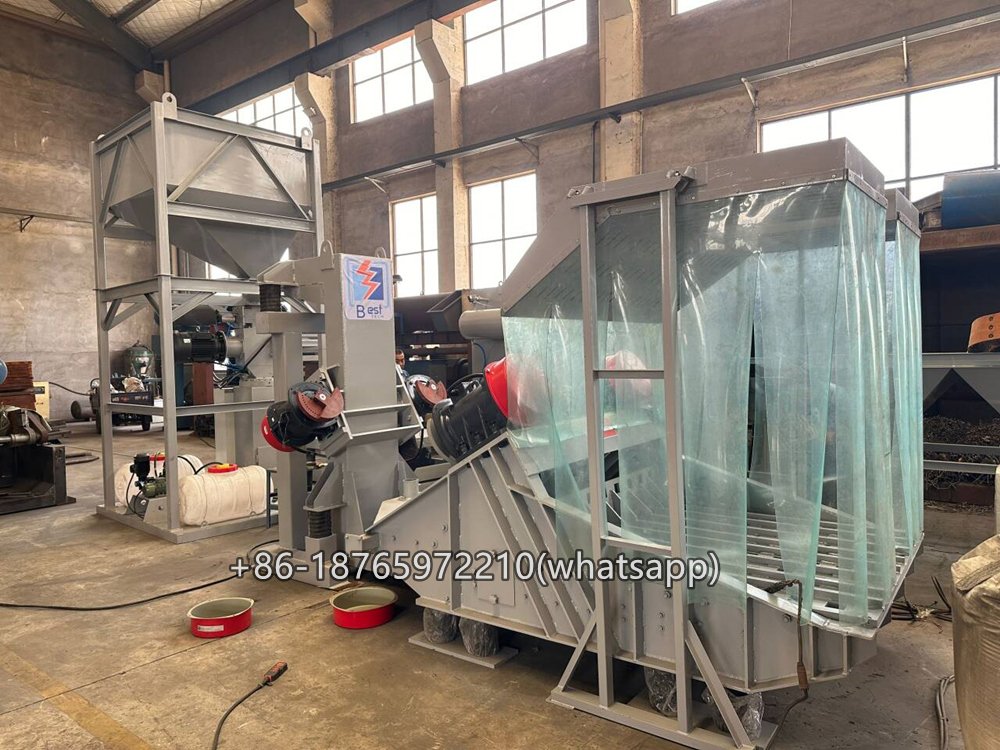
How the System Works
Step 1 – Shakeout
After solidification, castings are separated from the molds using a vibratory shakeout machine. Used resin bonded sand is collected for reclamation.
Step 2 – Sand Crushing
Large hardened sand lumps are reduced into uniform particles by a resin sand crusher.
Benefits include:
- Stable particle size
- Better downstream processing
- Reduced equipment wear
Step 3 – Mechanical Attrition
The secondary reclamation unit removes residual resin films through high-speed friction between sand grains.
This stage significantly improves reclaimed sand quality and minimizes new sand demand.
Step 4 – Screening & Dust Separation
A fine screening system removes oversized particles while the pulse jet dust collector extracts resin dust and fines.
The reclaimed sand becomes cleaner and more consistent.
Step 5 – Sand Cooling
The fluidized cooling bed lowers sand temperature before it enters the resin mixer.
Stable sand temperature improves:
- Resin coating performance
- Mold strength
- Dimensional accuracy
- Casting surface finish
Step 6 – Automatic Recycling
The cleaned and cooled sand is conveyed directly to the continuous resin sand mixer for reuse, creating a closed-loop production system.
Typical Technical Specifications
| Item | Standard Specification |
|---|---|
| Processing Capacity | 5–30 T/H |
| Sand Recovery Rate | Up to 98%* |
| Residual Binder Removal | ≥90% |
| Applicable Sand | Furan, Phenolic, Alkaline Phenolic No-Bake Sand |
| Cooling Method | Fluidized Air Cooling |
| Dust Collection | Pulse Jet Bag Filter |
| Automation | PLC + HMI Touchscreen |
| Power Supply | 380V / 415V / 440V / Customized |
| Operation Mode | Fully Automatic Continuous |
Actual recovery rate depends on sand properties, binder system, and production conditions.
Key Advantages
1. Recover Up to 98% of Valuable Sand
Efficient mechanical reclamation minimizes fresh silica sand consumption and significantly lowers raw material costs.
2. Lower Binder Consumption
Cleaner reclaimed sand provides better resin coating performance, reducing binder and catalyst usage while maintaining mold strength.
3. Improve Casting Quality
Consistent reclaimed sand improves:
- Surface finish
- Mold strength
- Gas permeability
- Dimensional accuracy
and helps reduce defects such as burn-on, gas porosity, and sand inclusions.
4. Reduce Environmental Impact
By recycling sand instead of disposing of it, foundries reduce landfill waste, conserve natural resources, and improve environmental compliance.
5. Compact Modular Design
The modular layout allows easy installation in:
- Existing foundries
- Greenfield projects
- Small and medium workshops
- Large automated production lines
6. Low Maintenance & Long Service Life
Critical wear parts are manufactured from:
- High-chromium alloy
- Wear-resistant liners
- Heavy-duty bearings
- Hardened shafts
ensuring reliable long-term operation.

Typical Applications
This system is widely used in:
- Steel Casting Foundries
- Ductile Iron Foundries
- Gray Iron Foundries
- Valve Manufacturing
- Pump Manufacturing
- Mining Equipment
- Wind Energy Components
- Railway Castings
- Heavy Machinery Production
Resin Sand Reclamation System vs Traditional Disposal
| Feature | Resin Sand Reclamation System | Traditional Disposal |
| Fresh Sand Consumption | Low | High |
| Waste Disposal Cost | Low | High |
| Binder Consumption | Lower | Higher |
| Environmental Impact | Low | High |
| Production Cost | Lower | Higher |
| Sustainability | Excellent | Poor |
| Return on Investment | Fast | None |
Factory Price Without Compromising Quality
As a direct manufacturer, we provide:
- Factory-direct pricing
- Customized engineering
- Strict quality inspection
- Short production lead times
- Global export experience
- Stable spare parts supply
This allows customers to achieve excellent performance while maintaining a competitive investment budget.
Global Supply & International Project Experience
Our equipment has been supplied to customers across:
- Southeast Asia
- Middle East
- Europe
- South America
- Africa
- North America
We support international projects with:
- CE-compliant designs (optional)
- Overseas installation guidance
- Online commissioning
- Operator training
- Remote technical support
- Long-term spare parts service
Why Choose Our No Bake Resin Sand Reclamation System?
Complete Turnkey Engineering
We provide complete solutions including:
- Production process analysis
- Equipment selection
- Plant layout design
- Foundation drawings
- Installation supervision
- Commissioning
- Production optimization
Intelligent PLC Automation
Optional functions include:
- Automatic load balancing
- Production data monitoring
- Fault diagnosis
- Maintenance reminders
- Energy consumption analysis
- Remote troubleshooting
Customized Solutions
Every system is engineered according to:
- Casting capacity
- Resin type
- Sand characteristics
- Workshop layout
- Automation level
- Customer budget
Frequently Asked Questions
Which resin systems are supported?
Suitable for:
- Furan resin
- Phenolic resin
- Alkaline phenolic resin
- Other no-bake resin bonded sand systems
What recovery rate can be achieved?
Under appropriate operating conditions, the system can typically achieve 90–98% reclaimed sand utilization, depending on binder type, sand condition, and process control.
Can reclaimed sand be reused for high-quality castings?
Yes. After crushing, attrition, screening, dust removal, and cooling, reclaimed sand is suitable for many high-quality molding applications when mixed according to process requirements.
Can the system be customized?
Absolutely.
Capacity, automation level, layout, voltage, dust collection configuration, and conveying systems can all be customized.

Request Your Customized Solution
Choosing the right No Bake Resin Sand Reclamation System depends on your production goals—not just equipment size.
Our engineering team will recommend the most cost-effective solution based on your foundry process.
Free Engineering Consultation
✔ Resin sand analysis
✔ Capacity calculation
✔ Process flow optimization
✔ Plant layout design
✔ Energy consumption evaluation
✔ ROI calculation
✔ Equipment configuration recommendation
Request a Factory-Direct Quotation
To prepare a customized proposal, please provide:
- Annual casting production (tons/year)
- Resin binder type (Furan / Phenolic / Alkaline Phenolic)
- Required processing capacity (T/H)
- Existing molding line details
- Available workshop dimensions
- Automation requirements
- Local power supply
Our engineers will provide a customized process flow, equipment layout, technical proposal, and competitive quotation within 24 hours.