
Why Choose a Compaction Table for No-Bake Resin Sand Molding?
In no-bake resin sand molding, sand preparation and binder mixing are only part of the production process. How the mixed sand fills the flask and surrounds the pattern also has a direct influence on mold quality.
Uneven sand distribution, insufficient compaction, and inconsistent mold density can cause weak mold sections, poor surface replication, sand erosion, and additional casting cleaning work.
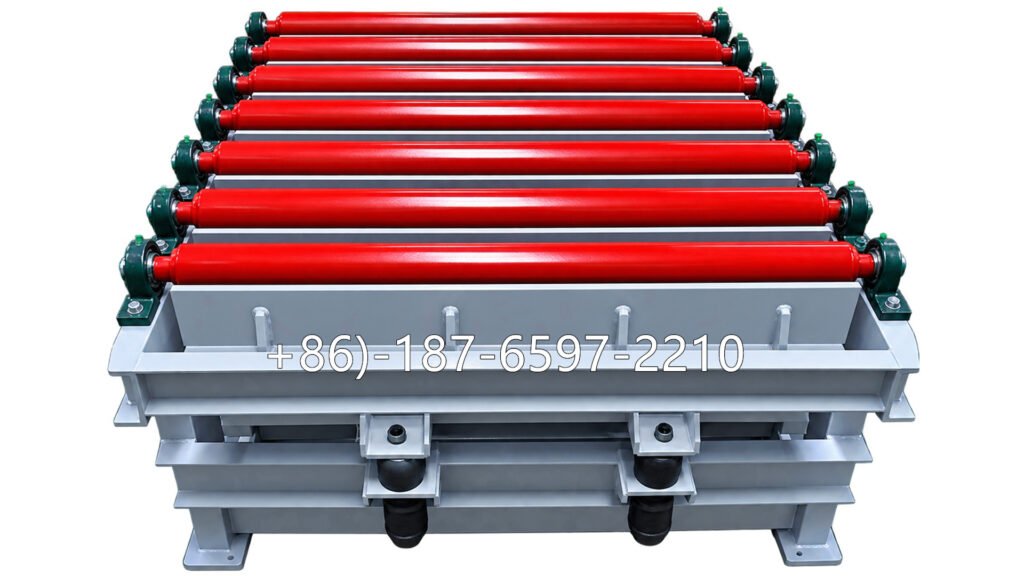
For foundries producing medium and large sand molds, a Compaction Table for No-Bake Resin Sand Molding provides a practical mechanical solution.
By applying controlled vibration during the sand-filling process, the equipment helps sand particles rearrange and fill the spaces around the pattern. This improves sand packing consistency and reduces dependence on manual ramming.
But why should a foundry invest in a dedicated resin sand vibrating table instead of continuing with manual compaction?
The answer involves more than labor savings. It includes mold density control, production repeatability, casting quality, and the integration of the complete no-bake molding process.
This article explains the working principle, technical advantages, equipment parameters, selection criteria, and industrial applications of no-bake resin sand compaction tables.
1. What Is a Compaction Table for No-Bake Resin Sand Molding?
A no-bake resin sand compaction table is a mechanical vibration device used to improve the filling and packing of chemically bonded sand inside a mold flask.
During production, mixed resin sand is discharged into the flask containing the pattern. The vibration table generates controlled mechanical vibration, allowing sand particles to move and settle into available spaces.
The objective is to obtain more uniform sand distribution and suitable mold density before the resin binder completes its curing reaction.
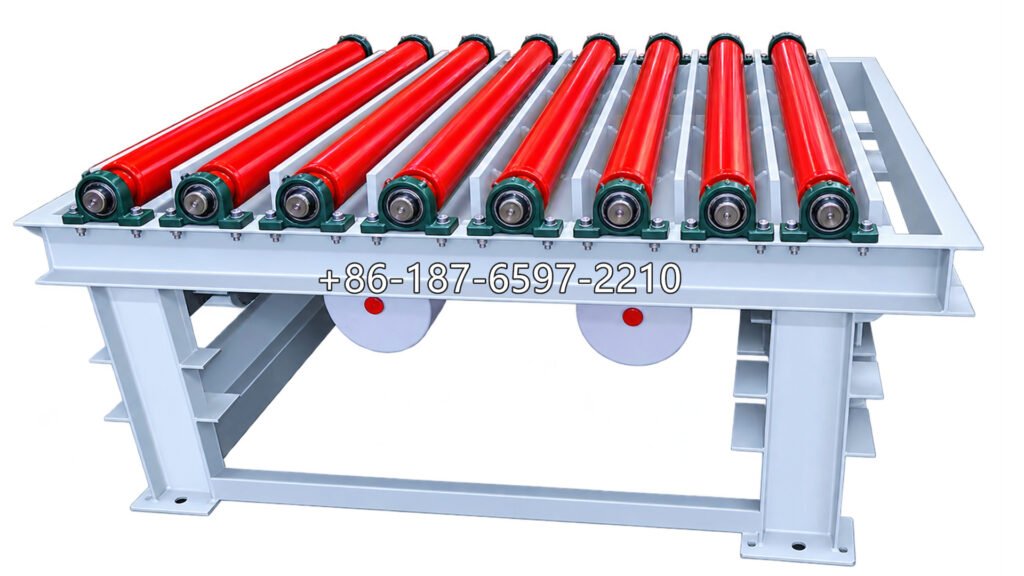
A typical resin sand compaction table consists of:
- Heavy-duty steel vibration platform
- Vibration motors or vibrator assemblies
- Supporting steel frame
- Vibration isolation system
- Mold positioning and locating components
- Electrical control cabinet
- Adjustable vibration control system
- Optional hydraulic lifting mechanism
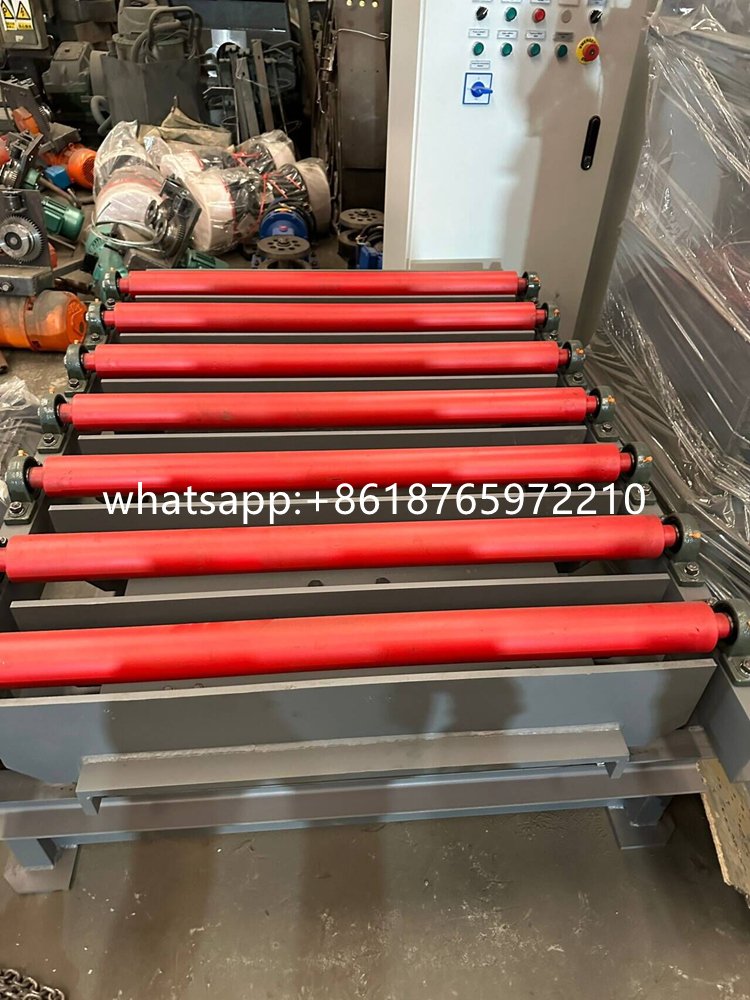
- Optional roller conveyor or mold transfer system
The machine can operate independently or be integrated with a continuous resin sand mixer and automatic molding line.
How Does It Work?
The typical working process is:
Step 1: Position the Mold Flask
Place the flask containing the pattern on the vibration platform. Ensure that the mold is correctly positioned and the total load is within the machine’s rated capacity.
Step 2: Fill with Mixed Resin Sand
A continuous resin sand mixer supplies uniformly mixed sand containing the required resin and hardener.
Step 3: Start Vibration Compaction
The vibration motors generate mechanical vibration. Sand particles rearrange and settle, helping the mixed sand fill corners, narrow sections, and spaces around the pattern.
Step 4: Complete Sand Filling
Continue filling and leveling the sand according to the molding procedure. Vibration duration should be coordinated with the sand discharge rate.
Step 5: Stop the Vibration System
Stop vibration when the required filling and compaction conditions are achieved.
Step 6: Allow Resin Sand to Cure
The mold remains under the required curing conditions before pattern removal and subsequent mold handling.
Important: A compaction table improves mechanical sand filling and packing. It does not replace the chemical curing process or compensate for incorrect resin-to-hardener ratios.
2. Why Is a Compaction Table Important in No-Bake Resin Sand Molding?
No-bake resin sand relies on a chemical reaction between the binder and hardener to develop mold strength.
However, chemical curing alone cannot solve problems caused by uneven sand filling.
If the sand is not properly distributed around the pattern, some sections may have insufficient packing while other sections become excessively compacted.
This can affect mold strength, surface quality, dimensional stability, and handling performance.
A properly configured vibration table helps control this important stage of the molding process.
Main Problems with Manual Sand Compaction
| Common Production Problem | Possible Consequence |
|---|---|
| Uneven manual ramming | Inconsistent mold density |
| Poor sand distribution | Incomplete pattern coverage |
| Insufficient compaction | Weak mold sections |
| Excessive local compaction | Uneven sand properties |
| Inconsistent operator operation | Unstable production quality |
| High manual labor requirements | Lower production efficiency |
| Difficult-to-reproduce compaction cycles | Inconsistent molding results |
For foundries producing large molds, manual compaction can become particularly difficult because of mold dimensions, sand weight, and complex pattern structures.
A mechanical vibration system provides a more repeatable method of controlling the compaction process.
3. 7 Major Advantages of Choosing a No-Bake Resin Sand Compaction Table
3.1 Improve Sand Distribution and Mold Density
The primary function of a vibration compaction table is to help resin sand settle more uniformly inside the flask.
Controlled vibration encourages sand particles to rearrange and fill available spaces.
Benefits include:
- More uniform sand distribution
- Improved filling around pattern features
- Reduced local voids caused by poor filling
- More consistent mold density
- Better support for complex mold geometries
The final result depends on sand characteristics, pattern design, filling method, and vibration settings.
3.2 Reduce Manual Ramming and Labor Costs
Traditional manual compaction requires operators to distribute and compact sand repeatedly.
For large flasks, this process consumes considerable labor and may produce different results between operators.
A mechanical compaction table helps reduce repetitive manual work.
It also makes the molding process easier to standardize.
For foundries with frequent mold production, reducing manual compaction can improve labor utilization and production organization.
3.3 Improve Mold Surface Quality
Uniform sand filling around the pattern is important for reproducing casting geometry.
Poorly filled corners, narrow sections, and complex pattern details may result in surface defects or additional repair work.
Controlled vibration helps sand reach difficult-to-fill areas and supports more consistent pattern coverage.
This can contribute to:
- Better surface replication
- More consistent mold geometry
- Reduced local sand defects
- Improved casting surface condition
A compaction table cannot independently guarantee casting surface quality. Pattern condition, sand quality, binder selection, and pouring conditions must also be controlled.
3.4 Reduce Weak Mold Sections
Insufficient sand packing may cause weak areas, especially around thin sections and complicated pattern structures.
These areas can become vulnerable during pattern removal, mold transportation, and mold assembly.
Proper vibration compaction helps improve sand distribution and reduce the risk of localized weak sections caused by incomplete filling.
3.5 Improve Production Repeatability
One major advantage of mechanical compaction is the ability to establish repeatable operating procedures.
Operators can use controlled vibration cycles instead of relying entirely on personal experience.
Depending on the control configuration, the equipment can provide:
- Adjustable vibration duration
- Controlled starting and stopping
- Manual or automatic operation
- PLC-based cycle management
- Integration with sand filling equipment
This is particularly useful for foundries producing repeated mold designs.
3.6 Support Larger and Heavier Sand Molds
Large no-bake molds require suitable equipment for handling their total weight during filling and compaction.
A heavy-duty vibration platform can be designed according to:
- Maximum flask dimensions
- Total mold weight
- Sand weight
- Pattern dimensions
- Required vibration force
- Production cycle
For large industrial castings, the platform structure and vibration system should be engineered according to the actual operating load.
3.7 Improve the Overall No-Bake Molding Process
A compaction table can be connected with a continuous resin sand mixer, sand discharge station, roller conveyor, and mold handling equipment.
This helps create a more organized production process.
Instead of treating sand mixing and mold compaction as separate manual operations, foundries can coordinate both stages.
The result is better production flow and more efficient use of labor and equipment.
4. Compaction Table vs. Manual Sand Ramming: Which Is Better?
For foundries considering equipment upgrades, the main question is whether mechanical vibration offers sufficient advantages over traditional manual compaction.
The comparison below explains the differences.
| Comparison Item | Manual Sand Ramming | Compaction Table |
|---|---|---|
| Operating method | Manual operation | Mechanical vibration |
| Sand distribution | Depends on operator | Controlled vibration assists filling |
| Mold density | May vary between sections | More repeatable with optimized settings |
| Labor requirement | Relatively high | Reduced repetitive manual work |
| Production consistency | Operator-dependent | Easier to standardize |
| Large mold applications | Labor-intensive | Can be engineered for heavy molds |
| Automation | Limited | Supports PLC and conveyor integration |
| Process control | Mainly manual | Adjustable vibration cycle |
Engineering recommendation:
For small or occasional molds, manual compaction may remain practical.
For foundries producing large molds, repeated batches, or complex castings, a mechanical vibration table can provide better process control and reduce repetitive labor.
The equipment should be selected according to production volume, mold dimensions, and actual sand properties.
5. Technical Parameters of a No-Bake Resin Sand Compaction Table
Selecting the correct technical configuration is essential for achieving stable compaction performance.
A vibration table should not simply be selected according to motor power. Its platform structure, rated load, vibration force, frequency, amplitude, and control system must work together.
Main Equipment Parameters
| Technical Parameter | Function | Selection Consideration |
|---|---|---|
| Platform length | Supports mold length | According to maximum flask dimensions |
| Platform width | Supports mold width | According to flask and pattern size |
| Platform height | Determines working height | According to filling and conveying arrangements |
| Rated load | Maximum designed operating load | Includes flask, pattern, and sand |
| Vibration motor power | Drives the vibration system | According to total load and vibration design |
| Vibration frequency | Controls vibration cycles | Match sand behavior and machine design |
| Vibration amplitude | Determines displacement | Optimize through production testing |
| Vibration force | Provides compaction energy | Match mold weight and required packing |
| Vibration duration | Controls compaction time | According to filling rate and mold quality |
| Control system | Manages machine operation | Manual, timer, or PLC |
| Isolation system | Reduces vibration transmission | Protect surrounding structures |
| Optional conveyor | Transfers molds | According to production layout |
Important Vibration Parameters
1. Vibration Frequency
Frequency affects how the sand particles move and settle.
The suitable frequency depends on vibrator design, mold weight, sand characteristics, and platform structure.
2. Vibration Amplitude
Amplitude affects the displacement of the vibration platform.
Excessive amplitude may cause sand segregation, movement of the flask, or unstable compaction.
3. Vibration Force
The vibration force must be matched to the total operating mass.
A larger vibration motor does not automatically produce better mold quality.
4. Vibration Time
The vibration cycle should be coordinated with the sand filling process.
Too little vibration may result in insufficient settling, while excessive vibration may cause unnecessary cycle time or undesirable sand behavior.
Reference Operating Parameters for Process Trials
The following are practical starting considerations, not universal ISO requirements or guaranteed machine specifications.
| Parameter | Initial Trial Reference | Adjustment Method |
|---|---|---|
| Vibration duration | Approximately 5–20 seconds for initial trials | Adjust according to mold size and sand filling |
| Vibration frequency | According to vibrator design | Verify under actual operating load |
| Amplitude | According to platform and vibrator configuration | Measure and optimize |
| Rated load | According to total flask and sand weight | Confirm static and dynamic design |
| Vibration force | According to operating mass | Verify through engineering calculation |
| Control mode | Manual / timer / PLC | According to production requirements |
AFS technical process documentation includes no-bake molding examples using vibration periods of 5, 10, and 15 seconds in different test procedures. These examples demonstrate why vibration time should be established through process trials rather than treated as one fixed value for all molds.
Important: Final frequency, amplitude, vibration force, and motor power should be confirmed by the equipment manufacturer based on the actual mold and production requirements.
6. How to Choose the Right Compaction Table for Your Foundry?
Not every vibration table is suitable for every no-bake molding application.
Before purchasing equipment, foundries should evaluate several important factors.
6.1 Determine the Maximum Mold Dimensions
The platform must accommodate the maximum flask dimensions.
Measure:
- Maximum mold length
- Maximum mold width
- Maximum mold height
- Flask dimensions
- Pattern dimensions
Allow suitable space for positioning and safe operation.
6.2 Calculate the Total Operating Weight
This is one of the most important selection factors.
The total operating load should include:
Total Load = Flask Weight + Pattern Weight + Sand Weight + Other Supported Components
The equipment manufacturer must verify the rated load and dynamic requirements of the vibration platform.
Do not select a table based only on the weight of the sand.
6.3 Match the Vibration System to Sand Characteristics
Different resin sand systems may have different flowability, binder content, and curing behavior.
Common no-bake binder systems include:
- Furan resin sand
- Phenolic no-bake resin sand
- Alkaline phenolic ester-cured sand
- Other chemically bonded self-hardening sand systems
The vibration process should be tested using the actual sand formulation and production conditions.
6.4 Consider the Required Production Capacity
Production capacity influences the required vibration cycle and equipment arrangement.
For example, a foundry producing multiple molds per hour may require a more automated feeding and transfer arrangement than a foundry producing large individual molds.
Consider:
- Required molds per hour
- Sand mixer discharge capacity
- Mold filling time
- Vibration time
- Curing time
- Mold transfer time
The complete process cycle should be evaluated rather than focusing only on the vibration table.
6.5 Choose the Right Automation Level
Different production requirements need different control configurations.
| Configuration | Suitable Application |
|---|---|
| Manual control | Small production volumes |
| Timer control | Repeatable basic vibration cycles |
| PLC control | Standardized molding operations |
| Automatic conveyor integration | Continuous production lines |
| Hydraulic lifting system | Heavy mold handling applications |
A customized configuration can help improve the connection between sand preparation, mold filling, vibration compaction, and transportation.
7. Common Applications of No-Bake Resin Sand Compaction Tables
No-bake resin sand molding is widely used for producing medium and large metal castings.
A compaction table is particularly useful when mold filling and sand distribution need to be improved.
Typical Applications
Cast Iron Foundries
Suitable for sand molds used in machine bases, pump housings, valve bodies, and other industrial castings.
Steel Foundries
Supports the preparation of larger and heavier molds used for industrial machinery and engineering components.
Large Mold Production
Helps improve sand distribution in large flasks and complex mold structures.
Customized Casting Production
Useful for foundries producing different mold designs and requiring flexible equipment configurations.
No-Bake Molding Production Lines
Can be integrated with resin sand mixers, conveyors, and mold handling equipment.
8. How to Integrate a Compaction Table into a No-Bake Molding Production Line?
A compaction table works more efficiently when its operating cycle is coordinated with upstream and downstream equipment.
A typical no-bake resin sand molding production line includes:
- Used sand reclamation system
- Sand storage and transportation equipment
- Sand temperature and quality control
- Continuous resin sand mixer
- Sand discharge and filling station
- Resin sand compaction table
- Roller conveyor or mold transfer system
- Pattern removal station
- Mold assembly area
- Casting preparation and pouring area
Recommended Production Process
Used Sand → Sand Reclamation → Sand Mixing → Resin and Hardener Addition → Mold Filling → Vibration Compaction → Resin Curing → Pattern Removal → Mold Assembly
Why Is Equipment Integration Important?
If the sand mixer supplies sand faster than the mold filling station can handle, production may become unbalanced.
Likewise, an undersized compaction table can become a bottleneck when handling large molds.
The equipment should therefore be designed according to:
- Sand mixer output
- Mold dimensions
- Total mold weight
- Filling method
- Vibration cycle
- Required production capacity
- Factory layout
For larger foundries, a customized no-bake molding line can provide a more efficient alternative to separate manual operations.
9. Common Problems and Troubleshooting of Compaction Tables
Even a properly designed vibration table requires correct operation and regular maintenance.
The following table summarizes common problems and possible solutions.
| Common Problem | Possible Cause | Recommended Solution |
|---|---|---|
| Uneven sand compaction | Unbalanced vibration or uneven sand filling | Check vibrator operation and filling method |
| Excessive machine vibration | Loose fasteners or abnormal vibrator operation | Inspect bolts and vibration components |
| Abnormal operating noise | Bearing wear or loose mechanical connections | Inspect bearings and connections |
| Flask movement | Incorrect positioning or unsuitable vibration settings | Check locating devices and vibration parameters |
| Insufficient compaction | Inadequate vibration force or short vibration cycle | Review load and operating parameters |
| Excessive sand movement | Excessive vibration intensity or duration | Reduce vibration according to trial results |
| Motor overheating | Overload or electrical problems | Check load, motor, and electrical system |
| Unstable operation | Damaged isolation components | Inspect and replace damaged components |
Recommended Maintenance Checklist
Daily Inspection
- Check the platform for sand accumulation.
- Inspect abnormal vibration and noise.
- Check electrical controls.
- Confirm flask positioning components.
Weekly Inspection
- Check vibrator mounting bolts.
- Inspect vibration isolation components.
- Check electrical connections.
- Inspect platform and supporting frame.
Periodic Inspection
- Check bearing conditions.
- Verify vibration performance.
- Inspect the platform structure and welds.
- Check electrical protection devices.
- Review the equipment’s operating records.
Always follow the manufacturer’s maintenance instructions and isolate the electrical power before maintenance work.
10. Safety Requirements and International Standards
Safety is an important consideration when designing and operating foundry vibration equipment.
The following international references are relevant to equipment design and technical documentation.
ISO 23062:2022 – Foundry Machinery: Safety Requirements for Molding and Coremaking Machinery
ISO 23062 specifies safety requirements for molding and coremaking machinery and associated equipment.
It is particularly relevant when evaluating:
- Mechanical hazards
- Moving machine components
- Operator access
- Guarding arrangements
- Emergency stopping
- Safe operation and maintenance
ISO 12100:2010 – Safety of Machinery: Risk Assessment and Risk Reduction
This standard provides general principles for machinery risk assessment and risk reduction.
It is useful for identifying potential hazards associated with vibration equipment, mold handling, and mechanical operation.
ISO 23472-2:2020 – Foundry Machinery Vocabulary: Molding and Coremaking Machines
This standard establishes terminology for molding and coremaking machines and related equipment used in foundries.
It provides a technical reference for equipment descriptions and engineering documentation.
Technical note: These standards provide safety and terminology references. They do not prescribe one universal vibration frequency, amplitude, or compaction time for all no-bake resin sand molding applications. Machine design and operating parameters must be verified for the specific equipment and production process.
11. Why Choose a Customized No-Bake Resin Sand Compaction Table from Bestech?
Different foundries have different production requirements.
A small flask used for general industrial castings requires a different vibration configuration from a large mold used for heavy steel or iron castings.
Bestech focuses on foundry machinery and customized sand preparation and molding solutions.
A suitable compaction table can be evaluated according to:
- Customized platform dimensions
- Maximum mold and flask weight
- Vibration motor configuration
- Vibration force and frequency
- Adjustable vibration cycle
- Heavy-duty supporting frame
- Vibration isolation structure
- PLC control system
- Hydraulic lifting arrangement
- Roller conveyor integration
- Customized production line layout
What Can a Customized Solution Improve?
Better Equipment Matching
The platform and vibration system are selected according to the actual mold dimensions and operating load.
More Flexible Production
Adjustable control configurations can accommodate different molding requirements.
Improved Production Integration
The table can be connected with resin sand mixers and mold transportation systems.
Reduced Manual Operation
Mechanical vibration and optional automation help reduce repetitive manual compaction work.
For foundries planning to upgrade existing equipment or establish a new no-bake molding line, selecting the correct configuration is more important than simply choosing the machine with the highest motor power.
12. Frequently Asked Questions About No-Bake Resin Sand Compaction Tables
Q1: What is the main function of a compaction table in no-bake resin sand molding?
Its main function is to apply controlled vibration during sand filling, helping resin sand settle and distribute more uniformly around the pattern.
Q2: Does a compaction table improve mold density?
Yes. Properly controlled vibration can improve sand packing consistency and help reduce local differences in mold density. Actual results depend on sand characteristics, mold design, and operating parameters.
Q3: How long should a resin sand compaction table vibrate?
There is no universal vibration time. Initial process trials may use short cycles, such as 5–20 seconds, followed by adjustments based on sand filling, mold dimensions, and mold quality.
Q4: Can a compaction table be used for furan resin sand?
Yes. It can be used in suitable furan resin no-bake molding applications. The vibration settings should be established according to the actual sand formulation and production process.
Q5: What is the difference between a vibration table and a compaction table?
In foundry applications, the terms are sometimes used interchangeably. A compaction table generally emphasizes the purpose of improving sand packing through controlled vibration.
Q6: Can the compaction table be connected to a continuous resin sand mixer?
Yes. It can be integrated with a continuous resin sand mixer and filling station to coordinate sand discharge and mold compaction.
Q7: How do I calculate the required table load capacity?
Calculate the combined weight of the flask, pattern, sand, and other supported components. The manufacturer should then verify the rated load and dynamic operating requirements.
Q8: Can the vibration frequency be adjusted?
Depending on the vibrator and electrical control configuration, frequency adjustment may be available. The appropriate control method should be confirmed during equipment design.
Q9: Can Bestech customize the compaction table according to mold dimensions?
Yes. The platform size, rated load, vibration system, control arrangement, and optional conveying equipment can be evaluated according to customer requirements.
13. Get a Customized Compaction Table for Your No-Bake Resin Sand Molding Line
Choosing the right compaction table is an important step in improving no-bake resin sand molding efficiency.
A properly designed vibration system helps improve sand filling, support more consistent mold density, reduce repetitive manual work, and create a more standardized molding process.
However, the correct equipment configuration depends on the mold dimensions, total operating weight, sand characteristics, production capacity, and factory layout.
Bestech provides customized foundry equipment solutions according to actual production requirements.
Whether you need an independent resin sand vibrating table or a complete no-bake molding production line, our engineering team can help evaluate a suitable configuration.
Send Us Your Project Requirements for a Technical Proposal
To recommend a suitable compaction table, please provide the following information:
| Required Information | Customer Requirements |
|---|---|
| Casting material | Cast iron / steel / other |
| Mold length | ___ mm |
| Mold width | ___ mm |
| Mold height | ___ mm |
| Flask dimensions | ___ mm |
| Total mold weight | ___ kg |
| Sand weight per mold | ___ kg |
| Required production capacity | ___ molds/hour |
| Resin sand type | Furan / phenolic / other |
| Sand mixer capacity | ___ tons/hour |
| Required table load | ___ kg |
| Vibration control | Manual / timer / PLC |
| Conveyor requirement | Yes / No |
| Hydraulic lifting | Yes / No |
| Power supply | ___ V / ___ Hz |
| Installation space | ___ mm |
Looking for a Reliable Compaction Table Manufacturer?
Contact Bestech today to discuss your no-bake resin sand molding requirements.
Get a Customized Equipment Proposal | Request Technical Parameters | Discuss OEM & ODM Solutions
Improve your foundry molding process with a compaction table designed around your actual production needs.