
When buying industrial shot blasting equipment, many buyers start with one question:
What is your price?
But for a wire mesh belt shot blasting machine, price is usually not the first engineering question that should be answered.
A better starting point is:
What parts are you processing, how many parts do you need to process per hour, and what surface result do you need?
Because a machine designed for small castings may not be suitable for heavy forgings.
A machine designed for 500 kg/hour may become a production bottleneck if your actual requirement is 2 tons/hour.
And a machine with more blast wheels is not automatically the better machine if the abrasive coverage does not match the workpiece geometry.
That is where a factory direct wire mesh belt shot blasting machine can offer a practical advantage.
Instead of selecting only from a fixed standard model, the blasting system can be configured around:
Workpiece + Production Capacity + Surface Requirement + Automation Level + Plant Layout
For factories processing castings, forgings and industrial metal components continuously, this approach can reduce the risk of buying equipment that looks correct on paper but does not match the actual production line.
What Is a Wire Mesh Belt Shot Blasting Machine?
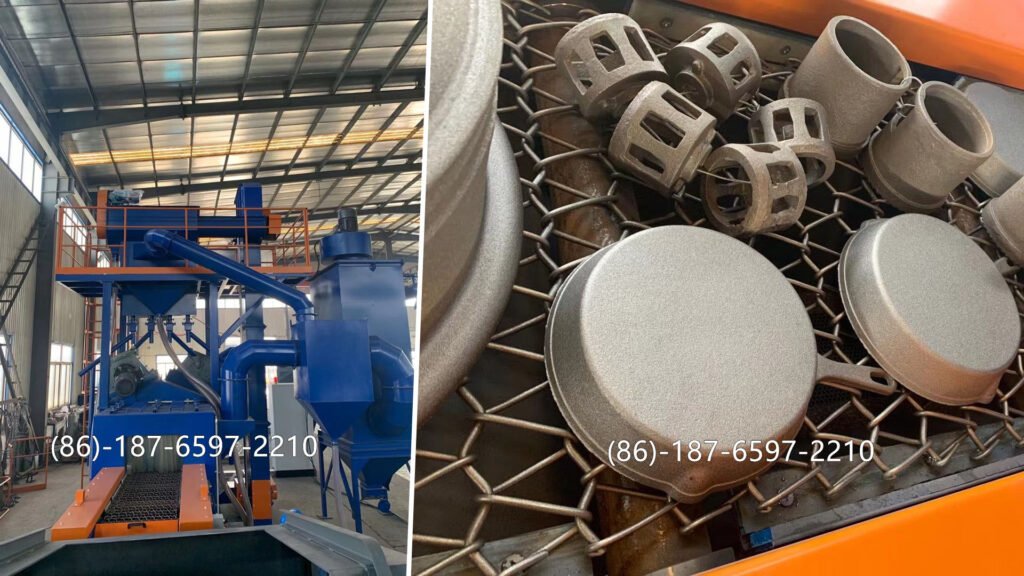
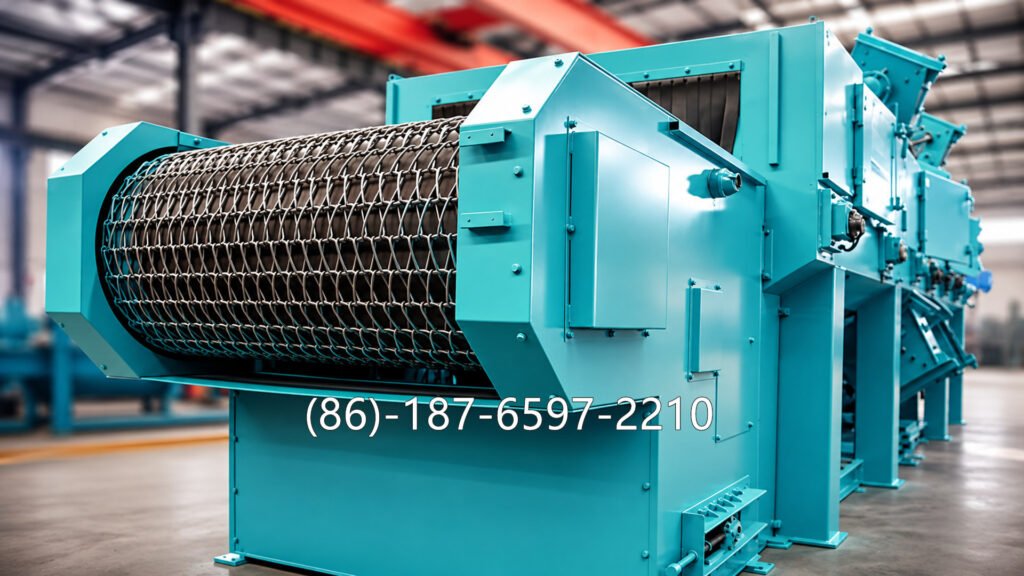
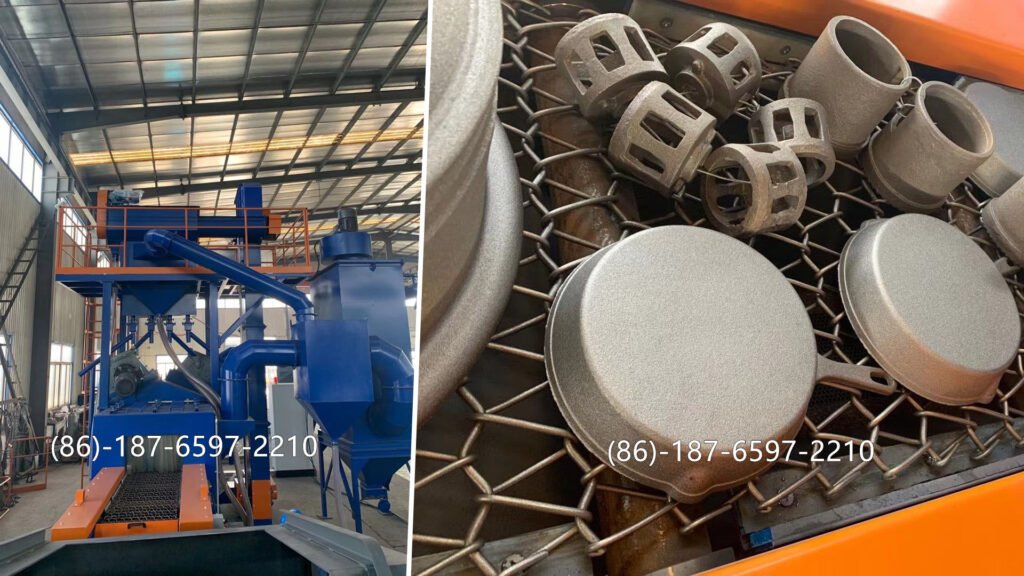
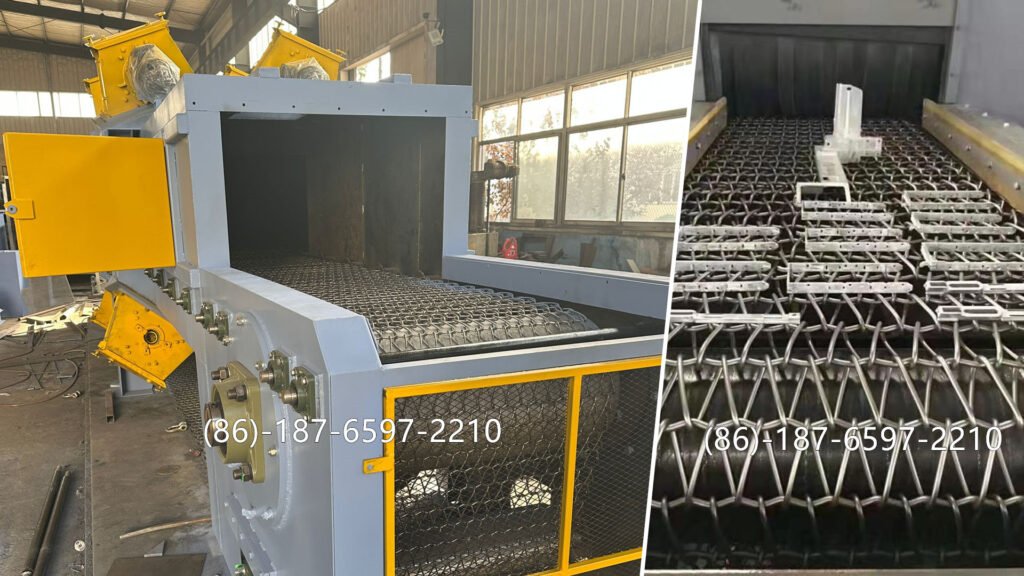
Wire mesh belt shot blasting machine is a continuous abrasive blasting system designed for small and medium-sized metal workpieces.
The workpieces are loaded onto a moving wire mesh conveyor and transported through the blasting chamber.
Inside the chamber, high-speed blast wheels project metallic abrasive onto the surfaces of the workpieces.
The system typically performs:
- Rust removal
- Oxide removal
- Heat-treatment scale removal
- Foundry sand cleaning
- Surface preparation
- Coating preparation
- General metal surface cleaning
A typical production flow is:
Workpiece Loading
        ↓
Wire Mesh Belt Conveyor
        ↓
Shot Blasting Chamber
        ↓
High-Speed Abrasive Blasting
        ↓
Abrasive Collection
        ↓
Abrasive Recovery
        ↓
Abrasive Separation
        ↓
Dust Collection
        ↓
Automatic Workpiece Discharge
The main advantage is continuous production.
The machine does not need to stop after every batch.
Why Factory Direct Matters for Industrial Buyers
Buying directly from the manufacturer is not only about reducing the number of companies between the buyer and the equipment producer.
For customized industrial machinery, the bigger advantage is usually engineering communication.
A wire mesh belt shot blasting machine involves several design decisions.
These include:
- Belt width
- Belt load capacity
- Workpiece dimensions
- Blast chamber size
- Blast wheel quantity
- Blast wheel arrangement
- Blast wheel power
- Abrasive flow
- Conveyor speed
- Abrasive recovery capacity
- Separator configuration
- Dust collector capacity
- Automation level
- PLC control
- Production line integration
A factory direct project makes it easier to discuss these technical parameters with the people responsible for machine design and manufacturing.
For a buyer, this can be more important than simply comparing catalog prices.
1. Configure the Machine Around Your Actual Workpiece
A standard machine may work perfectly for one factory and poorly for another.
For example:
Factory A
Processes small aluminum castings.
Factory B
Processes heavy steel forgings.
Factory C
Processes heat-treated automotive components.
All three factories may search for:
Wire Mesh Belt Shot Blasting Machine
But they may require completely different machine configurations.
The design should consider:
Maximum Part Size
Maximum Part Weight
Part Shape
Loading Density
Surface Condition
Required Production Capacity
Required Surface Result
The goal is not simply to sell the largest machine.
The goal is to build a machine that fits the production requirement.
2. Continuous Production Instead of Stop-and-Start Processing
Traditional batch blasting usually follows this cycle:
Load
 ↓
Close
 ↓
Blast
 ↓
Stop
 ↓
Unload
 ↓
Reload
A wire mesh belt system changes the production logic:
Continuous Loading
        ↓
Continuous Conveying
        ↓
Continuous Blasting
        ↓
Continuous Discharge
This is useful when a factory needs a more stable production rhythm.
The machine can become part of a continuous manufacturing process.
For example:
Casting
   ↓
Cooling
   ↓
Shot Blasting
   ↓
Inspection
   ↓
Machining
   ↓
Coating
Or:
Forging
   ↓
Heat Treatment
   ↓
Scale Removal
   ↓
Shot Blasting
   ↓
Machining
The biggest benefit is often not the blasting chamber itself.
It is the reduction of unnecessary interruptions in material handling.
3. Customized Blast Wheel Configuration
Blast wheels are the core energy system of a shot blasting machine.
They accelerate abrasive and project it toward the workpiece.
But asking only:
How many blast wheels does the machine have?
is not enough.
A better engineering question is:
Does the blast wheel arrangement provide sufficient coverage for my workpieces at the required conveyor speed?
The configuration should consider:
- Workpiece geometry
- Workpiece height
- Workpiece arrangement
- Belt speed
- Surface condition
- Cleaning requirement
For example, a workpiece with complex external surfaces may require blasting coverage from different angles.
The design may therefore use multiple blast wheels arranged to improve coverage.
The objective is:
Effective Coverage + Required Cleaning Result + Production Capacity
4. Better Integration with Automated Production Lines
A wire mesh belt shot blasting machine can be configured as an independent machine or integrated into a larger production system.
Possible integration options include:
Automatic Loading
       ↓
Wire Mesh Belt Shot Blasting
       ↓
Automatic Discharge
       ↓
Inspection
       ↓
Machining / Coating / Assembly
Depending on the production process, customization may include:
- Loading conveyor
- Transfer conveyor
- Automatic feeding
- Automatic unloading
- Workpiece sensors
- PLC control
- Variable conveyor speed
- Production monitoring
- Fault alarms
For factories planning to upgrade from manual material handling toward automated production, the conveyor system can become an important part of the investment.
5. Stable and Repeatable Surface Treatment
Surface treatment quality depends on controlling the process.
Important parameters include:
- Abrasive type
- Abrasive size
- Abrasive condition
- Abrasive flow rate
- Blast wheel position
- Blast wheel throwing direction
- Conveyor speed
- Exposure time
A continuous system allows these parameters to be controlled more consistently.
For example:
Conveyor Speed = Controlled

Abrasive Flow = Adjustable

Blast Wheel Direction = Fixed

Exposure Time = Repeatable
This can improve process consistency compared with uncontrolled manual cleaning.
Surface Preparation Standards: Why the Target Must Be Defined
In industrial production, “clean surface” is not a technical specification.
Steel surfaces may need to meet a defined preparation requirement before coating or further processing.
ISO 8501-1
ISO 8501-1 is commonly used for the visual assessment of surface cleanliness of steel substrates.
Blast-cleaning preparation grades include:
- Sa 2
- Sa 2½
- Sa 3
In practical projects, the required preparation grade should come from:
Project Specification + Coating System + Service Environment
Important Engineering Note
A shot blasting machine should not simply be described as a “Sa 2½ machine.”
The final surface result depends on:
- Initial surface condition
- Abrasive
- Abrasive flow
- Blasting intensity
- Exposure time
- Conveyor speed
- Workpiece geometry
The machine provides the process capability.
The final result depends on how the process is configured and controlled.
Surface Profile: Another Important Requirement
Surface cleanliness is not always enough.
A coating system may also require a specific surface profile.
The surface profile is affected by:
- Abrasive shape
- Abrasive size
- Abrasive hardness
- Abrasive velocity
- Workpiece material
The ISO 8503 series covers surface roughness characteristics of blast-cleaned steel substrates.
Relevant references include:
- ISO 8503-2 — Comparator method for grading surface profile
- ISO 8503-5 — Replica tape method for determining surface profile
A project may require a profile range such as:
25–60 μm
or:
40–75 μm
These are application examples only.
The actual target should be specified according to the coating or process requirement.
Typical Technical Parameters
The following table provides typical reference ranges for a factory direct wire mesh belt shot blasting machine.
Final specifications should be based on the actual workpiece and production requirement.
| Parameter | Typical Configuration |
|---|---|
| Machine Type | Wire Mesh Belt Shot Blasting Machine |
| Production Mode | Continuous |
| Application | Castings / Forgings / Metal Components |
| Conveyor Type | High-Strength Wire Mesh Belt |
| Effective Belt Width | Approx. 600–2000 mm |
| Effective Working Height | Approx. 200–800 mm |
| Workpiece Transport | Continuous Conveyor |
| Conveyor Speed | Approx. 0.5–5 m/min |
| Blast Wheels | Approx. 2–8 Units |
| Blast Wheel Power | Approx. 7.5–22 kW per Wheel |
| Abrasive Type | Steel Shot / Steel Grit |
| Abrasive Flow | Approx. 100–250 kg/min per Wheel |
| Production Capacity | Customized |
| Abrasive Recovery | Automatic |
| Abrasive Separator | Air-Wash Separator |
| Dust Collection | Pulse Jet Bag Filter / Cartridge Filter |
| Control System | PLC + HMI Optional |
| Speed Adjustment | Frequency Converter |
| Machine Layout | Customized |
Important: These are reference ranges, not universal guaranteed specifications. Final machine configuration should be confirmed according to actual workpiece samples, dimensions, weight and production requirements.
6. Automatic Abrasive Recovery Helps Control Operating Cost
The abrasive system is not a secondary component.
It is part of the production system.
A typical abrasive circulation process is:
Blast Wheel
     ↓
Used Abrasive
     ↓
Collection Hopper
     ↓
Screw Conveyor
     ↓
Bucket Elevator
     ↓
Abrasive Separator
     ↓
Reusable Abrasive
     ↓
Storage Hopper
     ↓
Blast Wheel
The separator removes unwanted material such as:
- Dust
- Broken abrasive
- Fine particles
- Sand
- Surface contaminants
Usable abrasive is returned to the blasting cycle.
A stable abrasive mix can help improve:
- Cleaning efficiency
- Surface consistency
- Abrasive utilization
- Operating cost control
The ISO 11124 series covers specifications and classification for metallic blast-cleaning abrasives.
7. Factory Direct Customization for Different Industries
Foundry Castings
The machine can be configured for removing:
- Sand residue
- Oxide
- Scale
- Surface contamination
Important design factors include:
- Part weight
- Part geometry
- Sand carryover
- Required throughput
Forgings
Forgings may require removal of:
- Heat-treatment scale
- Oxide
- Surface residue
Important factors include:
- Scale condition
- Workpiece temperature
- Production capacity
- Required exposure time
Automotive Components
High-volume production may require:
- Stable conveyor speed
- Consistent surface quality
- Production line integration
- Automated loading and unloading
Hardware and General Metal Parts
The focus may be:
- High throughput
- Compact layout
- Low handling requirement
- Easy maintenance
Wire Mesh Belt vs. Tumble Belt Shot Blasting Machine
Both machines are suitable for different production requirements.
| Factor | Wire Mesh Belt | Tumble Belt |
|---|---|---|
| Production Mode | Continuous | Batch |
| Material Handling | Conveyor | Tumble |
| Production Rhythm | Continuous | Intermittent |
| Automation Integration | High | Moderate |
| Part-to-Part Contact | Lower Potential | Higher Potential |
| Suitable for Delicate Parts | Often Better | Depends on Part |
| Bulk Small Parts | Suitable | Excellent |
| High-Volume Production | Excellent | Depends on Batch Cycle |
If your production is based on a continuous material flow, the wire mesh belt configuration may provide a better match.
If you process loose bulk parts in batches, a tumble belt machine may be more practical.
The correct choice should start with the workpiece.
How to Calculate the Right Production Capacity
A common mistake is choosing the machine based only on belt width.
Capacity should be determined using actual production data.
For example:
Required Pieces Per Hour
          ↓
Average Part Weight
          ↓
Part Dimensions
          ↓
Loading Density
          ↓
Required Exposure Time
          ↓
Conveyor Speed
          ↓
Blast Wheel Configuration
For some applications, capacity may be expressed as:
- kg/hour
- tons/hour
- pieces/hour
- m²/hour
The right measurement depends on the production process.
What Information Should You Send to the Manufacturer?
Before requesting a quotation, prepare the following information.
1. Workpiece Type
Casting / forging / steel component / aluminum casting / other.
2. Maximum Dimensions
Length: ___ mm
Width: ___ mm
Height: ___ mm
3. Maximum Single-Part Weight
___ kg
4. Production Capacity
___ kg/hour
or
___ pieces/hour
5. Current Surface Condition
For example:
- Rust
- Oxide
- Heat-treatment scale
- Foundry sand
- Mill scale
6. Required Surface Result
For example:
- General cleaning
- Scale removal
- Coating preparation
- Sa 2½
- Other specified requirement
7. Surface Profile Requirement
___ μm
8. Downstream Process
- Machining
- Painting
- Powder coating
- Inspection
- Assembly
9. Power Supply
___ V / ___ Hz / ___ Phase
10. Installation Country
This helps determine electrical and project requirements.
Common Mistakes When Buying a Wire Mesh Belt Shot Blasting Machine
Mistake 1: Comparing Only the Price
A low purchase price does not automatically mean a lower operating cost.
Consider:
- Production capacity
- Abrasive consumption
- Wear parts
- Power consumption
- Maintenance
- Downtime
- Labor requirement
A more useful comparison is:
Total Cost per Part Processed
or:
Total Cost per Ton Processed
Mistake 2: Ignoring Belt Load Capacity
The wire mesh belt must support the actual workpiece load.
Always confirm:
- Single-part weight
- Total loading weight
- Loading density
- Continuous operating load
Mistake 3: Ignoring Workpiece Stability
Some workpieces may:
- Roll
- Slide
- Overlap
- Become trapped
- Move during blasting
Workpiece geometry should be considered before finalizing the conveyor design.
Mistake 4: Selecting Blast Wheels Only by Motor Power
More power does not automatically mean better cleaning.
The important combination is:
Blast Wheel + Abrasive Flow + Wheel Arrangement + Exposure Time + Conveyor Speed
Mistake 5: Ignoring the Downstream Process
The blasting result should match what happens next.
For example:
Painting → Surface cleanliness and profile may be critical
Machining → Surface cleaning may focus on removing scale
Inspection → Surface contamination may need to be minimized
The blasting system should support the next production step.
Factory Acceptance Testing Before Shipment
For customized industrial equipment, factory testing is strongly recommended.
A typical test may include:
- Wire mesh belt operation
- Conveyor speed adjustment
- Blast wheel operation
- Abrasive circulation
- Separator operation
- Dust collector operation
- Electrical controls
- Safety interlocks
- Sample workpiece blasting
The recommended process is:
Customer Sample
      ↓
Initial Inspection
      ↓
Abrasive Selection
      ↓
Machine Adjustment
      ↓
Trial Blasting
      ↓
Surface Inspection
      ↓
Parameter Confirmation
Using an actual customer workpiece can provide more useful information than testing with a random sample.
Maintenance Areas That Affect Long-Term Cost
Blast Wheel Components
Regularly inspect:
- Blades
- Impeller
- Control cage
- Distributor
- Wear liners
Worn components can affect abrasive throwing performance.
Wire Mesh Belt
Check:
- Belt tension
- Mesh wear
- Alignment
- Damaged wires
- Drive sprockets
Abrasive Separator
Monitor separation efficiency.
Poor separation can increase:
- Dust contamination
- Fine abrasive content
- Abrasive consumption
Bucket Elevator
Inspect:
- Elevator belt
- Buckets
- Drive system
- Alignment
Dust Collector
Monitor:
- Filter condition
- Pulse cleaning
- Differential pressure
- Dust discharge
Preventive maintenance can help reduce unexpected production downtime.
How to Reduce Operating Costs
Operating cost can often be reduced through better process control.
Maintain the Correct Abrasive Mix
Excessive fines can reduce blasting efficiency.
Optimize Conveyor Speed
Do not operate slower than necessary once the required cleaning result has been achieved.
Replace Worn Parts on Schedule
Blast wheel wear changes abrasive distribution and blasting efficiency.
Maintain the Separator
Good separation helps preserve reusable abrasive.
Match the Machine to the Production Requirement
Oversized equipment may increase unnecessary investment.
Undersized equipment may create a production bottleneck.
The objective is balance.
Buyer Checklist Before Ordering
Before confirming your order, check:
- Maximum workpiece dimensions
- Maximum single-part weight
- Required hourly production capacity
- Wire mesh belt width
- Effective blasting height
- Belt load capacity
- Blast wheel quantity
- Blast wheel power
- Abrasive flow
- Conveyor speed range
- Abrasive recovery system
- Abrasive separator
- Dust collector
- PLC control system
- Electrical component specification
- Safety interlocks
- Wear-resistant liners
- Recommended spare parts
- Factory acceptance testing
- Installation requirements
- Technical documentation
- After-sales support
Frequently Asked Questions
What is a wire mesh belt shot blasting machine used for?
It is mainly used for continuous surface cleaning and preparation of castings, forgings, automotive components, hardware and other suitable metal parts.
What is the main advantage of buying factory direct?
The main advantage is direct communication regarding machine design, workpiece requirements, customization, technical configuration and factory testing.
Can the machine be customized?
Yes. Depending on the manufacturer, customization may include belt width, blasting height, blast wheel configuration, conveyor speed, load capacity, dust collection and automation.
Can it remove rust and heat-treatment scale?
Yes. With the correct abrasive and process parameters, it can remove rust, oxide and heat-treatment scale.
Can the machine achieve Sa 2½?
For suitable steel workpieces, the blasting process can be configured to target a preparation grade such as Sa 2½. Actual results depend on initial surface condition, abrasive, exposure time and machine settings.
What abrasive is normally used?
Steel shot and steel grit are commonly used, depending on the required cleaning result and surface profile.
How is abrasive recycled?
Used abrasive is collected, transported through the recovery system, cleaned by the separator and returned to the blasting system.
Can it be integrated into an automated production line?
Yes. The wire mesh conveyor design makes it suitable for integration with loading, inspection, machining, coating and other downstream equipment.
How much does a wire mesh belt shot blasting machine cost?
The price depends on working width, belt capacity, blast wheel configuration, production capacity, dust collection and automation requirements.
For an accurate quotation, workpiece and production data should be provided.
Factory Direct Customization Options
A customized machine may include:
Working Width
Designed according to maximum workpiece dimensions.
Effective Blasting Height
Configured according to the actual product.
Heavy-Duty Wire Mesh Belt
Selected according to:
- Workpiece weight
- Loading density
- Production volume
Blast Wheel Configuration
Selected according to:
- Surface condition
- Workpiece geometry
- Production capacity
- Required surface result
Variable Conveyor Speed
Allows adjustment of blasting exposure time.
Automatic Abrasive Recovery
Continuous collection, separation and reuse of suitable abrasive.
Dust Collection System
Configured according to:
- Machine size
- Abrasive flow
- Production environment
- Local requirements
PLC Automation
Optional functions may include:
- Automatic start/stop
- Conveyor speed control
- Fault monitoring
- Safety interlocking
- Production data monitoring
Get a Factory Direct Solution for Your Production Line
A good industrial equipment proposal should be based on actual production data.
Send:
Your Workpiece Photo or Drawing
Maximum Dimensions
Maximum Weight
Required Production Capacity
Current Surface Condition
Required Surface Result
Based on this information, a technical proposal can include:
- Recommended machine model
- Wire mesh belt dimensions
- Conveyor load capacity
- Blast wheel quantity and power
- Abrasive recovery system
- Abrasive separator
- Dust collector
- Conveyor speed range
- PLC control configuration
- Equipment layout
- Recommended spare parts
- Factory testing requirements
- Installation guidance